322 kr
Adrian Del Caro – översättare
Upptäck titlar översatta av Adrian Del Caro.
19 produkter
19 produkter
- Häftad, Engelska, 2001Nietzsche wrote The Gay Science, which he later described as 'perhaps my most personal book', when he was at the height of his intellectual powers, and the reader will find in it an extensive and sophisticated treatment of the philosophical themes and views which were most central to Nietzsche's own thought and which have been most influential on later thinkers. These include the death of God, the problem of nihilism, the role of truth, falsity and the will-to-truth in human life, the doctrine of the eternal recurrence, and the question of the proper attitude to adopt toward human suffering and toward human achievement. This volume presents the work in a new translation by Josefine Nauckhoff, with an introduction by Bernard Williams that elucidates the work's main themes and discusses their continuing philosophical importance.
- Häftad, Engelska, 2017
662 kr
Skickas inom 7-10 vardagar
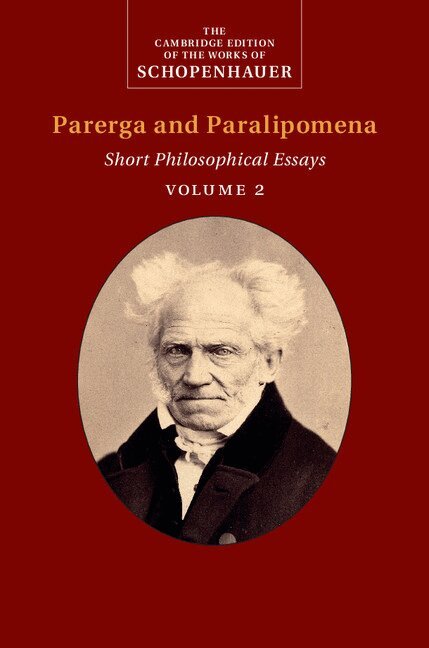
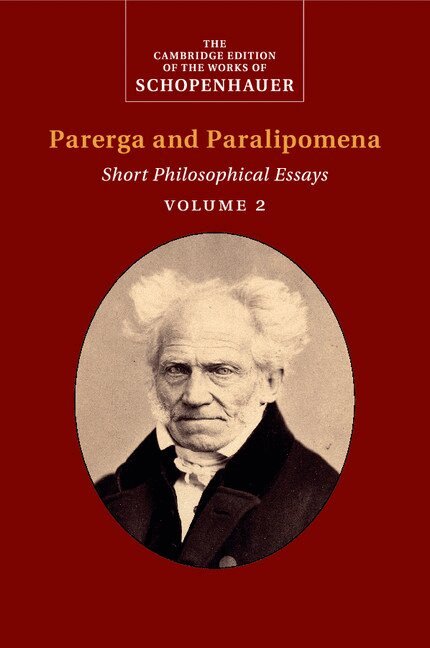
With the publication of Parerga and Paralipomena in 1851, there finally came some measure of the fame that Schopenhauer thought was his due. Described by Schopenhauer himself as 'incomparably more popular than everything up till now', Parerga is a miscellany of essays addressing themes that complement his work The World as Will and Representation, along with more divergent, speculative pieces. It includes essays on method, logic, the intellect, Kant, pantheism, natural science, religion, education, and language. The present volume offers a new translation, a substantial introduction explaining the context of the essays, and extensive editorial notes on the different published versions of the work. This readable and scholarly edition will be an essential reference for those studying Schopenhauer, the history of philosophy, and nineteenth-century German philosophy. - Häftad, Engelska, 2021
283 kr
Skickas
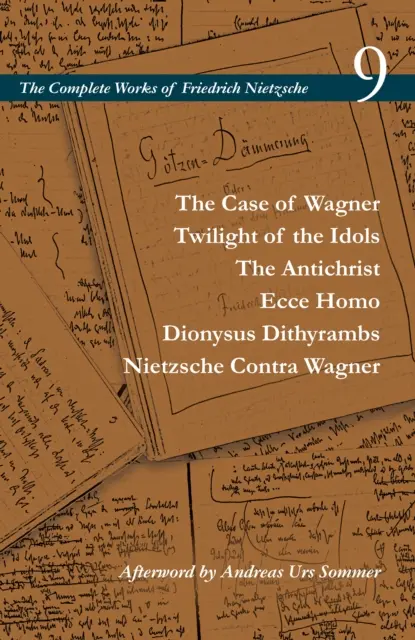
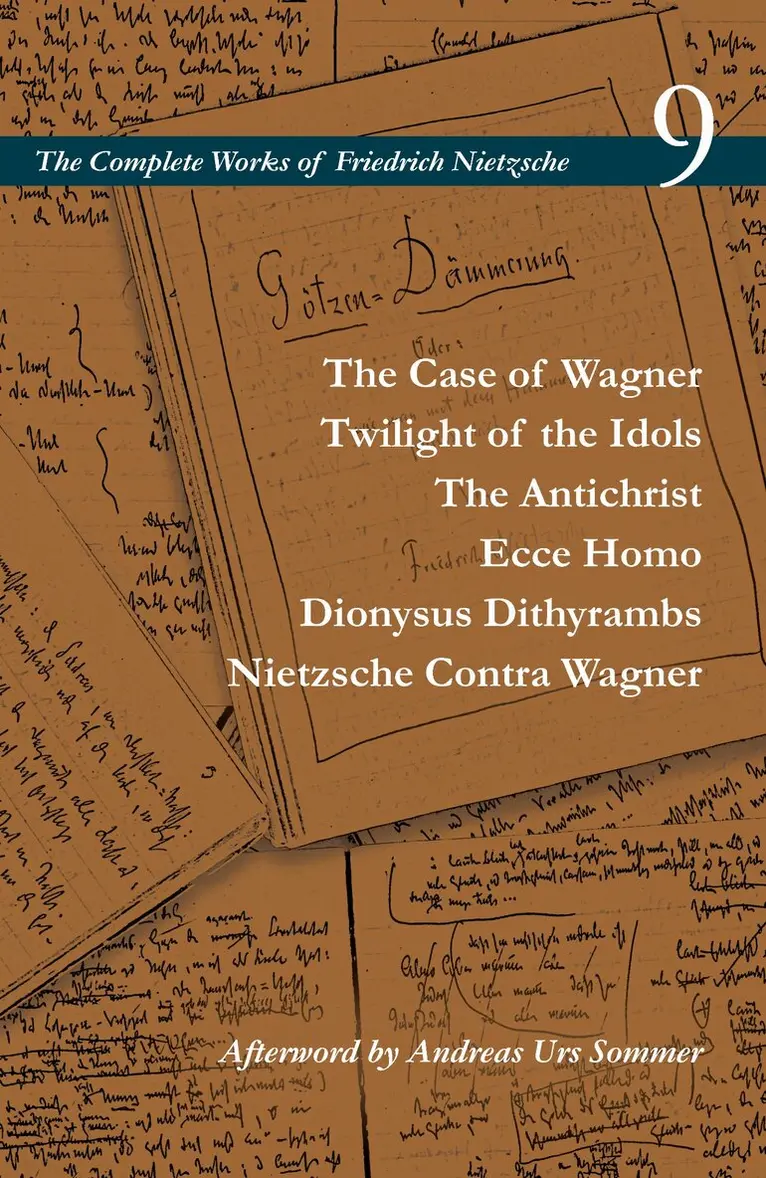
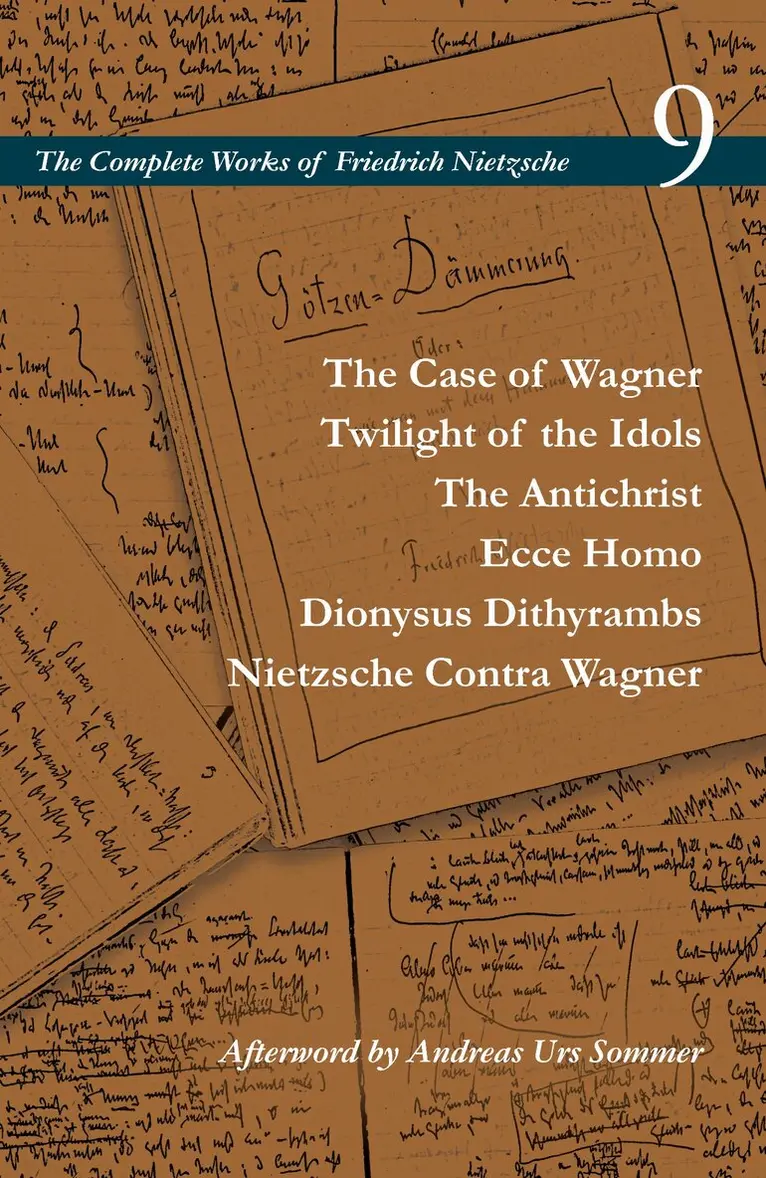
The year 1888 marked the last year of Friedrich Nietzsche's intellectual career and the culmination of his philosophical development. In that final productive year, he worked on six books, all of which are now, for the first time, presented in English in a single volume. Together these new translations provide a fundamental and complete introduction to Nietzsche's mature thought and to the virtuosity and versatility of his most fully developed style.The writings included here have a bold, sometimes radical tone that can be connected to Nietzsche's rising profile and growing confidence. In The Antichrist, we are offered an extended critique of Christianity and Christian morality alongside blunt diagnoses of contemporary Europe's cultural decadence. In Dionysus Dithyrambs we are presented with his only work composed exclusively of poetry, and in Twilight of the Idols we find a succinct summary of his mature philosophical views. At times the works are also openly personal, as in The Case of Wagner, which presents Nietzsche's attempt to settle accounts with his former close friend, German composer Richard Wagner, and in his provocative autobiography, Ecce Homo, which sees Nietzsche taking stock of his past and future while also reflecting on many of his earlier texts.Scrupulously edited, this critical volume also includes commentary by esteemed Nietzsche scholar Andreas Urs Sommer. Through this new collection, students and scholars are given an essential introduction to Nietzsche's late thought. - Häftad, Engelska, 2006
359 kr
Skickas
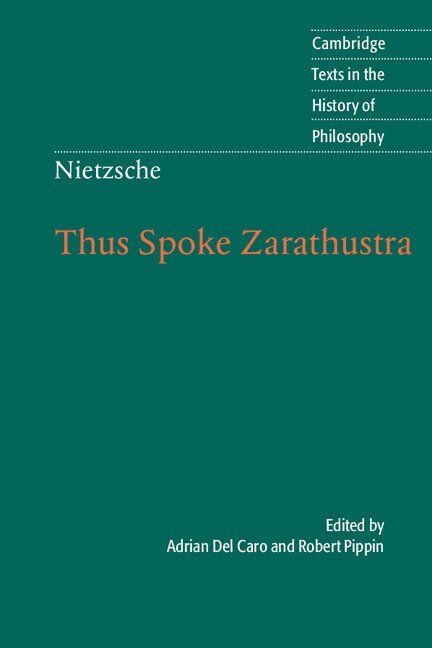
Nietzsche regarded 'Thus Spoke Zarathustra' as his most important work, and his story of the wandering Zarathustra has had enormous influence on subsequent culture. Nietzsche uses a mixture of homilies, parables, epigrams and dreams to introduce some of his most striking doctrines, including the Overman, nihilism, and the eternal return of the same. This edition offers a new translation by Adrian Del Caro which restores the original versification of Nietzsche's text and captures its poetic brilliance. Robert Pippin's introduction discusses many of the most important interpretative issues raised by the work, including who is Zarathustra and what kind of 'hero' is he and what is the philosophical significance of the work's literary form? The volume will appeal to all readers interested in one of the most original and inventive works of modern philosophy. - E-bokPDF, Engelska, 2001
310 kr
Läs direkt efter köp
Nietzsche wrote The Gay Science, which he later described as ''perhaps my most personal book'', when he was at the height of his intellectual powers, and the reader will find in it an extensive and sophisticated treatment of the philosophical themes and views which were most central to Nietzsche''s own thought and which have been most influential on later thinkers. These include the death of God, the problem of nihilism, the role of truth, falsity and the will-to-truth in human life, the doctrine of the eternal recurrence, and the question of the proper attitude to adopt toward human suffering and toward human achievement. This volume presents the work in a new translation by Josefine Nauckhoff, with an introduction by Bernard Williams that elucidates the work''s main themes and discusses their continuing philosophical importance. - E-bokPDF, Engelska, 2006
373 kr
Läs direkt efter köp
Nietzsche regarded ''Thus Spoke Zarathustra'' as his most important work, and his story of the wandering Zarathustra has had enormous influence on subsequent culture. Nietzsche uses a mixture of homilies, parables, epigrams and dreams to introduce some of his most striking doctrines, including the Overman, nihilism, and the eternal return of the same. This edition offers a new translation by Adrian Del Caro which restores the original versification of Nietzsche''s text and captures its poetic brilliance. Robert Pippin''s introduction discusses many of the most important interpretative issues raised by the work, including who is Zarathustra and what kind of ''hero'' is he and what is the philosophical significance of the work''s literary form? The volume will appeal to all readers interested in one of the most original and inventive works of modern philosophy. - Inbunden, Engelska, 2001
1 237 kr
Skickas inom 7-10 vardagar
Nietzsche wrote The Gay Science, which he later described as 'perhaps my most personal book', when he was at the height of his intellectual powers, and the reader will find in it an extensive and sophisticated treatment of the philosophical themes and views which were most central to Nietzsche's own thought and which have been most influential on later thinkers. These include the death of God, the problem of nihilism, the role of truth, falsity and the will-to-truth in human life, the doctrine of the eternal recurrence, and the question of the proper attitude to adopt toward human suffering and toward human achievement. This volume presents the work in a new translation by Josefine Nauckhoff, with an introduction by Bernard Williams that elucidates the work's main themes and discusses their continuing philosophical importance. - Inbunden, Engelska, 2006
1 228 kr
Skickas inom 7-10 vardagar
Nietzsche regarded 'Thus Spoke Zarathustra' as his most important work, and his story of the wandering Zarathustra has had enormous influence on subsequent culture. Nietzsche uses a mixture of homilies, parables, epigrams and dreams to introduce some of his most striking doctrines, including the Overman, nihilism, and the eternal return of the same. This edition offers a new translation by Adrian Del Caro which restores the original versification of Nietzsche's text and captures its poetic brilliance. Robert Pippin's introduction discusses many of the most important interpretative issues raised by the work, including who is Zarathustra and what kind of 'hero' is he and what is the philosophical significance of the work's literary form? The volume will appeal to all readers interested in one of the most original and inventive works of modern philosophy. - Inbunden, Engelska, 2015
2 313 kr
Skickas inom 7-10 vardagar
With the publication of Parerga and Paralipomena in 1851, there finally came some measure of the fame that Schopenhauer thought was his due. Described by Schopenhauer himself as 'incomparably more popular than everything up till now', Parerga is a miscellany of essays addressing themes that complement his work The World as Will and Representation, along with more divergent, speculative pieces. It includes essays on method, logic, the intellect, Kant, pantheism, natural science, religion, education, and language. The present volume offers a new translation, a substantial introduction explaining the context of the essays, and extensive editorial notes on the different published versions of the work. This readable and scholarly edition will be an essential reference for those studying Schopenhauer, the history of philosophy, and nineteenth-century German philosophy. - Inbunden, Engelska, 2023
1 029 kr
Skickas inom 7-10 vardagar
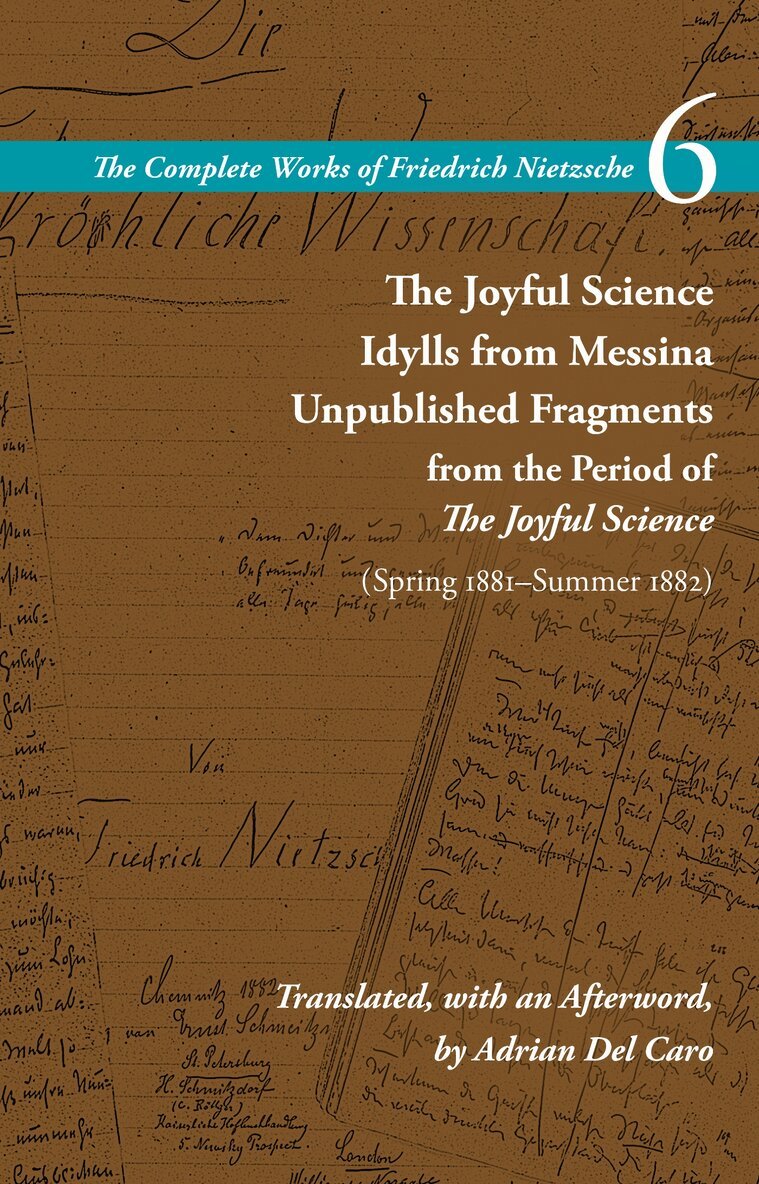
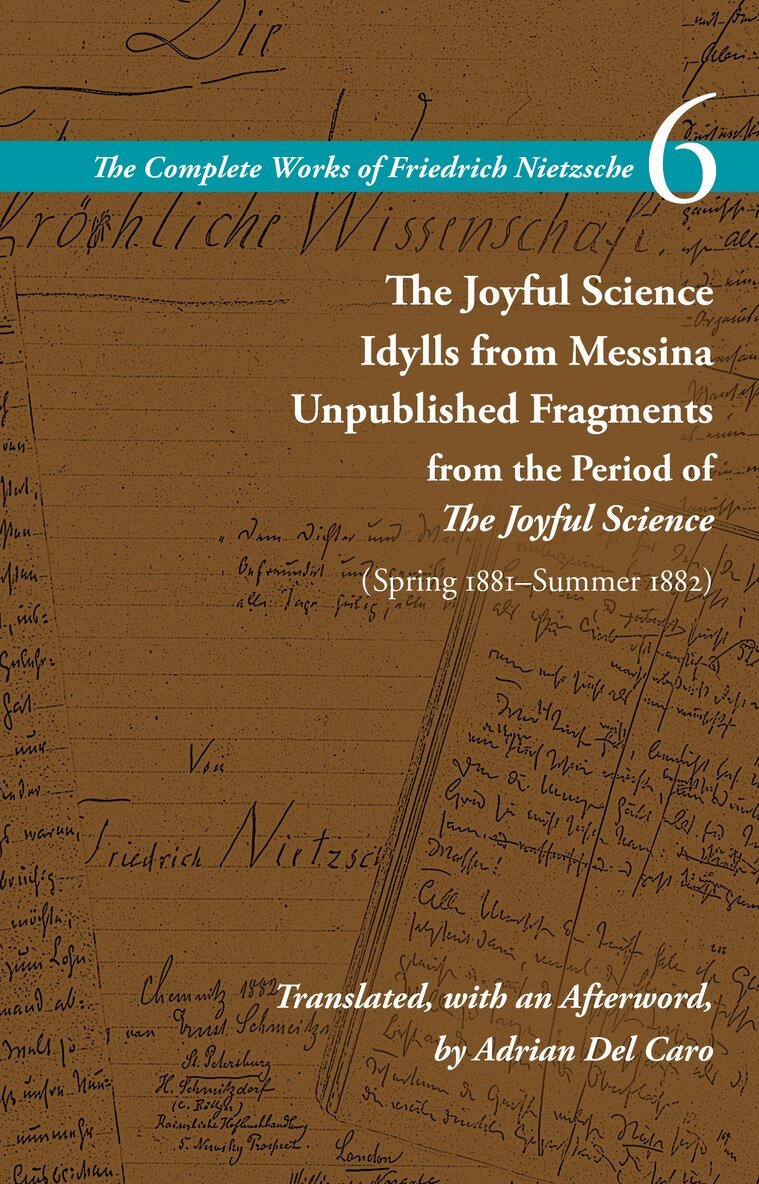
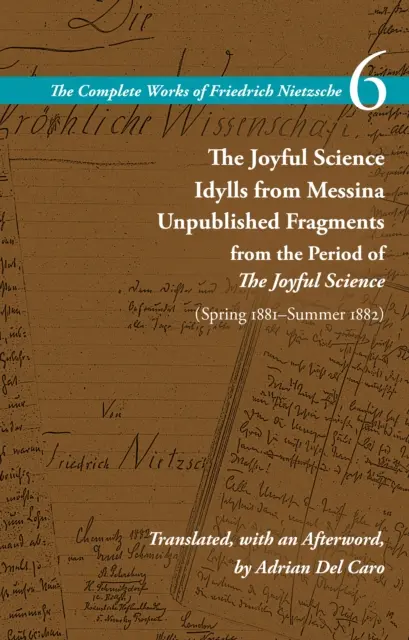
Written on the threshold of Thus Spoke Zarathustra during a high point of social, intellectual and psychic vibrancy, The Joyful Science (frequently translated as The Gay Science) is one of Nietzsche's thematically tighter books. Here he debuts and practices the art of amor fati, love of fate, to explore what is "species preserving" in relation to happiness (Book One); inspiration and the role of art as they keep us mentally fit for inhabiting a world dominated by science (Book Two); the challenges of living authentically and overcoming after the death of God (Book Three); and the crescendo of life affirmation in which Nietzsche revealed the doctrine of eternal recurrence and previewed the figure of Zarathustra (Book Four). Invigorated and motivated by Thus Spoke Zarathustra and Beyond Good and Evil, Nietzsche in 1887 added a new preface, an appendix of poems, and Book Five, where he deepened the critique of science and displayed a more genealogical approach. This volume provides the first English translation of the Idylls from Messina and, more importantly, it includes the first English translation of the notebooks of 1881–1882, in which Nietzsche first formulated the eternal recurrence. Structurally and stylistically, The Joyful Science remains Nietzsche's most effective book of aphorisms, immediately after which he took on the voice and alter ego of Zarathustra in order to push beyond the boundaries of even the most liberating prose. - E-bokEngelska, 2001
310 kr
Läs direkt efter köp
Nietzsche wrote The Gay Science, which he later described as ''perhaps my most personal book'', when he was at the height of his intellectual powers, and the reader will find in it an extensive and sophisticated treatment of the philosophical themes and views which were most central to Nietzsche''s own thought and which have been most influential on later thinkers. These include the death of God, the problem of nihilism, the role of truth, falsity and the will-to-truth in human life, the doctrine of the eternal recurrence, and the question of the proper attitude to adopt toward human suffering and toward human achievement. This volume presents the work in a new translation by Josefine Nauckhoff, with an introduction by Bernard Williams that elucidates the work''s main themes and discusses their continuing philosophical importance. - E-bokEngelska, 2006
373 kr
Läs direkt efter köp
Nietzsche regarded ''Thus Spoke Zarathustra'' as his most important work, and his story of the wandering Zarathustra has had enormous influence on subsequent culture. Nietzsche uses a mixture of homilies, parables, epigrams and dreams to introduce some of his most striking doctrines, including the Overman, nihilism, and the eternal return of the same. This edition offers a new translation by Adrian Del Caro which restores the original versification of Nietzsche''s text and captures its poetic brilliance. Robert Pippin''s introduction discusses many of the most important interpretative issues raised by the work, including who is Zarathustra and what kind of ''hero'' is he and what is the philosophical significance of the work''s literary form? The volume will appeal to all readers interested in one of the most original and inventive works of modern philosophy. - Häftad, Engelska, 2019
348 kr
Skickas inom 7-10 vardagar
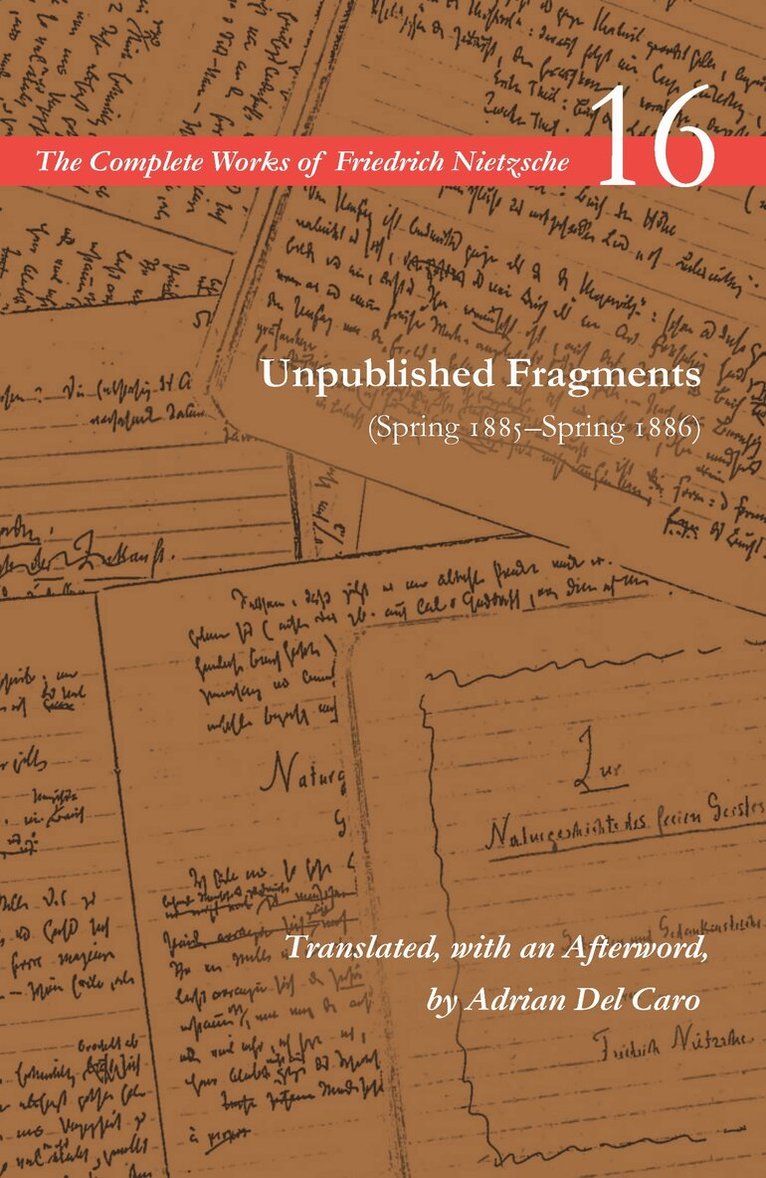
This volume of The Complete Works provides the first English translation of all Nietzsche's unpublished notes from April 1885 to the summer of 1886, the period in which he wrote his breakthrough philosophical books Beyond Good and Evil and On the Genealogy of Morality. Keen to reinvent himself after Thus Spoke Zarathustra, the philosopher used these unpublished notes to chart his search for a new philosophical voice. The notebooks contain copious drafts of book titles; critical retrospection on his earlier projects; a critique of the feminine; prophetic commentary on Germany; and forays into metaphysics, epistemology, ethics, aesthetics, and language. They also reveal his deep concern for Europe and its future and a burgeoning presence of the Dionysian. We learn what Nietzsche was reading and from whom he borrowed, and we find a considerable portion of notes and fragments from the non-book "Will to Power," though here they are unembellished and unmediated. Richly annotated and accompanied by a detailed translator's afterword, this landmark volume sheds light on the controversy surrounding the Nachlass of the 1880s. - E-bokEngelska, 2026
279 kr
Läs direkt efter köp
The year 1888 marked the last year of Friedrich Nietzsche's intellectual career and the culmination of his philosophical development. In that final productive year, he worked on six books, all of which are now, for the first time, presented in English in a single volume. Together these new translations provide a fundamental and complete introduction to Nietzsche's mature thought and to the virtuosity and versatility of his most fully developed style. The writings included here have a bold, sometimes radical tone that can be connected to Nietzsche's rising profile and growing confidence. In The Antichrist, we are offered an extended critique of Christianity and Christian morality alongside blunt diagnoses of contemporary Europe's cultural decadence. In Dionysus Dithyrambs we are presented with his only work composed exclusively of poetry, and in Twilight of the Idols we find a succinct summary of his mature philosophical views. At times the works are also openly personal, as in The Case of Wagner, which presents Nietzsche's attempt to settle accounts with his former close friend, German composer Richard Wagner, and in his provocative autobiography, Ecce Homo, which sees Nietzsche taking stock of his past and future while also reflecting on many of his earlier texts. Scrupulously edited, this critical volume also includes commentary by esteemed Nietzsche scholar Andreas Urs Sommer. Through this new collection, students and scholars are given an essential introduction to Nietzsche's late thought. - E-bokEngelska, 2026
335 kr
Läs direkt efter köp
This volume of The Complete Works provides the first English translation of all Nietzsche's unpublished notes from April 1885 to the summer of 1886, the period in which he wrote his breakthrough philosophical books Beyond Good and Evil and On the Genealogy of Morality. Keen to reinvent himself after Thus Spoke Zarathustra, the philosopher used these unpublished notes to chart his search for a new philosophical voice. The notebooks contain copious drafts of book titles; critical retrospection on his earlier projects; a critique of the feminine; prophetic commentary on Germany; and forays into metaphysics, epistemology, ethics, aesthetics, and language. They also reveal his deep concern for Europe and its future and a burgeoning presence of the Dionysian. We learn what Nietzsche was reading and from whom he borrowed, and we find a considerable portion of notes and fragments from the non-book "e;Will to Power,"e; though here they are unembellished and unmediated. Richly annotated and accompanied by a detailed translator's afterword, this landmark volume sheds light on the controversy surrounding the Nachlass of the 1880s. - Häftad, Engelska, 2023
298 kr
Skickas
Written on the threshold of Thus Spoke Zarathustra during a high point of social, intellectual and psychic vibrancy, The Joyful Science (frequently translated as The Gay Science) is one of Nietzsche's thematically tighter books. Here he debuts and practices the art of amor fati, love of fate, to explore what is "species preserving" in relation to happiness (Book One); inspiration and the role of art as they keep us mentally fit for inhabiting a world dominated by science (Book Two); the challenges of living authentically and overcoming after the death of God (Book Three); and the crescendo of life affirmation in which Nietzsche revealed the doctrine of eternal recurrence and previewed the figure of Zarathustra (Book Four). Invigorated and motivated by Thus Spoke Zarathustra and Beyond Good and Evil, Nietzsche in 1887 added a new preface, an appendix of poems, and Book Five, where he deepened the critique of science and displayed a more genealogical approach. This volume provides the first English translation of the Idylls from Messina and, more importantly, it includes the first English translation of the notebooks of 1881–1882, in which Nietzsche first formulated the eternal recurrence. Structurally and stylistically, The Joyful Science remains Nietzsche's most effective book of aphorisms, immediately after which he took on the voice and alter ego of Zarathustra in order to push beyond the boundaries of even the most liberating prose. - E-bokEngelska, 2026
364 kr
Läs direkt efter köp
Written on the threshold of Thus Spoke Zarathustra during a high point of social, intellectual and psychic vibrancy, The Joyful Science (frequently translated as The Gay Science) is one of Nietzsche's thematically tighter books. Here he debuts and practices the art of amor fati, love of fate, to explore what is "e;species preserving"e; in relation to happiness (Book One); inspiration and the role of art as they keep us mentally fit for inhabiting a world dominated by science (Book Two); the challenges of living authentically and overcoming after the death of God (Book Three); and the crescendo of life affirmation in which Nietzsche revealed the doctrine of eternal recurrence and previewed the figure of Zarathustra (Book Four). Invigorated and motivated by Thus Spoke Zarathustra and Beyond Good and Evil, Nietzsche in 1887 added a new preface, an appendix of poems, and Book Five, where he deepened the critique of science and displayed a more genealogical approach. This volume provides the first English translation of the Idylls from Messina and, more importantly, it includes the first English translation of the notebooks of 1881-1882, in which Nietzsche first formulated the eternal recurrence. Structurally and stylistically, The Joyful Science remains Nietzsche's most effective book of aphorisms, immediately after which he took on the voice and alter ego of Zarathustra in order to push beyond the boundaries of even the most liberating prose. - Inbunden, Engelska, 2021
1 197 kr
Tillfälligt slut
The year 1888 marked the last year of Friedrich Nietzsche's intellectual career and the culmination of his philosophical development. In that final productive year, he worked on six books, all of which are now, for the first time, presented in English in a single volume. Together these new translations provide a fundamental and complete introduction to Nietzsche's mature thought and to the virtuosity and versatility of his most fully developed style.The writings included here have a bold, sometimes radical tone that can be connected to Nietzsche's rising profile and growing confidence. In The Antichrist, we are offered an extended critique of Christianity and Christian morality alongside blunt diagnoses of contemporary Europe's cultural decadence. In Dionysus Dithyrambs we are presented with his only work composed exclusively of poetry, and in Twilight of the Idols we find a succinct summary of his mature philosophical views. At times the works are also openly personal, as in The Case of Wagner, which presents Nietzsche's attempt to settle accounts with his former close friend, German composer Richard Wagner, and in his provocative autobiography, Ecce Homo, which sees Nietzsche taking stock of his past and future while also reflecting on many of his earlier texts.Scrupulously edited, this critical volume also includes commentary by esteemed Nietzsche scholar Andreas Urs Sommer. Through this new collection, students and scholars are given an essential introduction to Nietzsche's late thought. - Inbunden, Engelska, 2019
1 483 kr
Tillfälligt slut
This volume of The Complete Works provides the first English translation of all Nietzsche's unpublished notes from April 1885 to the summer of 1886, the period in which he wrote his breakthrough philosophical books Beyond Good and Evil and On the Genealogy of Morality. Keen to reinvent himself after Thus Spoke Zarathustra, the philosopher used these unpublished notes to chart his search for a new philosophical voice. The notebooks contain copious drafts of book titles; critical retrospection on his earlier projects; a critique of the feminine; prophetic commentary on Germany; and forays into metaphysics, epistemology, ethics, aesthetics, and language. They also reveal his deep concern for Europe and its future and a burgeoning presence of the Dionysian. We learn what Nietzsche was reading and from whom he borrowed, and we find a considerable portion of notes and fragments from the non-book "Will to Power," though here they are unembellished and unmediated. Richly annotated and accompanied by a detailed translator's afterword, this landmark volume sheds light on the controversy surrounding the Nachlass of the 1880s.