• Fri frakt över 249 kr
  • •
  • Snabba leveranser
  • •
  • Billiga böcker
Kundservice

Du är på sajten för privatpersoner.

Företag, bibliotek eller offentlig verksamhet?

Du handlar på classic.bokus.com, där alla dina funktioner finns intakta.
Till classic.bokus.com
Bokus logotyp. Gå till startsidan.
  • Erbjudanden
  • Nyheter
  • Student
  • Topplistor
  • Barn & ungdom
  • Bokus Play
  • E-böcker
  • Pocketböcker
  • Spel & pussel

10% studentrabatt med kod TERM26

Sidfot

Mina sidor

    Hjälp

    • Kundservice
    • Vanliga frågor och svar
    • Frakt och leverans
    • Retur vid ångerrätt
    • Reklamera vara
    • Betalning
    • Köpvillkor
    • Allmänna villkor
    • Information om webbplatsens tillgänglighet

    Om Bokus

    • Om oss
    • Pressrum
    • För studenter
    • För företag
    • För bibliotek och offentlig verksamhet
    • För leverantörer
    • Hållbarhet

    Populärt

    • Aktuella erbjudanden
    • Presentkort
    • Studentlitteratur
    • Nya böcker
    • Topplistor
    • Signerade böcker
    • Engelska böcker

    Inspiration

    • Boktips
    • BookTok
    • Populära bokserier
    • Barnbokskaraktärer
    • Populära författare
    Logotyp för Bokus
    Följ oss på Facebook (extern länk)Följ oss på Instagram (extern länk)Följ oss på YouTube (extern länk)Följ oss på TikTok (extern länk)
    bokus @ CookiesAnpassa cookiesIntegritetspolicyKöpvillkor
    Till Citymail hemsida (extern länk)Till Budbee hemsida (extern länk)Till Postnord hemsida (extern länk)Till Schenker hemsida (extern länk)Till Early Bird hemsida (extern länk)Till Walleys hemsida (extern länk)
    1. Naturvetenskap och teknik
    2. Matematik och naturvetenskap
    3. Biologi

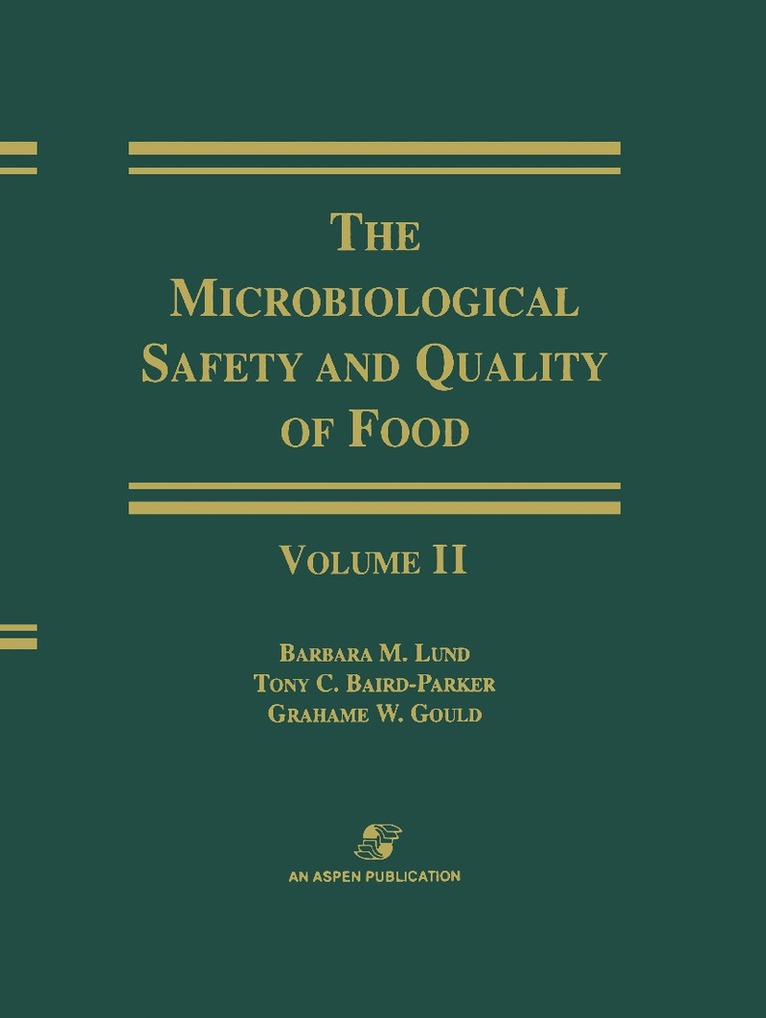
    Microbiological Safety and Quality of Food

    AvBarbara Lund,Anthony C. Baird-Parker

    Aspen Publishers Inc.,U.S.

    1999

    6 404 kr

    Beställningsvara. Skickas inom 10-15 vardagar. Fri frakt över 249 kr.

    Beskrivning

    This authoritative two-volume reference provides valuable, necessary information on the principles underlying the production of microbiologically safe and stable foods. The work begins with an overview and then addresses four major areas: 'Principles and application of food preservation techniques' covers the specific techniques that defeat growth of harmful microorganisms, how those techniques work, how they are used, and how their effectiveness is measured. 'Microbial ecology of different types of food' provides a food-by-food accounting of food composition, naturally occurring microflora, effects of processing, how spoiling can occur, and preservation. 'Foodborne pathogens' profiles the most important and the most dangerous microorganisms that can be found in foods, including bacteria, viruses, parasites, mycotoxins, and 'mad cow disease.' The section also looks at the economic aspects and long-term consequences of foodborne disease. 'Assurance of the microbiological safety and quality of foods' scrutinizes all aspects of quality assurance, including HACCP, hygienic factory design, methods of detecting organisms, risk assessment, legislation, and the design and accreditation of food microbiology laboratories. Tables, photographs, illustrations, chapter-by-chapter references, and a thorough index complete each volume. This reference is of value to all academic, research, industrial and laboratory libraries supporting food programs; and all institutions involved in food safety, microbiology and food microbiology, quality assurance and assessment, food legislation, and generally food science and technology.

    Produktinformation

    • Märke:Aspen Publishers Inc.,U.S.
    • Utgivningsdatum:1999-12-31
    • Höjd:210 x 279 x 122 mm
    • Vikt:5 489 g
    • Språk:Engelska
    • Antal sidor:2 024
    • Upplaga:2000
    • Förlag:Aspen Publishers Inc.,U.S.
    • EAN:9780834213234

    Utforska kategorier

    • Biologi inom Naturvetenskap och teknik
    • Tillverkningsteknik inom Naturvetenskap och teknik

    Innehållsförteckning

    • Principles And Application Of Food Preservation Techniques: Production Of Microbiologically Safe And Stable Foods. Strategies for Food Preservation. Heat Treatment. Irradiation. Chill Storage. Freezing. Drying and Reduction of Water Activity. Control of PH and Use of Organic Acids. The Use of Other Chemical Preservatives: Sulfite and Nitrite. Modified Atmospheres. The Effect of Redox Potential. Microorganisms and Their Products in the Preservation of Foods. New and Emerging Physical Methods of Preservation. Use of Combined Preservative Factors in Foods of Developing Countries. Injured Bacteria. Principles and Application of Predictive Modeling of the Effects of Preservative Factors on Microorganisms. MICROBIAL ECOLOGY OF DIFFERENT TYPES OF FOOD. Fresh Red Meats. Processed Meat Products. Fermented Meats. Fresh and Further-Processed Poultry. Fresh and Processed Fish and Shellfish. Milk and Unfermented Milk Products. Fermented Milk Products. Eggs and EggProducts. Fresh and Processed Vegetables. Fermented and Acidified Plant Foods. Fresh and Processed Fruits. Cereals and Cereal Products. Yellow-Fat Products. Mayonnaise, Dressings, Mustard, Mayonnaise-Based Salads and Acid Sauces. Fruit Juices, Fruit Drinks, and Soft Drinks. Bottled Water. Spices and Herbs. Nuts and Nut Products. Sugar, Honey, Cocoa, Chocolate and Confectionery Products. Teas, Herbal Teas and Coffee. FOODBORNE PATHOGENS. Surveillance of Foodborne Disease. The Aeromonas Hydrophila Group. Bactillus Spp. Campylobacter. Clostridium Botulinum. Clostridium Perfringens. Escherichia Coli. Listeria Monocytogenes. Salmonella. Shigella. Staphyloccus Aureus. Vibrio Spp. Yersinia Spp. Less Recognized and Suspected foodborne Bacterial Pathogens. Protozoa. Foodborne Viruses. Toxigenic Fungi And Mycotoxins. Fish and Shellfish Poisoning. Long-Term Consequences of Foodborne Disease. Economic Costs of Foodborne Disease. Transmissible Spongiform Encephalopathies. ASSURANCE OF THE MICROBIOLOGICAL SAFETY AND QUALITY OF FOODS. Good Manufacturing Practice, HACCP and Quality Systems. Hygienic Design o Factories and Equipment. Sampling for Microbiological Analysis. Detection of Microorganisms in Foods: Principles of Methods for Separation and Associated Chemical and Enzymological Methods of Detection. Detection of Microorganisms in Foods: Principles of Culture Methods. Detection of Microrganisms in Foods: Principles and Application of Immunological Techniques. Principles and Application of Genetic Techniques for Detection, Identification and Subtyping of Food-Associated, Pathogenic Microorganisms. Risk and Microbiological Criteria