• Fri frakt över 249 kr
  • •
  • Snabba leveranser
  • •
  • Billiga böcker
Kundservice

Du är på sajten för privatpersoner.

Företag, bibliotek eller offentlig verksamhet?

Du handlar på classic.bokus.com, där alla dina funktioner finns intakta.
Till classic.bokus.com
Bokus logotyp. Gå till startsidan.
  • Erbjudanden
  • Student
  • Topplistor
  • Barn & ungdom
  • Bokus Play
  • E-böcker
  • Ljudböcker
  • Pocketböcker
  • Spel och pussel

Pocketfynda! Hundratals böcker för 49 kr/st →

Sidfot

Mina sidor

    Hjälp

    • Kundservice
    • Vanliga frågor och svar
    • Frakt och leverans
    • Retur vid ångerrätt
    • Reklamera vara
    • Betalning
    • Köpvillkor
    • Allmänna villkor
    • Information om webbplatsens tillgänglighet

    Om Bokus

    • Om oss
    • Pressrum
    • För studenter
    • För företag
    • För bibliotek och offentlig verksamhet
    • För leverantörer
    • Hållbarhet

    Populärt

    • Aktuella erbjudanden
    • Presentkort
    • Studentlitteratur
    • Nya böcker
    • Topplistor
    • Signerade böcker
    • Engelska böcker

    Inspiration

    • Boktips
    • BookTok
    • Barnbokskaraktärer
    • Populära författare
    Logotyp för Bokus
    Följ oss på Facebook (extern länk)Följ oss på Instagram (extern länk)Följ oss på YouTube (extern länk)Följ oss på TikTok (extern länk)
    bokus @ CookiesAnpassa cookiesIntegritetspolicyKöpvillkor
    Till Citymail hemsida (extern länk)Till Budbee hemsida (extern länk)Till Postnord hemsida (extern länk)Till Schenker hemsida (extern länk)Till Early Bird hemsida (extern länk)Till Walleys hemsida (extern länk)
    1. Medicin
    2. Andra medicinska specialiteter
    3. Rättsmedicin

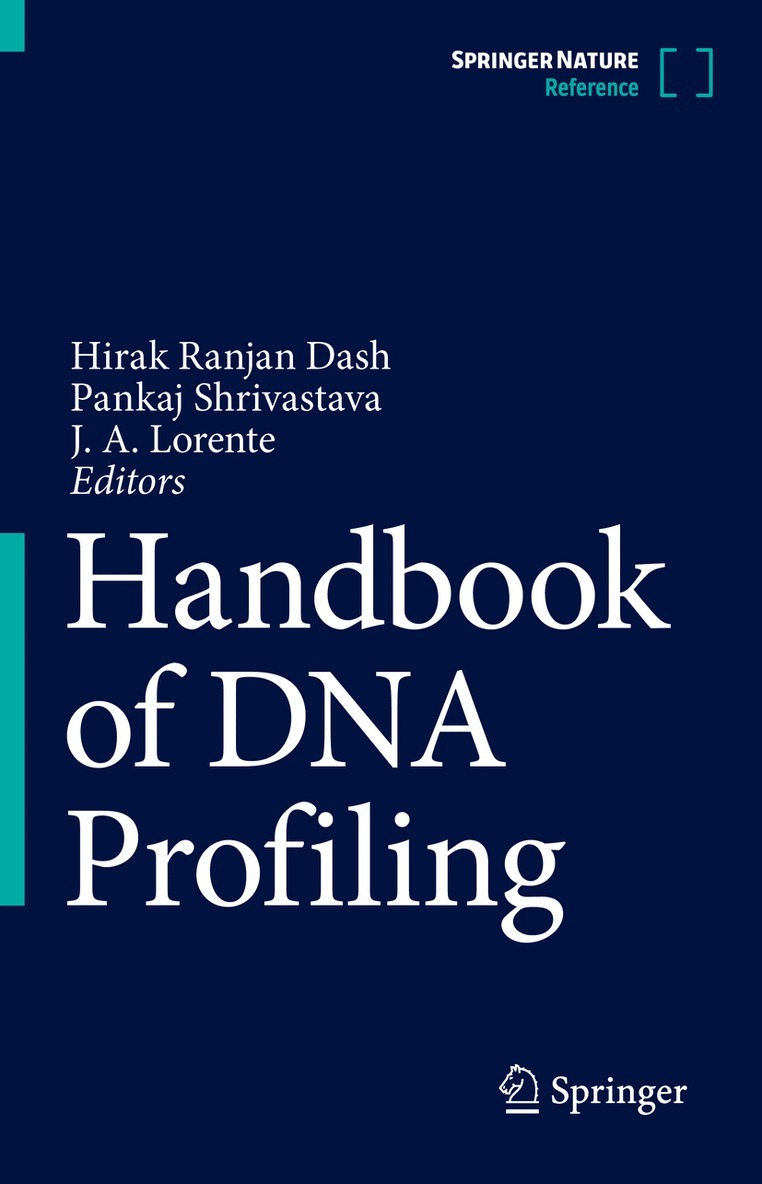
    Handbook of DNA Profiling

    AvHirak Ranjan Dash,Pankaj Shrivastava

    Springer Verlag, Singapore

    2022

    Del i serien Handbook of DNA Profiling

    7 812 kr

    Beställningsvara. Skickas inom 10-15 vardagar. Fri frakt över 249 kr.

    Beskrivning

    This reference book comprehensively reviews the significance of DNA technology in forensic science. After presenting the theory, basic principles, tools and techniques that are used in forensic DNA typing, it summarizes various techniques, including autosomal STR, Y-STR, X-STR, mitochondrial DNA and NGS, used in solving both criminal as and civil cases, such as paternity disputes, identification of mutilated remains, and culprit identification in sexual assault and murder cases. It also provides an overview of DNA-based genetic diagnostics for various diseases, and discusses the role of DNA typing in drug reactions, as well as the application of non-human DNA profiling of animals and plants in forensic science investigations. Lastly, the book examines the role of internal quality control in maintaining the high quality of DNA profiling.

    Produktinformation

    • Märke:Springer Verlag, Singapore
    • Utgivningsdatum:2022-04-15
    • Höjd:155 x 235 x 74 mm
    • Vikt:2 423 g
    • Språk:Engelska
    • Serie:Handbook of DNA Profiling
    • Antal sidor:1 206
    • Förlag:Springer Verlag, Singapore
    • EAN:9789811643170

    Utforska kategorier

    • Rättsmedicin inom Medicin
    • Biovetenskap inom Naturvetenskap och teknik
    • Biologi inom Naturvetenskap och teknik

    Mer om författaren

    Dr. Hirak Ranjan Dash is currently working as an Assistant Professor of Forensic Biology and Biotechnology at the National Forensic Sciences University, Delhi Campus, India. Besides teaching and research, he is actively involved in conducting training programs to various beneficiaries of forensic science. Before joining academics, he served as a forensic DNA expert at Madhya Pradesh Forensic Science Laboratory, India, for over 6 years. He has an experience of conducting DNA examination in more than 1500 complicated cases. He has completed his Ph.D. from the Department of Life Science, National Institute of Technology, Rourkela, India, He received his M.Sc. in Microbiology from Orissa University of Agriculture and Technology, Odisha, India. His research interests include forensic microbiology, thanatomicrobiome analysis, molecular microbiology, DNA fingerprinting, and genetic manipulation. He is one of the pioneers in India to work on NGS technology-based forensic DNA analysis. He has written 8 books and published 50 research papers, 14 book chapters, 12 conference proceedings, and 4 popular science articles.Dr. Pankaj Shrivastava received his Ph.D. in microbiology with a specialization in biotechnology from the Department of Biological Science, Rani Durgawati University, Jabalpur, Madhya Pradesh, India. He is in charge of the Forensic DNA Fingerprinting facility of the Govt. of Madhya Pradesh, India at Sagar. Dr. Shrivastava has more than 13 years of experience as a bench worker for examining and reporting a wide range of criminal cases using DNA technology and deposing the court evidence. His research interests include population DNA database, improvement of xv methods in forensic DNA typing, finding rapid protocols for the technology, and microbial forensics. He is a two-time recipient of the prestigious Pt. Govind Vallabh Pant Award from the Bureau of Police Research and Development, Ministry of Home Affairs, Govt. of India, and a recipient of the Anusrajan Award from AIISECT University, Bhopal, for his authored books. Dr. Shrivastava is also a recipient of the FICCI Smart Policing award for developing a fast DNA-typing protocol. He is a visiting faculty at many universities, police training institutes, and judicial officers training institutes. Dr. Shrivastava has written 13 books and published 65 research papers in journals of repute in forensic science, 21 book chapters, 84 conference proceedings, and 15 popular science articles.J. A. Lorente is Professor of Forensic Medicine at the University of Granada, Spain. After graduating from the Faculty of Medicine of Granada in 1985, he completed his Ph.D. (Honors) in medicine and surgery at the University of Granada, in 1989. Dr. Lorente has published over 170 peer-reviewed papers and several books and book chapters. He has a special focus on the use of DNA and its application to human rights (he launched the first-ever database to identify missing people, the Spanish Phoenix Program, back in 1999); he also created and launched the DNA-PROKIDS Program in 2004, and the DNA-Pro-ORGAN Program in 2016. His areas of interest in forensics also deal with population variability and analysis of old and ancient DNA samples and databases expansion and control. Dr. Lorente is also actively working in medical genomics, and he is the scientific director of the Center for Genomics and Oncological Research (GENYO), where his team focuses on liquid biopsy and cancer interception. Dr. Lorente is the founder and first president of the AICEF (Ibero-Latin American Network of Forensic Sciences) and an honorary member of the AFSN (Asian Forensic Sciences Network).

    Innehållsförteckning

    • Module 1._Principles of forensic DNA typing.- Module 2._Usefulness of various techniques of DNA typing in solving cases.-  Module 3._Varied nature of cases solved by DNA typing.- Module 4._DNA analysis in disease diagnosis.- Module 5._Modifications in routine methodologies to solve challenging cases.- Module 6._Non-human Case studies.- Module 7._Quality control and Challenges in forensic DNA analysis.