

Inbunden, Engelska, 2015
1 667 kr
Skickas inom 3-6 vardagar
1 667 kr
Skickas inom 3-6 vardagar
973 kr
Läs direkt efter köp

809 kr
Skickas inom 3-6 vardagar

669 kr
Skickas inom 5-8 vardagar

1 667 kr
Skickas inom 3-6 vardagar
404 kr
Läs direkt efter köp
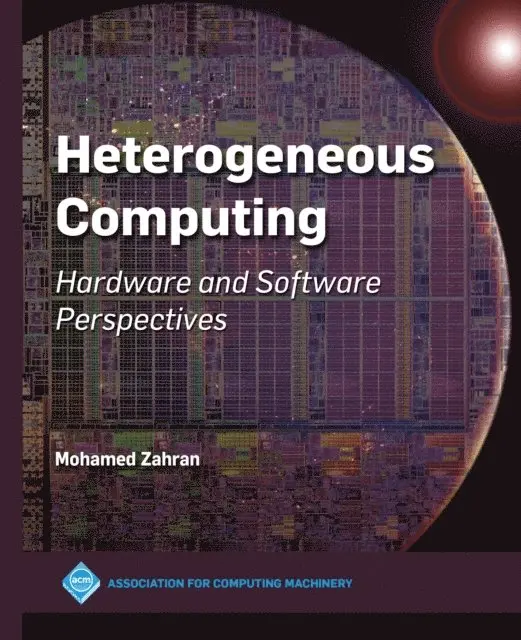
If you look around you will find that all computer systems, from your portable devices to the strongest supercomputers, are heterogeneous in nature.
The most obvious heterogeneity is the existence of computing nodes of different capabilities (e.g. multicore, GPUs, FPGAs, …). But there are also other heterogeneity factors that exist in computing systems, like the memory system components, interconnection, etc. The main reason for these different types of heterogeneity is to have good performance with power efficiency.
Heterogeneous computing results in both challenges and opportunities. This book discusses both. It shows that we need to deal with these challenges at all levels of the computing stack: from algorithms all the way to process technology. We discuss the topic of heterogeneous computing from different angles: hardware challenges, current hardware state-of-the-art, software issues, how to make the best use of the current heterogeneous systems, and what lies ahead.
The aim of this book is to introduce the big picture of heterogeneous computing. Whether you are a hardware designer or a software developer, you need to know how the pieces of the puzzle fit together. The main goal is to bring researchers and engineers to the forefront of the research frontier in the new era that started a few years ago and is expected to continue for decades. We believe that academics, researchers, practitioners, and students will benefit from this book and will be prepared to tackle the big wave of heterogeneous computing that is here to stay.
423 kr
Läs direkt efter köp
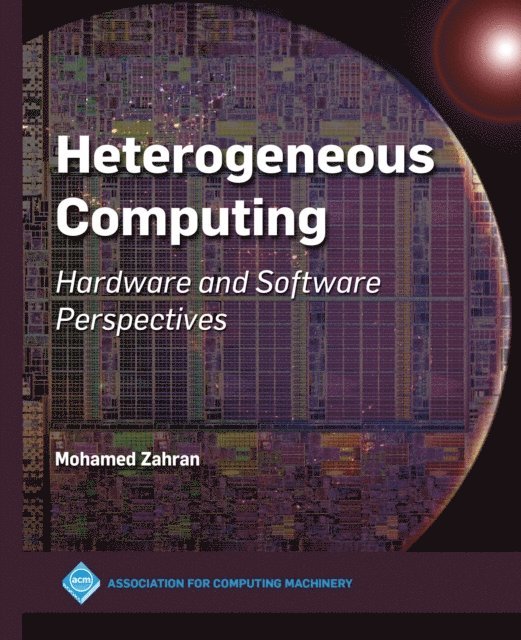
If you look around you will find that all computer systems, from your portable devices to the strongest supercomputers, are heterogeneous in nature.
The most obvious heterogeneity is the existence of computing nodes of different capabilities (e.g. multicore, GPUs, FPGAs, …). But there are also other heterogeneity factors that exist in computing systems, like the memory system components, interconnection, etc. The main reason for these different types of heterogeneity is to have good performance with power efficiency.
Heterogeneous computing results in both challenges and opportunities. This book discusses both. It shows that we need to deal with these challenges at all levels of the computing stack: from algorithms all the way to process technology. We discuss the topic of heterogeneous computing from different angles: hardware challenges, current hardware state-of-the-art, software issues, how to make the best use of the current heterogeneous systems, and what lies ahead.
The aim of this book is to introduce the big picture of heterogeneous computing. Whether you are a hardware designer or a software developer, you need to know how the pieces of the puzzle fit together. The main goal is to bring researchers and engineers to the forefront of the research frontier in the new era that started a few years ago and is expected to continue for decades. We believe that academics, researchers, practitioners, and students will benefit from this book and will be prepared to tackle the big wave of heterogeneous computing that is here to stay.
729 kr
Läs direkt efter köp
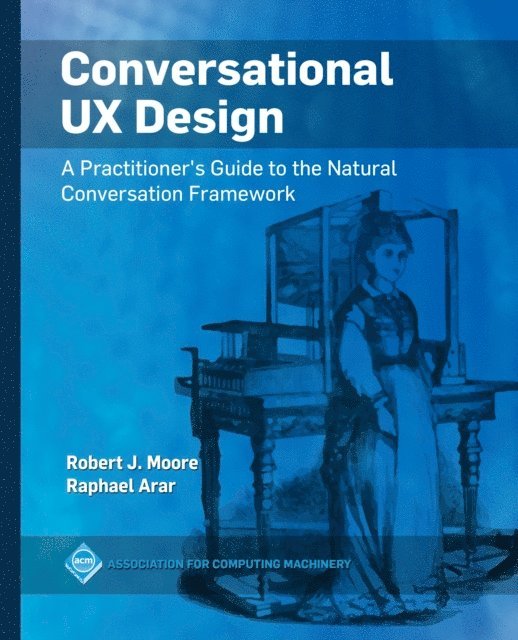
With recent advances in natural language understanding techniques and far-field microphone arrays, natural language interfaces, such as voice assistants and chatbots, are emerging as a popular new way to interact with computers.
They have made their way out of the industry research labs and into the pockets, desktops, cars and living rooms of the general public. But although such interfaces recognize bits of natural language, and even voice input, they generally lack conversational competence, or the ability to engage in natural conversation. Today’s platforms provide sophisticated tools for analyzing language and retrieving knowledge, but they fail to provide adequate support for modeling interaction. The user experience (UX) designer or software developer must figure out how a human conversation is organized, usually relying on commonsense rather than on formal knowledge. Fortunately, practitioners can rely on conversation science.
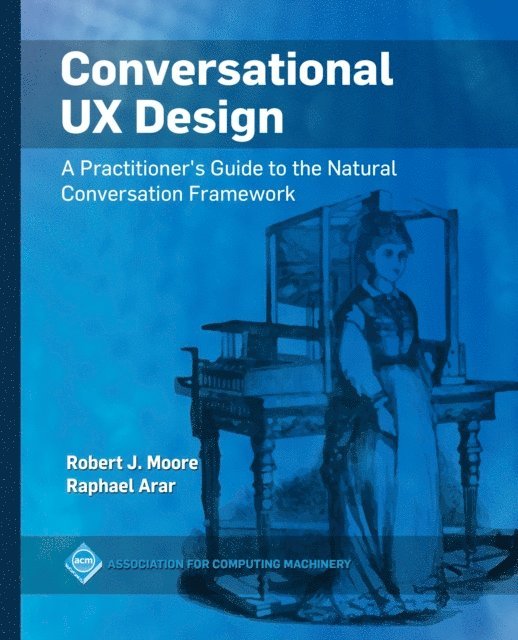
This book adapts formal knowledge from the field of Conversation Analysis (CA) to the design of natural language interfaces. It outlines the Natural Conversation Framework (NCF), developed at IBM Research, a systematic framework for designing interfaces that work like natural conversation. The NCF consists of four main components: 1) an interaction model of “expandable sequences,” 2) a corresponding content format, 3) a pattern language with 100 generic UX patterns and 4) a navigation method of six basic user actions. The authors introduce UX designers to a new way of thinking about user experience design in the context of conversational interfaces, including a new vocabulary, new principles and new interaction patterns. User experience designers and graduate students in the HCI field as well as developers and conversation analysis students should find this book of interest.
755 kr
Läs direkt efter köp
With recent advances in natural language understanding techniques and far-field microphone arrays, natural language interfaces, such as voice assistants and chatbots, are emerging as a popular new way to interact with computers.
They have made their way out of the industry research labs and into the pockets, desktops, cars and living rooms of the general public. But although such interfaces recognize bits of natural language, and even voice input, they generally lack conversational competence, or the ability to engage in natural conversation. Today’s platforms provide sophisticated tools for analyzing language and retrieving knowledge, but they fail to provide adequate support for modeling interaction. The user experience (UX) designer or software developer must figure out how a human conversation is organized, usually relying on commonsense rather than on formal knowledge. Fortunately, practitioners can rely on conversation science.
This book adapts formal knowledge from the field of Conversation Analysis (CA) to the design of natural language interfaces. It outlines the Natural Conversation Framework (NCF), developed at IBM Research, a systematic framework for designing interfaces that work like natural conversation. The NCF consists of four main components: 1) an interaction model of “expandable sequences,” 2) a corresponding content format, 3) a pattern language with 100 generic UX patterns and 4) a navigation method of six basic user actions. The authors introduce UX designers to a new way of thinking about user experience design in the context of conversational interfaces, including a new vocabulary, new principles and new interaction patterns. User experience designers and graduate students in the HCI field as well as developers and conversation analysis students should find this book of interest.
686 kr
Läs direkt efter köp
This is an overview of the end-to-end data cleaning process. Data quality is one of the most important problems in data management, since dirty data often leads to inaccurate data analytics results and incorrect business decisions.
Poor data across businesses and the U.S. government are reported to cost trillions of dollars a year. Multiple surveys show that dirty data is the most common barrier faced by data scientists. Not surprisingly, developing effective and efficient data cleaning solutions is challenging and is rife with deep theoretical and engineering problems. This book is about data cleaning, which is used to refer to all kinds of tasks and activities to detect and repair errors in the data. Rather than focus on a particular data cleaning task, this book describes various error detection and repair methods, and attempts to anchor these proposals with multiple taxonomies and views. Specifically, it covers four of the most common and important data cleaning tasks, namely, outlier detection, data transformation, error repair (including imputing missing values), and data deduplication. Furthermore, due to the increasing popularity and applicability of machine learning techniques, it includes a chapter that specifically explores how machine learning techniques are used for data cleaning, and how data cleaning is used to improve machine learning models.
This book is intended to serve as a useful reference for researchers and practitioners who are interested in the area of data quality and data cleaning. It can also be used as a textbook for a graduate course. Although we aim at covering state-of-the-art algorithms and techniques, we recognize that data cleaning is still an active field of research and therefore provide future directions of research whenever appropriate.
755 kr
Läs direkt efter köp
This is an overview of the end-to-end data cleaning process. Data quality is one of the most important problems in data management, since dirty data often leads to inaccurate data analytics results and incorrect business decisions.
Poor data across businesses and the U.S. government are reported to cost trillions of dollars a year. Multiple surveys show that dirty data is the most common barrier faced by data scientists. Not surprisingly, developing effective and efficient data cleaning solutions is challenging and is rife with deep theoretical and engineering problems. This book is about data cleaning, which is used to refer to all kinds of tasks and activities to detect and repair errors in the data. Rather than focus on a particular data cleaning task, this book describes various error detection and repair methods, and attempts to anchor these proposals with multiple taxonomies and views. Specifically, it covers four of the most common and important data cleaning tasks, namely, outlier detection, data transformation, error repair (including imputing missing values), and data deduplication. Furthermore, due to the increasing popularity and applicability of machine learning techniques, it includes a chapter that specifically explores how machine learning techniques are used for data cleaning, and how data cleaning is used to improve machine learning models.
This book is intended to serve as a useful reference for researchers and practitioners who are interested in the area of data quality and data cleaning. It can also be used as a textbook for a graduate course. Although we aim at covering state-of-the-art algorithms and techniques, we recognize that data cleaning is still an active field of research and therefore provide future directions of research whenever appropriate.
1 041 kr
Läs direkt efter köp
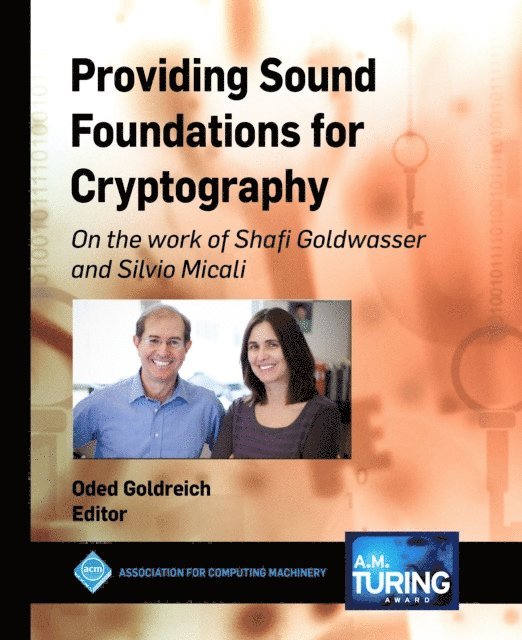
Cryptography is concerned with the construction of schemes that withstand any abuse.
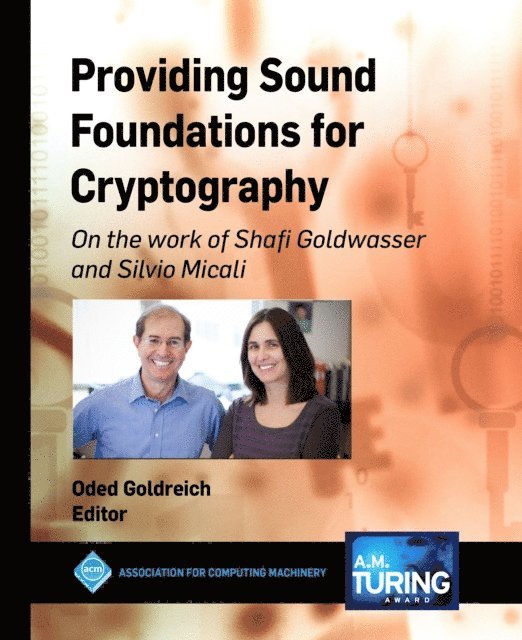
A cryptographic scheme is constructed so as to maintain a desired functionality, even under malicious attempts aimed at making it deviate from its prescribed behavior. The design of cryptographic systems must be based on firm foundations, whereas ad hoc approaches and heuristics are a very dangerous way to go. These foundations were developed mostly in the 1980s, in works that are all co-authored by Shafi Goldwasser and/or Silvio Micali. These works have transformed cryptography from an engineering discipline, lacking sound theoretical foundations, into a scientific field possessing a well-founded theory, which influences practice as well as contributes to other areas of theoretical computer science.
This book celebrates these works, which were the basis for bestowing the 2012 A.M. Turing Award upon Shafi Goldwasser and Silvio Micali. A significant portion of this book reproduces some of these works, and another portion consists of scientific perspectives by some of their former students. The highlight of the book is provided by a few chapters that allow the readers to meet Shafi and Silvio in person. These include interviews with them, their biographies and their Turing Award lectures.
1 050 kr
Läs direkt efter köp
Cryptography is concerned with the construction of schemes that withstand any abuse.
A cryptographic scheme is constructed so as to maintain a desired functionality, even under malicious attempts aimed at making it deviate from its prescribed behavior. The design of cryptographic systems must be based on firm foundations, whereas ad hoc approaches and heuristics are a very dangerous way to go. These foundations were developed mostly in the 1980s, in works that are all co-authored by Shafi Goldwasser and/or Silvio Micali. These works have transformed cryptography from an engineering discipline, lacking sound theoretical foundations, into a scientific field possessing a well-founded theory, which influences practice as well as contributes to other areas of theoretical computer science.
This book celebrates these works, which were the basis for bestowing the 2012 A.M. Turing Award upon Shafi Goldwasser and Silvio Micali. A significant portion of this book reproduces some of these works, and another portion consists of scientific perspectives by some of their former students. The highlight of the book is provided by a few chapters that allow the readers to meet Shafi and Silvio in person. These include interviews with them, their biographies and their Turing Award lectures.
815 kr
Läs direkt efter köp
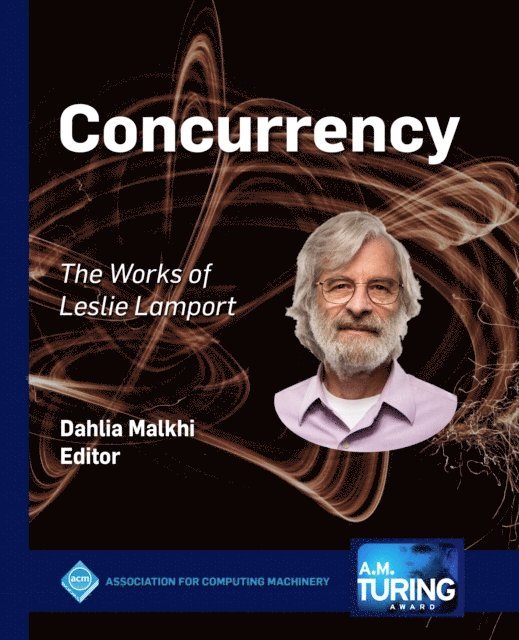
This book is a celebration of Leslie Lamport''s work on concurrency, interwoven in four-and-a-half decades of an evolving industry: from the introduction of the first personal computer to an era when parallel and distributed multiprocessors are abundant.
His works lay formal foundations for concurrent computations executed by interconnected computers. Some of the algorithms have become standard engineering practice for fault tolerant distributed computing – distributed systems that continue to function correctly despite failures of individual components. He also developed a substantial body of work on the formal specification and verification of concurrent systems, and has contributed to the development of automated tools applying these methods.
Part I consists of technical chapters of the book and a biography. The technical chapters of this book present a retrospective on Lamport''s original ideas from experts in the field. Through this lens, it portrays their long-lasting impact. The chapters cover timeless notions Lamport introduced: the Bakery algorithm, atomic shared registers and sequential consistency; causality and logical time; Byzantine Agreement; state machine replication and Paxos; temporal logic of actions (TLA). The professional biography tells of Lamport''s career, providing the context in which his work arose and broke new grounds, and discusses LaTeX – perhaps Lamport’s most influential contribution outside the field of concurrency. This chapter gives a voice to the people behind the achievements, notably Lamport himself, and additionally the colleagues around him, who inspired, collaborated, and helped him drive worldwide impact. Part II consists of a selection of Leslie Lamport''s most influential papers.
This book touches on a lifetime of contributions by Leslie Lamport to the field of concurrency and on the extensive influence he had on people working in the field. It will be of value to historians of science, and to researchers and students who work in the area of concurrency and who are interested to read about the work of one of the most influential researchers in this field.
847 kr
Läs direkt efter köp
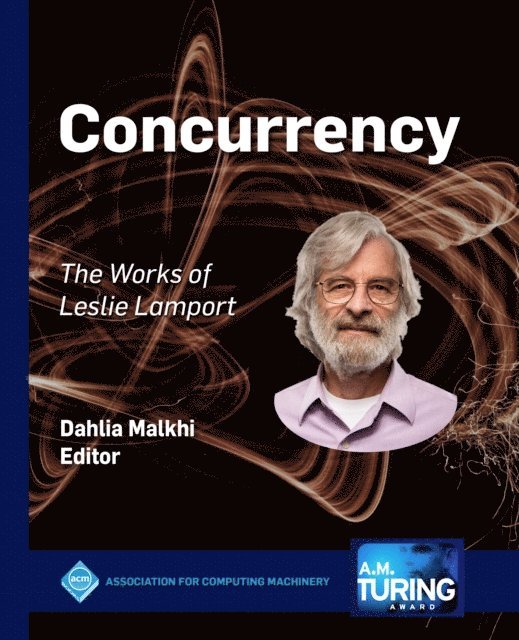
This book is a celebration of Leslie Lamport''s work on concurrency, interwoven in four-and-a-half decades of an evolving industry: from the introduction of the first personal computer to an era when parallel and distributed multiprocessors are abundant.
His works lay formal foundations for concurrent computations executed by interconnected computers. Some of the algorithms have become standard engineering practice for fault tolerant distributed computing – distributed systems that continue to function correctly despite failures of individual components. He also developed a substantial body of work on the formal specification and verification of concurrent systems, and has contributed to the development of automated tools applying these methods.
Part I consists of technical chapters of the book and a biography. The technical chapters of this book present a retrospective on Lamport''s original ideas from experts in the field. Through this lens, it portrays their long-lasting impact. The chapters cover timeless notions Lamport introduced: the Bakery algorithm, atomic shared registers and sequential consistency; causality and logical time; Byzantine Agreement; state machine replication and Paxos; temporal logic of actions (TLA). The professional biography tells of Lamport''s career, providing the context in which his work arose and broke new grounds, and discusses LaTeX – perhaps Lamport’s most influential contribution outside the field of concurrency. This chapter gives a voice to the people behind the achievements, notably Lamport himself, and additionally the colleagues around him, who inspired, collaborated, and helped him drive worldwide impact. Part II consists of a selection of Leslie Lamport''s most influential papers.
This book touches on a lifetime of contributions by Leslie Lamport to the field of concurrency and on the extensive influence he had on people working in the field. It will be of value to historians of science, and to researchers and students who work in the area of concurrency and who are interested to read about the work of one of the most influential researchers in this field.
423 kr
Läs direkt efter köp
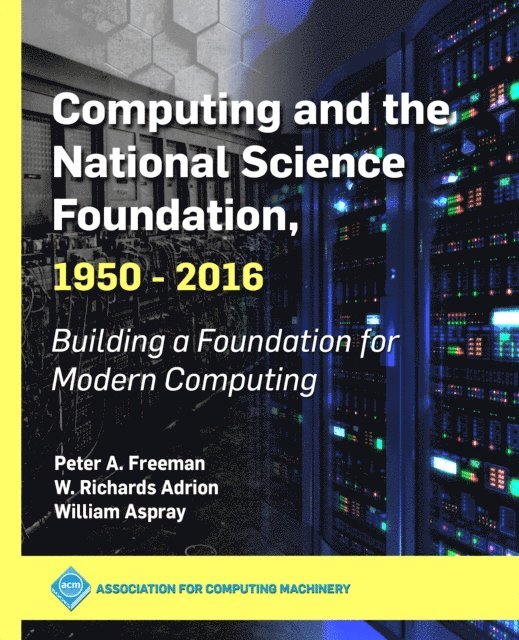
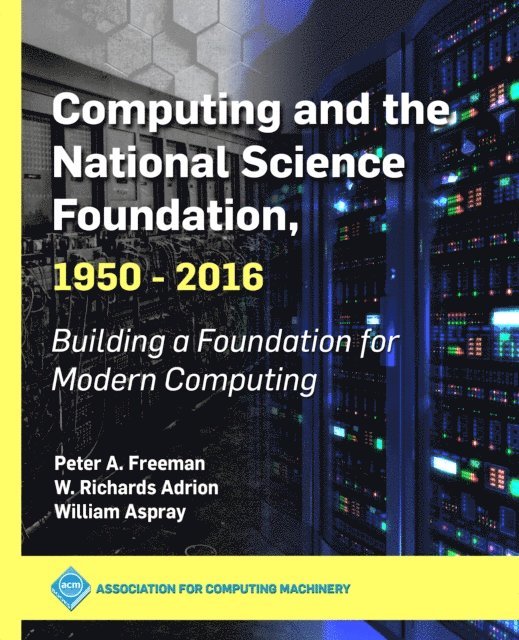
This organizational history relates the role of the National Science Foundation (NSF) in the development of modern computing.
Drawing upon new and existing oral histories, extensive use of NSF documents, and the experience of two of the authors as senior managers, this book describes how NSF’s programmatic activities originated and evolved to become the primary source of funding for fundamental research in computing and information technologies.
The book traces how NSF''s support has provided facilities and education for computing usage by all scientific disciplines, aided in institution and professional community building, supported fundamental research in computer science and allied disciplines, and led the efforts to broaden participation in computing by all segments of society.
Today, the research and infrastructure facilitated by NSF computing programs are significant economic drivers of American society and industry. For example, NSF supported work that led to the first widely-used web browser, Netscape; sponsored the creation of algorithms at the core of the Google search engine; facilitated the growth of the public Internet; and funded research on the scientific basis for countless other applications and technologies. NSF has advanced the development of human capital and ideas for future advances in computing and its applications.
This account is the first comprehensive coverage of NSF''s role in the extraordinary growth and expansion of modern computing and its use. It will appeal to historians of computing, policy makers and leaders in government and academia, and individuals interested in the history and development of computing and the NSF.
396 kr
Läs direkt efter köp
This organizational history relates the role of the National Science Foundation (NSF) in the development of modern computing.
Drawing upon new and existing oral histories, extensive use of NSF documents, and the experience of two of the authors as senior managers, this book describes how NSF’s programmatic activities originated and evolved to become the primary source of funding for fundamental research in computing and information technologies.
The book traces how NSF''s support has provided facilities and education for computing usage by all scientific disciplines, aided in institution and professional community building, supported fundamental research in computer science and allied disciplines, and led the efforts to broaden participation in computing by all segments of society.
Today, the research and infrastructure facilitated by NSF computing programs are significant economic drivers of American society and industry. For example, NSF supported work that led to the first widely-used web browser, Netscape; sponsored the creation of algorithms at the core of the Google search engine; facilitated the growth of the public Internet; and funded research on the scientific basis for countless other applications and technologies. NSF has advanced the development of human capital and ideas for future advances in computing and its applications.
This account is the first comprehensive coverage of NSF''s role in the extraordinary growth and expansion of modern computing and its use. It will appeal to historians of computing, policy makers and leaders in government and academia, and individuals interested in the history and development of computing and the NSF.
423 kr
Läs direkt efter köp
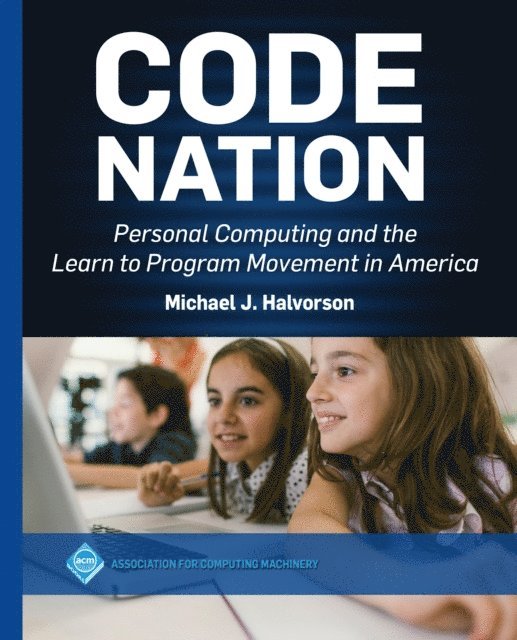
Code Nation explores the rise of software development as a social, cultural, and technical phenomenon in American history. The movement germinated in government and university labs during the 1950s, gained momentum through corporate and counterculture experiments in the 1960s and 1970s, and became a broad-based computer literacy movement in the 1980s. As personal computing came to the fore, learning to program was transformed by a groundswell of popular enthusiasm, exciting new platforms, and an array of commercial practices that have been further amplified by distributed computing and the Internet. The resulting society can be depicted as a “Code Nation”—a globally-connected world that is saturated with computer technology and enchanted by software and its creation.
Code Nation is a new history of personal computing that emphasizes the technical and business challenges that software developers faced when building applications for CP/M, MS-DOS, UNIX, Microsoft Windows, the Apple Macintosh, and other emerging platforms. It is a popular history of computing that explores the experiences of novice computer users, tinkerers, hackers, and power users, as well as the ideals and aspirations of leading computer scientists, engineers, educators, and entrepreneurs. Computer book and magazine publishers also played important, if overlooked, roles in the diffusion of new technical skills, and this book highlights their creative work and influence.
Code Nation offers a “behind-the-scenes” look at application and operating-system programming practices, the diversity of historic computer languages, the rise of user communities, early attempts to market PC software, and the origins of “enterprise” computing systems. Code samples and over 80 historic photographs support the text. The book concludes with an assessment of contemporary efforts to teach computational thinking to young people.
381 kr
Läs direkt efter köp
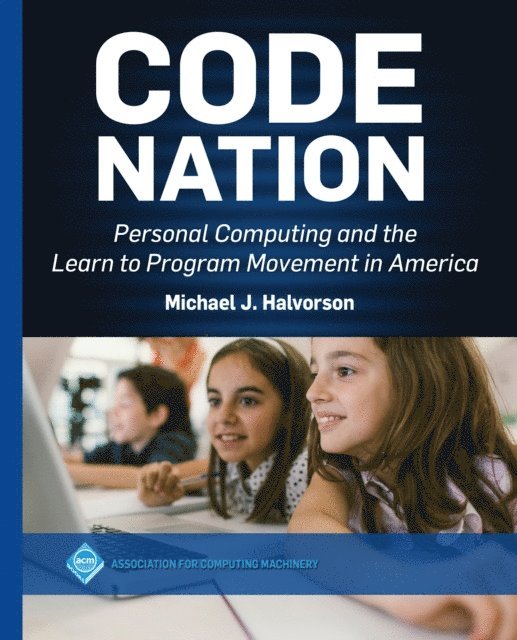
Code Nation explores the rise of software development as a social, cultural, and technical phenomenon in American history. The movement germinated in government and university labs during the 1950s, gained momentum through corporate and counterculture experiments in the 1960s and 1970s, and became a broad-based computer literacy movement in the 1980s. As personal computing came to the fore, learning to program was transformed by a groundswell of popular enthusiasm, exciting new platforms, and an array of commercial practices that have been further amplified by distributed computing and the Internet. The resulting society can be depicted as a “Code Nation”—a globally-connected world that is saturated with computer technology and enchanted by software and its creation.
Code Nation is a new history of personal computing that emphasizes the technical and business challenges that software developers faced when building applications for CP/M, MS-DOS, UNIX, Microsoft Windows, the Apple Macintosh, and other emerging platforms. It is a popular history of computing that explores the experiences of novice computer users, tinkerers, hackers, and power users, as well as the ideals and aspirations of leading computer scientists, engineers, educators, and entrepreneurs. Computer book and magazine publishers also played important, if overlooked, roles in the diffusion of new technical skills, and this book highlights their creative work and influence.
Code Nation offers a “behind-the-scenes” look at application and operating-system programming practices, the diversity of historic computer languages, the rise of user communities, early attempts to market PC software, and the origins of “enterprise” computing systems. Code samples and over 80 historic photographs support the text. The book concludes with an assessment of contemporary efforts to teach computational thinking to young people.
285 kr
Läs direkt efter köp
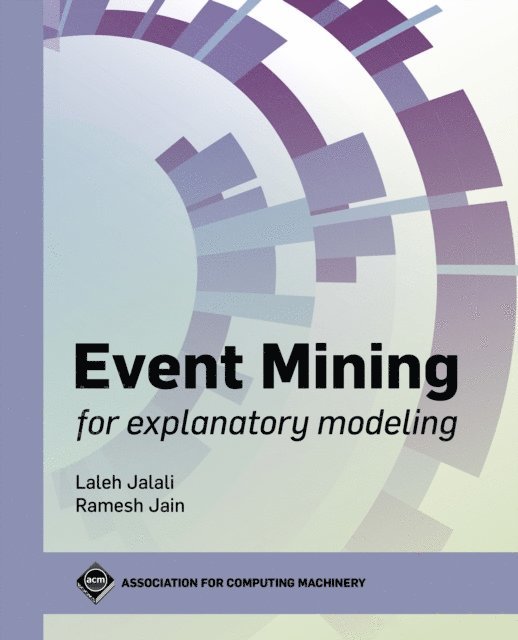
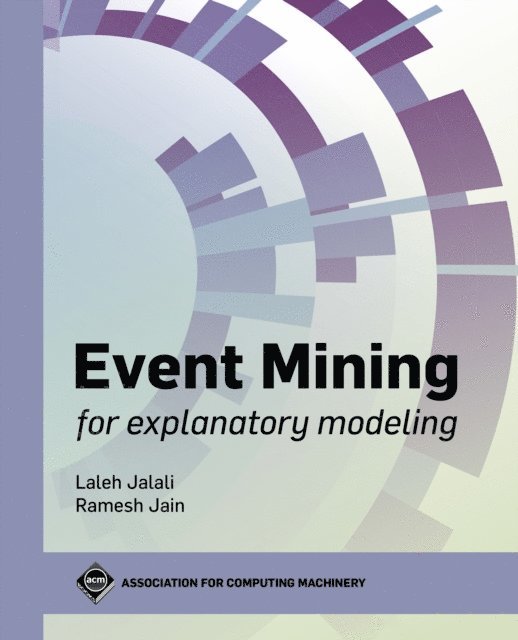
This book introduces the concept of Event Mining for building explanatory models from analyses of correlated data. Such a model may be used as the basis for predictions and corrective actions. The idea is to create, via an iterative process, a model that explains causal relationships in the form of structural and temporal patterns in the data. The first phase is the data-driven process of hypothesis formation, requiring the analysis of large amounts of data to find strong candidate hypotheses. The second phase is hypothesis testing, wherein a domain expert’s knowledge and judgment is used to test and modify the candidate hypotheses.
The book is intended as a primer on Event Mining for data-enthusiasts and information professionals interested in employing these event-based data analysis techniques in diverse applications. The reader is introduced to frameworks for temporal knowledge representation and reasoning, as well as temporal data mining and pattern discovery. Also discussed are the design principles of event mining systems. The approach is reified by the presentation of an event mining system called EventMiner, a computational framework for building explanatory models. The book contains case studies of using EventMiner in asthma risk management and an architecture for the objective self. The text can be used by researchers interested in harnessing the value of heterogeneous big data for designing explanatory event-based models in diverse application areas such as healthcare, biological data analytics, predictive maintenance of systems, computer networks, and business intelligence.
285 kr
Läs direkt efter köp
This book introduces the concept of Event Mining for building explanatory models from analyses of correlated data. Such a model may be used as the basis for predictions and corrective actions. The idea is to create, via an iterative process, a model that explains causal relationships in the form of structural and temporal patterns in the data. The first phase is the data-driven process of hypothesis formation, requiring the analysis of large amounts of data to find strong candidate hypotheses. The second phase is hypothesis testing, wherein a domain expert’s knowledge and judgment is used to test and modify the candidate hypotheses.
The book is intended as a primer on Event Mining for data-enthusiasts and information professionals interested in employing these event-based data analysis techniques in diverse applications. The reader is introduced to frameworks for temporal knowledge representation and reasoning, as well as temporal data mining and pattern discovery. Also discussed are the design principles of event mining systems. The approach is reified by the presentation of an event mining system called EventMiner, a computational framework for building explanatory models. The book contains case studies of using EventMiner in asthma risk management and an architecture for the objective self. The text can be used by researchers interested in harnessing the value of heterogeneous big data for designing explanatory event-based models in diverse application areas such as healthcare, biological data analytics, predictive maintenance of systems, computer networks, and business intelligence.
587 kr
Läs direkt efter köp
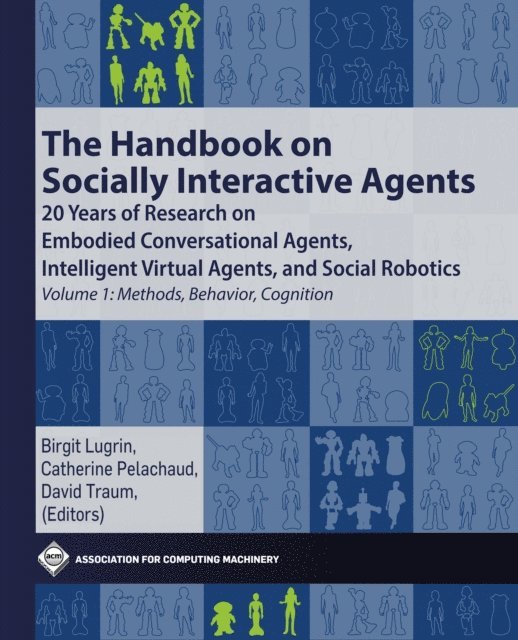
The Handbook on Socially Interactive Agents provides a comprehensive overview of the research fields of Embodied Conversational Agents, Intelligent Virtual Agents, and Social Robotics. Socially Interactive Agents (SIAs), whether virtually or physically embodied, are autonomous agents that are able to perceive an environment including people or other agents, reason, decide how to interact, and express attitudes such as emotions, engagement, or empathy. They are capable of interacting with people and one another in a socially intelligent manner using multimodal communicative behaviors, with the goal to support humans in various domains.
Written by international experts in their respective fields, the book summarizes research in the many important research communities pertinent for SIAs, while discussing current challenges and future directions. The handbook provides easy access to modeling and studying SIAs for researchers and students, and aims at further bridging the gap between the research communities involved.
In two volumes, the book clearly structures the vast body of research. The first volume starts by introducing what is involved in SIAs research, in particular research methodologies and ethical implications of developing SIAs. It further examines research on appearance and behavior, focusing on multimodality. Finally, social cognition for SIAs is investigated using different theoretical models and phenomena such as theory of mind or pro-sociality. The second volume starts with perspectives on interaction, examined from different angles such as interaction in social space, group interaction, or long-term interaction. It also includes an extensive overview summarizing research and systems of human–agent platforms and of some of the major application areas of SIAs such as education, aging support, autism, and games.
343 kr
Läs direkt efter köp
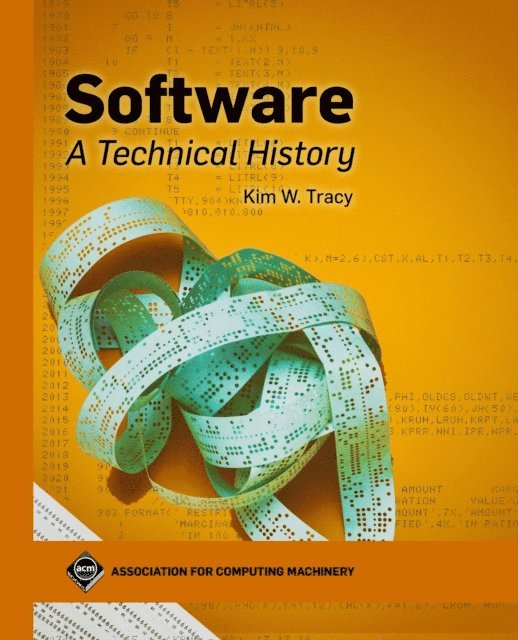
Software history has a deep impact on current software designers, computer scientists, and technologists. System constraints imposed in the past and the designs that responded to them are often unknown or poorly understood by students and practitioners, yet modern software systems often include “old” software and “historical” programming techniques. This work looks at software history through specific software areas to develop student-consumable practices, design principles, lessons learned, and trends useful in current and future software design. It also exposes key areas that are widely used in modern software, yet infrequently taught in computing programs. Written as a textbook, this book uses specific cases from the past and present to explore the impact of software trends and techniques.
Building on concepts from the history of science and technology, software history examines such areas as fundamentals, operating systems, programming languages, programming environments, networking, and databases. These topics are covered from their earliest beginnings to their modern variants. There are focused case studies on UNIX, APL, SAGE, GNU Emacs, Autoflow, internet protocols, System R, and others. Extensive problems and suggested projects enable readers to deeply delve into the history of software in areas that interest them most.
381 kr
Läs direkt efter köp
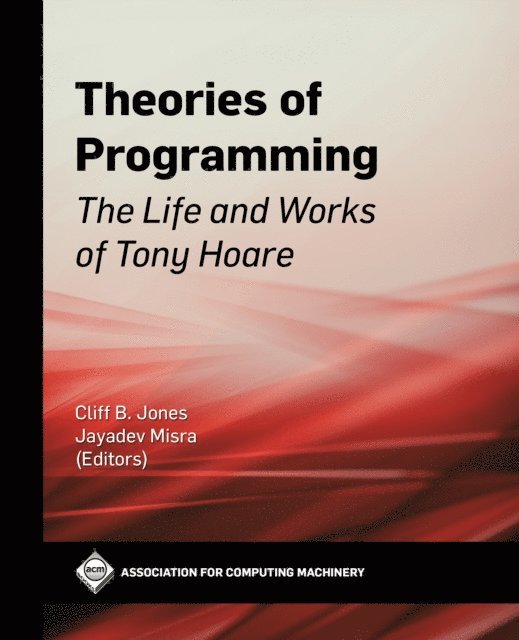
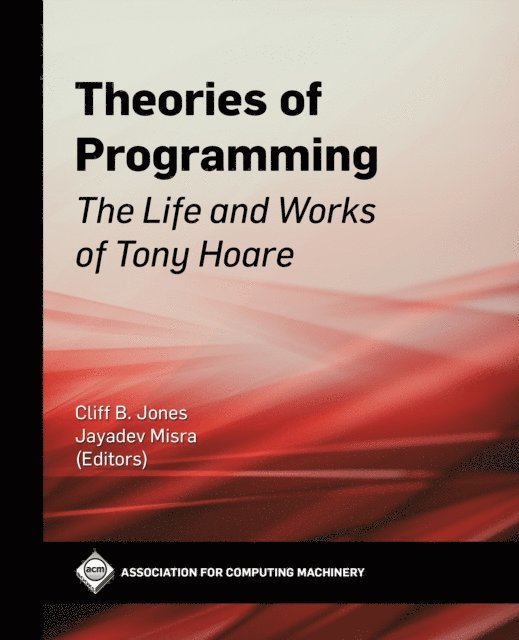
Sir Tony Hoare has had an enormous influence on computer science, from the Quicksort algorithm to the science of software development, concurrency and program verification. His contributions have been widely recognised: He was awarded the ACM’s Turing Award in 1980, the Kyoto Prize from the Inamori Foundation in 2000, and was knighted for “services to education and computer science” by Queen Elizabeth II of England in 2000.
This book presents the essence of his various works—the quest for effective abstractions—both in his own words as well as chapters written by leading experts in the field, including many of his research collaborators. In addition, this volume contains biographical material, his Turing award lecture, the transcript of an interview and some of his seminal papers.
Hoare’s foundational paper “An Axiomatic Basis for Computer Programming”, presented his approach, commonly known as Hoare Logic, for proving the correctness of programs by using logical assertions. Hoare Logic and subsequent developments have formed the basis of a wide variety of software verification efforts. Hoare was instrumental in proposing the Verified Software Initiative, a cooperative international project directed at the scientific challenges of large-scale software verification, encompassing theories, tools and experiments.
Tony Hoare’s contributions to the theory and practice of concurrent software systems are equally impressive. The process algebra called Communicating Sequential Processes (CSP) has been one of the fundamental paradigms, both as a mathematical theory to reason about concurrent computation as well as the basis for the programming language occam. CSP served as a framework for exploring several ideas in denotational semantics such as powerdomains, as well as notions of abstraction and refinement. It is the basis for a series of industrial-strength tools which have been employed in a wide range of applications.
This book also presents Hoare’s work in the last few decades. These works include a rigorous approach to specifications in software engineering practice, including procedural and data abstractions, data refinement, and a modular theory of designs. More recently, he has worked with collaborators to develop Unifying Theories of Programming (UTP). Their goal is to identify the common algebraic theories that lie at the core of sequential, concurrent, reactive and cyber-physical computations.
373 kr
Läs direkt efter köp
Sir Tony Hoare has had an enormous influence on computer science, from the Quicksort algorithm to the science of software development, concurrency and program verification. His contributions have been widely recognised: He was awarded the ACM’s Turing Award in 1980, the Kyoto Prize from the Inamori Foundation in 2000, and was knighted for “services to education and computer science” by Queen Elizabeth II of England in 2000.
This book presents the essence of his various works—the quest for effective abstractions—both in his own words as well as chapters written by leading experts in the field, including many of his research collaborators. In addition, this volume contains biographical material, his Turing award lecture, the transcript of an interview and some of his seminal papers.
Hoare’s foundational paper “An Axiomatic Basis for Computer Programming”, presented his approach, commonly known as Hoare Logic, for proving the correctness of programs by using logical assertions. Hoare Logic and subsequent developments have formed the basis of a wide variety of software verification efforts. Hoare was instrumental in proposing the Verified Software Initiative, a cooperative international project directed at the scientific challenges of large-scale software verification, encompassing theories, tools and experiments.
Tony Hoare’s contributions to the theory and practice of concurrent software systems are equally impressive. The process algebra called Communicating Sequential Processes (CSP) has been one of the fundamental paradigms, both as a mathematical theory to reason about concurrent computation as well as the basis for the programming language occam. CSP served as a framework for exploring several ideas in denotational semantics such as powerdomains, as well as notions of abstraction and refinement. It is the basis for a series of industrial-strength tools which have been employed in a wide range of applications.
This book also presents Hoare’s work in the last few decades. These works include a rigorous approach to specifications in software engineering practice, including procedural and data abstractions, data refinement, and a modular theory of designs. More recently, he has worked with collaborators to develop Unifying Theories of Programming (UTP). Their goal is to identify the common algebraic theories that lie at the core of sequential, concurrent, reactive and cyber-physical computations.
991 kr
Läs direkt efter köp
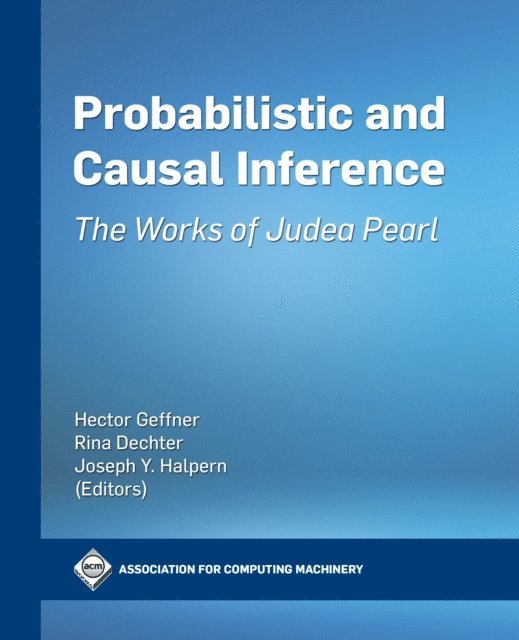
Professor Judea Pearl won the 2011 Turing Award “for fundamental contributions to artificial intelligence through the development of a calculus for probabilistic and causal reasoning.” This book contains the original articles that led to the award, as well as other seminal works, divided into four parts: heuristic search, probabilistic reasoning, causality, first period (1988–2001), and causality, recent period (2002–2020). Each of these parts starts with an introduction written by Judea Pearl. The volume also contains original, contributed articles by leading researchers that analyze, extend, or assess the influence of Pearl’s work in different fields: from AI, Machine Learning, and Statistics to Cognitive Science, Philosophy, and the Social Sciences. The first part of the volume includes a biography, a transcript of his Turing Award Lecture, two interviews, and a selected bibliography annotated by him.
748 kr
Läs direkt efter köp
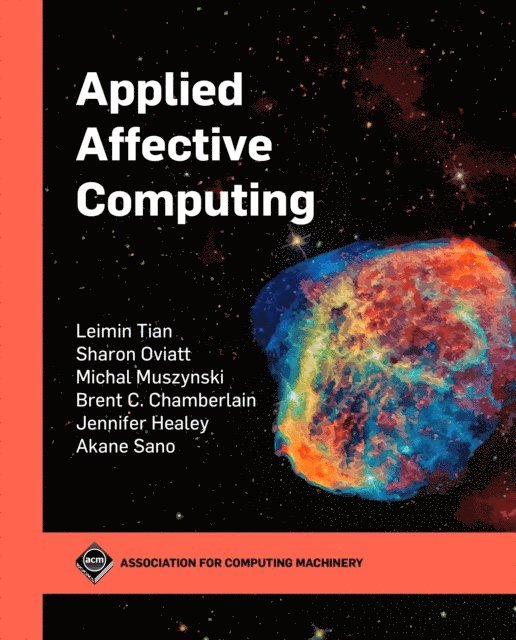
Affective computing is a nascent field situated at the intersection of artificial intelligence with social and behavioral science. It studies how human emotions are perceived and expressed, which then informs the design of intelligent agents and systems that can either mimic this behavior to improve their intelligence or incorporate such knowledge to effectively understand and communicate with their human collaborators. Affective computing research has recently seen significant advances and is making a critical transformation from exploratory studies to real-world applications in the emerging research area known as applied affective computing.
This book offers readers an overview of the state-of-the-art and emerging themes in affective computing, including a comprehensive review of the existing approaches to affective computing systems and social signal processing. It provides in-depth case studies of applied affective computing in various domains, such as social robotics and mental well-being. It also addresses ethical concerns related to affective computing and how to prevent misuse of the technology in research and applications. Further, this book identifies future directions for the field and summarizes a set of guidelines for developing next-generation affective computing systems that are effective, safe, and human-centered.
For researchers and practitioners new to affective computing, this book will serve as an introduction to the field to help them in identifying new research topics or developing novel applications. For more experienced researchers and practitioners, the discussions in this book provide guidance for adopting a human-centered design and development approach to advance affective computing.
770 kr
Läs direkt efter köp
Affective computing is a nascent field situated at the intersection of artificial intelligence with social and behavioral science. It studies how human emotions are perceived and expressed, which then informs the design of intelligent agents and systems that can either mimic this behavior to improve their intelligence or incorporate such knowledge to effectively understand and communicate with their human collaborators. Affective computing research has recently seen significant advances and is making a critical transformation from exploratory studies to real-world applications in the emerging research area known as applied affective computing.
This book offers readers an overview of the state-of-the-art and emerging themes in affective computing, including a comprehensive review of the existing approaches to affective computing systems and social signal processing. It provides in-depth case studies of applied affective computing in various domains, such as social robotics and mental well-being. It also addresses ethical concerns related to affective computing and how to prevent misuse of the technology in research and applications. Further, this book identifies future directions for the field and summarizes a set of guidelines for developing next-generation affective computing systems that are effective, safe, and human-centered.
For researchers and practitioners new to affective computing, this book will serve as an introduction to the field to help them in identifying new research topics or developing novel applications. For more experienced researchers and practitioners, the discussions in this book provide guidance for adopting a human-centered design and development approach to advance affective computing.
606 kr
Läs direkt efter köp
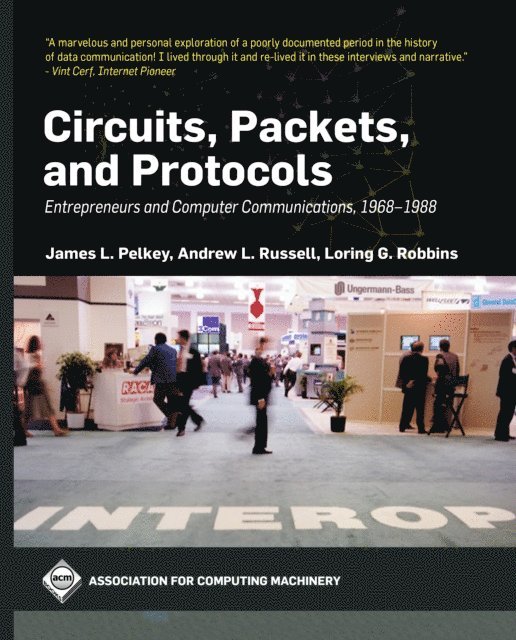
As recently as 1968, computer scientists were uncertain how best to interconnect even two computers. The notion that within a few decades the challenge would be how to interconnect millions of computers around the globe was too far-fetched to contemplate. Yet, by 1988, that is precisely what was happening. The products and devices developed in the intervening years—such as modems, multiplexers, local area networks, and routers—became the linchpins of the global digital society. How did such revolutionary innovation occur? This book tells the story of the entrepreneurs who were able to harness and join two factors: the energy of computer science researchers supported by governments and universities, and the tremendous commercial demand for Internetworking computers. The centerpiece of this history comes from unpublished interviews from the late 1980s with over 80 computing industry pioneers, including Paul Baran, J.C.R. Licklider, Vint Cerf, Robert Kahn, Larry Roberts, and Robert Metcalfe. These individuals give us unique insights into the creation of multi-billion dollar markets for computer-communications equipment, and they reveal how entrepreneurs struggled with failure, uncertainty, and the limits of knowledge.
751 kr
Läs direkt efter köp
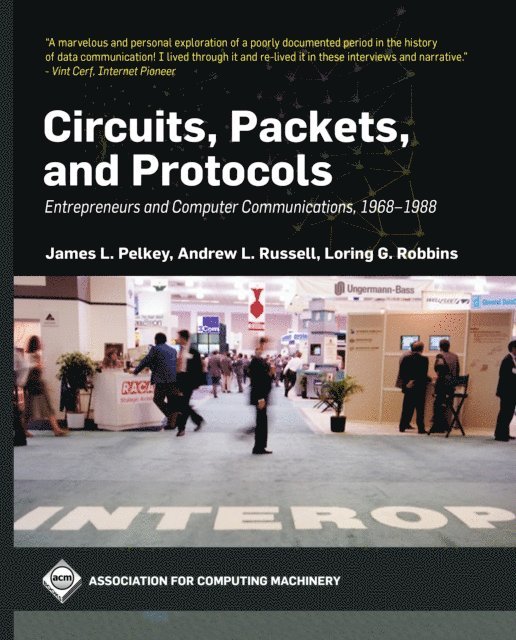
As recently as 1968, computer scientists were uncertain how best to interconnect even two computers. The notion that within a few decades the challenge would be how to interconnect millions of computers around the globe was too far-fetched to contemplate. Yet, by 1988, that is precisely what was happening. The products and devices developed in the intervening years—such as modems, multiplexers, local area networks, and routers—became the linchpins of the global digital society. How did such revolutionary innovation occur? This book tells the story of the entrepreneurs who were able to harness and join two factors: the energy of computer science researchers supported by governments and universities, and the tremendous commercial demand for Internetworking computers. The centerpiece of this history comes from unpublished interviews from the late 1980s with over 80 computing industry pioneers, including Paul Baran, J.C.R. Licklider, Vint Cerf, Robert Kahn, Larry Roberts, and Robert Metcalfe. These individuals give us unique insights into the creation of multi-billion dollar markets for computer-communications equipment, and they reveal how entrepreneurs struggled with failure, uncertainty, and the limits of knowledge.