Visar resultat för..."Kenne"
Sökningen "R Kenne Fant" gav inga träffar.343 kr
Skickas inom 5-8 vardagar
382 kr
Skickas inom 5-8 vardagar
670 kr
Läs direkt efter köp
In 2002 Congress passed the Education Sciences Reform Act of 2002 (ESRA), authorizing the creation of the Institute of Education Sciences (IES) as the research, evaluation, statistics, and assessment arm of the Department of Education, and crystallizing the federal government''s commitment to providing national leadership in expanding fundamental knowledge and understanding of education from early childhood through postsecondary study. IES shares information on the condition and progress of education in the United States, including early childhood education and special education; educational practices that support learning and improve academic achievement and access to educational opportunities for all students; and the effectiveness of federal and other education programs.
In response to a request from the Institute of Education Sciences, this report provides guidance on the future of education research at the National Center for Education Research and the National Center for Special Education Research, two centers directed by IES. This report identifies critical problems and issues, new methods and approaches, and new and different kinds of research training investments.
584 kr
Läs direkt efter köp
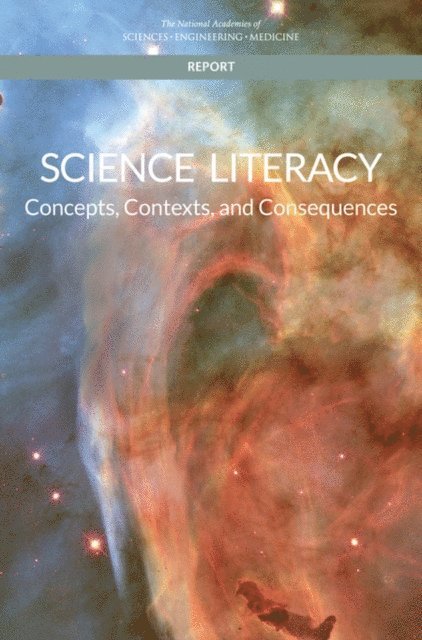
Science is a way of knowing about the world. At once a process, a product, and an institution, science enables people to both engage in the construction of new knowledge as well as use information to achieve desired ends. Access to science—whether using knowledge or creating it—necessitates some level of familiarity with the enterprise and practice of science: we refer to this as science literacy.
Science literacy is desirable not only for individuals, but also for the health and well- being of communities and society. More than just basic knowledge of science facts, contemporary definitions of science literacy have expanded to include understandings of scientific processes and practices, familiarity with how science and scientists work, a capacity to weigh and evaluate the products of science, and an ability to engage in civic decisions about the value of science. Although science literacy has traditionally been seen as the responsibility of individuals, individuals are nested within communities that are nested within societies—and, as a result, individual science literacy is limited or enhanced by the circumstances of that nesting.
Science Literacy studies the role of science literacy in public support of science. This report synthesizes the available research literature on science literacy, makes recommendations on the need to improve the understanding of science and scientific research in the United States, and considers the relationship between scientific literacy and support for and use of science and research.
757 kr
Läs direkt efter köp
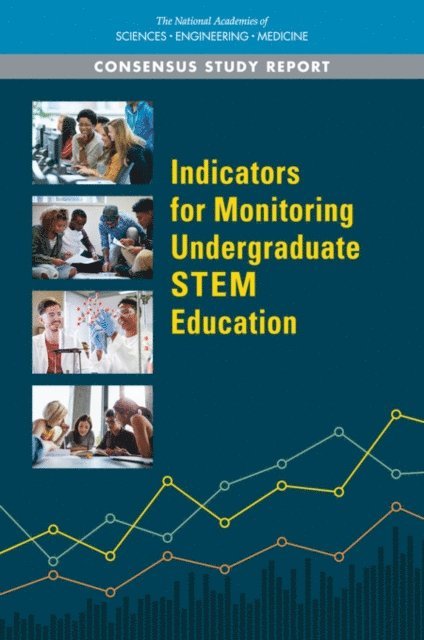
Science, technology, engineering and mathematics (STEM) professionals generate a stream of scientific discoveries and technological innovations that fuel job creation and national economic growth. Ensuring a robust supply of these professionals is critical for sustaining growth and creating jobs growth at a time of intense global competition. Undergraduate STEM education prepares the STEM professionals of today and those of tomorrow, while also helping all students develop knowledge and skills they can draw on in a variety of occupations and as individual citizens. However, many capable students intending to major in STEM later switch to another field or drop out of higher education altogether, partly because of documented weaknesses in STEM teaching, learning and student supports. Improving undergraduate STEM education to address these weaknesses is a national imperative.
Many initiatives are now underway to improve the quality of undergraduate STEM teaching and learning. Some focus on the national level, others involve multi-institution collaborations, and others take place on individual campuses. At present, however, policymakers and the public do not know whether these various initiatives are accomplishing their goals and leading to nationwide improvement in undergraduate STEM education.
Indicators for Monitoring Undergraduate STEM Education outlines a framework and a set of indicators that document the status and quality of undergraduate STEM education at the national level over multiple years. It also indicates areas where additional research is needed in order to develop appropriate measures. This publication will be valuable to government agencies that make investments in higher education, institutions of higher education, private funders of higher education programs, and industry stakeholders. It will also be of interest to researchers who study higher education.
735 kr
Läs direkt efter köp
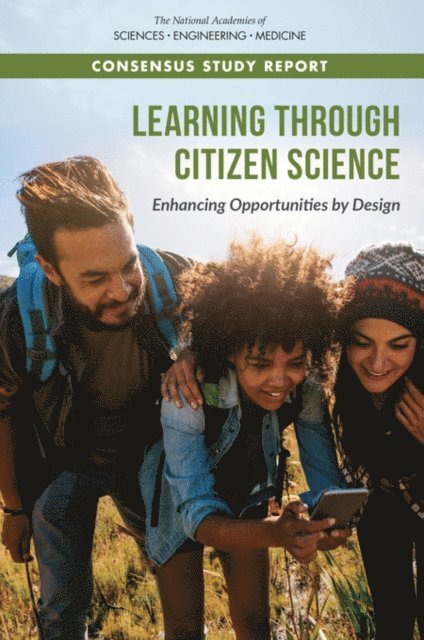
In the last twenty years, citizen science has blossomed as a way to engage a broad range of individuals in doing science. Citizen science projects focus on, but are not limited to, nonscientists participating in the processes of scientific research, with the intended goal of advancing and using scientific knowledge. A rich range of projects extend this focus in myriad directions, and the boundaries of citizen science as a field are not clearly delineated. Citizen science involves a growing community of professional practitioners, participants, and stakeholders, and a thriving collection of projects. While citizen science is often recognized for its potential to engage the public in science, it is also uniquely positioned to support and extend participants'' learning in science.
Contemporary understandings of science learning continue to advance. Indeed, modern theories of learning recognize that science learning is complex and multifaceted. Learning is affected by factors that are individual, social, cultural, and institutional, and learning occurs in virtually any context and at every age. Current understandings of science learning also suggest that science learning extends well beyond content knowledge in a domain to include understanding of the nature and methods of science.
Learning Through Citizen Science: Enhancing Opportunities by Design discusses the potential of citizen science to support science learning and identifies promising practices and programs that exemplify the promising practices. This report also lays out a research agenda that can fill gaps in the current understanding of how citizen science can support science learning and enhance science education.

801 kr
Läs direkt efter köp
The National Aeronautics and Space Administration (NASA) is one of the United States'' leading federal science, technology, engineering, and mathematics (STEM) agencies and plays an important role in the landscape of STEM education. In 2015, NASA''s Science Mission Directorate (SMD) created the Science Activation (SciAct) program to increase the overall coherence of SMD''s education efforts, to support more effective, sustainable, and efficient use of SMD science discoveries for education, and to enable NASA scientists and engineers to engage more effectively and efficiently in the STEM learning environment with learners of all ages. SciAct is now transitioning into its second round of funding, and it is beneficial to review the program''s portfolio and identify opportunities for improvement.

NASA''s Science Activation Program: Achievements and Opportunities assesses SciAct''s efforts towards meeting its goals. The key objectives of SciAct are to enable STEM education, improve U.S. scientific literacy, advance national education goals, and leverage efforts through partnerships. This report describes and assesses the history, current status, and vision of the program and its projects. It also provides recommendations to enhance NASA''s efforts through the SciAct program.
641 kr
Läs direkt efter köp
The COVID-19 pandemic has presented unprecedented challenges to the nation''s K-12 education system. The rush to slow the spread of the virus led to closures of schools across the country, with little time to ensure continuity of instruction or to create a framework for deciding when and how to reopen schools. States, districts, and schools are now grappling with the complex and high-stakes questions of whether to reopen school buildings and how to operate them safely if they do reopen. These decisions need to be informed by the most up-to-date evidence about the SARS-CoV-2 virus that causes COVID-19; about the impacts of school closures on students and families; and about the complexities of operating school buildings as the pandemic persists.
Reopening K-12 Schools During the COVID-19 Pandemic: Prioritizing Health, Equity, and Communities provides guidance on the reopening and operation of elementary and secondary schools for the 2020-2021 school year. The recommendations of this report are designed to help districts and schools successfully navigate the complex decisions around reopening school buildings, keeping them open, and operating them safely.
385 kr
Skickas
605 kr
Läs direkt efter köp
245 kr
Läs direkt efter köp
1 221 kr
Skickas inom 10-15 vardagar
936 kr
Skickas inom 10-15 vardagar
936 kr
Skickas inom 10-15 vardagar
271 kr
Skickas inom 5-8 vardagar
414 kr
Skickas inom 5-8 vardagar
239 kr
Skickas inom 5-8 vardagar
223 kr
Skickas inom 5-8 vardagar
398 kr
Skickas inom 5-8 vardagar
191 kr
Skickas inom 5-8 vardagar
303 kr
Skickas inom 5-8 vardagar
446 kr
Skickas inom 5-8 vardagar
271 kr
Skickas inom 5-8 vardagar
430 kr
Skickas inom 5-8 vardagar
351 kr
Skickas inom 5-8 vardagar
494 kr
Skickas inom 5-8 vardagar
510 kr
Skickas inom 5-8 vardagar
239 kr
Skickas inom 5-8 vardagar
446 kr
Skickas inom 5-8 vardagar
351 kr
Skickas inom 5-8 vardagar