AACN Workshop Series - Böcker
Visar alla böcker i serien AACN Workshop Series. Handla med fri frakt och snabb leverans.
15 produkter
15 produkter
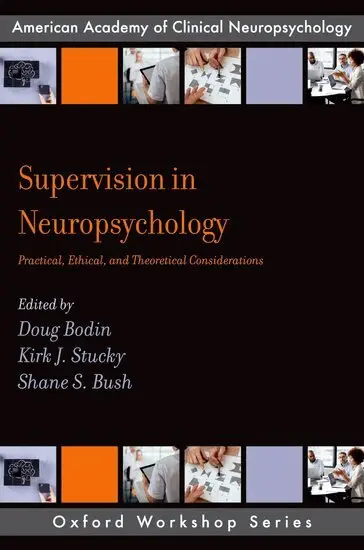
Supervision in Neuropsychology
Practical, Ethical, and Theoretical Considerations
Häftad, Engelska, 2022
898 kr
Skickas inom 3-6 vardagar
The American Psychological Association now considers clinical supervision an essential professional activity of clinical neuropsychologists, yet most receive very little training in this activity. Instead, they rely on publications about providing general psychology supervision, with limited resources tailored to the specialty of clinical neuropsychology.This book offers a review of theoretical, practical, and ethical considerations when providing supervision in clinical neuropsychology. In each chapter, neuropsychologists with extensive experience teaching and supervising trainees review the scholarly literature and share wisdom with those who are learning how to conduct clinical supervision. Chapters cover competency, structural and practical issues, ethical considerations, diversity and inclusion in supervision, future challenges, and more. The book also includes 8 appendices for easy reference on matters such as professional competencies, evaluation, and supervision broadly. Supervision in Neuropsychology is a well-rounded, valuable resource for those who mentor neuropsychology trainees.
522 kr
Skickas inom 5-8 vardagar
The ability to anticipate, avoid, and resolve ethical conflicts in neuropsychology is a dynamic process that must be developed and maintained over time. Ethics codes and professional guidelines are drafted and updated, changes in clinical practice occur, and new laws are implemented. To practice in a manner consistent with the highest ethics principles, neuropsychologists must be able to integrate the evolving ethical and legal requirements into their professional activities. The primary purpose of this 2nd edition is to review ethical guidelines and literature relevant to clinical neuropsychology that have been published since the first edition of this book was published a decade ago. A number of important publications have emerged since the first edition was published, including new Specialty Guidelines for Forensic Psychology, Standards for Educational and Psychological Testing, and position statements/practice guidelines by APA (e.g., Assessment of Older Adults with Diminished Capacity, co-authored with ABA) and other professional organizations (e.g., AACN, NAN) that are directly relevant to neuropsychological practice. In addition, scholarly publications have contributed knowledge to ethical practice in general (e.g., Knapp's & VandeCreek's work on positive ethics), which is relevant for, and should be applied to, neuropsychological practice. Additionally, book chapters on ethics in subspecialty areas (e.g., pediatric and geriatric neuropsychology, mTBI, Veterans) have advanced our understanding of ethical issues in neuropsychology and should be integrated into a new edition of the book. Finally, advances in technology and increased use of technology in clinical neuropsychology bring ethical issues and challenges incorporated in the new edition of the book. Learning exercises and study questions at the end of the chapters help readers review the main points and check their learning progress.
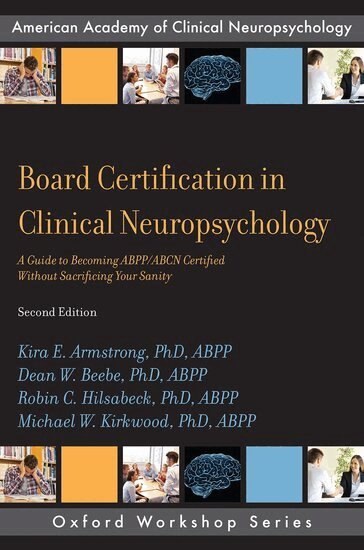
Board Certification in Clinical Neuropsychology
A Guide to Becoming ABPP/ABCN Certified Without Sacrificing Your Sanity
Häftad, Engelska, 2019
781 kr
Skickas inom 5-8 vardagar
Pursuit of board certification through the American Board of Professional Psychology (ABPP) has become a standard expectation for clinical neuropsychologists. At the time this book was published, the American Board of Clinical Neuropsychology (ABCN) was the fastest growing specialty board of ABPP with over 1,000 active members. However, the board certification process is challenging and can be intimidating. The objectives of this book are to demystify the process and provide practical advice for achieving board certification through ABPP/ABCN. To start, benefits of board certification are summarized and common myths debunked. Next, individual chapters for each step in the process, as well as a chapter devoted to pursuit of the pediatric subspecialty, provide details about essential elements of the task, the process, the timeline, strategies for success, common pitfalls, and what happens behind the scenes at ABPP/ABCN. Each of these chapters also has tips for trainees and supervisors who want to get a jump on preparing for board certification. Finally, encouragement and guidance for individuals who encounter setbacks at any step along the way are offered.
670 kr
Skickas inom 5-8 vardagar
Understanding Somatization in the Practice of Clinical Neuropsychology is written for neuropsychologists wishing to improve their ability to diagnose and treat, or recommend treatment for, patients with somatoform disorders. The author, a seasoned clinician, blends evidence-based information with sound practical advice within a conceptual framework helpful in understanding this group of difficult patients.A Continuing Education (CE) component administered by the American Academy of Clinical Neuropsychology is included.
Mild Traumatic Brain Injury and Postconcussion Syndrome
The New Evidence Base for Diagnosis and Treatment
Häftad, Engelska, 2007
679 kr
Skickas inom 5-8 vardagar
This is the first neuropsychology book to translate exciting findings from the recent explosion of research on sport-related concussion to the broader context of mild traumatic brain injury (MTBI) and post-concussive syndrome (PCS) in the general population. Traumatic brain injuries constitute a major global public health problem, but until now MTBIs, which constitute up to 90 percent of all treated TBIs, have been difficult to evaluate and manage clinically because of the absence of a viable model. This book provides a welcome evidence base for all clinicians involved in the clinical diagnosis and treatment of MTBI. Each section of the book ends with a helpful summary of the 'Top 10' conclusions.The book includes a Continuing Education (CE) component administered by the American Academy of Clinical Neuropsychology.
670 kr
Skickas inom 5-8 vardagar
Based on the author's popular workshop, this concise volume provides scientific and practical guidance on assessing learning disabilities and ADHD in adults. It includes instructions for accessing the author's downloadable PowerPoints, as well as a Continuing Education component (3 credits) that is administered by the American Academy of Clinical Neuropsychology. Topics include definitions of disability (including legal definitions), assessment, and management approaches (from medications and therapy to educational and workplace accommodations), and assistive technology and software. Three case examples are provided, along with a sample report. The book is aimed at clinical neuropsychologists and clinical psychologists who are involved in the assessment and management of adults with learning disabilities and/or ADHD.
760 kr
Skickas inom 5-8 vardagar
This book provides essential information about the variety of seizure disorders to serve as a basic epilepsy reference guide for students and practicing clinical neuropsychologists. In addition to epilepsy neuropsychological assessment issues, the book provides an overview of the known cognitive effects of seizures as well as the adaptive, emotional, and psychiatric consequences of epilepsy including a chapter on psychogenic nonepileptic seizures. Diagnostic tests, such as EEG and structural neuroimaging, are described and the leading treatment options are detailed with a chapter on pharmacologic therapies which reviews the known cognitive and behaivoral side effects of specific antiepileptic drugs. Many of the more rare epilepsy disorders have been included in the appendices for quick and easy reference. The book also details the role of neuropsychology within the epilepsy surgery process including pre/post surgery cognitive evaluations, cortical stimulation mapping, functional neuroimaging, and intracarotid amobarbital (Wada) procedures and reviews the major surgical treatment options used in the intractable epilepsies. Case examples are dispersed throughout the text with neuropsychological results as heuristic aids. The book ends with a glossary of epilepsy terms that may be used as a dictionary for the more experienced clinician or as a tool to assist students and residents in learning.
670 kr
Skickas inom 5-8 vardagar
The purpose of this text is to provide an overview of basic business principles and how they can be used to enhance the stability and fiscal responsibility of neuropsychological practice. The principles discussed are presented in a fashion that will include an overview of concepts as well as a practical approach to promote application of the information. It is designed to benefit professionals at varying levels of practice regardless of their work setting, but focuses primarily on the issues related to neuropsychological practice. Graduate school catalogs and training program brochures reveal a broad array of educational opportunities designed to prepare future professionals for independent practice in neuropsychology. However, little is offered to prepare neuropsychologists for the business realities that await them in the workplace. The expectation that they will simply see patients and do quality clinical work is often in conflict with institutional goals of making money so that the doors can remain open. The result can be a cataclysmic "crash" when altruistic ideals meet capitalistic needs. The concepts of "cash is king" and "no margin, no mission" are foreign to most neuropsychologists until our own fiscal bottom line is affected. The Business of Neuropsychology also contains an overview of business "basics," such as budget and fiscal tracking abilities, strategies for communicating with stakeholders in the business, front and back office flow and processes, billing, coding, marketing, referral relationship development, and staff growth and development. Guidance on balancing the needs of training programs with the fiscal responsibilities of departments is also provided.The Business of Neuropsychology is part of the Oxford AACN Workshop series.
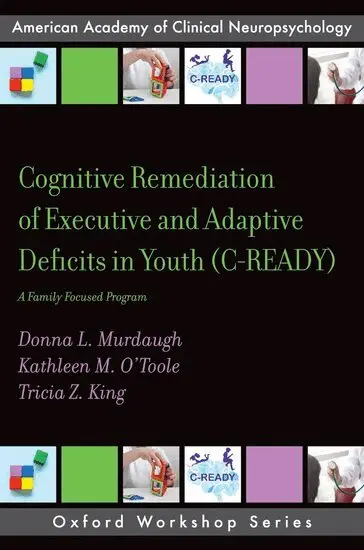
Cognitive Remediation of Executive and Adaptive Deficits in Youth (C-READY)
A Family Focused Program
Häftad, Engelska, 2023
709 kr
Skickas inom 5-8 vardagar
This book is a comprehensive and contextual guide to implementation of a family-systems focused, culturally competent cognitive remediation program for youth with neurological and medical disorders. The primary goal of the C-READY program is to guide successful transitioning to adult healthcare providers and medical management, and even more so, successful transition to adult independence. The book is divided into three main parts: Part 1 provides the empirical evidence and theoretical framework for the development of the C-READY program, outlining the brain injury and recovery model in which the program is based, with specific attention to transition of care needs. Part 2 is the “nuts and bolts” of the program, providing the framework and content of the C-READY program so that it can be implemented in practice. Woven throughout the chapters are vignettes providing patient examples, reflecting the importance of considering diverse sociocultural contexts. Finally, Part 3 highlights additional considerations important to implementation of the C-READY program, including adaptations of special populations and decreasing barriers to care for health disparity populations. Overall, this book is a useful reference for neuropsychologists, psychologists, and other professionals interested in implementing the C-READY program within their professional setting.
481 kr
Skickas inom 5-8 vardagar
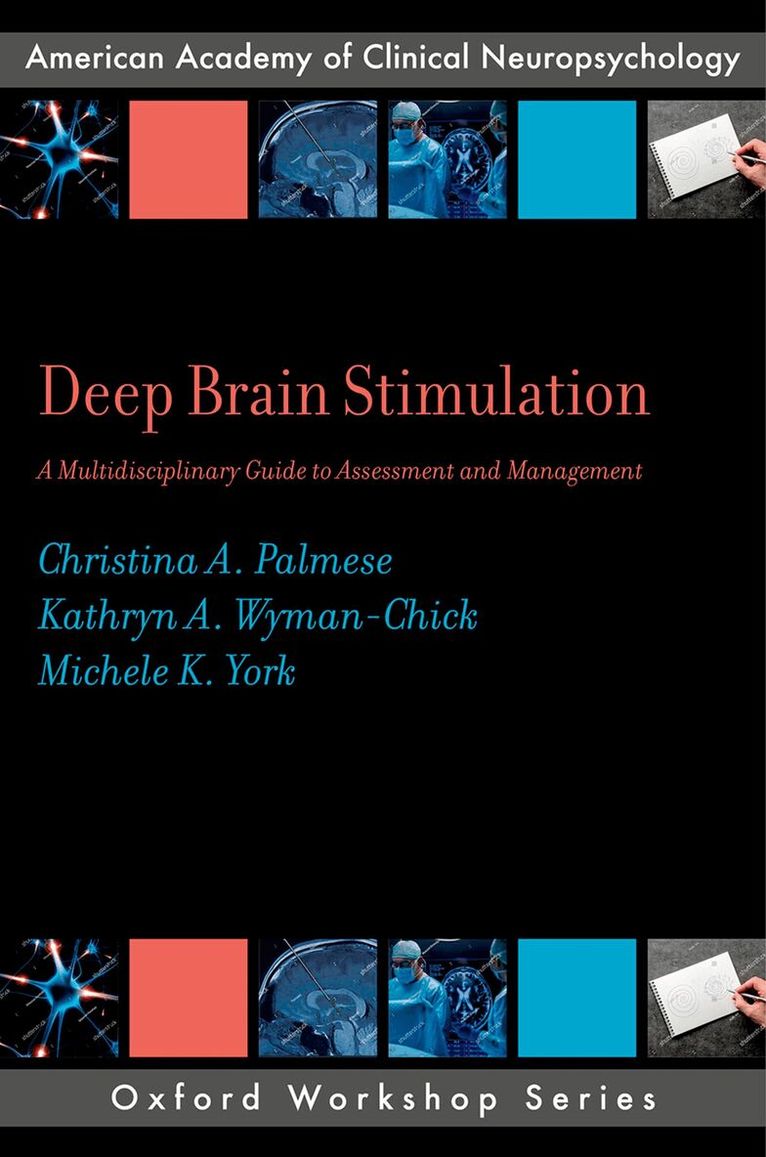
Deep Brain Stimulation is an invaluable resource that presents an exhaustive review of scientific DBS literature and integrates it with cutting-edge practice approaches for working with neurological and psychiatric disorders. The book takes the reader through the interdisciplinary care team model including DBS candidate selection and the crucial role of the neuropsychological evaluation in DBS surgical decision-making, along with post-operative care management considerations and alternative therapies. The book provides a detailed roadmap for understanding the cognitive and psychiatric risks and benefits of DBS surgery and it details approaches to enhance clinical outcomes. It is a must-have resource for anyone working with DBS candidate populations.
930 kr
Skickas inom 5-8 vardagar
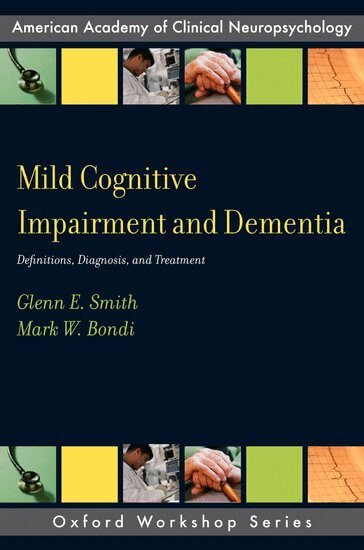
In 2011, National Institute on Aging and Alzheimer's Association joint task forces released proposed criteria for Alzheimer' disease diagnosis. These proposals included revisions to the nearly 30-year-old NINDS-ADRDA criteria for Alzheimer's diagnosis and added criteria for diagnosis of Mild Cognitive Impairment (MCI) due to Alzheimer's disease. The same year the American Psychiatric Association proposed new criteria for major and minor neurocognitive disorders (the entities previously known as dementia and mild cognitive impairment, respectively). These new criteria reflect the research and clinical advances in identifying mild cognitive impairment and offer new opportunities for prevention, treatment, and management of neurodegenerative conditions. A major focus of this book is on the mild cognitive impairment prodrome of the common dementias. In addition to discussing the most common neurodegenerative conditions, many rare neurodegenerative conditions are highlighted. Most chapters include an autopsy-confirmed case presentation from the authors' files. Following the case presentation, those chapters present current diagnostic criteria, epidemiology, neuropathology/neurophysiology, genetics, neuroimaging studies as relevant, associated clinical features, differential neuropsychological features and possible interventions for each disorder. The pace of change in research and practice in the field of normal cognitive aging and dementia is increasing almost as fast as the median age of the population. The massive baby boom population bubble is currently entering the age of risk for neurodegenerative conditions. Neuropsychologists will play a major role in refining and applying these diagnoses, and in developing, testing, and refining interventions for these diagnoses, and in caring for this population. This book is intended to prepare neuropsychologists and others interested in neuropsychology to serve this fastest growing segment of our population.
643 kr
Skickas inom 5-8 vardagar
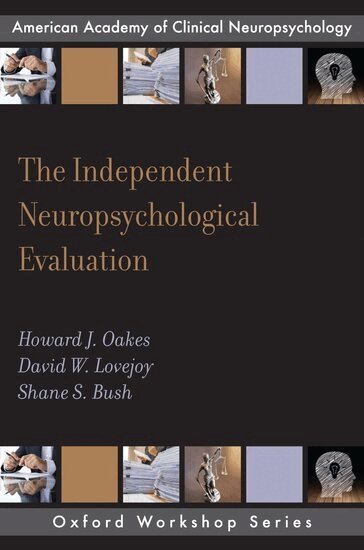
The Independent Neuropsychological Evaluation explores the process of conducting an independent neuropsychological evaluation (IME) for disability related claims. While neuropsychologists are well trained in the area of clinical assessment, little training, mentoring, or supervision applies these skills to the disability arena, and a lack of literature specific to this rapidly growing area of practice by which to develop expertise encroaches on these needs.Authors Howard J. Oakes, David W. Lovejoy, and Shane S. Bush provide information about how to prepare disability related assessments that are valid, useful, and appropriate. They explain the language and context of "disability," offer relevant ethical and professional considerations, and cover business aspects of IMEs as well as particular neuropsychological related issues. Although the subject matter covered in this book has relevance to neuropsychological IMEs conducted in the context of civil litigation, workers' compensation, fitness for duty, and state- or federally-sponsored disability programs, this book emphasizes IMEs conducted for private disability insurance companies. Practicing neuropsychologists and clinical psychologists who conduct, or are contemplating conducting, independent examinations, as well as providers in neurology and psychiatry who may struggle with some of the same disability-related issues and questions, will find this volume of great practical use.
599 kr
Skickas inom 5-8 vardagar
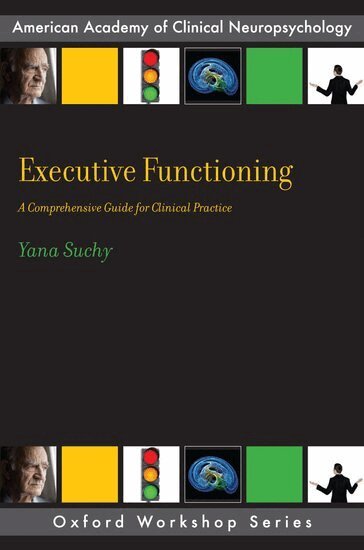
Executive Functioning: A Comprehensive Guide for Clinical Practice is the first book to offer an in-depth, comprehensive, and clinically applicable analysis of executive functioning (EF), as contrasted with "frontal-lobe functioning." Throughout the book, care is taken to stay true to the EF construct, and to use function, not structure, as the organising framework. The book is organised into four parts. The first part provides a brief overview of historical, theoretical, and clinical influences on how the construct has been conceptualized, studied, and ultimately defined. Part II describes five subdomains of EF, including Executive Cognitive Functions, Meta-tasking, Response Selection, Initiation/Maintenance, and Social Cognition. For each subdomain, the book reviews contributing elemental neurocognitive processes, neuroanatomic underpinnings, the utility of the subdomain in execution of daily tasks, as well as associated clinical syndromes. For each syndrome, cognitive and personality changes in daily life, as well as presentation during neuropsychological assessment, are described, and typical clinical populations characterized by each syndrome are briefly reviewed. Part III describes assessment methods, addressing both challenges and solutions in the neuropsychological evaluations of EF. An integration of information across record review, clinical interview, behavioural observation, and standardised assessment is advocated, as is consideration of assessment results within the contextual complexities of a given patient. Lastly, Part IV provides an overview of populations that are characterized by deficiencies in EF, with a chapter each devoted to neurodevelopmental, neurodegenerative, and neuropsychiatric disorders, as well as acquired brain insults and medical conditions.
573 kr
Skickas inom 5-8 vardagar
This book focuses on the skills required in testing and treating the older adult population. Topics discussed include normal aging, determining competency, important factors to consider in conducting clinical interviews, the importance of evaluating for depression and substance abuse, screening tools for use in practice, cognitive retaining and intervention and evaluation of the older adult in the workplace. This book will be helpful for neuropsychologists interested in testing and providing recommendations for older adults and for psychologists interested in treating older adults.
827 kr
Skickas inom 5-8 vardagar
Courts recognize that those who are involved in medico-legal proceedings have a stake in the outcome of their psychological assessment, regardless of whether they are high- or low-functioning individuals. Accounting for the validity of the evaluation in low-functioning examinees is frequently made more difficult by impairment; when evaluating testimony from people with intellectual disability (ID), neuropsychologists and psychologists must acknowledge the differences between the medico-legal evaluation and the clinical evaluation. This book provides helpful guidelines for assessing validity in low-functioning claimants. It charts recent advances in psychological and neuropsychological assessment pertaining to civil and criminal proceedings while examining issues such as validity and motivation, assessments of disability, criminal and civil capacities, capital cases, Miranda waiver cases, and others.In disability cases, the Social Security Administration has had a long-standing policy that prevents neuropsychologists and psychologists from using validity instruments--yet, using this book, an accurate and valid assessment can still be obtained. Evaluators who perform assessments in capital cases will find up-to-date discussions of the Flynn Effect, measurement of intellectual functioning, problems associated with the assessment of adaptive functioning, and the challenge of validity assessment. Miranda waiver evaluations for those with low IQ are discussed concerning issues of capacity measurement, including reading and language analysis for the Miranda advisement in the particular jurisdiction in question. Testamentary capacity is discussed at length, showing how understanding of the legal standard is helpful in guiding the examination. Competency to stand trial, or adjudicative competence, is the main topic in the area of criminal competencies, with exploration of the Dusky standard and the various tests used to evaluate this competence, focusing on individuals with ID.