AD Reader - Böcker
Visar alla böcker i serien AD Reader. Handla med fri frakt och snabb leverans.
12 produkter
12 produkter
900 kr
Tillfälligt slut
509 kr
Skickas inom 11-20 vardagar
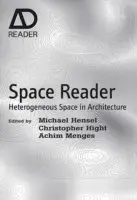
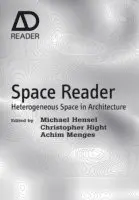
The Space Reader provides a highly pertinent and contemporary understanding of space for a new generation of students and architects. It espouses a definition of space that is heterogeneous (an object or system consisting of a diverse range of different items). An example of heterogeneous space, for instance, is Manhattan where complex and multiple social and technological conditions are overlaid. (This is to be contrasted with highly centralised and ordered Modernist cities.) With the onset of globalisation and the Web, heterogeneneous space, with its emphasis on differentiation, is more relevant to the contemporary condition, which encourages the mixing of space, than a much more static conception of Modernist space. This book foregrounds spatial issues and the potential of heterogeneous space through a threefold strategy:1) Its compilation of seminal essays on the discourse of heterogeneous space. These are to include previously published key texts by Reyner Banham, Andrew Benjamin, Robin Evans, Jeff Kipnis and Henri Lefebvre, as well as new texts by important contemporary commentators, such as Mark Cousins, Werner Durth and Anthony Vidler.2) By commenting on these seminal texts and drawing links between them.3) By distilling from the first two efforts a contemporary outlook on a discourse of heterogeneous space that is of future significance.
440 kr
Skickas inom 7-10 vardagar
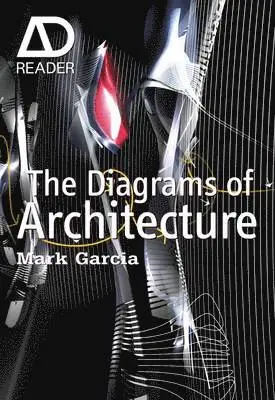
Since the 1980s, the diagram has become a preferred method for researching, communicating, theorising and making architectural designs, ideas and projects. Thus the rise of the diagram, as opposed to the model or the drawing, is the one of the most significant new developments in the process of design in the late 20th and early 21st centuries. Diagrams of Architecture is the first anthology to represent - through texts and diagrams - the histories, theories and futures of architecture through the diagram.Spanning the Pre-historic to the Parametric, Diagrams of Architecture illustrates over 250 diagrams and brings together 26 previously published and newly commissioned essays from leading international academics, architects, theorists and professional experts. These combine to define the past and future of the diagram's discourse. Prefaced with a critical introduction by Mark Garcia, each text investigates a central concept or dimension of the diagram ranging from socio-cultural studies, science, philosophy, technology, CAD/CAM, computing and cyberspace and virtual/digital design to methodology, environment/sustainability and phenomenological, poetic and art architecture; as well as interior, urban, engineering, interactive and landscape design. The first critical, multidisciplinary book on the history, theory and futures of the architectural diagram.Includes seminal articles on the diagram from the history and theory of architecture such as those by Peter Eisenman, Sanford Kwinter, MVRDV, Neil Spiller, Lars Spuybroek, UN Studio and Anthony Vidler.Features 16 newly commissioned articles by leading architects and theorists, including Will Alsop, Charles Jencks, Hanif Kara, Patrik Schumacher, Bernard Tschumi, Leon van Schaik and Alejandro Zaera-Polo.Includes a full-colour critical collection of over 250 of the most significant and original diagrams, many of which are previously unpublished, in the history of architecture from around the world.
440 kr
Skickas inom 7-10 vardagar
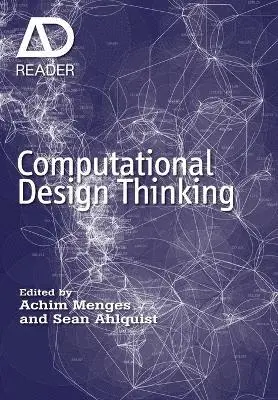
The current transition from Computer Aided Design (CAD) to Computational Design in architecture represents a profound shift in design thinking and methods. Representation is being replaced by simulation, and the crafting of objects is moving towards the generation of integrated systems through designer-authored computational processes. While there is a particular history of such an approach in architecture, its relative newness requires the continued progression of novel modes of design thinking for the architect of the 21st century. This AD Reader establishes a foundation for such thinking. It includes multifaceted reflections and speculations on the profound influence of computational paradigms on architecture. It presents relevant principles from the domains of mathematics and computer science, developmental and evolutionary biology, system science and philosophy, establishing a discourse for computational design thinking in architecture. Rather than a merely technical approach, the book will discuss essential intellectual concepts that are fundamental not only for a discourse on computational design but also for its practice. This anthology provides a unique collection of seminal texts by authors, who have either provided a significant starting point through which a computational approach to design has been pursued or have played a considerable role in shaping the field. An important aspect of this book is the manner in which adjacent fields and historical texts are connected. Both the source of original inspiration and scientific thought are presented alongside contemporary writings on the continually evolving computational design discourse. Emerging from the field of science, principally the subjects of morphogenesis, evolution and mathematics, selected texts provide a historical basis for a reconfigured mindset of processes that generate, arrange and describe form. Juxtaposed against more contemporary statements regarding the influence of computation on design thinking, the book offers advancements of fundamental texts to the particular purpose of establishing novel thought processes for architecture, theoretically and practically. The first reader to provide an effective framework for computational thinking in design. Includes classic texts by Johan W. von Goethe, D’Arcy Thompson, Ernst Mayr, Ludwig von Bertalanffy, Gordan Pask, Christopher Alexander, John H. Holland, Nicholas Negroponte, William Mitchell, Peter J. Bentley & David W. Corne, Sanford Kwinter, John Frazer, Kostis Terzidis, Michael Weinstock and Achim Menges Features new writing by: Mark Burry, Jane Burry, Manuel DeLanda and Peter Trummer.
1 104 kr
Skickas inom 7-10 vardagar
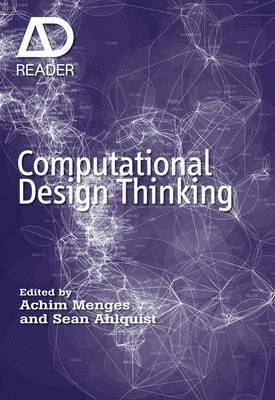
The current transition from Computer Aided Design (CAD) to Computational Design in architecture represents a profound shift in design thinking and methods. Representation is being replaced by simulation, and the crafting of objects is moving towards the generation of integrated systems through designer-authored computational processes. While there is a particular history of such an approach in architecture, its relative newness requires the continued progression of novel modes of design thinking for the architect of the 21st century. This AD Reader establishes a foundation for such thinking. It includes multifaceted reflections and speculations on the profound influence of computational paradigms on architecture. It presents relevant principles from the domains of mathematics and computer science, developmental and evolutionary biology, system science and philosophy, establishing a discourse for computational design thinking in architecture. Rather than a merely technical approach, the book will discuss essential intellectual concepts that are fundamental not only for a discourse on computational design but also for its practice. This anthology provides a unique collection of seminal texts by authors, who have either provided a significant starting point through which a computational approach to design has been pursued or have played a considerable role in shaping the field. An important aspect of this book is the manner in which adjacent fields and historical texts are connected. Both the source of original inspiration and scientific thought are presented alongside contemporary writings on the continually evolving computational design discourse. Emerging from the field of science, principally the subjects of morphogenesis, evolution and mathematics, selected texts provide a historical basis for a reconfigured mindset of processes that generate, arrange and describe form. Juxtaposed against more contemporary statements regarding the influence of computation on design thinking, the book offers advancements of fundamental texts to the particular purpose of establishing novel thought processes for architecture, theoretically and practically. The first reader to provide an effective framework for computational thinking in design. Includes classic texts by Johan W. von Goethe, D’Arcy Thompson, Ernst Mayr, Ludwig von Bertalanffy, Gordan Pask, Christopher Alexander, John H. Holland, Nicholas Negroponte, William Mitchell, Peter J. Bentley & David W. Corne, Sanford Kwinter, John Frazer, Kostis Terzidis, Michael Weinstock and Achim Menges Features new writing by: Mark Burry, Jane Burry, Manuel DeLanda and Peter Trummer.
285 kr
Tillfälligt slut
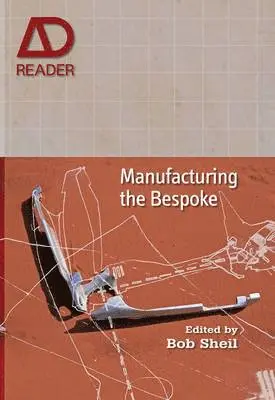
The essential reader on fabrication in architecture for practitioners and producers alike An original and informative reader on the subject of translating architectural ideas from conceptual propositions to physical manifestations, Manufacturing the Bespoke is an essential resource for students and practitioners of architecture, as well as producers and suppliers of architectural products.At a time where roles, methods and capabilities within the disciplines of building production are in unprecedented flux, this book: Provides a unique and highly current treatment on the subject of fabrication in architecture with its emphasis on contemporary technology, cultural history and theoryA key source book for students and professionals engaged in manufacturing/fabrication projectsIncludes extended articles by internationally renowned critics, theorists, educators and designers, such as Mathias Kohler, Nevi Oxman, and Michael StaceyArticles will examine and refer to key portfolios of the 20th and 21st Century including works by Pierre Charreau, Peter Salter and Rural StudioFeaturing essays from pioneering architects, engineers, academics and designers from around the world on both existing and yet-to-be-built projects, the book covers architecture across the ages.
417 kr
Skickas inom 7-10 vardagar
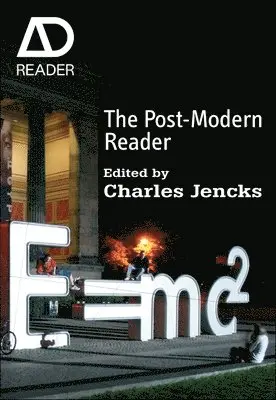
Post-Modernism has been debated, attacked and defended for over three decades. It is, however, not just a fashion or style but part of a greater movement in all areas of culture, and one which stubbornly persists like its parent, Modernism. The Post-Modern Reader is a seminal anthology that presents this trend in all its diversity, as a convergence in architecture and literature, sociology and cultural theory, feminism and theology, science and economics.For this new edition, editor Charles Jencks has provided an entirely new definitive introductory essay 'What Then Is Post-Modernism?' that reflects on the movement's coming of age. The book also encompasses essential classic texts on the subject by John Barth, Umberto Eco, David Harvey, Jane Jacobs, Jean-François Lyotard and Robert Venturi, while incorporating new articles by Felipe Fernández-Armesto, John Gray, Ihab Hassan and Anatole Kaletsky. Each text is introduced and contextualized got the reader with a new short introductory passage. A new edition of a classic anthology of 26 texts covering the full gamut of Post-Modern thought from architecture and literature to economics and theology.The Reader includes key texts by John Barth, Umberto Eco, David Harvey, Jane Jacobs, Jean-François Lyotard and Robert Venturi.A book edited by the most influential figure behind the Post-Modern movement – Charles Jencks.A timely and informative publication for students that captures the renewed interest in Post-Modernism.
440 kr
Skickas inom 7-10 vardagar
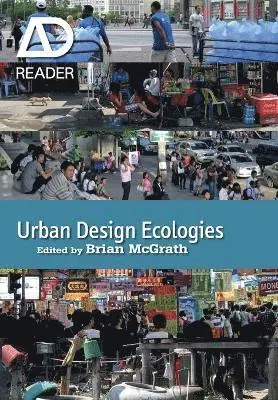
The discipline of urban design is undergoing a rapid expansion and realignment. It is experiencing a shift from a profession dominated by architects and planners, directed at urban development, to a more expansive set of practices engaging new forms of social and environmental ecologies, as cities worldwide adapt to economic restructuring, mass migrations and climate change. Bringing together classic and new texts from the last 40 years, this AD Reader focuses attention on the critical tools needed to understand how cities have been designed and constructed and then changed over time. This enables new ways of envisioning how cities must be conceived and adapted in the future to the dual conditions of rapid urbanisation and economic restructuring, coupled with unpredictable environmental conditions due to climate change. With its emphasis on both urban design and the ecological, this book brings together key articles that point the way forward for reconciling the often conflicting concerns of urbanism and environmentalism. Twenty-three texts are organised into four distinct sections, covering metropolitan architecture, the sprawling megalopolis, the megacity and the recently emerging metacity. These are broadly chronological and highlight the recent thinking behind some of the key urban developments, ranging from the art of traditional city-making covered by European architects and historians in the late 20th century to contemporary Tokyo described by Atelier Bow-Wow. Features original texts from: Reyner Banham, Rem Koolhaas, Aldo Rossi, Colin Rowe, David Grahame Shane, Bernard Tschumi, Oswald Mathias Ungers, and Robert Venturi, Denise Scott Brown and Steven Izenour. Contains newly commissioned texts from: Mary Cadenasso, Sharon Haar and Victoria Marshall, Carlos Leite, Steward TA Pickett and Albert Pope. Includes new translations of important essays by Vittorio Gregotti and Paola Viganò. Topics range from the European historic city to the Las Vegas Strip and the megacity of São Paulo, taking in the global sustainable city.
1 291 kr
Skickas inom 11-20 vardagar
The discipline of urban design is undergoing a rapid expansion and realignment. It is experiencing a shift from a profession dominated by architects and planners, directed at urban development, to a more expansive set of practices engaging new forms of social and environmental ecologies, as cities worldwide adapt to economic restructuring, mass migrations and climate change. Bringing together classic and new texts from the last 40 years, this AD Reader focuses attention on the critical tools needed to understand how cities have been designed and constructed and then changed over time. This enables new ways of envisioning how cities must be conceived and adapted in the future to the dual conditions of rapid urbanisation and economic restructuring, coupled with unpredictable environmental conditions due to climate change. With its emphasis on both urban design and the ecological, this book brings together key articles that point the way forward for reconciling the often conflicting concerns of urbanism and environmentalism. Twenty-three texts are organised into four distinct sections, covering metropolitan architecture, the sprawling megalopolis, the megacity and the recently emerging metacity. These are broadly chronological and highlight the recent thinking behind some of the key urban developments, ranging from the art of traditional city-making covered by European architects and historians in the late 20th century to contemporary Tokyo described by Atelier Bow-Wow. Features original texts from: Reyner Banham, Rem Koolhaas, Aldo Rossi, Colin Rowe, David Grahame Shane, Bernard Tschumi, Oswald Mathias Ungers, and Robert Venturi, Denise Scott Brown and Steven Izenour. Contains newly commissioned texts from: Mary Cadenasso, Sharon Haar and Victoria Marshall, Carlos Leite, Steward TA Pickett and Albert Pope. Includes new translations of important essays by Vittorio Gregotti and Paola Viganò. Topics range from the European historic city to the Las Vegas Strip and the megacity of São Paulo, taking in the global sustainable city.
467 kr
Skickas inom 11-20 vardagar
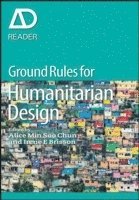
Delve deep into the complex issues surrounding humanitarian design Ground Rules in Humanitarian Design establishes essential foundations for thinking about humanitarian design and its role in global change. Outlining a vital framework for designing for impoverished and disaster-stricken communities, this informative guide explores the integration of culture, art, architecture, economy, ecology, health, and education. Experts on land, health, water, housing, education, and planning weigh in with best practices and critical considerations during the design process, and discussion of the environmental considerations and local materials/skills will broaden your understanding of this nuanced specialty. Richly illustrated, this guide combines graphic documentation of projects, maps, and data-tracking developments from Asia, Africa, and the Americas to underscore the complexities of this emerging and evolving field.The ambition to provide humanitarian architecture for areas in acute need is driving design innovation worldwide among both practitioners and educators. This book provides an indispensable resource for those engaged in the search for the sustainable inclusion of cultural code and compassion as a technology for design innovation. Learn how to approach the problem of humanitarian designUnderstand the cultural factors that play into developmentDevelop a new framework for planning post-disaster designSee how humanitarian design is pushing the industry forwardWhile still in college, students are being given the opportunity to directly participate in programmes that provide vital facilities for communities abroad. While these international initiatives remain largely ad hoc, this book provides parameters for engagement and establishes best practices for approaching these projects with a global perspective. With expert insight and practical strategies on the ground, Ground Rules in Humanitarian Design is an essential resource for architects at any level.
517 kr
Skickas inom 7-10 vardagar
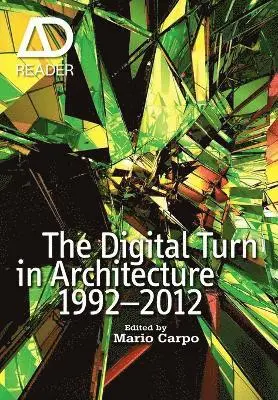
Now almost 20 years old, the digital turn in architecture has already gone through several stages and phases. Architectural Design (AD) has captured them all – from folding to cyberspace, nonlinearity and hypersurfaces, from versioning to scripting, emergence, information modelling and parametricism. It has recorded and interpreted the spirit of the times with vivid documentary precision, fostering and often anticipating crucial architectural and theoretical developments. This anthology of AD’s most salient articles is chronologically and thematically arranged to provide a complete historical timeline of the recent rise to pre-eminence of computer-based design and production. Mario Carpo provides an astute overview of the recent history of digital design in his comprehensive introductory essay and in his leaders to each original text. A much needed pedagogical and research tool for students and scholars, this synopsis also relates the present state of digitality in architecture to the history and theory of its recent development and trends, and raises issues of crucial importance for the contemporary practice of the design professions. A comprehensive anthology on digital architecture edited by one of its most eminent scholars in this field, Mario Carpo.Includes seminal texts by Bernard Cache, Peter Eisenman, John Frazer, Charles Jencks, Greg Lynn, Achim Menges and Patrik Schumacher.Features key works by FOA, Frank Gehry, Zaha Hadid, Ali Rahim, Lars Spuybroek/NOX, Kas Oosterhuis and SHoP.
1 061 kr
Tillfälligt slut
Now almost 20 years old, the digital turn in architecture has already gone through several stages and phases. Architectural Design (AD) has captured them all – from folding to cyberspace, nonlinearity and hypersurfaces, from versioning to scripting, emergence, information modelling and parametricism. It has recorded and interpreted the spirit of the times with vivid documentary precision, fostering and often anticipating crucial architectural and theoretical developments. This anthology of AD’s most salient articles is chronologically and thematically arranged to provide a complete historical timeline of the recent rise to pre-eminence of computer-based design and production. Mario Carpo provides an astute overview of the recent history of digital design in his comprehensive introductory essay and in his leaders to each original text. A much needed pedagogical and research tool for students and scholars, this synopsis also relates the present state of digitality in architecture to the history and theory of its recent development and trends, and raises issues of crucial importance for the contemporary practice of the design professions. A comprehensive anthology on digital architecture edited by one of its most eminent scholars in this field, Mario Carpo.Includes seminal texts by Bernard Cache, Peter Eisenman, John Frazer, Charles Jencks, Greg Lynn, Achim Menges and Patrik Schumacher.Features key works by FOA, Frank Gehry, Zaha Hadid, Ali Rahim, Lars Spuybroek/NOX, Kas Oosterhuis and SHoP.