Advances in Wastewater Research – serie
Visar alla böcker i serien Advances in Wastewater Research. Handla med fri frakt och snabb leverans.
14 produkter
14 produkter
Inbunden, Engelska, 2026
2 176 kr
Skickas inom 10-15 vardagar
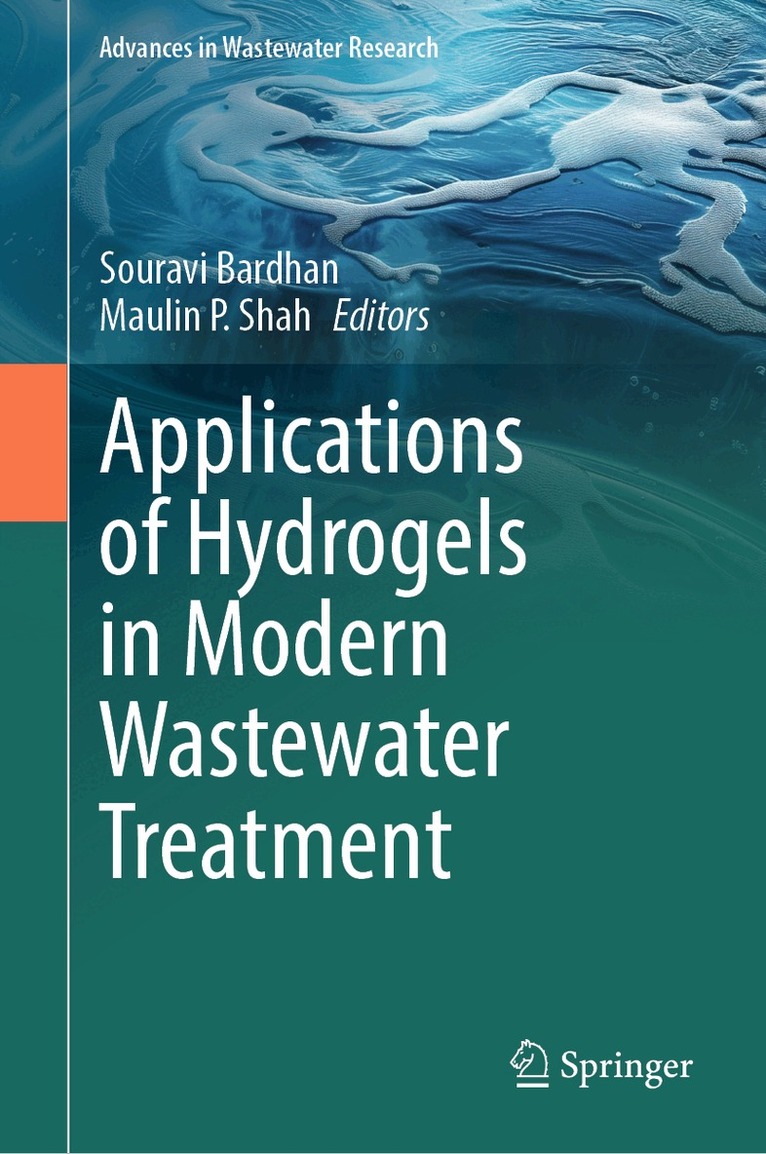
This book summarizes key findings in hydrogel-based wastewater treatment and outlines their future directions. The book begins with various physicochemical properties and synthesis routes of hydrogels. The book then unveils their potential in contaminant removal from wastewater along with their mechanisms. The kinetics and thermodynamics governing the adsorption processes during pollutant removal are also explored. In addition, the book brings to light the practical applications of hydrogels in diverse scenarios, offering lessons learned from pilot studies and insights into scaling up hydrogel technologies for large-scale treatment. Alongside the removal of heavy metals and organic pollutants, this book also highlights the application of hydrogels in eradication of microbes in wastewater. Besides the challenges faced during the hydrogel application in wastewater treatment, the environmental sustainability of hydrogel applications is also addressed. The book provides readers a roadmap for the future of hydrogel-based wastewater treatment.
Inbunden, Engelska, 2026
1 742 kr
Skickas inom 10-15 vardagar
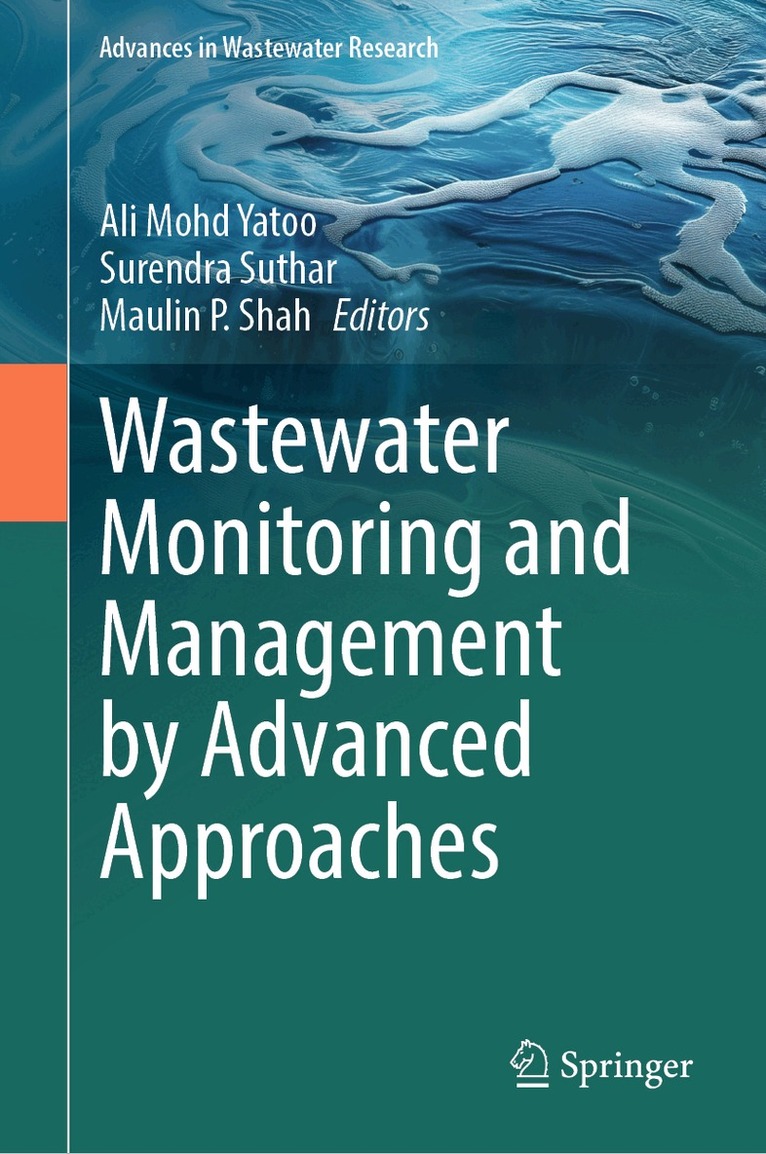
This book provides an in-depth understanding of the latest technologies and approaches to monitor and manage wastewater such as the review of current state, the challenges faced by the industry, and the latest technological advancements in the field. The book is divided into two parts, each of which focuses on a specific aspect of wastewater monitoring and management. The part one includes the wastewater monitoring which highlights and provides an overview of the latest technologies, including remote sensing, GIS, biosensors, electrochemical sensors, and microfluidic devices. The part two focuses on the latest approaches to treat and manage wastewater. This part discusses advanced electrochemical methods, nanotechnology applications, membrane filtration techniques, electrocoagulation, microbial fuel cells, and the potential of artificial intelligence, machine learning, IoT and big data analytics in wastewater management. The part also covers the potential of advanced biotechnological approaches to remove toxicants and enhance water quality. The book is a valuable resource for professionals and students in the field of wastewater management.
Inbunden, Engelska, 2026
2 894 kr
Kommande
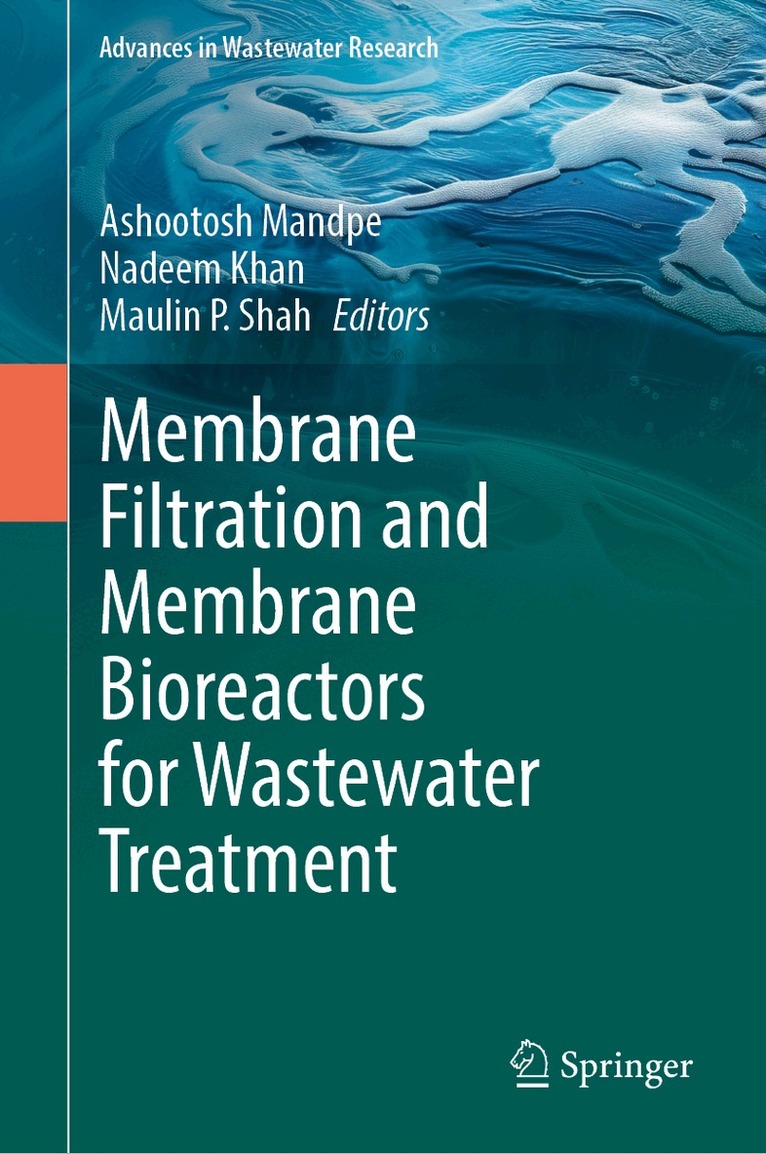
This book offers precise guidelines and exemplary design instances of membrane filtration and membrane bioreactors (MBR) for wastewater treatment. In addition, the book presents some real-world insights into the technology. Delving into the intricacies of MBR technology such as biological treatment and membrane fouling, the primary focus remains on membrane filtration and its application in wastewater treatment. The content extends to practical aspects of MBR utilization in daily life, including maintenance, design intricacies, and illustrative case studies. Tailored for students and wastewater engineers, the book seamlessly includes foundational chapters, which are supplemented with examples and problem-solving exercises, to facilitate a thorough understanding of MBR technology. Addressing both the scientific and technological facets, the book presents extensive insights into MBR applications and practices with foundational principles. The book consists of eighteen chapters, encompassing membrane basics, contemporary membrane types, characterization techniques, fouling dynamics, diverse configurations, practical applications, and case studies.
Inbunden, Engelska, 2026
1 742 kr
Skickas inom 10-15 vardagar
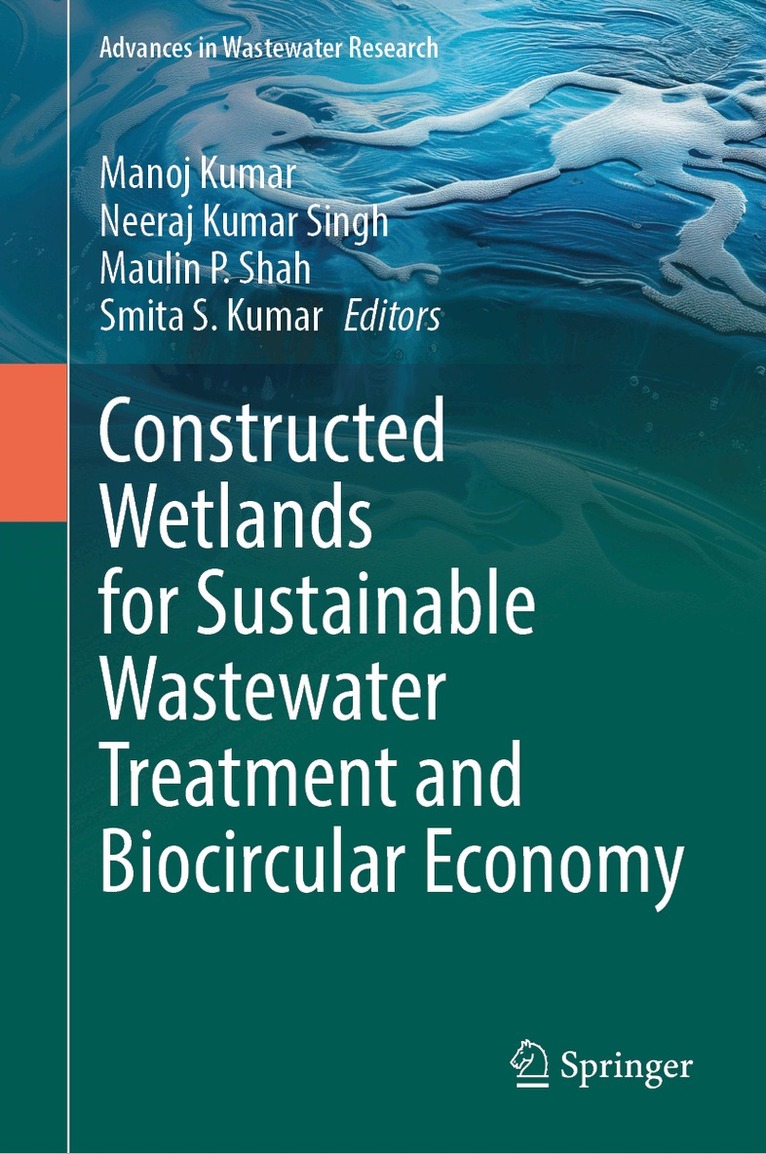
This book provides a comprehensive exploration of the role of constructed wetlands in sustainable wastewater treatment and their contribution to the emerging concept of the biocircular economy. The book is divided into three parts. Part I covers the fundamentals, basic design, efficiency, maintenance, limitations, performance assessment, and sustainability of constructed wetlands. It also provides an overview of the current situation. Part II is dedicated to recent advancements and novel applications of constructed wetlands for wastewater treatment, including various emerging technologies, bioelectrochemical systems. The last part concludes with a global scenario, challenges, life cycle assessment, and techno-economical analyses of constructed wetlands. It also provides the information on the techniques and methodologies that facilitate the integration of wastewater treatment technologies; the bibliometric overview of the research progress and challenges; policy landscape; global perspectives; and green circular economy. The book is a valuable resource for researchers, practitioners, and policymakers interested in advanced sustainable wastewater treatment solutions.
Inbunden, Engelska, 2025
2 393 kr
Skickas inom 10-15 vardagar
This book presents electrochemical water treatment methods, which offer ways to find more sustainable solutions. The majority of electrochemical water treatment methods use electricity as the main reactant to conduct the treatment process. Among well-developed electrochemical water treatment methods such as electrocoagulation, electroflotation, electrodialysis, electrochemical oxidation-reduction, there are evolving methods, which show good pre fundamentals for their use in industry-scale applications. These methods increase the removal rates of pollutants, remove drawbacks, extend the applicability of existing electrochemical water treatment methods, and improve cost-efficiency.This book also delivers the improved and enhanced innovative techniques which are economical and efficient for wastewater treatment industry. In addition, the book will envisage the future potential of electrochemical treatment adaptation and a protocol for achieving graded water flexibility and a sustainable future.The main typical reactors used for electrochemical water treatment methods are discussed in this book. Moreover, the volume includes some examples of electrochemical water treatment methods in practice and the activities of some companies working in the field of water treatment. At the same time, design solutions for reactors of developing electrochemical processes are still in the stage of optimization and development, which are presented in the book. There is often a difficulty in selecting the right size of equipment for the treatment of water with given flow rates and concentration of pollutants. This book focuses on the challenges and future tendencies for this highly efficient technology to reach the full-scale implementations as well.
Häftad, Engelska, 2026
2 393 kr
Skickas inom 10-15 vardagar
This book presents electrochemical water treatment methods, which offer ways to find more sustainable solutions. The majority of electrochemical water treatment methods use electricity as the main reactant to conduct the treatment process. Among well-developed electrochemical water treatment methods such as electrocoagulation, electroflotation, electrodialysis, electrochemical oxidation-reduction, there are evolving methods, which show good pre fundamentals for their use in industry-scale applications. These methods increase the removal rates of pollutants, remove drawbacks, extend the applicability of existing electrochemical water treatment methods, and improve cost-efficiency.This book also delivers the improved and enhanced innovative techniques which are economical and efficient for wastewater treatment industry. In addition, the book will envisage the future potential of electrochemical treatment adaptation and a protocol for achieving graded water flexibility and a sustainable future.The main typical reactors used for electrochemical water treatment methods are discussed in this book. Moreover, the volume includes some examples of electrochemical water treatment methods in practice and the activities of some companies working in the field of water treatment. At the same time, design solutions for reactors of developing electrochemical processes are still in the stage of optimization and development, which are presented in the book. There is often a difficulty in selecting the right size of equipment for the treatment of water with given flow rates and concentration of pollutants. This book focuses on the challenges and future tendencies for this highly efficient technology to reach the full-scale implementations as well.
Inbunden, Engelska, 2025
1 742 kr
Skickas inom 10-15 vardagar
This book explores the perspectives and prospects of nanotechnology in environmental remediation and provides a deep insight into the role of nanomaterials for wastewater remediation. The book also focuses on the need for novel developments in the nanomaterials which can target particular contaminants in wastewater. It also takes into account the challenges involved in the application of these nanomaterials, their social and economic aspects, and future directions in multifaceted aspects of nanomaterial use that will facilitate future research to formulate the strategies for environmental restoration.Nanotechnology offers new and improved environmental remediation technologies such as nanophotocatalysts, nanosensors, nanodevices, nanofilters, and nanoadsorbents for the decontamination of toxic pollutants, groundwater, and industrial wastewater. Considering the capabilities of nanotechnology in controlling, eliminating, and purifying environmental pollutants, it can also be considered as a green technology and an effective tool to achieve sustainable environment.
Inbunden, Engelska, 2025
1 742 kr
Skickas inom 10-15 vardagar
This book focuses on the most recent developments in bioremediation techniques and what the future holds for bioremediation in order to reduce the amount of pollution in the world. This book serves as a valuable resource for policy makers, teachers, researchers, climatologists, and undergraduate and graduate students of agriculture, forestry, ecology, soil science, and environmental sciences.Both industries and anthropogenic activities generate pollutants of different types which have affected human health and have destroyed biodiversity at multiple levels. They largely consist of personal care and pharmaceuticals products produced by different industries. Most of these emergent contaminants cannot be removed by conventional water treatment procedures and are released in surface water. They further contaminate groundwater, soil, sediments and oceans. More efficient and improved treatment systems are required to remove such emerging contaminants. Various microbes can play crucial role in bioremediation by elimination, degradation, detoxification, and immobilization of pollutants. Most of these microbes are versatile in nature and can survive in a wide range of environmental conditions. Furthermore, they can be applied to different pollutants. Microbial degradation and bioremediation can be considered as useful and effective treatment options for emerging pollutants.
Häftad, Engelska, 2026
1 742 kr
Skickas inom 10-15 vardagar
This book focuses on the most recent developments in bioremediation techniques and what the future holds for bioremediation in order to reduce the amount of pollution in the world. This book serves as a valuable resource for policy makers, teachers, researchers, climatologists, and undergraduate and graduate students of agriculture, forestry, ecology, soil science, and environmental sciences.Both industries and anthropogenic activities generate pollutants of different types which have affected human health and have destroyed biodiversity at multiple levels. They largely consist of personal care and pharmaceuticals products produced by different industries. Most of these emergent contaminants cannot be removed by conventional water treatment procedures and are released in surface water. They further contaminate groundwater, soil, sediments and oceans. More efficient and improved treatment systems are required to remove such emerging contaminants. Various microbes can play crucial role in bioremediation by elimination, degradation, detoxification, and immobilization of pollutants. Most of these microbes are versatile in nature and can survive in a wide range of environmental conditions. Furthermore, they can be applied to different pollutants. Microbial degradation and bioremediation can be considered as useful and effective treatment options for emerging pollutants.
Inbunden, Engelska, 2025
2 166 kr
Skickas inom 5-8 vardagar
This book explores the transformative field of nanotechnology in wastewater treatment and emphasizes state-of-the-art strategies to address intricate challenges. The volume is a valuable guide for professionals, researchers, and students involved in industrial waste management. Distinguishing itself by providing detailed insights into the application of nanomaterials, the book highlights their unique properties, including high surface area, reactivity, and selectivity owing to nanoscale dimensions. It meticulously examines nanomaterials' efficacy in adsorption, catalysis, and pollutant transformation, which are faster and more efficient treatment than conventional methods. The volume encompasses customized nanomaterials for specific pollutants, reducing resource consumption in line with sustainability principles. The book also explores the compact designs for nanomaterial-based treatment systems, particularly beneficial for space-constrained industries.The book bridges a gap between scientific insights and practical applications, offering a thorough exploration of waste management methodologies, policy frameworks, and circular economy integration. With a focus on technology transfer, capacity building, and governance, the book shows professionals and stakeholders to implement nanomaterial-based approaches. Overall, it stands as a concise and practical guide, seamlessly blending scientific rigor with real-world relevance in the field of industrial wastewater treatment.
Inbunden, Engelska, 2025
1 518 kr
Skickas inom 5-8 vardagar
This book covers various aspects of heavy metal contamination in wastewater and its removal by microbial-based approaches. The heavy metal contamination in water is generally caused due to natural and anthropogenic activities. There are many industrial processes responsible for such a contamination, for example, leather tanning, coal washeries, agriculture activities, chrome plating and paint industries. The industrial effluent directly or indirectly discharges into water sources, and heavy metal containing wastewater decreases the quality of surface water and groundwater. The heavy metal contamination causes various types of health issues in human and other living organisms, including kidney and liver damage, heart failure, mental retardation, cancers, and skin and gastric problems. The high level of heavy metal concentration in the cell generates reactive oxygen species (ROS) which may cause damage to cell organelles.Due to their high toxicity, there is an urgent need to develop effective heavy metal removal method for wastewater treatment. There are several conventional methods available for the removal of heavy metal ions from contaminated sites. These methods have some disadvantages such as the generation of secondary toxic sludge and high operation cost. Hence, it is required to develop cost-effective and eco-friendly methods for decontamination. Microorganisms have tendency to accumulate heavy metal ions into their intracellular space and can grow in various high-stress environments, and microbial-based methods are considered as eco-friendly and cost-effective. Moreover, the integrated approach of wastewater treatment and utilization of microbial biomass for bioenergy production can be beneficial in terms of heavy metal bioremediation and zero waste generation. This book focuses on the heavy metal contamination, their toxicity and microbial methods for the removal of heavy metal ions from contaminated sites.
Inbunden, Engelska, 2025
1 742 kr
Skickas inom 10-15 vardagar
This book carefully reviews the sources, causes, and effects of the emerging contaminants and clarifies how they enter water systems, including urban wastewater, agricultural runoff, and industrial discharges. This book also highlights the intricate relationships between pollutants and ecosystems, showing their hazardous and bioaccumulative characteristics through in-depth studies and case studies. In addition, the book addresses the pressing need for efficient management techniques and covers cutting-edge methods for monitoring, assessment, and correction. This book provides insights into reducing the negative consequences of emerging pollutants through sophisticated analytical techniques and environmentally acceptable remedial procedures. Furthermore, this book stresses the significance of legislative interventions and interdisciplinary teamwork in tackling this environmental concern. This book is a valuable resource for scholars, decision-makers, and individuals who are committed to environmentally friendly water management.
Inbunden, Engelska, 2026
1 742 kr
Skickas inom 10-15 vardagar
This book explores the latest development on bioremediation techniques of wastewater pollutants using microbes. They can be used to valorize nutrients from wastewater systems and produce biodiesel, bioethanol and other biofuels. Furthermore, polymers such as poly hydroxybutyric acids and other extra cellular polysaccharides obtained from these microbes can also be utilized for the production of bioplastics, different biopolymers and biosurfactants. The book is divided into three parts, including (1) bioremediation by microbes, (2) resource recovery by microbes and (3) genomics and proteomics associated with bioremediation. The volume is a valuable resource for researchers, students, academicians and policymakers in the field of wastewater treatment.
Inbunden, Engelska, 2025
1 742 kr
Skickas inom 10-15 vardagar
This book describes the extraction, production, characterizations of bioflocculants with a focus on their mechanisms and applications. The volume explores various bioflocculants from plants, microbes such as bacteria, fungi, and algae. The chapters cover degradation of new emergent pollutants from industries using bioflocculants, and characterization of wastewater at microbiological and molecular levels with help of upgraded techniques, among others. The book inspires researchers or academicians to advance research in the field of environmental biotechnology, bioremediation technologies using bioflocculants.