Agriculture Automation and Control – serie
Visar alla böcker i serien Agriculture Automation and Control. Handla med fri frakt och snabb leverans.
16 produkter
16 produkter
Inbunden, Engelska, 2021
1 956 kr
Skickas inom 10-15 vardagar
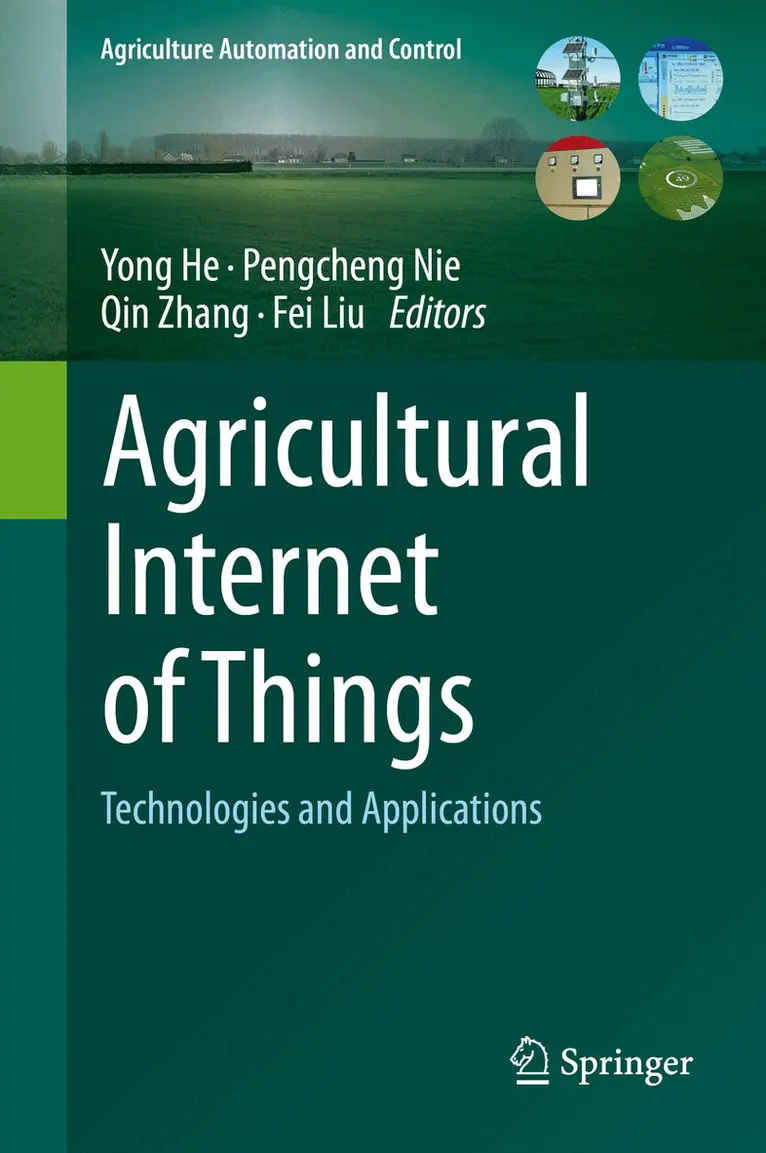
Internet of things (IoT) is a new type of network that combines communication technology, expanded applications, and physical devices. Among them, agriculture is one of the most important areas in the application of the IoT technology, which has its unique requirements and integration features. Compared to the information technology in traditional agriculture, the agricultural IoT mainly refers to industrialized production and sustainable development under relatively controllable conditions. Agricultural IoT applies sensors, RFID, visual capture terminals and other types of sensing devices to detect and collect site information, and with broad applications in field planting, facility horticulture, livestock and poultry breeding, aquaculture and agricultural product logistics. It utilizes multiple information transmission channels such as wireless sensor networks, telecommunications networks and the internet to achieve reliable transmission of agricultural information at multiple scales and intelligently processes the acquired, massive information. The goals are to achieve (i) optimal control of agricultural production process, (ii) intelligent electronic trading of agricultural products circulation, and (iii) management of systematic logistics, quality and safety traceability.This book focuses on three levels of agricultural IoT network: information perception technology, information transmission technology and application technology.
Häftad, Engelska, 2022
1 956 kr
Skickas inom 10-15 vardagar
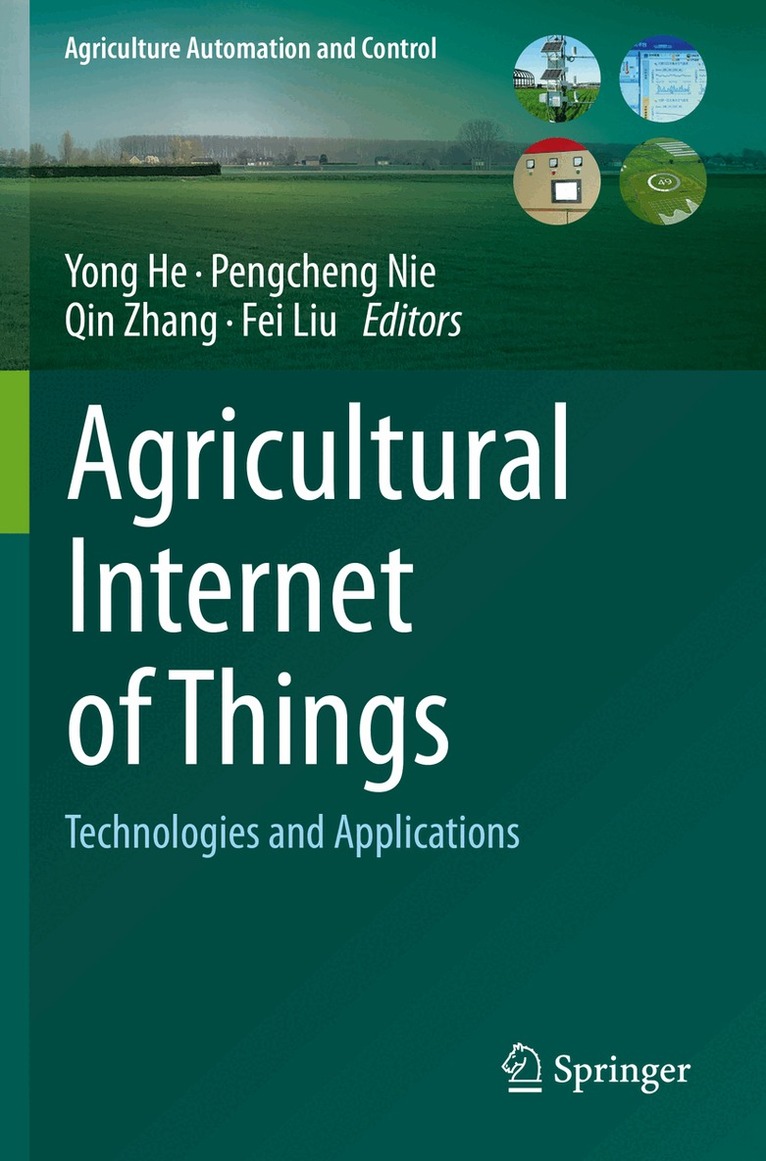
Internet of things (IoT) is a new type of network that combines communication technology, expanded applications, and physical devices. Among them, agriculture is one of the most important areas in the application of the IoT technology, which has its unique requirements and integration features. Compared to the information technology in traditional agriculture, the agricultural IoT mainly refers to industrialized production and sustainable development under relatively controllable conditions. Agricultural IoT applies sensors, RFID, visual capture terminals and other types of sensing devices to detect and collect site information, and with broad applications in field planting, facility horticulture, livestock and poultry breeding, aquaculture and agricultural product logistics. It utilizes multiple information transmission channels such as wireless sensor networks, telecommunications networks and the internet to achieve reliable transmission of agricultural information at multiple scales and intelligently processes the acquired, massive information. The goals are to achieve (i) optimal control of agricultural production process, (ii) intelligent electronic trading of agricultural products circulation, and (iii) management of systematic logistics, quality and safety traceability.This book focuses on three levels of agricultural IoT network: information perception technology, information transmission technology and application technology.
Inbunden, Engelska, 2021
2 389 kr
Skickas inom 10-15 vardagar
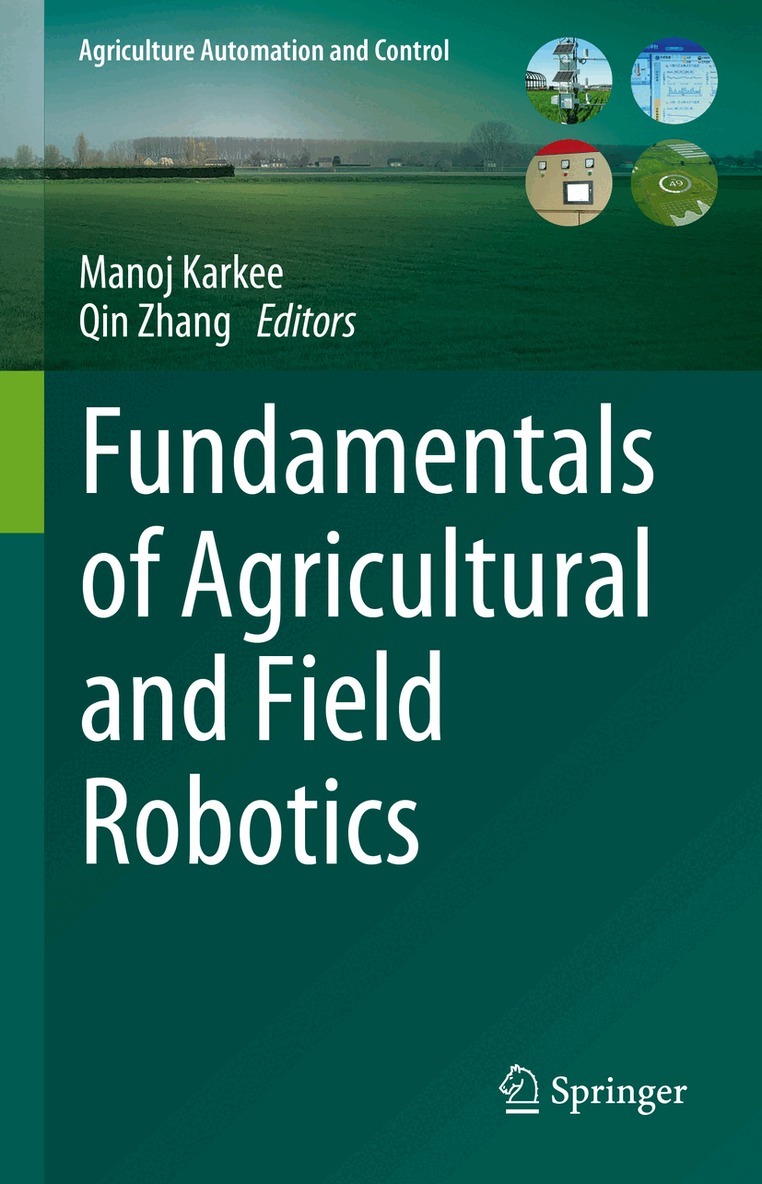
Over the past century, mechanization has been an important means for optimizing resource utilization, improving worker health and safety and reducing labor requirements in farming while increasing productivity and quality of 4F (Food, Fuel, Fiber, Feed). Recognizing this contribution, agricultural mechanization was considered as one of the top ten engineering achievements of 20th century by the National Academy of Engineering. Accordingly farming communities have adopted increasing level of automation and robotics to further improve the precision management of crops (including input resources), increase productivity and reduce farm labor beyond what has been possible with conventional mechanization technologies. It is more important than ever to continue to develop and adopt novel automation and robotic solutions into farming so that some of the most complex agricultural tasks, which require huge amount of seasonal labor such as fruit and vegetable harvesting, couldbe automated while meeting the rapidly increasing need for 4F. In addition, continual innovation in and adoption of agricultural automation and robotic technologies is essential to minimize the use of depleting resources including water, minerals and other chemicals so that sufficient amount of safe and healthy food can be produced for current generation while not compromising the potential for the future generation. This book aims at presenting the fundamental principles of various aspects of automation and robotics as they relate to production agriculture (the branch of agriculture dealing with farming operations from field preparation to seeding, to harvesting and field logistics). The building blocks of agricultural automation and robotics that are discussed in the book include sensing and machine vision, control, guidance, manipulation and end-effector technologies. The fundamentals and operating principles of these technologies are explained with examples from cutting-edge research and development currently going on around the word. This book brings together scientists, engineers, students and professionals working in these and related technologies to present their latest examples of agricultural automation and robotics research, innovation and development while explaining the fundamentals of the technology. The book, therefore, benefits those who wish to develop novel agricultural engineering solutions and/or to adopt them in the future.
Häftad, Engelska, 2022
2 389 kr
Skickas inom 10-15 vardagar
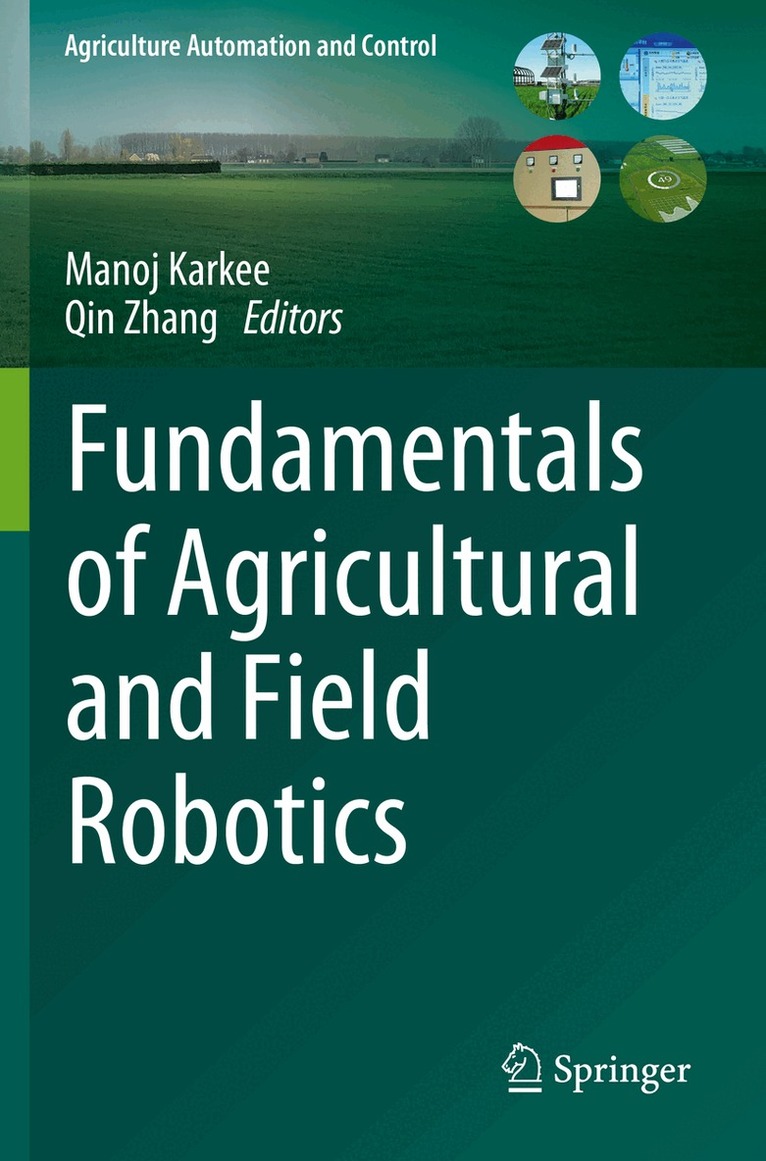
Over the past century, mechanization has been an important means for optimizing resource utilization, improving worker health and safety and reducing labor requirements in farming while increasing productivity and quality of 4F (Food, Fuel, Fiber, Feed). Recognizing this contribution, agricultural mechanization was considered as one of the top ten engineering achievements of 20th century by the National Academy of Engineering. Accordingly farming communities have adopted increasing level of automation and robotics to further improve the precision management of crops (including input resources), increase productivity and reduce farm labor beyond what has been possible with conventional mechanization technologies. It is more important than ever to continue to develop and adopt novel automation and robotic solutions into farming so that some of the most complex agricultural tasks, which require huge amount of seasonal labor such as fruit and vegetable harvesting, couldbe automated while meeting the rapidly increasing need for 4F. In addition, continual innovation in and adoption of agricultural automation and robotic technologies is essential to minimize the use of depleting resources including water, minerals and other chemicals so that sufficient amount of safe and healthy food can be produced for current generation while not compromising the potential for the future generation. This book aims at presenting the fundamental principles of various aspects of automation and robotics as they relate to production agriculture (the branch of agriculture dealing with farming operations from field preparation to seeding, to harvesting and field logistics). The building blocks of agricultural automation and robotics that are discussed in the book include sensing and machine vision, control, guidance, manipulation and end-effector technologies. The fundamentals and operating principles of these technologies are explained with examples from cutting-edge research and development currently going on around the word. This book brings together scientists, engineers, students and professionals working in these and related technologies to present their latest examples of agricultural automation and robotics research, innovation and development while explaining the fundamentals of the technology. The book, therefore, benefits those who wish to develop novel agricultural engineering solutions and/or to adopt them in the future.
Inbunden, Engelska, 2022
1 007 kr
Skickas inom 5-8 vardagar
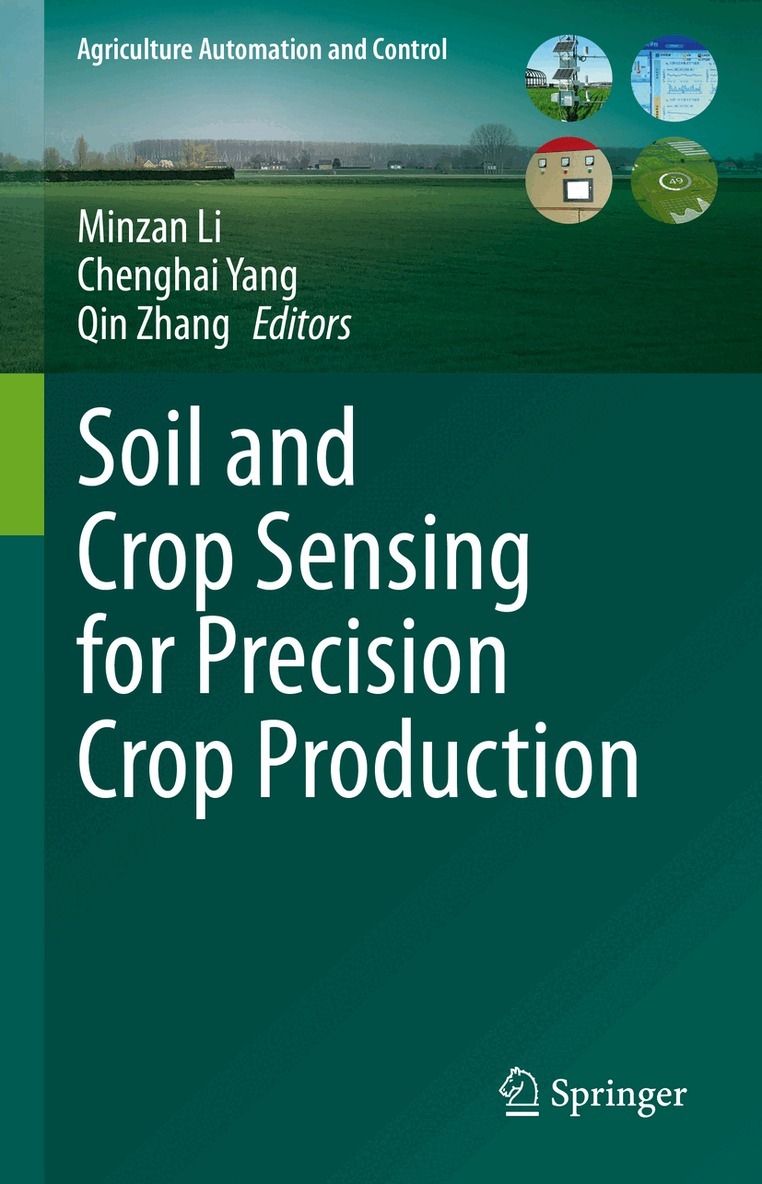
Soil and crop sensing is a fundamental component and the first important step in precision agriculture. Unless the level of soil and crop variability is known, appropriate management decisions cannot be made and implemented. In the last few decades, various ground-based sensors have been developed to measure spatial variability in soil properties and nutrients, crop growth and yield, and pest conditions. Remote sensing as an important data collection tool has been increasingly used to map soil and crop growth variability as spatial, spectral and temporal resolutions of image data have improved significantly in recent years. While identifying spatial variability of soil and crop growth within fields is an important first step towards precision management, using that variability to formulate variable rate application plans of farming inputs such as fertilizers and pesticides is another essential step in precision agriculture.The purpose of this book is to present the historical, current and future developments of soil and crop sensing technologies with fundamentals and practical examples. The first chapter gives an overview of soil and crop sensing technologies for precision crop production. The next six chapters provide details on theories, methods, practical applications, as well as challenges and future research needs for all aspects of soil and crop sensing. The last two chapters show how soil and crop sensing technologies can be used for plant phenotyping and precision fertilization. The chapters are written by some of the world’s leading experts who have contributed significantly to the developments of precision agriculture technologies, especially in the area of soil and crop sensing. They use their knowledge, experiences, and successful stories to present informative and up-to-date information on relevant topics. Therefore, this book is an invaluable addition to the literature and can be used as a reference by scientists, engineers, practitioners, and college students for the dissemination and advancement of precision agriculture technologies for practical applications.
Häftad, Engelska, 2023
1 007 kr
Skickas inom 5-8 vardagar
Soil and crop sensing is a fundamental component and the first important step in precision agriculture. Unless the level of soil and crop variability is known, appropriate management decisions cannot be made and implemented. In the last few decades, various ground-based sensors have been developed to measure spatial variability in soil properties and nutrients, crop growth and yield, and pest conditions. Remote sensing as an important data collection tool has been increasingly used to map soil and crop growth variability as spatial, spectral and temporal resolutions of image data have improved significantly in recent years. While identifying spatial variability of soil and crop growth within fields is an important first step towards precision management, using that variability to formulate variable rate application plans of farming inputs such as fertilizers and pesticides is another essential step in precision agriculture.The purpose of this book is to present the historical, current and future developments of soil and crop sensing technologies with fundamentals and practical examples. The first chapter gives an overview of soil and crop sensing technologies for precision crop production. The next six chapters provide details on theories, methods, practical applications, as well as challenges and future research needs for all aspects of soil and crop sensing. The last two chapters show how soil and crop sensing technologies can be used for plant phenotyping and precision fertilization. The chapters are written by some of the world’s leading experts who have contributed significantly to the developments of precision agriculture technologies, especially in the area of soil and crop sensing. They use their knowledge, experiences, and successful stories to present informative and up-to-date information on relevant topics. Therefore, this book is an invaluable addition to the literature and can be used as a reference by scientists, engineers, practitioners, and college students for the dissemination and advancement of precision agriculture technologies for practical applications.
Inbunden, Engelska, 2021
1 631 kr
Skickas inom 10-15 vardagar
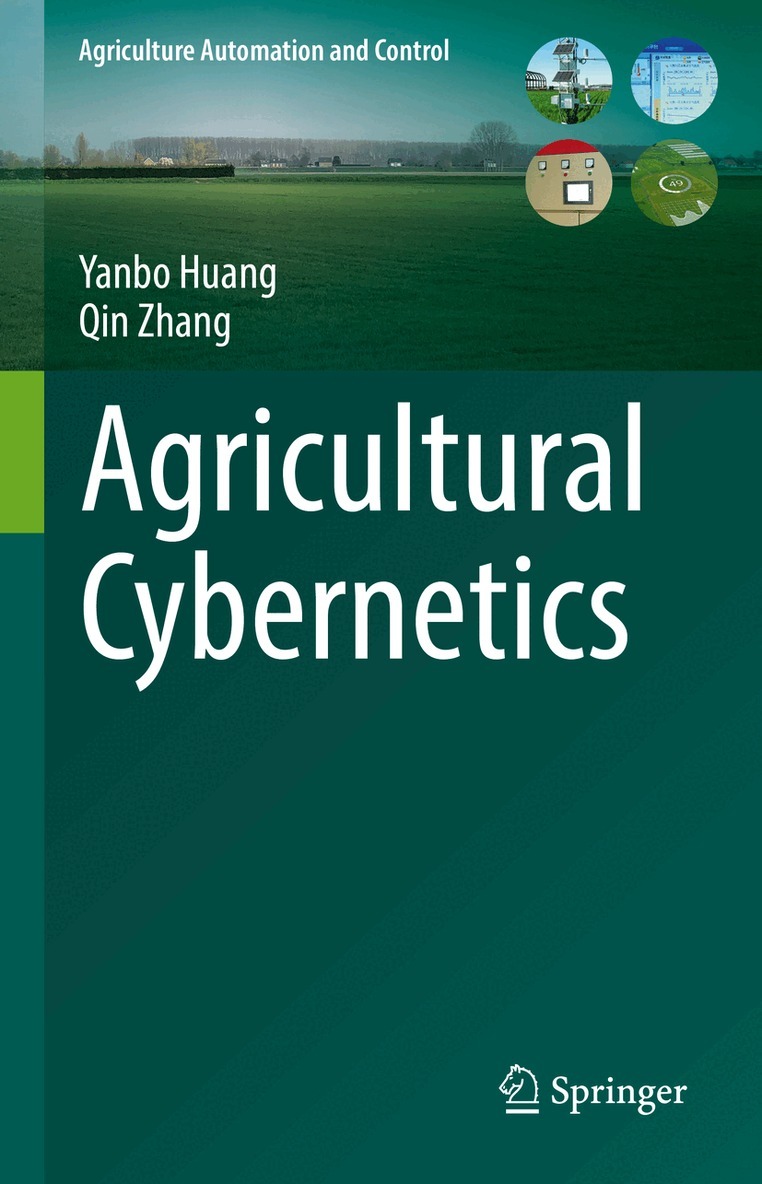
Agricultural systems are uniquely complex systems, given that agricultural systems are parts of natural and ecological systems. Those aspects bring in a substantial degree of uncertainty in system operation. Also, impact factors, such as weather factors, are critical in agricultural systems but these factors are uncontrollable in system management. Modern agriculture has been evolving through precision agriculture beginning in the late 1980s and biotechnological innovations in the early 2000s. Precision agriculture implements site-specific crop production management by integrating agricultural mechanization and information technology in geographic information system (GIS), global navigation satellite system (GNSS), and remote sensing. Now, precision agriculture is set to evolve into smart agriculture with advanced systematization, informatization, intelligence and automation. From precision agriculture to smart agriculture, there is a substantial amount of specific control and communication problems that have been investigated and will continue to be studied.In this book, the core ideas and methods from control problems in agricultural production systems are extracted, and a system view of agricultural production is formulated for the analysis and design of management strategies to control and optimize agricultural production systems while exploiting the intrinsic feedback information-exchanging mechanisms. On this basis, the theoretical framework of agricultural cybernetics is established to predict and control the behavior of agricultural production systems through control theory.
Häftad, Engelska, 2022
1 631 kr
Skickas inom 10-15 vardagar
Agricultural systems are uniquely complex systems, given that agricultural systems are parts of natural and ecological systems. Those aspects bring in a substantial degree of uncertainty in system operation. Also, impact factors, such as weather factors, are critical in agricultural systems but these factors are uncontrollable in system management. Modern agriculture has been evolving through precision agriculture beginning in the late 1980s and biotechnological innovations in the early 2000s. Precision agriculture implements site-specific crop production management by integrating agricultural mechanization and information technology in geographic information system (GIS), global navigation satellite system (GNSS), and remote sensing. Now, precision agriculture is set to evolve into smart agriculture with advanced systematization, informatization, intelligence and automation. From precision agriculture to smart agriculture, there is a substantial amount of specific control and communication problems that have been investigated and will continue to be studied.In this book, the core ideas and methods from control problems in agricultural production systems are extracted, and a system view of agricultural production is formulated for the analysis and design of management strategies to control and optimize agricultural production systems while exploiting the intrinsic feedback information-exchanging mechanisms. On this basis, the theoretical framework of agricultural cybernetics is established to predict and control the behavior of agricultural production systems through control theory.
Inbunden, Engelska, 2022
2 173 kr
Skickas inom 10-15 vardagar
Agricultural automation is the emerging technologies which heavily rely on computer-integrated management and advanced control systems. The tedious farming tasks had been taken over by agricultural machines in last century, in new millennium, computer-aided systems, automation, and robotics has been applied to precisely manage agricultural production system. With agricultural automation technologies, sustainable agriculture is being developed based on efficient use of land, increased conservation of water, fertilizer and energy resources. The agricultural automation technologies refer to related areas in sensing & perception, reasoning & learning, data communication, and task planning & execution. Since the literature on this diverse subject is widely scattered, it is necessary to review current status and capture the future challenges through a comprehensive monograph.In this book we focus on agricultural automation and provide critical reviews of advanced control technologies, their merits and limitations, application areas and research opportunities for further development. This collection thus serves as an authoritative treatise that can help researchers, engineers, educators, and students in the field of sensing, control, and automation technologies for production agriculture.
Häftad, Engelska, 2023
2 173 kr
Skickas inom 10-15 vardagar
Agricultural automation is the emerging technologies which heavily rely on computer-integrated management and advanced control systems. The tedious farming tasks had been taken over by agricultural machines in last century, in new millennium, computer-aided systems, automation, and robotics has been applied to precisely manage agricultural production system. With agricultural automation technologies, sustainable agriculture is being developed based on efficient use of land, increased conservation of water, fertilizer and energy resources. The agricultural automation technologies refer to related areas in sensing & perception, reasoning & learning, data communication, and task planning & execution. Since the literature on this diverse subject is widely scattered, it is necessary to review current status and capture the future challenges through a comprehensive monograph.In this book we focus on agricultural automation and provide critical reviews of advanced control technologies, their merits and limitations, application areas and research opportunities for further development. This collection thus serves as an authoritative treatise that can help researchers, engineers, educators, and students in the field of sensing, control, and automation technologies for production agriculture.
Inbunden, Engelska, 2023
1 848 kr
Skickas inom 10-15 vardagar
Modern tree fruit orchards and vineyards constitute complex production systems that are exposed to highly dynamic and stochastic natural, financial and societal forces, and face demands for increased production using fewer resources, with reduced environmental impact. Successful operation of orchards and vineyards under these conditions is practically impossible without careful and extensive use of state-of-the-art automation technologies and careful planning of future operations (e.g., training systems when replanting) that can be enabled by knowledge of emerging technologies and future trends. Also, improvement of existing automation technologies and development of novel future systems cannot be accomplished without a working understanding of the tree and vine biological production systems, their management needs, and the capabilities and limitations of existing automation systems. The book aims to provide the necessary knowledge to achieve the above goals in a way that can engage readers without engineering or horticultural backgrounds.
Häftad, Engelska, 2024
1 848 kr
Skickas inom 10-15 vardagar
Modern tree fruit orchards and vineyards constitute complex production systems that are exposed to highly dynamic and stochastic natural, financial and societal forces, and face demands for increased production using fewer resources, with reduced environmental impact. Successful operation of orchards and vineyards under these conditions is practically impossible without careful and extensive use of state-of-the-art automation technologies and careful planning of future operations (e.g., training systems when replanting) that can be enabled by knowledge of emerging technologies and future trends. Also, improvement of existing automation technologies and development of novel future systems cannot be accomplished without a working understanding of the tree and vine biological production systems, their management needs, and the capabilities and limitations of existing automation systems. The book aims to provide the necessary knowledge to achieve the above goals in a way that can engage readers without engineering or horticultural backgrounds.
Inbunden, Engelska, 2024
1 618 kr
Skickas inom 5-8 vardagar
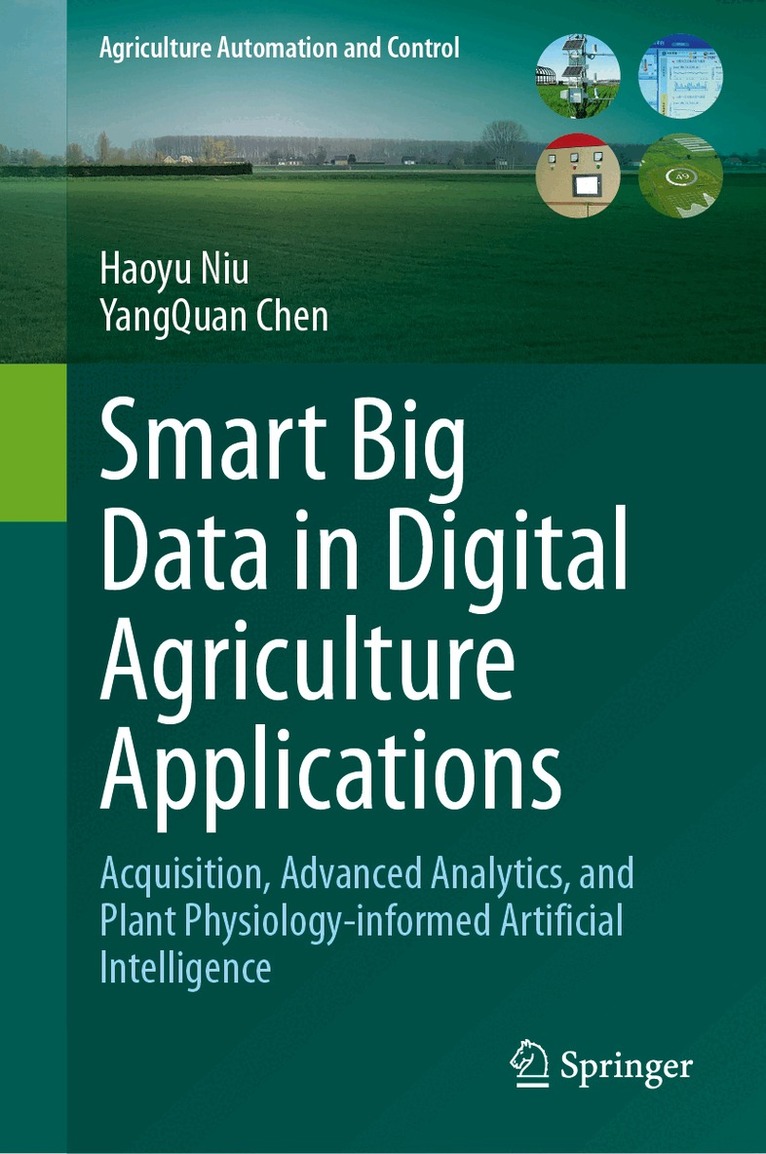
In the dynamic realm of digital agriculture, the integration of big data acquisition platforms has sparked both curiosity and enthusiasm among researchers and agricultural practitioners. This book embarks on a journey to explore the intersection of artificial intelligence and agriculture, focusing on small-unmanned aerial vehicles (UAVs), unmanned ground vehicles (UGVs), edge-AI sensors and the profound impact they have on digital agriculture, particularly in the context of heterogeneous crops, such as walnuts, pomegranates, cotton, etc. For example, lightweight sensors mounted on UAVs, including multispectral and thermal infrared cameras, serve as invaluable tools for capturing high-resolution images. Their enhanced temporal and spatial resolutions, coupled with cost effectiveness and near-real-time data acquisition, position UAVs as an optimal platform for mapping and monitoring crop variability in vast expanses. This combination of data acquisition platforms and advanced analytics generates substantial datasets, necessitating a deep understanding of fractional-order thinking, which is imperative due to the inherent “complexity” and consequent variability within the agricultural process. Much optimism is vested in the field of artificial intelligence, such as machine learning (ML) and computer vision (CV), where the efficient utilization of big data to make it “smart” is of paramount importance in agricultural research. Central to this learning process lies the intricate relationship between plant physiology and optimization methods. The key to the learning process is the plant physiology and optimization method. Crafting an efficient optimization method raises three pivotal questions: 1.) What represents the best approach to optimization? 2.) How can we achieve a more optimal optimization? 3.) Is it possible to demand “more optimal machine learning,” exemplified by deep learning, while minimizing the need for extensive labeled data for digital agriculture? This book details the foundations of the plant physiology-informed machine learning (PPIML) and the principle of tail matching (POTM) framework. It is the 9th title of the "Agriculture Automation and Control" book series published by Springer.
Häftad, Engelska, 2025
1 631 kr
Skickas inom 10-15 vardagar
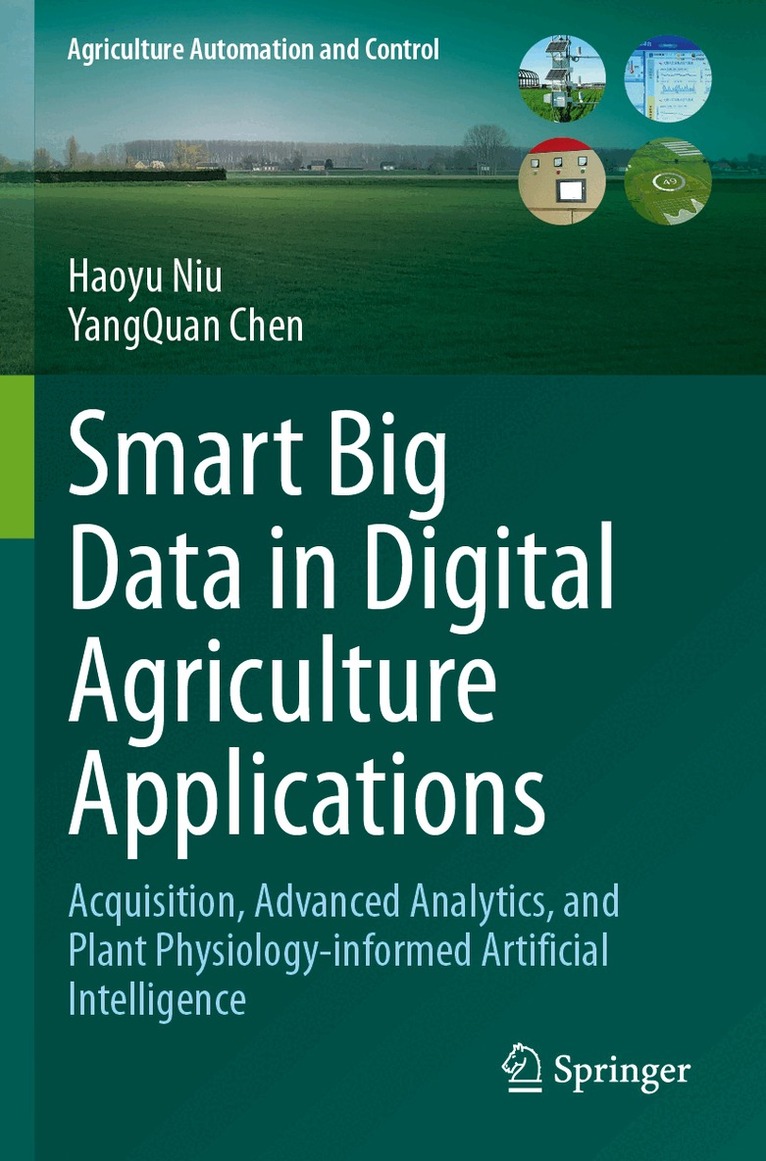
In the dynamic realm of digital agriculture, the integration of big data acquisition platforms has sparked both curiosity and enthusiasm among researchers and agricultural practitioners. This book embarks on a journey to explore the intersection of artificial intelligence and agriculture, focusing on small-unmanned aerial vehicles (UAVs), unmanned ground vehicles (UGVs), edge-AI sensors and the profound impact they have on digital agriculture, particularly in the context of heterogeneous crops, such as walnuts, pomegranates, cotton, etc. For example, lightweight sensors mounted on UAVs, including multispectral and thermal infrared cameras, serve as invaluable tools for capturing high-resolution images. Their enhanced temporal and spatial resolutions, coupled with cost effectiveness and near-real-time data acquisition, position UAVs as an optimal platform for mapping and monitoring crop variability in vast expanses. This combination of data acquisition platforms and advanced analytics generates substantial datasets, necessitating a deep understanding of fractional-order thinking, which is imperative due to the inherent “complexity” and consequent variability within the agricultural process. Much optimism is vested in the field of artificial intelligence, such as machine learning (ML) and computer vision (CV), where the efficient utilization of big data to make it “smart” is of paramount importance in agricultural research. Central to this learning process lies the intricate relationship between plant physiology and optimization methods. The key to the learning process is the plant physiology and optimization method. Crafting an efficient optimization method raises three pivotal questions: 1.) What represents the best approach to optimization? 2.) How can we achieve a more optimal optimization? 3.) Is it possible to demand “more optimal machine learning,” exemplified by deep learning, while minimizing the need for extensive labeled data for digital agriculture? This book details the foundations of the plant physiology-informed machine learning (PPIML) and the principle of tail matching (POTM) framework. It is the 9th title of the "Agriculture Automation and Control" book series published by Springer.
Inbunden, Engelska, 2025
1 740 kr
Skickas inom 10-15 vardagar
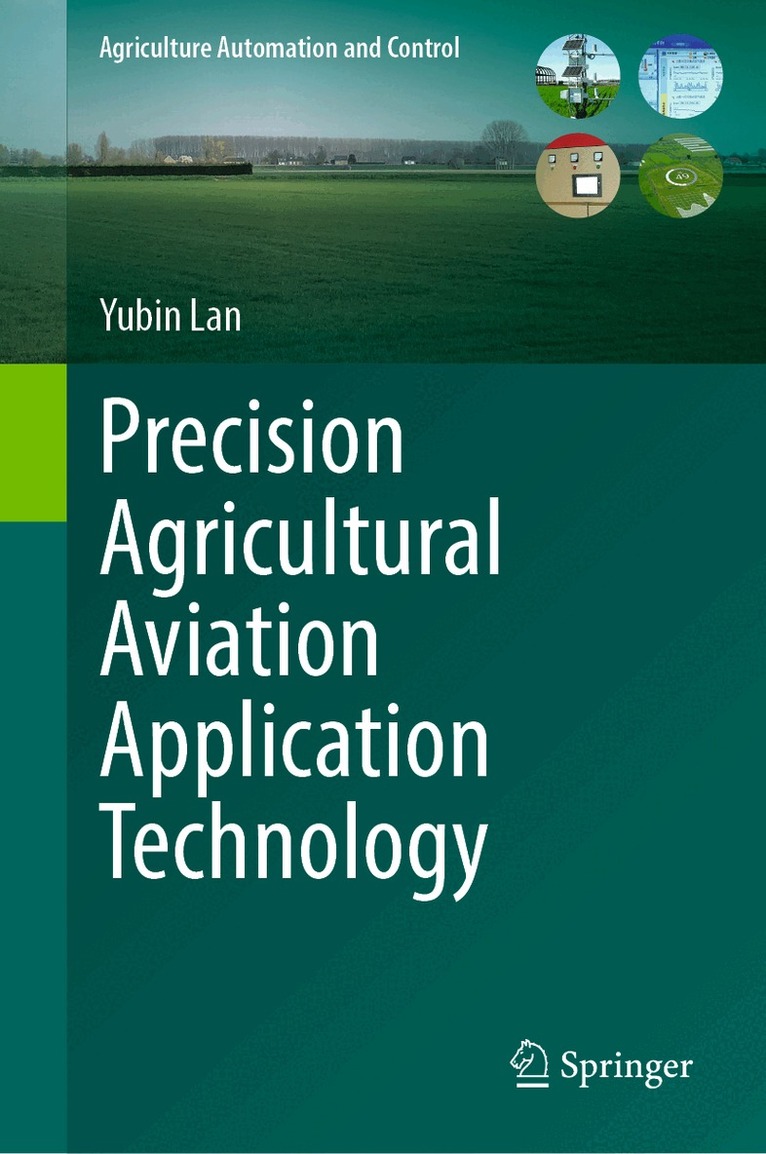
Modern technologies and information tools can be used to maximize agricultural aviation productivity, allowing for precision application of agrochemical products. This book reviews and summarizes state-of-the-art precision agricultural aviation technologies that include remote sensing, aerial spraying and ground verification technologies. Furthermore, the author discusses the future of precision agricultural aviation technology with emphasis on key development directions in real-time image processing, variable-rate spraying, multi-sensor data fusion and RTK differential positioning, and other supporting technologies for UAV-based aerial spraying. This book serves as a reference for industry professionals by summarizing the history and achievements of UAV-based technologies, and encourages further development of precision agricultural aviation technologies. It is the 8th title of the "Agriculture Automation and Control" book series published by Springer.
Häftad, Engelska, 2026
1 740 kr
Skickas inom 10-15 vardagar
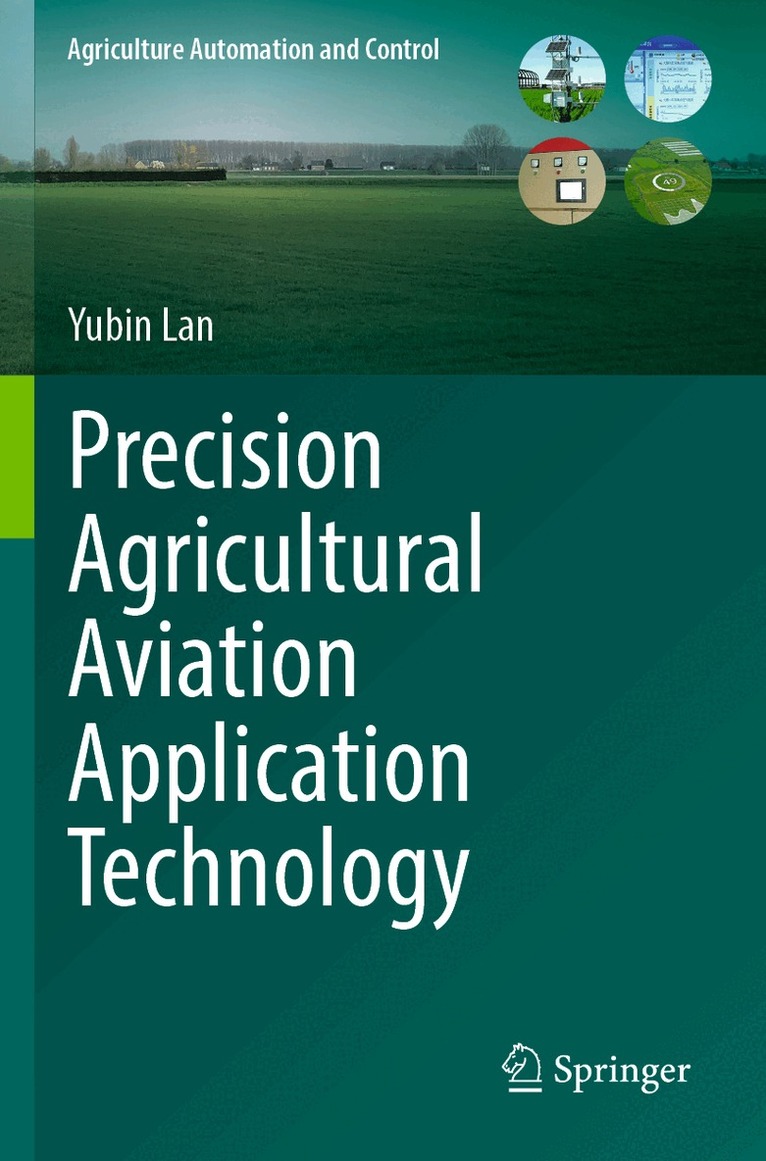
Modern technologies and information tools can be used to maximize agricultural aviation productivity, allowing for precision application of agrochemical products. This book reviews and summarizes state-of-the-art precision agricultural aviation technologies that include remote sensing, aerial spraying and ground verification technologies. Furthermore, the author discusses the future of precision agricultural aviation technology with emphasis on key development directions in real-time image processing, variable-rate spraying, multi-sensor data fusion and RTK differential positioning, and other supporting technologies for UAV-based aerial spraying. This book serves as a reference for industry professionals by summarizing the history and achievements of UAV-based technologies, and encourages further development of precision agricultural aviation technologies. It is the 8th title of the "Agriculture Automation and Control" book series published by Springer.