Advancing Science, Technology, Engineering, and Mathematics Education – serie
Visar alla böcker i serien Advancing Science, Technology, Engineering, and Mathematics Education. Handla med fri frakt och snabb leverans.
24 produkter
24 produkter
Häftad, Engelska, 2001
430 kr
Skickas
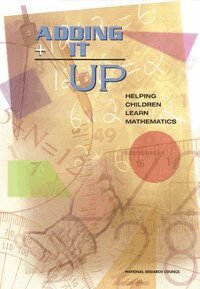
Adding It Up explores how students in pre-K through 8th grade learn mathematics and recommends how teaching, curricula, and teacher education should change to improve mathematics learning during these critical years. The committee identifies five interdependent components of mathematical proficiency and describes how students develop this proficiency. With examples and illustrations, the book presents a portrait of mathematics learning: * Research findings on what children know about numbers by the time they arrive in pre-K and the implications for mathematics instruction. * Details on the processes by which students acquire mathematical proficiency with whole numbers, rational numbers, and integers, as well as beginning algebra, geometry, measurement, and probability and statistics. The committee discusses what is known from research about teaching for mathematics proficiency, focusing on the interactions between teachers and students around educational materials and how teachers develop proficiency in teaching mathematics.
Häftad, Engelska, 2023
341 kr
Skickas
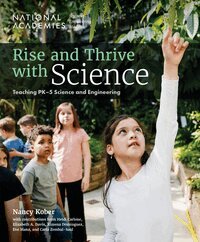
Research shows that that children learn science and engineering subjects best by engaging from an early age in the kinds of practices used by real scientists and engineers. By doing science and engineering, children not only develop and refine their understanding of the core ideas and crosscutting concepts of these disciplines, but can also be empowered to use their growing understanding to make sense of questions and problems relevant to them. This approach can make learning more meaningful, equitable, and lasting.Using cases and shorter examples, Rise and Thrive with Science shows what high-quality teaching and learning in science and engineering can look like for preschool and elementary school children. Through analyses of these examples and summaries of research findings, the guide points out the key elements of a coherent, research-grounded approach to teaching and learning in science and engineering. This guide also discusses the kinds of support that educators need to implement effective and equitable instruction for all children. This book will provide inspiration for practitioners at the preschool and elementary levels to try new strategies for science and engineering education, whatever their level of experience.Rise and Thrive with Science will be an essential guide for teachers as they organize instruction to enable young children to carry out their own science investigations and engineering design projects, determine the kinds of instruction that lead to meaningful learning, and try to engage every one of their students.
Häftad, Engelska, 2025
385 kr
Skickas
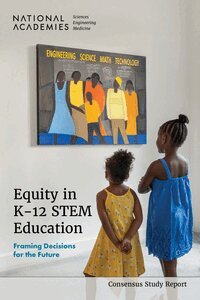
Science, technology, engineering, and mathematics (STEM) live in the American imagination as promising tools for solving pressing global challenges and enhancing quality of life. Despite the importance of the STEM disciplines in the landscape of U.S. political, economic, and social priorities, STEM learning opportunities are unevenly distributed, and the experiences an individual has in STEM education are likely to vary tremendously based on their race, ethnicity, socio-economic class, gender, and a myriad of other factors.Equity in K-12 STEM Education: Framing Decisions for the Future approaches equity in STEM education not as a singular goal but as an ongoing process that requires intentional decision-making and action toward addressing and disrupting existing inequities and envisioning a more just future. Stakeholders at all levels of the education system - including state, district, and school leaders and classroom teachers - have roles as decision-makers who can advance equity. This consensus study report provides five equity frames as a guide to help decision-makers articulate short- and long-term goals for equity and make decisions about policy and practice.
Häftad, Engelska, 2025
389 kr
Skickas inom 3-6 vardagar
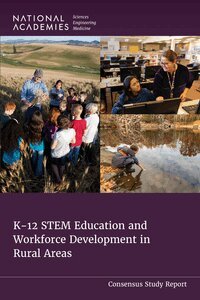
Rural areas can provide a rich context for learning science, technology, engineering and mathematics (STEM), but these communities and the students in them are often overlooked in ongoing efforts to expand access to high-quality K-12 STEM education and workforce development. Addressing barriers, often related to funding, and promoting unrecognized assets for STEM learning can enhance the ability of individuals in rural areas to further engage in and contribute to their communities or to broader scientific exploration and discovery.K-12 STEM Education and Workforce Development in Rural Areas makes recommendations to federal, state, and local educational agencies, programs, and other relevant stakeholders to advance STEM education and workforce development for rural America. This report comes in response to a mandate within the CHIPS and Science Act of 2022.
Häftad, Engelska, 2004
603 kr
Tillfälligt slut
To enhance the nation's economic productivity and improve the quality of life worldwide, engineering education in the United States must anticipate and adapt to the dramatic changes of engineering practice. The Engineer of 2020 urges the engineering profession to recognize what engineers can build for the future through a wide range of leadership roles in industry, government, and academia--not just through technical jobs. Engineering schools should attract the best and brightest students and be open to new teaching and training approaches. With the appropriate education and training, the engineer of the future will be called upon to become a leader not only in business but also in nonprofit and government sectors. The book finds that the next several decades will offer more opportunities for engineers, with exciting possibilities expected from nanotechnology, information technology, and bioengineering. Other engineering applications, such as transgenic food, technologies that affect personal privacy, and nuclear technologies, raise complex social and ethical challenges.Future engineers must be prepared to help the public consider and resolve these dilemmas along with challenges that will arise from new global competition, requiring thoughtful and concerted action if engineering in the United States is to retain its vibrancy and strength.
Inbunden, Engelska, 2007
597 kr
Tillfälligt slut
What is science for a child? How do children learn about science and how to do science? Drawing on a vast array of work from neuroscience to classroom observation, Taking Science to School provides a comprehensive picture of what we know about teaching and learning science from kindergarten through eighth grade. By looking at a broad range of questions, this book provides a basic foundation for guiding science teaching and supporting students in their learning. Taking Science to School answers such questions as: * When do children begin to learn about science? Are there critical stages in a child's development of such scientific concepts as mass or animate objects? * What role does nonschool learning play in children's knowledge of science? * How can science education capitalize on children's natural curiosity? * What are the best tasks for books, lectures, and hands-on learning? * How can teachers be taught to teach science? The book also provides a detailed examination of how we know what we know about children's learning of science--about the role of research and evidence.This book will be an essential resource for everyone involved in K-8 science education--teachers, principals, boards of education, teacher education providers and accreditors, education researchers, federal education agencies, and state and federal policy makers. It will also be a useful guide for parents and others interested in how children learn.
Inbunden, Engelska, 2009
641 kr
Tillfälligt slut
Informal science is a burgeoning field that operates across a broad range of venues and envisages learning outcomes for individuals, schools, families, and society. The evidence base that describes informal science, its promise, and effects is informed by a range of disciplines and perspectives, including field-based research, visitor studies, and psychological and anthropological studies of learning. Learning Science in Informal Environments draws together disparate literatures, synthesizes the state of knowledge, and articulates a common framework for the next generation of research on learning science in informal environments across a life span. Contributors include recognized experts in a range of disciplines--research and evaluation, exhibit designers, program developers, and educators. They also have experience in a range of settings--museums, after-school programs, science and technology centers, media enterprises, aquariums, zoos, state parks, and botanical gardens.Learning Science in Informal Environments is an invaluable guide for program and exhibit designers, evaluators, staff of science-rich informal learning institutions and community-based organizations, scientists interested in educational outreach, federal science agency education staff, and K-12 science educators.
Häftad, Engelska, 2010
430 kr
Tillfälligt slut
Practitioners in informal science settings--museums, after-school programs, science and technology centers, media enterprises, libraries, aquariums, zoos, and botanical gardens--are interested in finding out what learning looks like, how to measure it, and what they can do to ensure that people of all ages, from different backgrounds and cultures, have a positive learning experience. Surrounded by Science: Learning Science in Informal Environments, is designed to make that task easier. Based on the National Research Council study, Learning Science in Informal Environments: People, Places, and Pursuits, this book is a tool that provides case studies, illustrative examples, and probing questions for practitioners. In short, this book makes valuable research accessible to those working in informal science: educators, museum professionals, university faculty, youth leaders, media specialists, publishers, broadcast journalists, and many others.
Häftad, Engelska, 2009
619 kr
Tillfälligt slut
Engineering education in K-12 classrooms is a small but growing phenomenon that may have implications for engineering and also for the other STEM subjects--science, technology, and mathematics. Specifically, engineering education may improve student learning and achievement in science and mathematics, increase awareness of engineering and the work of engineers, boost youth interest in pursuing engineering as a career, and increase the technological literacy of all students. The teaching of STEM subjects in U.S. schools must be improved in order to retain U.S. competitiveness in the global economy and to develop a workforce with the knowledge and skills to address technical and technological issues. Engineering in K-12 Education reviews the scope and impact of engineering education today and makes several recommendations to address curriculum, policy, and funding issues. The book also analyzes a number of K-12 engineering curricula in depth and discusses what is known from the cognitive sciences about how children learn engineering-related concepts and skills.Engineering in K-12 Education will serve as a reference for science, technology, engineering, and math educators, policy makers, employers, and others concerned about the development of the country's technical workforce. The book will also prove useful to educational researchers, cognitive scientists, advocates for greater public understanding of engineering, and those working to boost technological and scientific literacy.
Häftad, Engelska, 2011
351 kr
Tillfälligt slut
In order for the United States to maintain the global leadership and competitiveness in science and technology that are critical to achieving national goals, we must invest in research, encourage innovation, and grow a strong and talented science and technology workforce. Expanding Underrepresented Minority Participation explores the role of diversity in the science, technology, engineering and mathematics (STEM) workforce and its value in keeping America innovative and competitive. According to the book, the U.S. labor market is projected to grow faster in science and engineering than in any other sector in the coming years, making minority participation in STEM education at all levels a national priority. Expanding Underrepresented Minority Participation analyzes the rate of change and the challenges the nation currently faces in developing a strong and diverse workforce. Although minorities are the fastest growing segment of the population, they are underrepresented in the fields of science and engineering. Historically, there has been a strong connection between increasing educational attainment in the United States and the growth in and global leadership of the economy.Expanding Underrepresented Minority Participation suggests that the federal government, industry, and post-secondary institutions work collaboratively with K-12 schools and school systems to increase minority access to and demand for post-secondary STEM education and technical training. The book also identifies best practices and offers a comprehensive road map for increasing involvement of underrepresented minorities and improving the quality of their education. It offers recommendations that focus on academic and social support, institutional roles, teacher preparation, affordability and program development.
Häftad, Engelska, 2012
430 kr
Tillfälligt slut
Americans have long recognized that investments in public education contribute to the common good, enhancing national prosperity and supporting stable families, neighborhoods, and communities. Education is even more critical today, in the face of economic, environmental, and social challenges. Today's children can meet future challenges if their schooling and informal learning activities prepare them for adult roles as citizens, employees, managers, parents, volunteers, and entrepreneurs. To achieve their full potential as adults, young people need to develop a range of skills and knowledge that facilitate mastery and application of English, mathematics, and other school subjects. At the same time, business and political leaders are increasingly asking schools to develop skills such as problem solving, critical thinking, communication, collaboration, and self-management - often referred to as "21st century skills." Education for Life and Work: Developing Transferable Knowledge and Skills in the 21st Century describes this important set of key skills that increase deeper learning, college and career readiness, student-centered learning, and higher order thinking.These labels include both cognitive and non-cognitive skills- such as critical thinking, problem solving, collaboration, effective communication, motivation, persistence, and learning to learn. 21st century skills also include creativity, innovation, and ethics that are important to later success and may be developed in formal or informal learning environments. This report also describes how these skills relate to each other and to more traditional academic skills and content in the key disciplines of reading, mathematics, and science. Education for Life and Work: Developing Transferable Knowledge and Skills in the 21st Century summarizes the findings of the research that investigates the importance of such skills to success in education, work, and other areas of adult responsibility and that demonstrates the importance of developing these skills in K-16 education. In this report, features related to learning these skills are identified, which include teacher professional development, curriculum, assessment, after-school and out-of-school programs, and informal learning centers such as exhibits and museums.
Häftad, Engelska, 2013
241 kr
Tillfälligt slut
Following a 2011 report by the National Research Council (NRC) on successful K-12 education in science, technology, engineering, and mathematics (STEM), Congress asked the National Science Foundation to identify methods for tracking progress toward the report's recommendations. In response, the NRC convened the Committee on an Evaluation Framework for Successful K-12 STEM Education to take on this assignment. The committee developed 14 indicators linked to the 2011 report's recommendations. By providing a focused set of key indicators related to students' access to quality learning, educator's capacity, and policy and funding initiatives in STEM, the committee addresses the need for research and data that can be used to monitor progress in K-12 STEM education and make informed decisions about improving it.The recommended indicators provide a framework for Congress and relevant deferral agencies to create and implement a national-level monitoring and reporting system that: assesses progress toward key improvements recommended by a previous National Research Council (2011) committee; measures student knowledge, interest, and participation in the STEM disciplines and STEM-related activities; tracks financial, human capital, and material investments in K-12 STEM education at the federal, state, and local levels; provides information about the capabilities of the STEM education workforce, including teachers and principals; and facilitates strategic planning for federal investments in STEM education and workforce development when used with labor force projections. All 14 indicators explained in this report are intended to form the core of this system. Monitoring Progress Toward Successful K-12 STEM Education: A Nation Advancing? summarizes the 14 indicators and tracks progress towards the initial report's recommendations.
Häftad, Engelska, 2013
408 kr
Tillfälligt slut
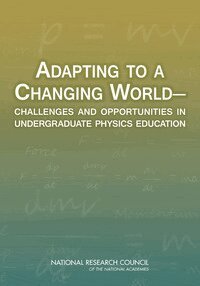
Adapting to a Changing World was commissioned by the National Science Foundation to examine the present status of undergraduate physics education, including the state of physics education research, and, most importantly, to develop a series of recommendations for improving physics education that draws from the knowledge we have about learning and effective teaching. Our committee has endeavored to do so, with great interest and more than a little passion. The Committee on Undergraduate Physics Education Research and Implementation was established in 2010 by the Board on Physics and Astronomy of the National Research Council. This report summarizes the committee's response to its statement of task, which requires the committee to produce a report that identifies the goals and challenges facing undergraduate physics education and identifies how best practices for undergraduate physics education can be implemented on a widespread and sustained basis, assess the status of physics education research (PER) and discuss how PER can assist in accomplishing the goal of improving undergraduate physics education best practices and education policy.
Häftad, Engelska, 2013
419 kr
Tillfälligt slut
The mathematical sciences are part of nearly all aspects of everyday life--the discipline has underpinned such beneficial modern capabilities as Internet search, medical imaging, computer animation, numerical weather predictions, and all types of digital communications. The Mathematical Sciences in 2025 examines the current state of the mathematical sciences and explores the changes needed for the discipline to be in a strong position and able to maximize its contribution to the nation in 2025. It finds the vitality of the discipline excellent and that it contributes in expanding ways to most areas of science and engineering, as well as to the nation as a whole, and recommends that training for future generations of mathematical scientists should be re-assessed in light of the increasingly cross-disciplinary nature of the mathematical sciences. In addition, because of the valuable interplay between ideas and people from all parts of the mathematical sciences, the report emphasizes that universities and the government need to continue to invest in the full spectrum of the mathematical sciences in order for the whole enterprise to continue to flourish long-term.
Häftad, Engelska, 2014
408 kr
Tillfälligt slut
STEM Integration in K-12 Education examines current efforts to connect the STEM disciplines in K-12 education. This report identifies and characterizes existing approaches to integrated STEM education, both in formal and after- and out-of-school settings. The report reviews the evidence for the impact of integrated approaches on various student outcomes, and it proposes a set of priority research questions to advance the understanding of integrated STEM education. STEM Integration in K-12 Education proposes a framework to provide a common perspective and vocabulary for researchers, practitioners, and others to identify, discuss, and investigate specific integrated STEM initiatives within the K-12 education system of the United States. STEM Integration in K-12 Education makes recommendations for designers of integrated STEM experiences, assessment developers, and researchers to design and document effective integrated STEM education. This report will help to further their work and improve the chances that some forms of integrated STEM education will make a positive difference in student learning and interest and other valued outcomes.
Häftad, Engelska, 2015
252 kr
Tillfälligt slut
More and more young people are learning about science, technology, engineering, and mathematics (STEM) in a wide variety of afterschool, summer, and informal programs. At the same time, there has been increasing awareness of the value of such programs in sparking, sustaining, and extending interest in and understanding of STEM. To help policy makers, funders and education leaders in both school and out-of-school settings make informed decisions about how to best leverage the educational and learning resources in their community, this report identifies features of productive STEM programs in out-of-school settings. Identifying and Supporting Productive STEM Programs in Out-of-School Settings draws from a wide range of research traditions to illustrate that interest in STEM and deep STEM learning develop across time and settings. The report provides guidance on how to evaluate and sustain programs. This report is a resource for local, state, and federal policy makers seeking to broaden access to multiple, high-quality STEM learning opportunities in their community.
Häftad, Engelska, 2017
307 kr
Tillfälligt slut
Science educators in the United States are adapting to a new vision of how students learn science. Children are natural explorers and their observations and intuitions about the world around them are the foundation for science learning. Unfortunately, the way science has been taught in the United States has not always taken advantage of those attributes. Some students who successfully complete their Ka "12 science classes have not really had the chance to a /doa science for themselves in ways that harness their natural curiosity and understanding of the world around them. The introduction of the Next Generation Science Standards led many states, schools, and districts to change curricula, instruction, and professional development to align with the standards. Therefore existing assessmentsa "whatever their purposea "cannot be used to measure the full range of activities and interactions happening in science classrooms that have adapted to these ideas because they were not designed to do so. Seeing Students Learn Science is meant to help educators improve their understanding of how students learn science and guide the adaptation of their instruction and approach to assessment.It includes examples of innovative assessment formats, ways to embed assessments in engaging classroom activities, and ideas for interpreting and using novel kinds of assessment information. It provides ideas and questions educators can use to reflect on what they can adapt right away and what they can work toward more gradually.
Häftad, Engelska, 2021
263 kr
Tillfälligt slut
Scientific thinking and understanding are essential for all people navigating the world, not just for scientists and other science, technology, engineering and mathematics (STEM) professionals. Knowledge of science and the practice of scientific thinking are essential components of a fully functioning democracy. Science is also crucial for the future STEM workforce and the pursuit of living wage jobs. Yet, science education is not the national priority it needs to be, and states and local communities are not yet delivering high quality, rigorous learning experiences in equal measure to all students from elementary school through higher education.Call to Action for Science Education: Building Opportunity for the Future articulates a vision for high quality science education, describes the gaps in opportunity that currently exist for many students, and outlines key priorities that need to be addressed in order to advance better, more equitable science education across grades K-16. This report makes recommendations for state and federal policy makers on ways to support equitable, productive pathways for all students to thrive and have opportunities to pursue careers that build on scientific skills and concepts. Call to Action for Science Education challenges the policy-making community at state and federal levels to acknowledge the importance of science, make science education a core national priority, and empower and give local communities the resources they must have to deliver a better, more equitable science education.
Häftad, Engelska, 2019
430 kr
Tillfälligt slut
It is essential for today's students to learn about science and engineering in order to make sense of the world around them and participate as informed members of a democratic society. The skills and ways of thinking that are developed and honed through engaging in scientific and engineering endeavors can be used to engage with evidence in making personal decisions, to participate responsibly in civic life, and to improve and maintain the health of the environment, as well as to prepare for careers that use science and technology.The majority of Americans learn most of what they know about science and engineering as middle and high school students. During these years of rapid change for students' knowledge, attitudes, and interests, they can be engaged in learning science and engineering through schoolwork that piques their curiosity about the phenomena around them in ways that are relevant to their local surroundings and to their culture. Many decades of education research provide strong evidence for effective practices in teaching and learning of science and engineering. One of the effective practices that helps students learn is to engage in science investigation and engineering design. Broad implementation of science investigation and engineering design and other evidence-based practices in middle and high schools can help address present-day and future national challenges, including broadening access to science and engineering for communities who have traditionally been underrepresented and improving students' educational and life experiences.Science and Engineering for Grades 6-12: Investigation and Design at the Center revisits America's Lab Report: Investigations in High School Science in order to consider its discussion of laboratory experiences and teacher and school readiness in an updated context. It considers how to engage today's middle and high school students in doing science and engineering through an analysis of evidence and examples. This report provides guidance for teachers, administrators, creators of instructional resources, and leaders in teacher professional learning on how to support students as they make sense of phenomena, gather and analyze data/information, construct explanations and design solutions, and communicate reasoning to self and others during science investigation and engineering design. It also provides guidance to help educators get started with designing, implementing, and assessing investigation and design.
Häftad, Engelska, 2019
430 kr
Tillfälligt slut
The Board on Science Education and the Board on Mathematical Sciences and Analytics of the National Academies of Sciences, Engineering, and Medicine convened the Workshop on Increasing Student Success in Developmental Mathematics on March 18-19, 2019. The Workshop explored how to best support all students in postsecondary mathematics, with particular attention to students who are unsuccessful in developmental mathematics and with an eye toward issues of access to promising reforms and equitable learning environments.The two-day workshop was designed to bring together a variety of stakeholders, including experts who have developed and/or implemented new initiatives to improve the mathematics education experience for students. The overarching goal of the workshop was to take stock of the mathematics education community's progress in this domain. Participants examined the data on students who are well-served by new reform structures in developmental mathematics and discussed various cohorts of students who are not currently well served - those who even with access to reforms do not succeed and those who do not have access to a reform due to differential access constraints. Throughout the workshop, participants also explored promising approaches to bolstering student outcomes in mathematics, focusing especially on research and data that demonstrate the success of these approaches; deliberated and discussed barriers and opportunities for effectively serving all students; and outlined some key directions of inquiry intended to address the prevailing research and data needs in the field. This publication summarizes the presentations and discussion of the workshop.
Häftad, Engelska, 2020
412 kr
Tillfälligt slut
The COVID-19 pandemic has presented unprecedented challenges to the nation's K-12 education system. The rush to slow the spread of the virus led to closures of schools across the country, with little time to ensure continuity of instruction or to create a framework for deciding when and how to reopen schools. States, districts, and schools are now grappling with the complex and high-stakes questions of whether to reopen school buildings and how to operate them safely if they do reopen. These decisions need to be informed by the most up-to-date evidence about the SARS-CoV-2 virus that causes COVID-19; about the impacts of school closures on students and families; and about the complexities of operating school buildings as the pandemic persists.Reopening K-12 Schools During the COVID-19 Pandemic: Prioritizing Health, Equity, and Communities provides guidance on the reopening and operation of elementary and secondary schools for the 2020-2021 school year. The recommendations of this report are designed to help districts and schools successfully navigate the complex decisions around reopening school buildings, keeping them open, and operating them safely.
Häftad, Engelska, 2020
430 kr
Tillfälligt slut
The COVID-19 pandemic is resulting in widespread and ongoing changes to how the K-12 education system functions, including disruptions to science teaching and learning environments. Students and teachers are all figuring out how to do schooling differently, and districts and states are working overtime to reimagine systems and processes. This is difficult and stressful work in the middle of the already stressful and sometimes traumatic backdrop of the global pandemic. In addition, students with disabilities, students of color, immigrants, English learners, and students from under-resourced communities have been disproportionately affected, both by the pandemic itself and by the resulting instructional shifts.Teaching K-12 Science and Engineering During a Crisis aims to describe what high quality science and engineering education can look like in a time of great uncertainty and to support practitioners as they work toward their goals. This book includes guidance for science and engineering practitioners - with an emphasis on the needs of district science supervisors, curriculum leads, and instructional coaches. Teaching K-12 Science and Engineering During a Crisis will help K-12 science and engineering teachers adapt learning experiences as needed to support students and their families dealing with ongoing changes to instructional and home environments and at the same time provide high quality in those experiences.
Häftad, Engelska, 2022
341 kr
Tillfälligt slut
Starting in early childhood, children are capable of learning sophisticated science and engineering concepts and engage in disciplinary practices. They are deeply curious about the world around them and eager to investigate the many questions they have about their environment. Educators can develop learning environments that support the development and demonstration of proficiencies in science and engineering, including making connections across the contexts of learning, which can help children see their ideas, interests, and practices as meaningful not just for school, but also in their lives. Unfortunately, in many preschool and elementary schools science gets relatively little attention compared to English language arts and mathematics. In addition, many early childhood and elementary teachers do not have extensive grounding in science and engineering content.Science and Engineering in Preschool through Elementary Grades provides evidence-based guidance on effective approaches to preschool through elementary science and engineering instruction that supports the success of all students. This report evaluates the state of the evidence on learning experiences prior to school; promising instructional approaches and what is needed for implementation to include teacher professional development, curriculum, and instructional materials; and the policies and practices at all levels that constrain or facilitate efforts to enhance preschool through elementary science and engineering.Building a solid foundation in science and engineering in the elementary grades sets the stage for later success, both by sustaining and enhancing students' natural enthusiasm for science and engineering and by establishing the knowledge and skills they need to approach the more challenging topics introduced in later grades. Through evidence-based guidance on effective approaches to preschool through elementary science and engineering instruction, this report will help teachers to support the success of all students.
Häftad, Engelska, 2025
243 kr
Tillfälligt slut
In the modern history of the United States, investment in the teaching of science, technology, engineering and mathematics has resulted in a rich variety of education innovations (programs, practices, models, and technologies). Although a number of these innovations have had the potential to impact learners on a broad scale, that potential often remains unrealized. Efforts vary in their success in widescale implementation and sustainability across different educational contexts - leaving questions about how to achieve the major improvements to STEM education that many policy leaders seek.Scaling and Sustaining Pre-K-12 STEM Education Innovations: Systemic Challenges, Systemic Responses examines the interconnected factors at local, regional, and national levels that foster or hinder the widespread implementation of promising, evidence-based Pre-K-12 STEM education innovations, to identify gaps in the research, and to provide guidance on how to address barriers to implementation. This report comes in response to a mandate within the CHIPS and Science Act of 2022.