Early American Places Series – serie
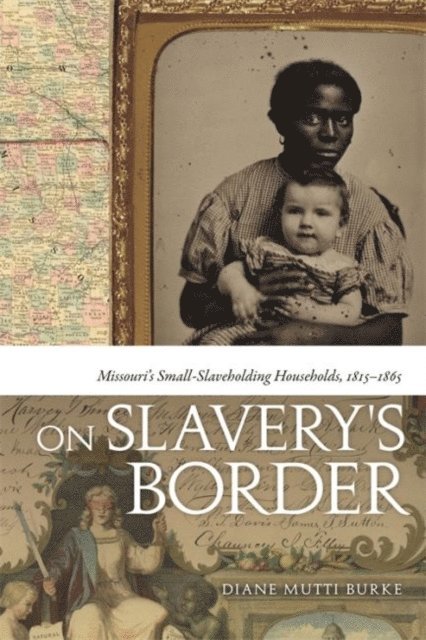
On Slavery's Border
Missouri's Small Slaveholding Households, 1815-1865
545 kr
Läs direkt efter köp
On Slavery’s Border is a bottom-up examination of how slavery and slaveholding were influenced by both the geography and the scale of the slaveholding enterprise. Missouri’s strategic access to important waterways made it a key site at the periphery of the Atlantic world. By the time of statehood in 1821, people were moving there in large numbers, especially from the upper South, hoping to replicate the slave society they’d left behind.Diane Mutti Burke focuses on the Missouri counties located along the Mississippi and Missouri rivers to investigate small-scale slavery at the level of the household and neighborhood. She examines such topics as small slaveholders’ child-rearing and fiscal strategies, the economics of slavery, relations between slaves and owners, the challenges faced by slave families, sociability among enslaved and free Missourians within rural neighborhoods, and the disintegration of slavery during the Civil War. Mutti Burke argues that economic and social factors gave Missouri slavery an especially intimate quality. Owners directly oversaw their slaves and lived in close proximity with them, sometimes in the same building. White Missourians believed this made for a milder version of bondage. Some slaves, who expressed fear of being sold further south, seemed to agree.Mutti Burke reveals, however, that while small slaveholding created some advantages for slaves, it also made them more vulnerable to abuse and interference in their personal lives. In a region with easy access to the free states, the perception that slavery was threatened spawned white anxiety, which frequently led to violent reassertions of supremacy.
545 kr
Läs direkt efter köp
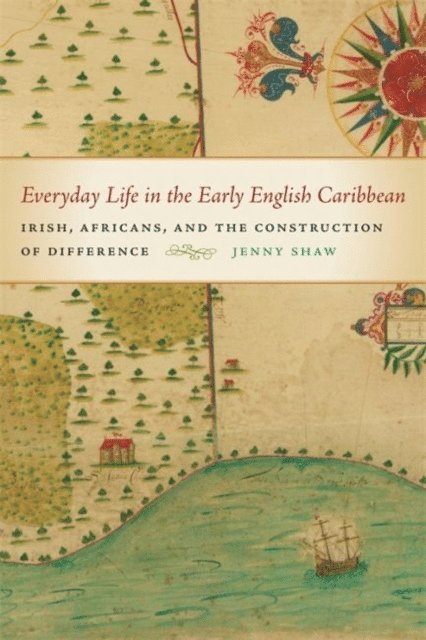
Everyday Life and the Construction of Difference in the Early English Caribbean
Irish, Africans, and the Construction of Difference
1 872 kr
Läs direkt efter köp
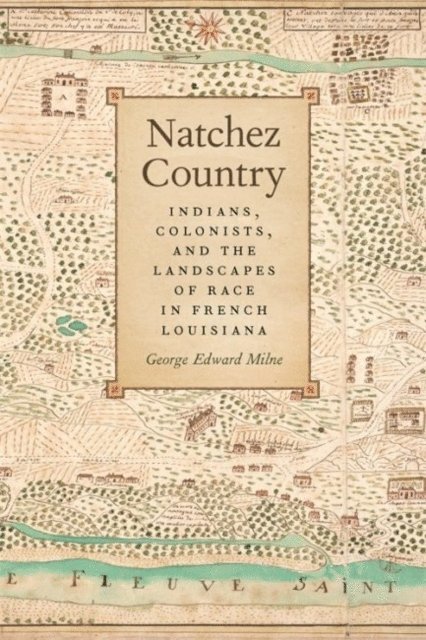
Natchez Country
Indians, Colonists, and the Landscapes of Race in French Louisiana
545 kr
Läs direkt efter köp
At the dawn of the 1700s the Natchez viewed the first Francophones in the Lower Mississippi Valley as potential inductees to their chiefdom. This mistaken perception lulled them into permitting these outsiders to settle among them. Within two decades conditions in Natchez Country had taken a turn for the worse. The trickle of wayfarers had given way to a torrent of colonists (and their enslaved Africans) who refused to recognize the Natchez’s hierarchy. These newcomers threatened to seize key authority-generating features of Natchez Country: mounds, a plaza, and a temple. This threat inspired these Indians to turn to a recent import—racial categories—to reestablish social order. They began to call themselves “red men” to reunite their polity and to distance themselves from the “blacks” and “whites” into which their neighbors divided themselves. After refashioning their identity, they launched an attack that destroyed the nearby colonial settlements. Their 1729 assault began a two-year war that resulted in the death or enslavement of most of the Natchez people.In Natchez Country, George Edward Milne provides the most comprehensive history of the Lower Mississippi Valley and the Natchez to date. From La Salle’s first encounter with what would become Louisiana to the ultimate dispersal of the Natchez by the close of the 1730s, Milne also analyzes the ways in which French attitudes about race and slavery influenced native North American Indians in the vicinity of French colonial settlements on the Mississippi River and how Native Americans in turn adopted and resisted colonial ideology.
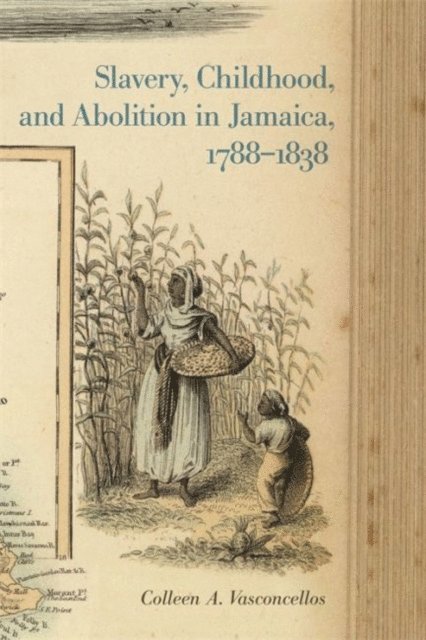
Slavery, Childhood, and Abolition in Jamaica, 1788-1838
398 kr
Läs direkt efter köp
This study examines childhood and slavery in Jamaica from the onset of improved conditions for the island’s slaves to the end of all forced or coerced labor throughout the British Caribbean. As Colleen A. Vasconcellos discusses the nature of child development in the plantation complex, she looks at how both colonial Jamaican society and the slave community conceived childhood—and how those ideas changed as the abolitionist movement gained power, the fortunes of planters rose and fell, and the nature of work on Jamaica’s estates evolved from slavery to apprenticeship to free labor. Vasconcellos explores the experiences of enslaved children through the lenses of family, resistance, race, status, culture, education, and freedom. In the half-century covered by her study, Jamaican planters alternately saw enslaved children as burdens or investments. At the same time, the childhood experience was shaped by the ethnically, linguistically, and culturally diverse slave community.Vasconcellos adds detail and meaning to these tensions by looking, for instance, at enslaved children of color, legally termed mulattos, who had unique ties to both slave and planter families. In addition, she shows how traditions, beliefs, and practices within the slave community undermined planters’ efforts to ensure a compliant workforce by instilling Christian values in enslaved children. These are just a few of the ways that Vasconcellos reveals an overlooked childhood—one that was often defined by Jamaican planters but always contested and redefined by the slaves themselves.
Privateers of the Americas
Spanish American Privateering from the United States in the Early Republic
442 kr
Läs direkt efter köp
Privateers of the Americas examines raids on Spanish shipping conducted from the United States during the early 1800s. These activities were sanctioned by, and conducted on behalf of, republics in Spanish America aspiring to independence from Spain. Among the available histories of privateering, there is no comparable work. Because privateering further complicated international dealings during the already tumultuous Age of Revolution, the book also offers a new perspective on the diplomatic and Atlantic history of the early American republic.Seafarers living in the United States secured commissions from Spanish American nations, attacked Spanish vessels, and returned to sell their captured cargoes (which sometimes included slaves) from bases in Baltimore, New Orleans, and Galveston and on Amelia Island. Privateers sold millions of dollars of goods to untold numbers of ordinary Americans. Their collective enterprise involved more than a hundred vessels and thousands of people—not only ships’ crews but investors, merchants, suppliers, and others. They angered foreign diplomats, worried American officials, and muddied U.S. foreign relations.David Head looks at how Spanish American privateering worked and who engaged in it; how the U.S. government responded; how privateers and their supporters evaded or exploited laws and international relations; what motivated men to choose this line of work; and ultimately, what it meant to them to sail for the new republics of Spanish America. His findings broaden our understanding of the experience of being an American in a wider world.
899 kr
Läs direkt efter köp
Too often, says Jennifer L. Goloboy, we equate being middle class with “niceness”—a set of values frozen in the antebellum period and centered on long-term economic and social progress and a close, nurturing family life. Goloboy’s case study of merchants in Charleston, South Carolina, looks to an earlier time to establish the roots of middle-class culture in America. She argues for a definition more applicable to the ruthless pursuit of profit in the early republic. To be middle class then was to be skilled at survival in the market economy.What prompted cultural shifts in the early middle class, Goloboy shows, were market conditions. In Charleston, deference and restraint were the bywords of the colonial business climate, while rowdy ambition defined the post-Revolutionary era, which in turn gave way to institution building and professionalism in antebellum times. Goloboy’s research also supports a view of the Old South as neither precapitalist nor isolated from the rest of American culture, and it challenges the idea that post-Revolutionary Charleston was a port in decline by reminding us of a forgotten economic boom based on slave trading, cotton exporting, and trading as a neutral entity amid warring European states.This fresh look at Charleston’s merchants lets us rethink the middle class in light of the new history of capitalism and its commitment to reintegrating the Old South into the world economy.
Anglo-Native Virginia
Trade, Conversion, and Indian Slavery in the Old Dominion, 1646-1722
899 kr
Läs direkt efter köp
The 1646 Treaty of Peace with Necotowance in Virginia fundamentally changed relationships between Native Americans and the English settlers of Virginia. Virginians were unique in their interaction with Native peoples in part because of their tributary system, a practice that became codified with the 1646 Treaty of Peace with the former Powhatan Confederacy. This book traces English establishment of tributary status for its Native allies and the phrasing and concept of foreign Indians for non-allied Natives.Kristalyn Marie Shefveland examines Anglo-Indian interactions through the conception of Native tributaries to the Virginia colony, with particular emphasis on the colonial and tributary and foreign Native settlements of the Piedmont and southwestern Coastal Plain between 1646 and 1722. Shefveland contends that this region played a central role in the larger narrative of the colonial plantation South and of the Indian experience in the Southeast. The transformation of Virginia from fledgling colony on the outpost of empire to a frontier model of English society was influenced significantly by interactions between the colonizers and Natives.Many of the powerful families that emerged to dominate Virginia’s history gained their start through Native trade and diplomacy in this transformative period, particularly through the Byrd family, whose members emerged as key figures in trade, slavery, diplomacy, and conversion. By the second half of the seventeenth century, the transformation of Virginia set forth political, economic, racial, and class distinctions that typified the state for the next three centuries.
973 kr
Läs direkt efter köp
Slavery on the Periphery traces the rise and fall of chattel slavery on the Kansas-Missouri border from the earliest years of American settlement through the Civil War, exploring how its presence shaped life on this critical geographical, political, and social fault line. Kristen Epps explores how this dynamic, small-scale system—characterized by slaves'' diverse occupations, close contact between slaves and slaveholders, a robust hiring market, and abroad marriages—emerged from an established upper South slaveholding culture. Awareness of space and local landscapes was also a defining feature of slaves'' experiences, because slave mobility could be a powerful means of resistance. This mobility became particularly crucial when the sectional conflict escalated in the 1850s and 1860s, as both enslaved and white residents became central players in a violent national struggle over the future of slavery in America. Drawing on extensive archival research, Epps makes clear that slavery''s expansion into Kansas was more than a theoretical, ideological debate. Chattel slavery was already extending its grasp into the West. By foregrounding African Americans'' place in the border narrative, Epps illustrates how slavery''s presence on this geographic periphery set the stage for the Civil War and emancipation here, as it did elsewhere in the United States.
899 kr
Läs direkt efter köp
The Dred Scott suit for freedom, argues Kelly M. Kennington, was merely the most famous example of a phenomenon that was more widespread in antebellum American jurisprudence than is generally recognized. The author draws on the case files of more than three hundred enslaved individuals who, like Dred Scott and his family, sued for freedom in the local legal arena of St. Louis. Her findings open new perspectives on the legal culture of slavery and the negotiated processes involved in freedom suits. As a gateway to the American West, a major port on both the Mississippi and Missouri Rivers, and a focal point in the rancorous national debate over slavery’s expansion, St. Louis was an ideal place for enslaved individuals to challenge the legal systems and, by extension, the social systems that held them in forced servitude.Kennington offers an in-depth look at how daily interactions, webs of relationships, and arguments presented in court shaped and reshaped legal debates and public attitudes over slavery and freedom in St. Louis. Kennington also surveys more than eight hundred state supreme court freedom suits from around the United States to situate the St. Louis example in a broader context. Although white enslavers dominated the antebellum legal system in St. Louis and throughout the slaveholding states, that fact did not mean that the system ignored the concerns of the subordinated groups who made up the bulk of the American population. By looking at a particular example of one group’s encounters with the law—and placing these suits into conversation with similar encounters that arose in appellate cases nationwide—Kennington sheds light on the ways in which the law responded to the demands of a variety of actors.
Brothers and Friends
Kinship in Early America
796 kr
Läs direkt efter köp
By following key families in Cherokee, Chickasaw, and Anglo-American societies from the Seven Years’ War through 1845, this study illustrates how kinship networks—forged out of natal, marital, or fictive kinship relationships—enabled and directed the actions of their members as they decided the futures of their nations. Natalie R. Inman focuses in particular on the Chickasaw Colbert family, the Anglo-American Donelson family, and the Cherokee families of Attakullakulla (Little Carpenter) and Major Ridge. Her research shows how kinship facilitated actions and goals for people in early America across cultures, even if the definitions and constructions of family were different in each society. To open new perspectives on intercultural relations in the colonial and early republic eras, Inman describes the formation and extension of these networks, their intersection with other types of personal and professional networks, their effect on crucial events, and their mutability over time.The Anglo-American patrilineal kinship system shaped patterns of descent, inheritance, and migration. The matrilineal native system was an avenue to political voice, connections between towns, and protection from enemies. In the volatile trans-Appalachian South, Inman shows, kinship networks helped to further political and economic agendas at both personal and national levels even through wars, revolutions, fiscal change, and removals.Comparative analysis of family case studies advances the historiography of early America by revealing connections between the social institution of family and national politics and economies. Beyond the British Atlantic world, these case studies can be compared to other colonial scenarios in which the cultures and families of Europeans collided with native peoples in the Americas, Africa, Australia, and other contexts.
Patrolling the Border
Theft and Violence on the Creek-Georgia Frontier, 1770–1796
486 kr
Läs direkt efter köp
Patrolling the Border focuses on a late eighteenth-century conflict between Creek Indians and Georgians. The conflict was marked by years of seemingly random theft and violence culminating in open war along the Oconee River, the contested border between the two peoples. Joshua S. Haynes argues that the period should be viewed as the struggle of nonstate indigenous people to develop an effective method of resisting colonization.Using database and digital mapping applications, Haynes identifies one such method of resistance: a pattern of Creek raiding best described as politically motivated border patrols. Drawing on precontact ideas and two hundred years of political innovation, border patrols harnessed a popular spirit of unity to defend Creek country. These actions, however, sharpened divisions over political leadership both in Creek country and in the infant United States. In both polities, people struggled over whether local or central governments would call the shots. As a state-like institution, border patrols are the key to understanding seemingly random violence and its long-term political implications, which would include, ultimately, Indian removal.
973 kr
Läs direkt efter köp
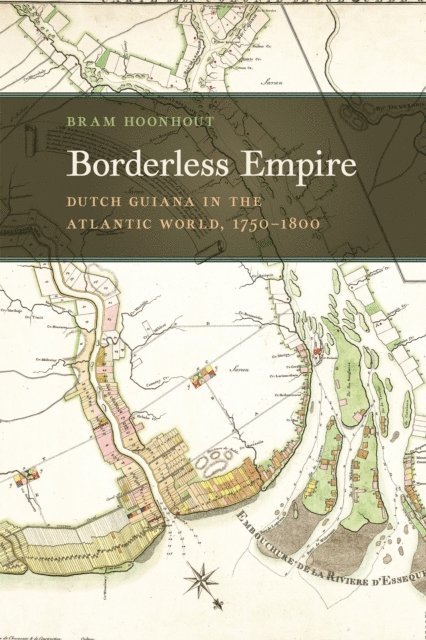
Borderless Empire explores the volatile history of Dutch Guiana, in particular the forgotten colonies of Essequibo and Demerara, to provide new perspectives on European empire building in the Atlantic world. Bram Hoonhout argues that imperial expansion was a process of improvisation at the colonial level rather than a project that was centrally orchestrated from the metropolis. Furthermore, he emphasizes that colonial expansion was far more transnational than the oft-used divisions into "national Atlantics" suggest. In so doing, he transcends the framework of the "Dutch Atlantic" by looking at the connections across cultural and imperial boundaries.The openness of Essequibo and Demerara affected all levels of the colonial society. Instead of counting on metropolitan soldiers, the colonists relied on Amerindian allies, who captured runaway slaves and put down revolts. Instead of waiting for Dutch slavers, the planters bought enslaved Africans from foreign smugglers. Instead of trying to populate the colonies with Dutchmen, the local authorities welcomed adventurers from many different origins. The result was a borderless world in which slavery was contingent on Amerindian support and colonial trade was rooted in illegality. These transactions created a colonial society that was far more Atlantic than Dutch.
442 kr
Läs direkt efter köp
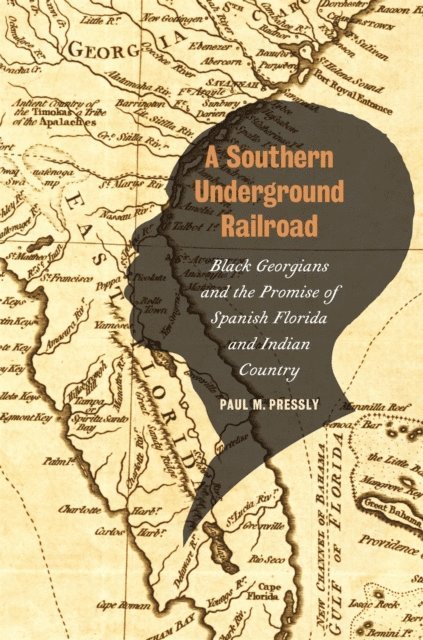
Despite its apparent isolation as an older region of the country, the Southeast provided a vital connecting link between the Black self-emancipation that occurred during the American Revolution and the growth of the Underground Railroad in the final years of the antebellum period. From the beginning of the revolutionary war to the eve of the First Seminole War in 1817, hundreds and eventually several thousand Africans and African Americans in Georgia, and to a lesser extent South Carolina, crossed the borders and boundaries that separated the Lowcountry from the British and Spanish in coastal Florida and from the Seminole and Creek people in the vast interior of the Southeast. Even in times of peace, there remained a steady flow of individuals moving south and southwest, reflecting the aspirations of a captive people. A Southern Underground Railroad constitutes a powerful counter-narrative in American history, a tale of how enslaved men and women found freedom and human dignity not in Jefferson’s “Empire of Liberty” but outside the expanding boundaries of the United States. It is a potent reminder of the strength of Black resistance in the post-revolutionary South and the ability of this community to influence the balance of power in a contested region. Paul M. Pressly’s research shows that their movement across borders was an integral part of the sustained struggle for dominance in the Southeast not only among the Great Powers but also among the many different racial, ethnic, and religious groups that inhabited the region and contended for control.