Geographies of Justice and Social Transformation Series – serie
489 kr
Läs direkt efter köp
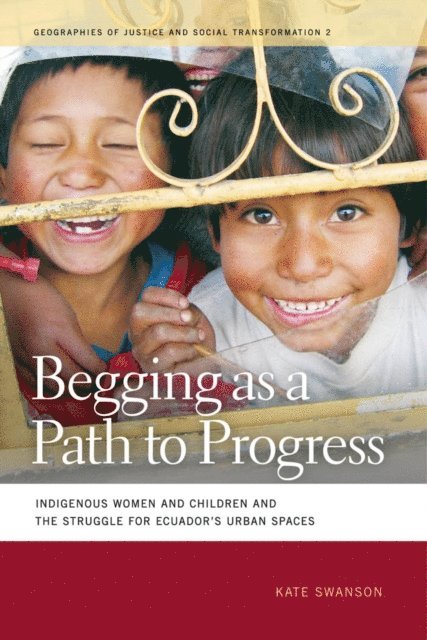
In 1992, Calhuasí, an isolated Andean town, got its first road. Newly connected to Ecuador’s large cities, Calhuasí experienced rapid social-spatial change, which Kate Swanson richly describes in Begging as a Path to Progress.Based on nineteen months of fieldwork, Swanson’s study pays particular attention to the ideas and practices surrounding youth. While begging seems to be inconsistent with—or even an affront to—ideas about childhood in the developed world, Swanson demonstrates that the majority of income earned from begging goes toward funding Ecuadorian children’s educations in hopes of securing more prosperous futures.Examining beggars’ organized migration networks, as well as the degree to which children can express agency and fulfill personal ambitions through begging, Swanson argues that Calhuasí’s beggars are capable of canny engagement with the forces of change. She also shows how frequent movement between rural and urban Ecuador has altered both, masculinizing the countryside and complicating the Ecuadorian conflation of whiteness and cities. Finally, her study unpacks ongoing conflicts over programs to “clean up” Quito and other major cities, noting that revanchist efforts have had multiple effects—spurring more dangerous transnational migration, for example, while also providing some women and children with tourist-friendly local spaces in which to sell a notion of Andean authenticity.
595 kr
Läs direkt efter köp
Faith Based
Religious Neoliberalism and the Politics of Welfare in the United States
443 kr
Läs direkt efter köp
They Saved the Crops
Labor, Landscape, and the Struggle over Industrial Farming in Bracero-Era California
626 kr
Läs direkt efter köp
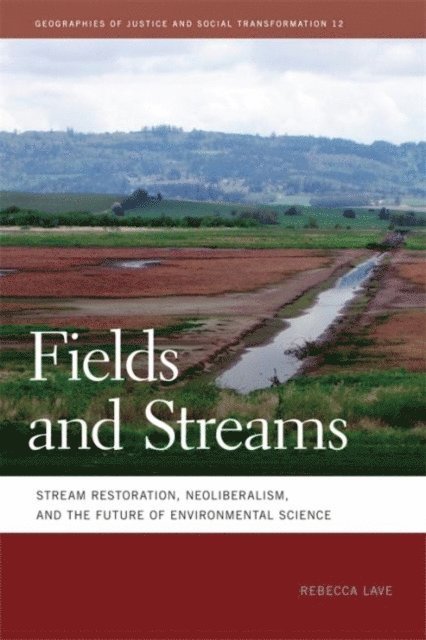
Fields and Streams
Stream Restoration, Neoliberalism, and the Future of Environmental Science
429 kr
Läs direkt efter köp
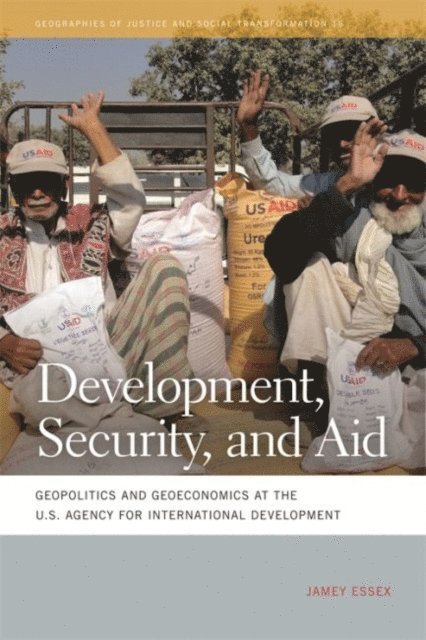
Development, Security, and Aid
Geopolitics and Geoeconomics at the U.S. Agency for International Development
386 kr
Läs direkt efter köp
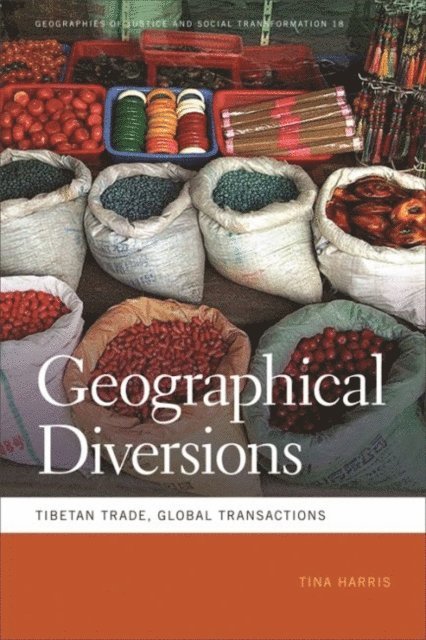
Geographical Diversions
Tibetan Trade, Global Transactions
472 kr
Läs direkt efter köp
383 kr
Läs direkt efter köp
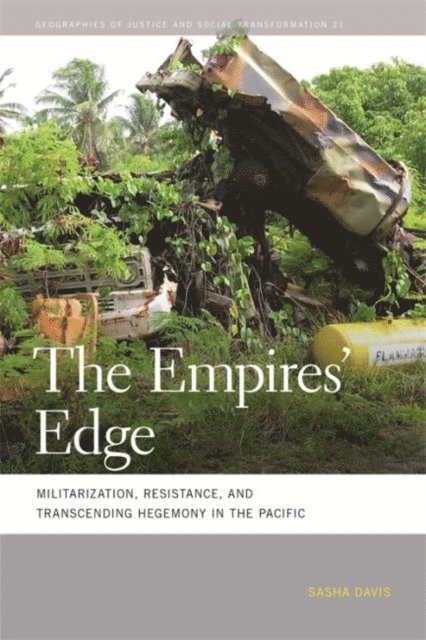
In the past decade the Asia-Pacific region has become a focus of international politics and military strategies. Due to China’s rising economic and military strength, North Korea’s nuclear tests and missile launches, tense international disputes over small island groups in the seas around Asia, and the United States pivoting a majority of its military forces to the region, the islands of the western Pacific have increasingly become the center of global attention. While the Pacific is a current hotbed of geopolitical rivalry and intense militarization, the region is also something else: a homeland to the hundreds of millions of people that inhabit it.Based on a decade of research in the region, The Empires’ Edge examines the tremendous damage the militarization of the Pacific has wrought on its people and environments. Furthermore, Davis details how contemporary social movements in this region are affecting global geopolitics by challenging the military use of Pacific islands and by developing a demilitarized view of security based on affinity, mutual aid, and international solidarity. Through an examination of “sacrificed” islands from across the region—including Bikini Atoll, Okinawa, Hawai‘i, and Guam—The Empires’ Edge makes the case that the great political contest of the twenty-first century is not about which country gets hegemony in a global system but rather about the choice between perpetuating a system of international relations based on domination or pursuing a more egalitarian and cooperative future.
504 kr
Läs direkt efter köp
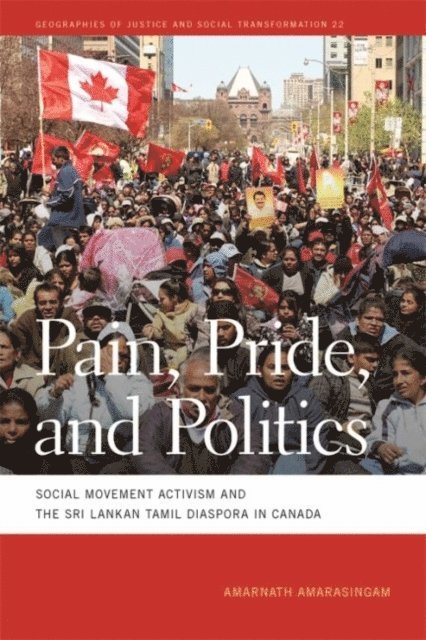
Pain, Pride, and Politics is an examination of diasporic politics based on a case study of Sri Lankan Tamils in Canada, with particular focus on activism between December 2008 and May 2009. Amarnath Amarasingam analyzes the reactions of diasporic Tamils in Canada at a time when the separatist Tamil movement was being crushed by the Sri Lankan armed forces and revises currently accepted analytical frameworks relating to diasporic communities. This book adds to our understanding of a particular diasporic group, while contributing to the theoretical literature in the area.Throughout, Amarasingam argues that transnational diasporic mobilization is at times determined and driven as much by internal organizational and communal developments as by events in their countries of origin, a phenomenon that has received relatively little attention in the scholarly literature. His work provides an in-depth examination of the ways in which a separatist sociopolitical movement beginning in Sri Lanka is carried forward, altered, and adapted by the diaspora and the struggles that are involved in this process.
578 kr
Läs direkt efter köp
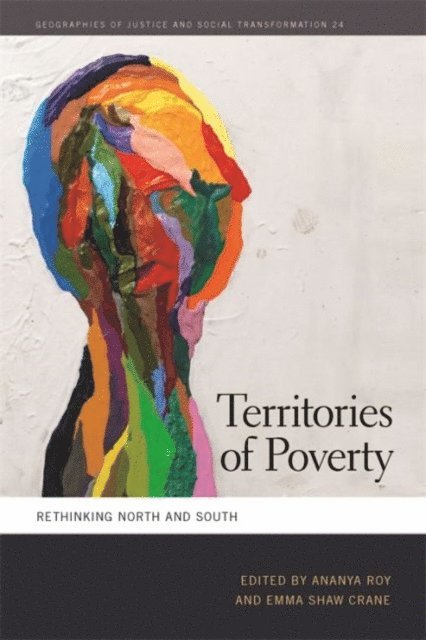
Territories of Poverty challenges the conventional North-South geographies through which poverty scholarship is organized. Staging theoretical interventions that traverse social histories of the American welfare state and critical ethnographies of international development regimes, these essays confront how poverty is constituted as a problem. In the process, the book analyzes bureaucracies of poverty, poor people’s movements, and global networks of poverty expertise, as well as more intimate modes of poverty action such as volunteerism. From post-Katrina New Orleans to Korean church missions in Africa, this book is fundamentally concerned with how poverty is territorialized.In contrast to studies concerned with locations of poverty, Territories of Poverty engages with spatial technologies of power, be they community development and counterinsurgency during the American 1960s or the unceasing anticipation of war in Beirut. Within this territorial matrix, contributors uncover dissent, rupture, and mobilization. This book helps us understand the regulation of poverty—whether by globally circulating models of fast policy or vast webs of mobile money or philanthrocapitalist foundations—as multiple terrains of struggle for justice and social transformation.
549 kr
Läs direkt efter köp
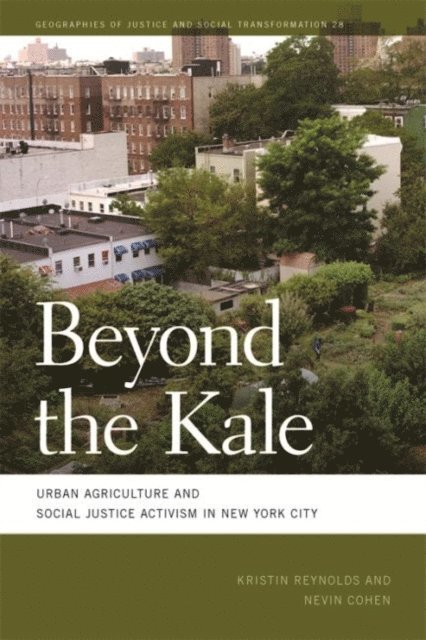
Urban agriculture is increasingly considered an important part of creating just and sustainable cities. Yet the benefits that many people attribute to urban agriculture—fresh food, green space, educational opportunities—can mask structural inequities, thereby making political transformation harder to achieve. Realizing social and environmental justice requires moving beyond food production to address deeper issues such as structural racism, gender inequity, and economic disparities. Beyond the Kale argues that urban agricultural projects focused explicitly on dismantling oppressive systems have the greatest potential to achieve substantive social change.Through in-depth interviews and public forums with some of New York City’s most prominent urban agriculture activists and supporters, Kristin Reynolds and Nevin Cohen illustrate how some urban farmers and gardeners not only grow healthy food for their communities but also use their activities and spaces to disrupt the dynamics of power and privilege that perpetuate inequity. Addressing a significant gap in the urban agriculture literature, Beyond the Kale prioritizes the voices of people of color and women—activists and leaders whose strategies have often been underrepresented within the urban agriculture movement—and it examines the roles of scholarship in advancing social justice initiatives.
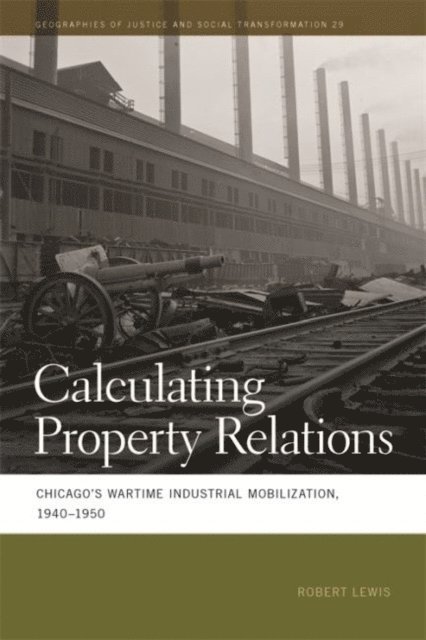
Calculating Property Relations
Chicago's Wartime Industrial Mobilization, 1940–1950
1 940 kr
Läs direkt efter köp
Combining theories of calculation and property relations and using an array of archival sources, this book focuses on the building and decommissioning of state-owned defense factories in World War II–era Chicago. Robert Lewis’s rich trove of material—drawn from research on more than six hundred federally funded wartime industrial sites in metropolitan Chicago—supports three major conclusions. First, the relationship of the key institutions of the military-industrial complex was refashioned by their calculative actions on industrial property. The imperatives of war forced the federal state and the military to become involved in industrial matters in an entirely new manner. Second, federal and military investment in defense factories had an enormous effect on the industrial geography of metropolitan Chicago. The channeling of huge lumps of industrial capital into sprawling plants on the urban fringe had a decisive impact on the metropolitan geographies of manufacturing. Third, the success of industrial mobilization was made possible through the multi-scale relations of national and locational interaction. National policy could only be realized by the placing of these relations at the local level.Throughout, Lewis shows how the interests of developers, factory engineers, corporate executives, politicians, unions, and the working class were intimately bound up with industrial space. Offering a local perspective on a city permanently shaped by national events, this book provides a richer understanding of the dynamics of wartime mobilization, the calculative actions of political and business leaders, the social relations of property, the working of state-industry relations, and the making of industrial space.
1 188 kr
Läs direkt efter köp
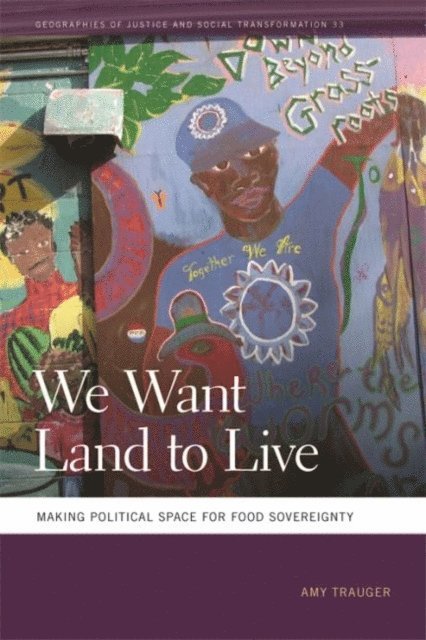
We Want Land to Live explores the current boundaries of radical approaches to food sovereignty. First coined by La Via Campesina (a global movement whose name means “the peasant’s way”), food sovereignty is a concept that expresses the universal right to food. Amy Trauger uses research combining ethnography, participant observation, field notes, and interviews to help us understand the material and definitional struggles surrounding the decommodification of food and the transformation of the global food system’s political-economic foundations.Trauger’s work is the first of its kind to analytically and coherently link a dialogue on food sovereignty with case studies illustrating the spatial and territorial strategies by which the movement fosters its life in the margins of the corporate food regime. She discusses community gardeners in Portugal; small-scale, independent farmers in Maine; Native American wild rice gatherers in Minnesota; seed library supporters in Pennsylvania; and permaculturists in Georgia.The problem in the food system, as the activists profiled here see it, is not markets or the role of governance but that the right to food is conditioned by what the state and corporations deem to be safe, legal, and profitable—and not by what eaters think is right in terms of their health, the environment, or their communities. Useful for classes on food studies and active food movements alike, We Want Land to Live makes food sovereignty issues real as it illustrates a range of methodological alternatives that are consistent with its discourse: direct action (rather than charity, market creation, or policy changes), civil disobedience (rather than compliance with discriminatory laws), and mutual aid (rather than reliance on top-down aid).
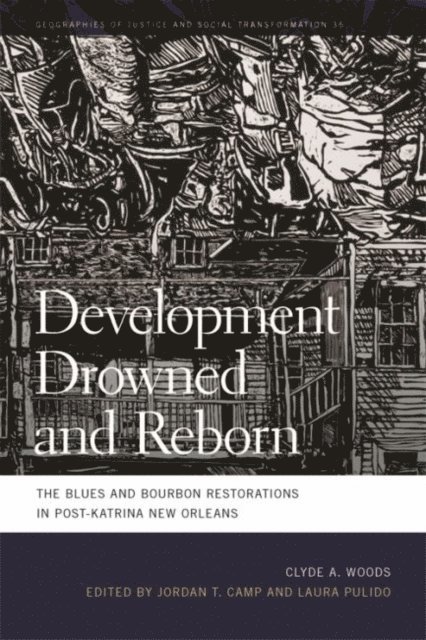
Development Drowned and Reborn
The Blues and Bourbon Restorations in Post-Katrina New Orleans
595 kr
Läs direkt efter köp
Development Drowned and Reborn is a “Blues geography” of New Orleans, one that compels readers to return to the history of the Black freedom struggle there to reckon with its unfinished business. Reading contemporary policies of abandonment against the grain, Clyde Woods explores how Hurricane Katrina brought long-standing structures of domination into view. In so doing, Woods delineates the roots of neoliberalism in the region and a history of resistance.Written in dialogue with social movements, this book offers tools for comprehending the racist dynamics of U.S. culture and economy. Following his landmark study, Development Arrested, Woods turns to organic intellectuals, Blues musicians, and poor and working people to instruct readers in this future-oriented history of struggle. Through this unique optic, Woods delineates a history, methodology, and epistemology to grasp alternative visions of development.Woods contributes to debates about the history and geography of neoliberalism. The book suggests that the prevailing focus on neoliberalism at national and global scales has led to a neglect of the regional scale. Specifically, it observes that theories of neoliberalism have tended to overlook New Orleans as an epicenter where racial, class, gender, and regional hierarchies have persisted for centuries. Through this Blues geography, Woods excavates the struggle for a new society.
Priority of Injustice
Locating Democracy in Critical Theory
1 468 kr
Läs direkt efter köp
This original and ambitious work looks anew at a series of intellectual debates about the meaning of democracy. Clive Barnett engages with key thinkers in various traditions of democratic theory and demonstrates the importance of a geographical imagination in interpreting contemporary political change.Debates about radical democracy, Barnett argues, have become trapped around a set of oppositions between deliberative and agonistic theories—contrasting thinkers who promote the possibility of rational agreement and those who seek to unmask the role of power or violence or difference in shaping human affairs. While these debates are often framed in terms of consensus versus contestation, Barnett unpacks the assumptions about space and time that underlie different understandings of the sources of political conflict and shows how these differences reflect deeper philosophical commitments to theories of creative action or revived ontologies of “the political.” Rather than developing ideal theories of democracy or models of proper politics, he argues that attention should turn toward the practices of claims-making through which political movements express experiences of injustice and make demands for recognition, redress, and re pair. By rethinking the spatial grammar of discussions of public space, democratic inclusion, and globalization, Barnett develops a conceptual framework for analyzing the crucial roles played by geographical processes in generating and processing contentious politics.
Spaces of Capital/Spaces of Resistance
Mexico and the Global Political Economy
1 344 kr
Läs direkt efter köp
Based on original fieldwork in Chiapas and Oaxaca, Mexico, this book offers a bridge between geography and historical sociology. Chris Hesketh examines the production of space within the global political economy. Drawing on multiple disciplines, Hesketh’s discussion of state formation in Mexico takes us beyond the national level to explore the interplay between global, regional, national, and sub-national articulations of power. These are linked through the novel deployment of Antonio Gramsci’s concept of passive revolution, understood as the state-led institution or expansion of capitalism that prevents the meaningful participation of the subaltern classes.Furthermore, the author brings attention to the conflicts involved in the production of space, placing particular emphasis on indigenous communities and movements and their creation of counterspaces of resistance. Hesketh argues that indigenous movements are now the leading social force of popular mobilization in Latin America. The author reveals how the wider global context of uneven and combined development frames these specific indigenous struggles, and he explores the scales at which they must now seek to articulate themselves.
Relational Poverty Politics
Forms, Struggles, and Possibilities
1 379 kr
Läs direkt efter köp
This collection examines the power and transformative potential of movements that fight against poverty and inequality. Broadly, poverty politics are struggles to define who is poor, what it means to be poor, what actions might be taken, and who should act. These movements shape the sociocultural and political economic structures that constitute poverty and privilege as material and social relations. Editors Victoria Lawson and Sarah Elwood focus on the politics of insurgent movements against poverty and inequality in seven countries (Argentina, India, Brazil, South Africa, Thailand, Singapore, and the United States).The contributors explore theory and practice in alliance politics, resistance movements, the militarized repression of justice movements, global counterpublics, and political theater. These movements reflect the diversity of poverty politics and the relations between bureaucracies and antipoverty movements. They discuss work done by mass and other types of mobilizations across multiple scales; forms of creative and political alliance across axes of difference; expressions and exercises of agency by people named as poor; and the kinds of rights and other claims that are made in different spaces and places.Relational Poverty Politics advocates for poverty knowledge grounded in relational perspectives that highlight the adversarial relationship of poverty to privilege, as well as the possibility for alliances across different groups. It incorporates current research in the field and demonstrates how relational poverty knowledge is best seen as a model for understanding how theory is derivative of action as much as the other way around. The book lays a foundation for realistic change that can directly attack poverty at its roots.Contributors: Antonádia Borges, Dia Da Costa, Sarah Elwood, David Boarder Giles, Jim Glassman, Victoria Lawson, Felipe Magalhães, Jeff Maskovsky, Richa Nagar, Genevieve Negrón-Gonzales, LaShawnDa Pittman, Frances Fox Piven, Preeti Sampat, Thomas Swerts, and Junjia Ye.
Rights in Transit
Public Transportation and the Right to the City in California's East Bay
1 574 kr
Läs direkt efter köp
Is public transportation a right? Should it be? For those reliant on public transit, the answer is invariably “yes” to both. Indeed, when city officials propose slashing service or raising fares, it is these riders who are often the first to appear at that officials’ door demanding their “right” to more service. Rights in Transit starts from the presumption that such riders are justified. For those who lack other means of mobility, transit is a lifeline. It offers access to many of the entitlements we take as essential: food, employment, and democratic public life itself. While accepting transit as a right, this book also suggests that there remains a desperate need to think critically, both about what is meant by a right and about the types of rights at issue when public transportation is threatened.Drawing on a detailed case study of the various struggles that have come to define public transportation in California’s East Bay, Rights in Transit offers a direct challenge to contemporary scholarship on transportation equity. Rather than focusing on civil rights alone, Rights in Transit argues for engaging the more radical notion of the right to the city.
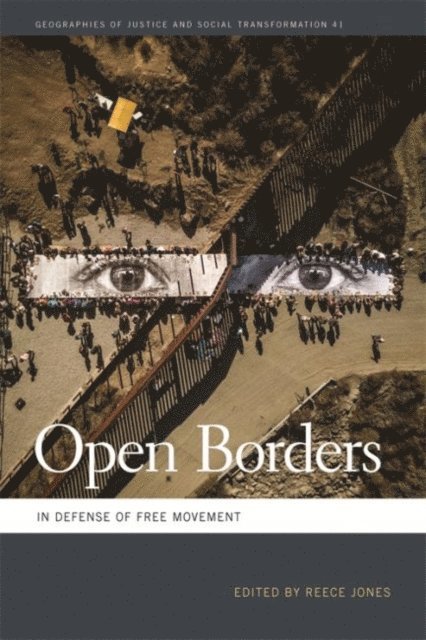
Open Borders
In Defense of Free Movement
1 631 kr
Läs direkt efter köp
Border control continues to be a highly contested and politically charged subject around the world. This collection of essays challenges reactionary nationalism by making the positive case for the benefits of free movement for countries on both ends of the exchange. Open Borders counters the knee-jerk reaction to build walls and close borders by arguing that there is not a moral, legal, philosophical, or economic case for limiting the movement of human beings at borders. The volume brings together essays by theorists in anthropology, geography, international relations, and other fields who argue for open borders with writings by activists who are working to make safe passage a reality on the ground. It puts forward a clear, concise, and convincing case for a world without movement restrictions at borders.The essays in the first part of the volume make a theoretical case for free movement by analyzing philosophical, legal, and moral arguments for opening borders. In doing so, they articulate a sustained critique of the dominant idea that states should favor the rights of their own citizens over the rights of all human beings. The second part sketches out the current situation in the European Union, in states that have erected border walls, in states that have adopted a policy of inclusion such as Germany and Uganda, and elsewhere in the world to demonstrate the consequences of the current regime of movement restrictions at borders. The third part creates a dialogue between theorists and activists, examining the work of Calais Migrant Solidarity, No Borders Morocco, activists in sanctuary cities, and others who contest border restrictions on the ground.
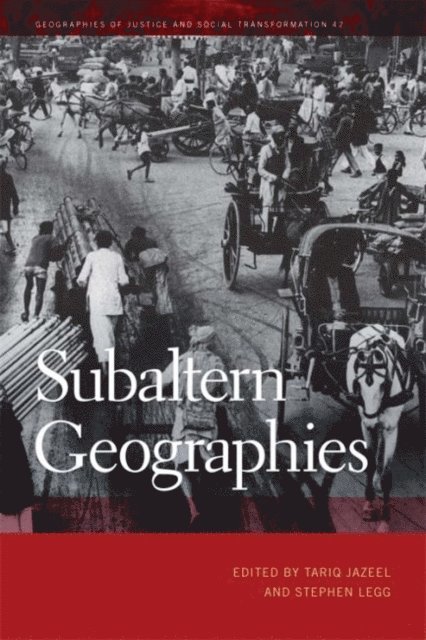
Subaltern Geographies
1 680 kr
Läs direkt efter köp
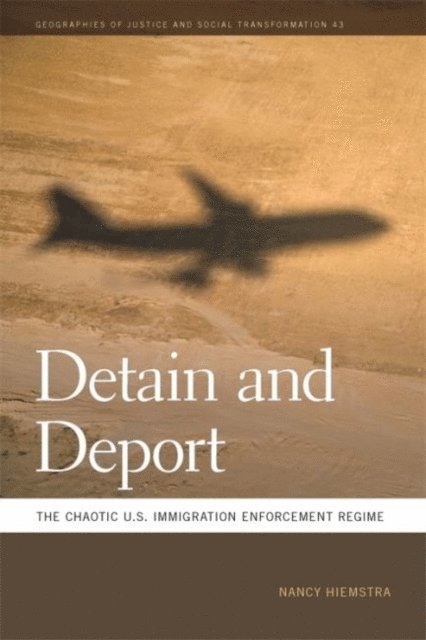
Detain and Deport
The Chaotic U.S. Immigration Enforcement Regime
1 574 kr
Läs direkt efter köp
1 621 kr
Läs direkt efter köp
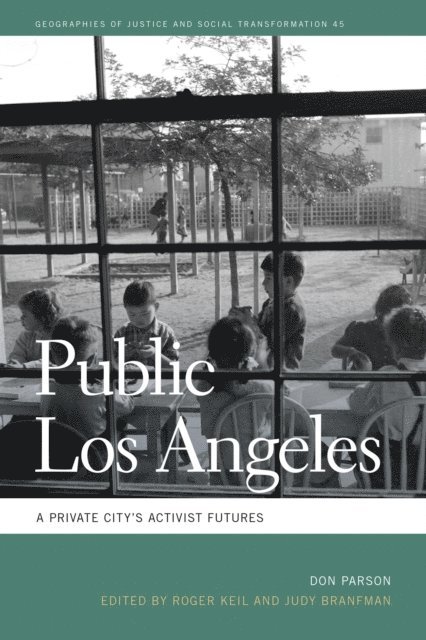
Public Los Angeles is a collection of unpublished essays by scholar Don Parson focusing on little-known characters and histories located in the first half of twentieth-century Los Angeles. An infamously private city in the eyes of outside observers, structured around single-family homes and an aggressively competitive regional economy, Los Angeles has often been celebrated or caricatured as the epitome of an American society bent on individualism, entrepreneurialism, and market ingenuity. But Don Parson presents a different vision for the vast Southern California metropolis, one that is deftly illustrated by stories of sustained struggles for social and economic justice led by activists, social workers, architects, housing officials, and a courageous judge.Public Los Angeles presents insights into LA’s historic collectivism, networks of solidarity, and government policy. A follow-up to Parson’s seminal Making a Better World: Public Housing, the Red Scare, and the Direction of Modern Los Angeles (2005), this volume helps shape our understanding of public housing, gender and housework, judicial activism, and race and class in modernday Los Angeles and asks us if history is repeating. Parson’s work anchors a collection of nine essays by friends and mentors who deepen the discussion of his themes: Dana Cuff, Mike Davis, Steven Flusty, Greg Goldin, Jacqueline Leavitt, Laura Pulido, Sue Ruddick, Tom Sitton, Edward W. Soja, and Jennifer Wolch.The book is richly illustrated. Biographical and curatorial essays by the book’s editors, Roger Keil and Judy Branfman, provide background material and a coherent storyline for a mosaic of fresh Los Angeles research.
489 kr
Läs direkt efter köp
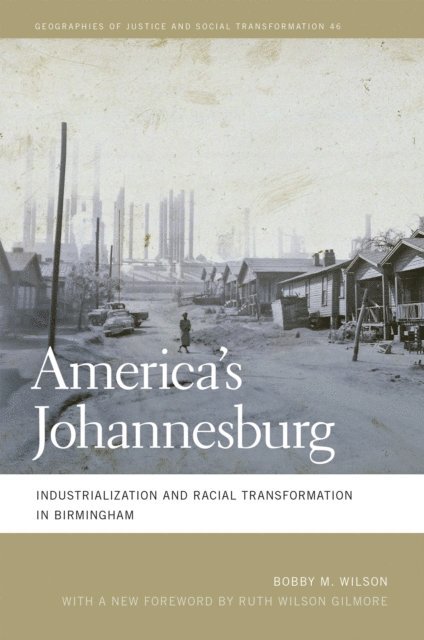
In some ways, no American city symbolizes the black struggle for civil rights more than Birmingham, Alabama. During the 1950s and 1960s, Birmingham gained national and international attention as a center of activity and unrest during the civil rights movement. Racially motivated bombings of the houses of black families who moved into new neighborhoods or who were politically active during this era were so prevalent that Birmingham earned the nickname “Bombingham.”In this critical analysis of why Birmingham became such a national flashpoint, Bobby M. Wilson argues that Alabama’s path to industrialism differed significantly from that of states in the North and Midwest. True to its antebellum roots, no other industrial city in the United States depended as much on the exploitation of black labor so early in its urban development as Birmingham.A persuasive exploration of the links between Alabama’s slaveholding order and the subsequent industrialization of the state, America’s Johannesburg demonstrates that arguments based on classical economics fail to take into account the ways in which racial issues influenced the rise of industrial capitalism.
1 574 kr
Läs direkt efter köp
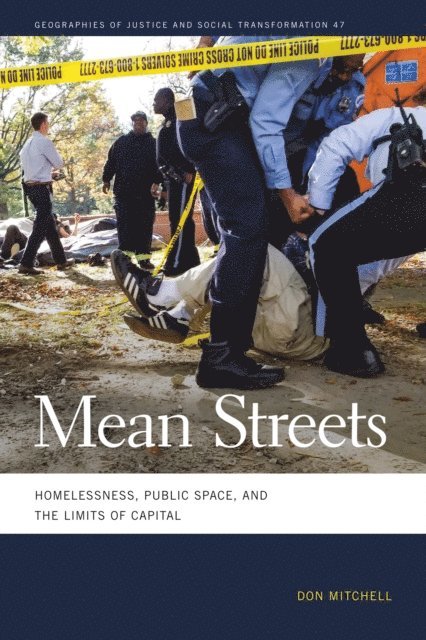
The problem of homelessness in America underpins the definition of an American city: what it is, who it is for, what it does, and why it matters. And the problem of the American city is epitomized in public space. Mean Streets offers, in a single, sustained argument, a theory of the social and economic logic behind the historical development, evolution, and especially the persistence of homelessness in the contemporary American city. By updating and revisiting thirty years of research and thinking on this subject, Don Mitchell explores the conditions that produce and sustain homelessness and how its persistence relates to the way capital works in the urban built environment. He also addresses the historical and social origins that created the boundary between public and private. Consequently, he unpacks the structure, meaning, and governance of urban public space and its uses.Mitchell traces his argument through two sections: a broadly historical overview of how homelessness has been managed in public spaces, followed by an exploration of recent Supreme Court jurisprudence that expands our national discussion. Beyond the mere regulation of the homeless and the poor, homelessness has metastasized more recently, Mitchell argues, to become a general issue that affects all urbanites.
1 680 kr
Läs direkt efter köp
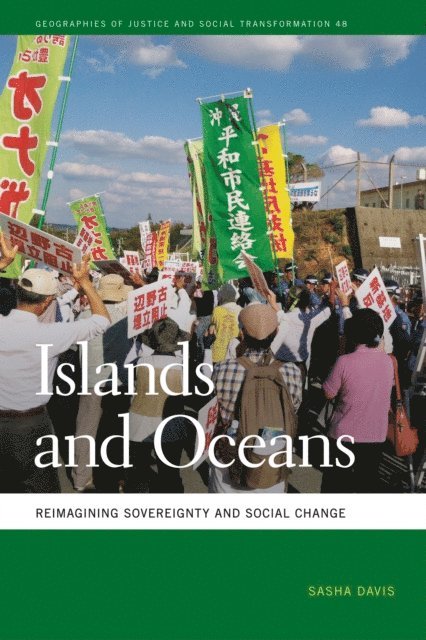
Sovereignty is a term used by stateless people seeking decolonization as well as by dominant social groups struggling to reassert their socially privileged positions. All sorts of political actors, it seems, are interested in sovereignty. It is less clear, however, just what the term means, and whether calls for sovereignty promote a politically progressive or conservative agenda. Examining how sovereignty functions allows us to better understand the dangers, promise, and limitations of relying on it as a political strategy.Islands and Oceans explores how struggles for decolonization, self- determination, and political rights permeate conceptualizations of how sovereignty operates. To support his theoretical claims, Sasha Davis works through a series of case studies, drawing on research that he conducted between 2013 and 2017 in Korea, Guam, Yap, Palau, the Northern Marianas, Hawai‘i, and Honshu and Okinawa in Japan. Because of the hybridized and contested arrangements of sovereignty in these territories, these places are excellent sites to tease out some of the differences between official regimes of sovereignty and the actual control of social processes on the ground. In addition, analysis of the tensions and acute debates over sovereignty in these regions lays bare how sovereignty works as a process. Davis’s study of these political cases within the Asia-Pacific region advances our understanding the nature of sovereignty more generally.
1 631 kr
Läs direkt efter köp
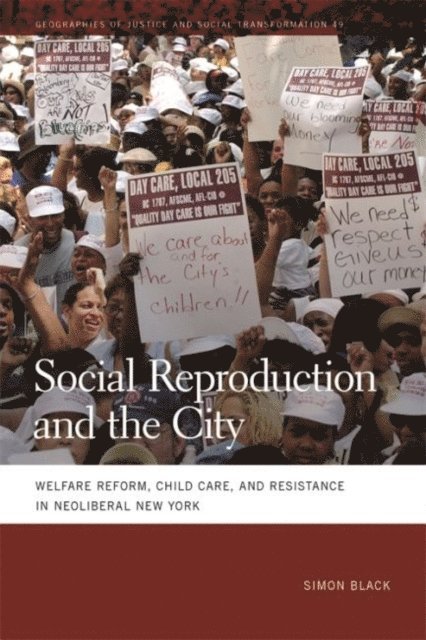
The transformation of child care after welfare reform in New York City and the struggle against that transformation is a largely untold story. In the decade following welfare reform, despite increases in child care funding, there was little growth in New York’s unionized, center-based child care system and no attempt to make this system more responsive to the needs of working mothers. As the city delivered child care services “on the cheap,” relying on non-union home child care providers, welfare rights organizations, community legal clinics, child care advocates, low-income community groups, activist mothers, and labor unions organized to demand fair solutions to the child care crisis that addressed poor single mothers’ need for quality, affordable child care as well as child care providers’ need for decent work and pay. Social Reproduction and the City tells this story, linking welfare reform to feminist research and activism around the “crisis of care,” social reproduction, and the neoliberal city.At a theoretical level, Simon Black’s history of this era presents a feminist political economy of the urban welfare regime, applying a social reproduction lens to processes of urban neoliberalization and an urban lens to feminist analyses of welfare state restructuring and resistance. Feminist political economy and feminist welfare state scholarship have not focused on the urban as a scale of analysis, and critical approaches to urban neoliberalism often fail to address questions of social reproduction. To address these unexplored areas, Black unpacks the urban as a contested site of welfare state restructuring and examines the escalating crisis in social reproduction. He lays bare the aftermath of the welfare-to-work agenda of the Giuliani administration in New York City on child care and the resistance to policies that deepened race, class, and gender inequities.
1 621 kr
Läs direkt efter köp
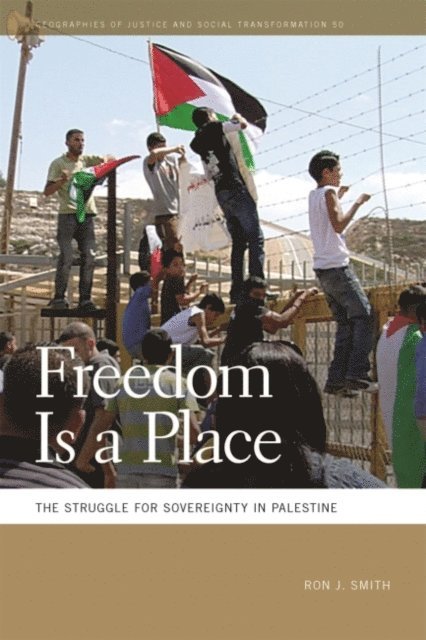
Freedom Is a Place gives readers a snapshot of everyday life in the 1967 oPt (occupied Palestinian territories). A project of subaltern geopolitics, it helps both new and seasoned scholars of the region better understand occupation: its purpose, varied manifestations, and on-the-ground functions. This personal study brings to light how large-scale geopolitics play havoc with the lives of ordinary people and how people resist and endure.Using data collected over a decade of fieldwork, Ron J. Smith situates the everyday realities of the occupation within the larger project of Zionism. He explores the attempts to codify a temporary condition like occupation into permanency. Smith insists that occupation be understood as a changing process, not a singular event, and to explain its longevity, he argues that we must uncover the particular geographical and political dynamism at hand.Through careful use of interviews and participant observation, Smith reveals how the varied practices of occupation transform daily life into a prison. He also helps bring to light everyday narratives illustrating how people mobilize claims to freedom and sovereignty to maintain life under occupation. Freedom Is a Place uncovers how lessons from Israel’s seventy-plus-years occupation are used by other states to oppress restive populations. At the same time, Smith identifies how these lessons also can be mobilized to create new spaces and strategies toward achieving liberation.
460 kr
Läs direkt efter köp
Abolishing Poverty argues for a project of relationality that refuses the whiteness of liberal poverty studies and instead centers critiques of the poverty relation and political futures disavowed under liberal governance. In disrupting poverty thinking, the author collective opens space for diverse frameworks for understanding impoverishment and articulating antiracist knowledges and political visions. The book explores new infrastructures of possibilities and political solidarities rooted in accountable relations to each other and from flights to the future that animate diverse communities.This book is boundary and genre crossing, with broad appeal to scholars of such disciplines as human geography, ethnic studies, decolonial theory, and feminist studies. As a volume, the work is unique in its primary field of human geography in the form of its making, its collective authorship, and its investigation of politics that abolish poverty thinking and engage in activism against the poverty relation produced through settler colonialism, heteropatriarchy, white supremacy, and capitalist exploitation.