Global America – serie
Visar alla böcker i serien Global America. Handla med fri frakt och snabb leverans.
14 produkter
14 produkter
Inbunden, Engelska, 2023
1 173 kr
Skickas inom 5-8 vardagar
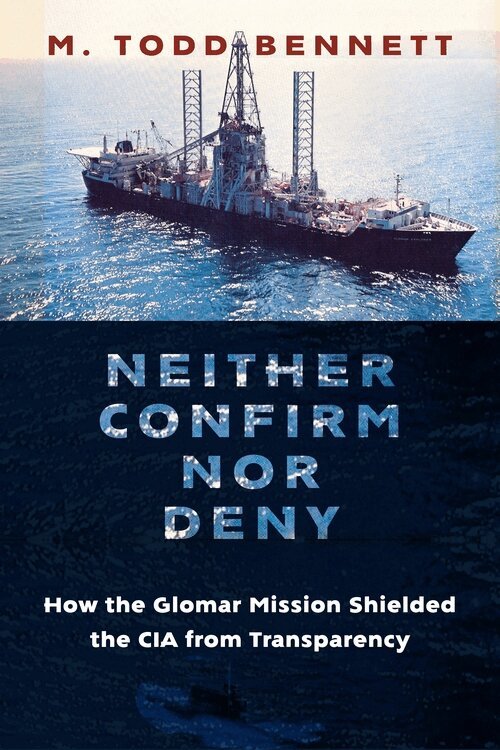
Winner, 2024 Book Award, Society for History in the Federal GovernmentIn 1974, the Hughes Glomar Explorer, ostensibly an advanced deep-sea mining vessel owned by reclusive billionaire Howard Hughes, lowered a claw-like contraption to the floor of the Pacific Ocean. This high-tech venture was only a cover story for an even more improbable scheme: a CIA mission to retrieve a sunken Soviet submarine. Like a Jules Verne novel with an Ian Fleming twist, the saga of the Glomar Explorer features underwater espionage, impossible gadgetry, and high-stakes international drama. It also marks a key moment in the history of transparency—and not just for what became known as the Glomar response: “We can neither confirm nor deny. . . . ”M. Todd Bennett plumbs the depths of government secrecy in this new account of the Glomar mission and its consequences. Trawling through recently declassified documents, he explores the logistics, media fallout, and geopolitical significance of one of the most ambitious operations in intelligence history. Glomar, Bennett argues, played a pivotal but underappreciated role in helping the CIA ward off oversight amid a push for transparency and accountability. He reframes the operation’s history to offer an alternative perspective on the 1970s, a decade known for expansive openness, as well as the persistent tension between the demands of democracy and the need for secrecy in foreign policy. Combining keen historical analysis and gripping storytelling, Neither Confirm nor Deny brings to the surface fresh insights into the history of the security state, the politics of intelligence, and the CIA’s relationship with the media and the public.
Häftad, Engelska, 2023
299 kr
Skickas inom 5-8 vardagar
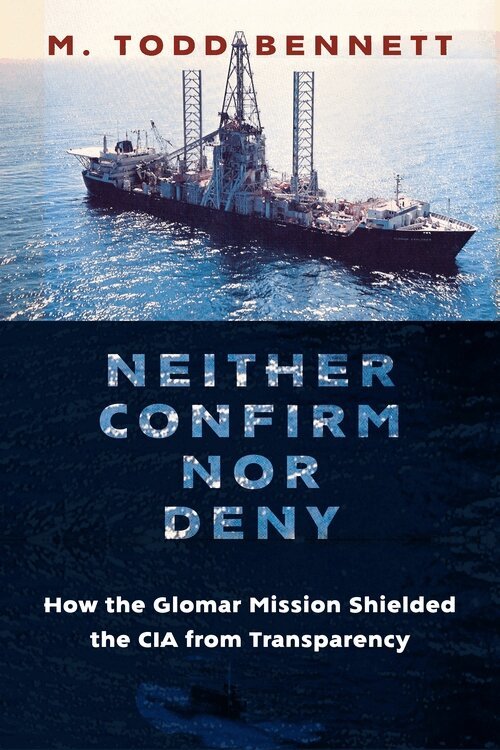
Winner, 2024 Book Award, Society for History in the Federal GovernmentIn 1974, the Hughes Glomar Explorer, ostensibly an advanced deep-sea mining vessel owned by reclusive billionaire Howard Hughes, lowered a claw-like contraption to the floor of the Pacific Ocean. This high-tech venture was only a cover story for an even more improbable scheme: a CIA mission to retrieve a sunken Soviet submarine. Like a Jules Verne novel with an Ian Fleming twist, the saga of the Glomar Explorer features underwater espionage, impossible gadgetry, and high-stakes international drama. It also marks a key moment in the history of transparency—and not just for what became known as the Glomar response: “We can neither confirm nor deny. . . . ”M. Todd Bennett plumbs the depths of government secrecy in this new account of the Glomar mission and its consequences. Trawling through recently declassified documents, he explores the logistics, media fallout, and geopolitical significance of one of the most ambitious operations in intelligence history. Glomar, Bennett argues, played a pivotal but underappreciated role in helping the CIA ward off oversight amid a push for transparency and accountability. He reframes the operation’s history to offer an alternative perspective on the 1970s, a decade known for expansive openness, as well as the persistent tension between the demands of democracy and the need for secrecy in foreign policy. Combining keen historical analysis and gripping storytelling, Neither Confirm nor Deny brings to the surface fresh insights into the history of the security state, the politics of intelligence, and the CIA’s relationship with the media and the public.
Inbunden, Engelska, 2024
1 162 kr
Skickas inom 5-8 vardagar
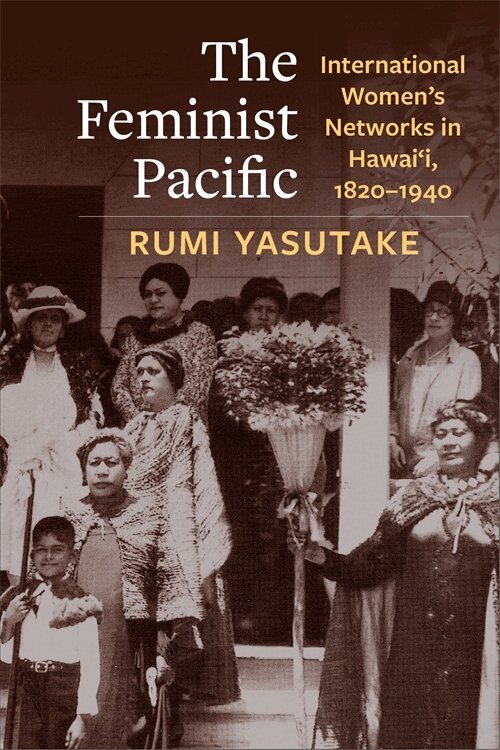
As competing American, European, and later Japanese imperial and colonial ambitions spread across the ocean in the nineteenth century, Honolulu emerged as a transnational hub for the exchange of ideas. Rumi Yasutake reveals the pivotal role of women’s organizing in this era of rapid globalization, tracing how diverse movements intersected and converged in Hawai‘i—with worldwide consequences.The Feminist Pacific examines transnational networks in Hawai‘i beginning in 1820, with the arrival of American missionary wives, and through the rise of women’s internationalism in the interwar years. It follows an array of suffragists, missionaries, maternalists, and antiwar activists in their international campaigns for peace and social justice that culminated in the formation of the Pan-Pacific Women’s Association (PPWA) and subsequent conferences. Yasutake explores how these movements radiated from Honolulu and branched out to the United States, Japan, and China. She illuminates their contradictions, showing how women’s striving for collective power went at once in the face of and hand in hand with globalization, settler colonialism, and imperialism. Yasutake underscores how the PPWA and the movements that formed it wrestled with the dichotomies of their world: home and public, domestic and foreign, native and settler, white and nonwhite, feminist and antifeminist. Bridging nineteenth-century Protestant churchwomen’s evangelism with twentieth-century feminist internationalism, this book recasts women’s global organizing from the perspective of the Pacific.
Häftad, Engelska, 2024
296 kr
Skickas inom 5-8 vardagar
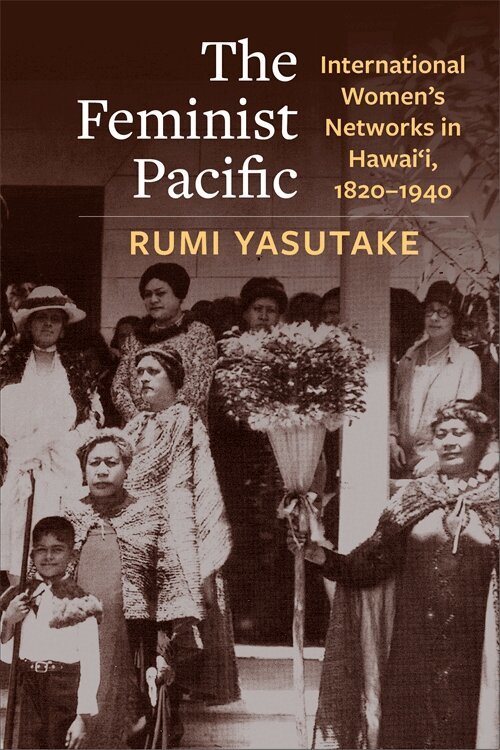
As competing American, European, and later Japanese imperial and colonial ambitions spread across the ocean in the nineteenth century, Honolulu emerged as a transnational hub for the exchange of ideas. Rumi Yasutake reveals the pivotal role of women’s organizing in this era of rapid globalization, tracing how diverse movements intersected and converged in Hawai‘i—with worldwide consequences.The Feminist Pacific examines transnational networks in Hawai‘i beginning in 1820, with the arrival of American missionary wives, and through the rise of women’s internationalism in the interwar years. It follows an array of suffragists, missionaries, maternalists, and antiwar activists in their international campaigns for peace and social justice that culminated in the formation of the Pan-Pacific Women’s Association (PPWA) and subsequent conferences. Yasutake explores how these movements radiated from Honolulu and branched out to the United States, Japan, and China. She illuminates their contradictions, showing how women’s striving for collective power went at once in the face of and hand in hand with globalization, settler colonialism, and imperialism. Yasutake underscores how the PPWA and the movements that formed it wrestled with the dichotomies of their world: home and public, domestic and foreign, native and settler, white and nonwhite, feminist and antifeminist. Bridging nineteenth-century Protestant churchwomen’s evangelism with twentieth-century feminist internationalism, this book recasts women’s global organizing from the perspective of the Pacific.
Inbunden, Engelska, 2023
1 327 kr
Skickas inom 5-8 vardagar
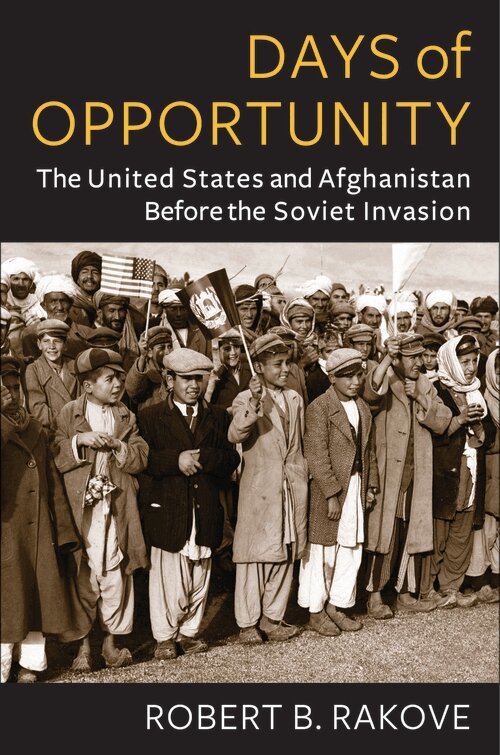
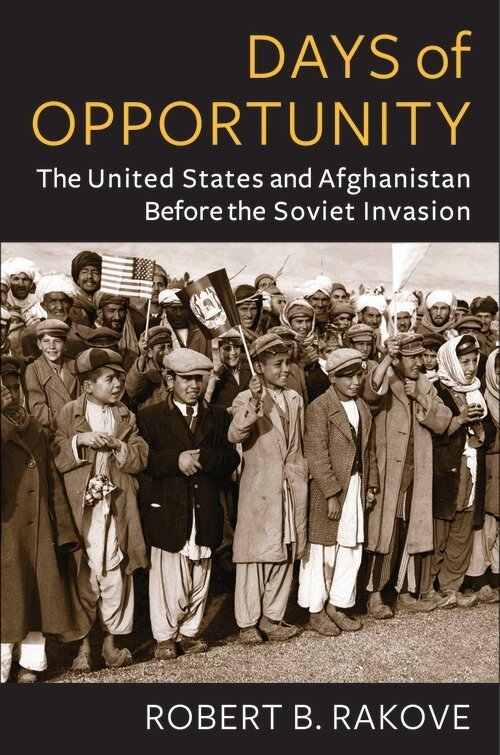
Honorable Mention, 2025 Charles H. Norchi Prize, Royal Asiatic Society of Great Britain and IrelandLong before the 1979 Soviet invasion, the United States was closely concerned with Afghanistan. For much of the twentieth century, American diplomats, policy makers, businesspeople, and experts took part in the Afghan struggle to modernize, delivered vital aid, and involved themselves in Kabul’s conflicts with its neighbors. For their own part, many Afghans embraced the potential benefits of political and commercial ties with the United States. Yet these relationships ultimately helped make the country a Cold War battleground.Robert B. Rakove sheds new light on the little-known and often surprising history of U.S. engagement in Afghanistan from the 1920s to the Soviet invasion, tracing its evolution and exploring its lasting consequences. Days of Opportunity chronicles the battle for influence in Kabul, as Americans contended with vigorous communist bloc competition and the independent ambitions of successive Afghan governments. Rakove examines the phases of peaceful Cold War competition, including development assistance, cultural diplomacy, and disaster relief. He demonstrates that Americans feared the “loss” of Afghanistan to Soviet influence—and were never simply bystanders, playing pivotal roles in the country’s political life. The ensuing collision of U.S., Soviet, and Afghan ambitions transformed the country—and ultimately led it, and the world, toward calamity.Harnessing extensive research in U.S. and international archives, Days of Opportunity unveils the remarkable and tragic history of American involvement in Afghanistan.
Häftad, Engelska, 2023
337 kr
Skickas inom 5-8 vardagar
Honorable Mention, 2025 Charles H. Norchi Prize, Royal Asiatic Society of Great Britain and IrelandLong before the 1979 Soviet invasion, the United States was closely concerned with Afghanistan. For much of the twentieth century, American diplomats, policy makers, businesspeople, and experts took part in the Afghan struggle to modernize, delivered vital aid, and involved themselves in Kabul’s conflicts with its neighbors. For their own part, many Afghans embraced the potential benefits of political and commercial ties with the United States. Yet these relationships ultimately helped make the country a Cold War battleground.Robert B. Rakove sheds new light on the little-known and often surprising history of U.S. engagement in Afghanistan from the 1920s to the Soviet invasion, tracing its evolution and exploring its lasting consequences. Days of Opportunity chronicles the battle for influence in Kabul, as Americans contended with vigorous communist bloc competition and the independent ambitions of successive Afghan governments. Rakove examines the phases of peaceful Cold War competition, including development assistance, cultural diplomacy, and disaster relief. He demonstrates that Americans feared the “loss” of Afghanistan to Soviet influence—and were never simply bystanders, playing pivotal roles in the country’s political life. The ensuing collision of U.S., Soviet, and Afghan ambitions transformed the country—and ultimately led it, and the world, toward calamity.Harnessing extensive research in U.S. and international archives, Days of Opportunity unveils the remarkable and tragic history of American involvement in Afghanistan.
Inbunden, Engelska, 2024
1 203 kr
Skickas inom 5-8 vardagar
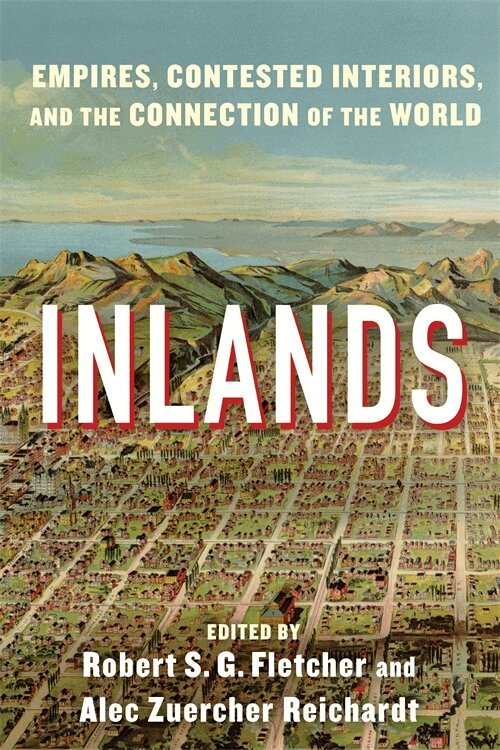
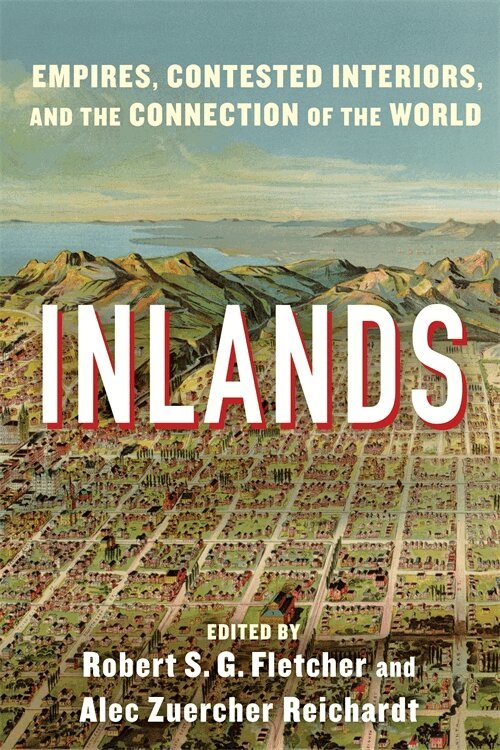
Conventional narratives of empires and globalization focus on oceans and coasts, supposing that global connections are seaborne and that historical change proceeds inward from port cities into continental expanses. This book offers a new perspective, examining key inland areas around the world to show how interior regions have shaped global history.Inlands brings together an interdisciplinary group of experts to explore the modern histories of inland regions across North and South America, Africa, Eurasia, and Australasia, from the American heartland to the Yangzi valley, the Great Dismal Swamp to the Arabian Desert. Together, they argue that interior regions provide a fresh vantage point from which to rethink the history of global connection and disconnection. Each chapter reconsiders national, regional, or imperial histories from an inland perspective, demonstrating how such places have spurred global change.Contributors reveal the critical role inlands and their Indigenous inhabitants have played in the development, projection, and contestation of state power, showing how some interiors became essential to empire even as others developed in resistance to it. By examining the struggle to integrate inland regions into wider networks of exchange, this book also sheds light on the unevenness and the limits of contemporary globalization. A new global history of interior spaces, Inlands presents a bold challenge to dominant understandings of the making of today’s connected world.
Häftad, Engelska, 2024
312 kr
Skickas inom 5-8 vardagar
Conventional narratives of empires and globalization focus on oceans and coasts, supposing that global connections are seaborne and that historical change proceeds inward from port cities into continental expanses. This book offers a new perspective, examining key inland areas around the world to show how interior regions have shaped global history.Inlands brings together an interdisciplinary group of experts to explore the modern histories of inland regions across North and South America, Africa, Eurasia, and Australasia, from the American heartland to the Yangzi valley, the Great Dismal Swamp to the Arabian Desert. Together, they argue that interior regions provide a fresh vantage point from which to rethink the history of global connection and disconnection. Each chapter reconsiders national, regional, or imperial histories from an inland perspective, demonstrating how such places have spurred global change.Contributors reveal the critical role inlands and their Indigenous inhabitants have played in the development, projection, and contestation of state power, showing how some interiors became essential to empire even as others developed in resistance to it. By examining the struggle to integrate inland regions into wider networks of exchange, this book also sheds light on the unevenness and the limits of contemporary globalization. A new global history of interior spaces, Inlands presents a bold challenge to dominant understandings of the making of today’s connected world.
Inbunden, Engelska, 2023
1 128 kr
Skickas inom 5-8 vardagar
Winner, 2025 Sisam Prize for the Best Monograph in Environmental History, Italian Society for Environmental HistoryThe U.S. government, military, and industry once saw ocean incineration as the safest and most efficient way to dispose of hazardous chemical waste. Beginning in the late 1960s, toxic chemicals such as PCBs and other harmful industrial byproducts were taken out to sea to be destroyed in specially designed ships equipped with high-temperature combustion chambers and smokestacks. But public outcry arose after the environmental and health risks of ocean incineration were exposed, and the practice was banned in the early 1990s.Smoke on the Water traces the rise and fall of ocean incineration, showing how a transnational environmental movement tested the limits of U.S. political and economic power. Dario Fazzi examines the anti-ocean-incineration movement that emerged on both sides of the Atlantic, arguing that it succeeded by merging local advocacy with international mobilization. He emphasizes the role played at the grassroots level by women, migrant workers, and other underrepresented groups who were at greatest risk. Environmental groups, for their part, gathered and shared evidence about the harms of at-sea incineration, building scientific consensus and influencing international debates.Smoke on the Water tells the compelling story of a campaign against environmental degradation in which people from marginalized communities took on the might of the U.S. military-industrial complex. It offers new insights into the transnational dimensions of environmental regulation, the significance of nonstate actors in international history, and the making of environmental justice movements.
Häftad, Engelska, 2023
287 kr
Skickas inom 5-8 vardagar
Winner, 2025 Sisam Prize for the Best Monograph in Environmental History, Italian Society for Environmental HistoryThe U.S. government, military, and industry once saw ocean incineration as the safest and most efficient way to dispose of hazardous chemical waste. Beginning in the late 1960s, toxic chemicals such as PCBs and other harmful industrial byproducts were taken out to sea to be destroyed in specially designed ships equipped with high-temperature combustion chambers and smokestacks. But public outcry arose after the environmental and health risks of ocean incineration were exposed, and the practice was banned in the early 1990s.Smoke on the Water traces the rise and fall of ocean incineration, showing how a transnational environmental movement tested the limits of U.S. political and economic power. Dario Fazzi examines the anti-ocean-incineration movement that emerged on both sides of the Atlantic, arguing that it succeeded by merging local advocacy with international mobilization. He emphasizes the role played at the grassroots level by women, migrant workers, and other underrepresented groups who were at greatest risk. Environmental groups, for their part, gathered and shared evidence about the harms of at-sea incineration, building scientific consensus and influencing international debates.Smoke on the Water tells the compelling story of a campaign against environmental degradation in which people from marginalized communities took on the might of the U.S. military-industrial complex. It offers new insights into the transnational dimensions of environmental regulation, the significance of nonstate actors in international history, and the making of environmental justice movements.
Inbunden, Engelska, 2026
1 203 kr
Skickas inom 5-8 vardagar
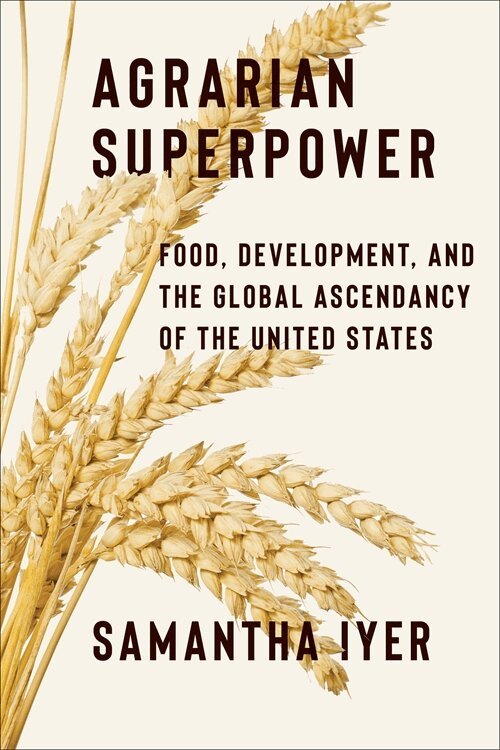
The United States’ superpower status is often associated with its industrial, financial, and military might. Yet its global power after the Second World War hinged in part on something often seen as backward: agriculture. In contrast to Britain, the predominant global power of the nineteenth century, which depended on its current and former colonies for food and raw materials, the United States produced vast agricultural surpluses. During the 1950s, an era of decolonization and rising Cold War competition, the United States became the dominant exporter of food staples to industrializing nations in the Third World through its massive food aid program.Through the lens of food and agriculture, this book offers new ways to understand the roots of the post–Second World War global order and the US position in it. Samantha Iyer traces how two former British territories and agricultural competitors of the United States, India and Egypt, became two of the largest importers of US food aid. She investigates the origins and consequences of the US-centric postwar food regime by examining changes in the production, distribution, and consumption of agricultural surpluses from the late nineteenth century to the early 1970s. Bringing together life in villages, towns, and cities with national, imperial, and international affairs, Iyer demonstrates that food aid was the expression of a changed political, economic, and ecological world that the United States did not create alone. Drawing on sources in Arabic, French, Urdu, and English, Agrarian Superpower is a groundbreaking comparative history of food, agriculture, and development.
Häftad, Engelska, 2026
304 kr
Skickas inom 5-8 vardagar
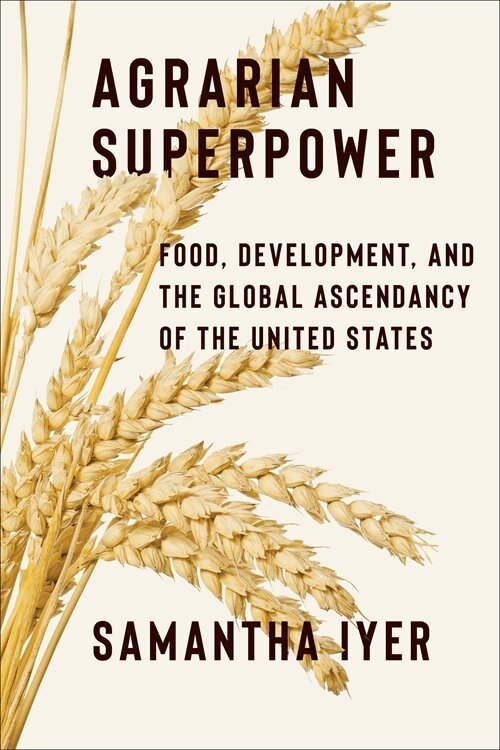
The United States’ superpower status is often associated with its industrial, financial, and military might. Yet its global power after the Second World War hinged in part on something often seen as backward: agriculture. In contrast to Britain, the predominant global power of the nineteenth century, which depended on its current and former colonies for food and raw materials, the United States produced vast agricultural surpluses. During the 1950s, an era of decolonization and rising Cold War competition, the United States became the dominant exporter of food staples to industrializing nations in the Third World through its massive food aid program.Through the lens of food and agriculture, this book offers new ways to understand the roots of the post–Second World War global order and the US position in it. Samantha Iyer traces how two former British territories and agricultural competitors of the United States, India and Egypt, became two of the largest importers of US food aid. She investigates the origins and consequences of the US-centric postwar food regime by examining changes in the production, distribution, and consumption of agricultural surpluses from the late nineteenth century to the early 1970s. Bringing together life in villages, towns, and cities with national, imperial, and international affairs, Iyer demonstrates that food aid was the expression of a changed political, economic, and ecological world that the United States did not create alone. Drawing on sources in Arabic, French, Urdu, and English, Agrarian Superpower is a groundbreaking comparative history of food, agriculture, and development.
Inbunden, Engelska, 2026
1 244 kr
Skickas inom 5-8 vardagar
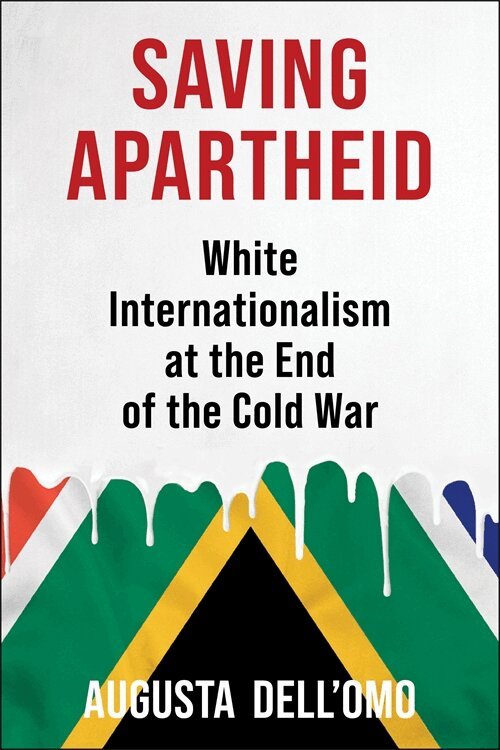
During the 1980s, as global antiapartheid sentiment grew, an international coalition of far-right activists arose to preserve racial hierarchy in South Africa and beyond. This groundbreaking book tells the story of how a transatlantic pro-apartheid movement attempted to defend white rule in South Africa—and forged enduring links between global conservatism and white power.By mapping an international network of white supremacist organizations, Augusta Dell’Omo reveals a fundamental shift in far-right organizing in response to changing geopolitical realities. The pro-apartheid movement brought together a range of figures who sought to influence the conservative Western governments they saw as allies. As antiapartheid activism grew, the South African regime crumbled, and the post–Cold War order took shape, apartheid’s defenders adapted their ideology for a colorblind, human rights–centric, and neoliberal world. Their successes and failures shaped the antistatist trajectory of white supremacist organizing in the 1990s and beyond, planting the seeds for a global resurgence of the far right.Saving Apartheid ranges from Reagan’s Oval Office to South Africa’s bantustans and from white women’s grassroots organizing to evangelical broadcasting, illuminating how an unlikely coalition reimagined white supremacy. Uncovering the surprising influence of apartheid’s defenders, this book offers a prehistory of the present.
Häftad, Engelska, 2026
321 kr
Skickas inom 5-8 vardagar
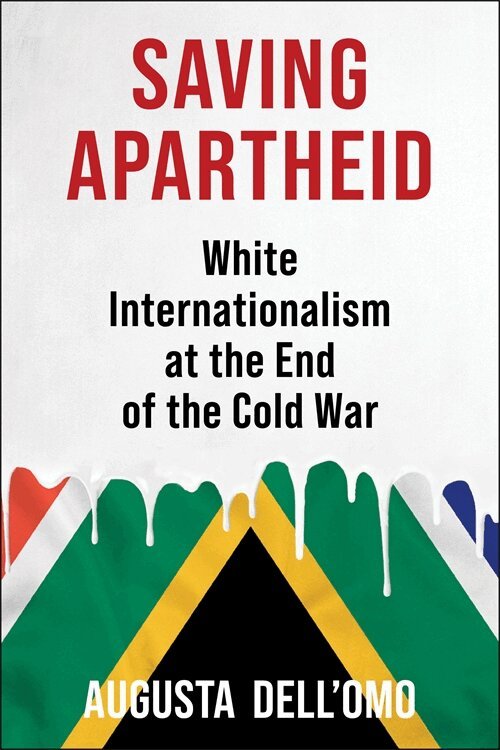
During the 1980s, as global antiapartheid sentiment grew, an international coalition of far-right activists arose to preserve racial hierarchy in South Africa and beyond. This groundbreaking book tells the story of how a transatlantic pro-apartheid movement attempted to defend white rule in South Africa—and forged enduring links between global conservatism and white power.By mapping an international network of white supremacist organizations, Augusta Dell’Omo reveals a fundamental shift in far-right organizing in response to changing geopolitical realities. The pro-apartheid movement brought together a range of figures who sought to influence the conservative Western governments they saw as allies. As antiapartheid activism grew, the South African regime crumbled, and the post–Cold War order took shape, apartheid’s defenders adapted their ideology for a colorblind, human rights–centric, and neoliberal world. Their successes and failures shaped the antistatist trajectory of white supremacist organizing in the 1990s and beyond, planting the seeds for a global resurgence of the far right.Saving Apartheid ranges from Reagan’s Oval Office to South Africa’s bantustans and from white women’s grassroots organizing to evangelical broadcasting, illuminating how an unlikely coalition reimagined white supremacy. Uncovering the surprising influence of apartheid’s defenders, this book offers a prehistory of the present.