Integrative Studies in Water Management & Land Development - Böcker
Visar alla böcker i serien Integrative Studies in Water Management & Land Development. Handla med fri frakt och snabb leverans.
14 produkter
14 produkter
931 kr
Skickas inom 10-15 vardagar
The use of organic management practices in field cropping continues to rise globally, and these methods have proven to be a viable way to produce food with reduced resource use and environmental damage. Managing Energy, Nutrients, and Pests in Organic Field Crops challenges the popular misconception that organic systems are weak at managing energy, nutrients, and pests and shows how innovative farm designs can enhance organic performance. It provides information for assessing the current state of knowledge on organic field cropping and for making the systems more viable.Each chapter summarizes the latest data from a wide range of sources, creating a comprehensive and coherent picture of the issues and integrating agronomic, economic, and policy aspects. Many chapters also include recent research from the authors. Section I, Soil Health, examines the importance of phosphorus balance, soil fertility, and tillage reduction. Section II, Pest Management, focuses on integrated weed management and long-term approaches to insect management.Section III, Integrating Approaches, addresses multiple field cropping challenges. Chapters cover the oldest organic rotational trials in Canada, the issue of using cereals bred for conventional systems and more targeted organic cereal breeding strategies, and case studies of a broad spectrum of farming experiences that explore the broader social and ecological landscape. The final section, Economics, Energy, and Policy, examines environmental issues not previously addressed in the text as well as consumer, economic, and rural community matters. It also presents a reprint of an article that describes policies and programs (and their costs) needed to advance adoption of organic farming in Ontario. The text wraps up with key conclusions and a discussion of overarching themes for the book, summarizing the strengths of the available tool box for organic producers and the challenges that remain.
713 kr
Skickas inom 10-15 vardagar
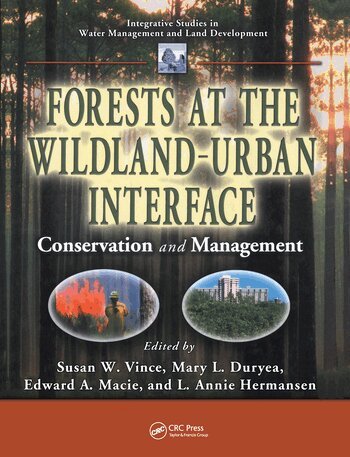
Forests at the wildland-urban interface are at increasing risk due to the impacts of urbanization. Conserving and managing these forestlands for continued ecological and social benefits is a critical and complex challenge facing natural resource managers, land-use planners, and policymakers.Forests at the Wildland-Urban Interface: Conservation and Management provides information, strategies, and tools to enhance natural resource management, planning, and policymaking at the wildland-urban interface. The text is arranged in five sections: forestland changes at the wildland-urban interface and why they are occurring; economic, policy, and land-use planning tools that can be used to manage growth; methods for communicating with and engaging the public; ecosystem management tools for sustaining the provision of ecological goods and services from interface forests; and ways in which various types of landowners are pursuing conservation and management of forests in the interface.By combining science and management, theory and practical problem solving, this book addresses a broad range of issues associated with the wildland-urban interface and provides possible solutions. Natural resource professionals and urban planners will find this a crucial resource for coordinating and implementing sound policy and practice.
735 kr
Skickas inom 10-15 vardagar
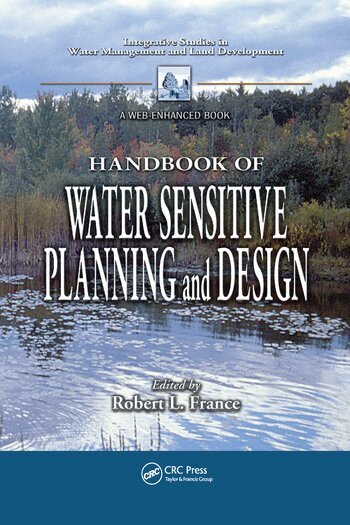
Design options and planning procedures must be critically examined to ensure that landscapes are created with sensitivity to water quality and management issues as well as overall ecological integrity. Handbook of Water Sensitive Planning and Design presents the history of water as a design and planning element in landscape architecture and describes new interpretations of water management. This text pushes the frontiers of standard water management in new directions, challenging readers into abandoning the comfortable safety of conducting business-as-usual within narrow disciplinary confines, and instead directing views outward to the exciting and incompletely mapped regions of true interdisciplinary water sensitive planning and design.With contributions from renowned practitioners, Part I provides seventeen chapters addressing the subject of site-specific water sensitive design and Part II presents another seventeen chapters focusing on issues relating to the water sensitive planning of riparian buffers and watersheds. In addition, Professor France has provided a "Response" to accompany each chapter, which succinctly underscores the salient features in more detail and emphasizes cross-linking to other chapters in the book. The "Overview" provides a brief road-map to navigate through the section. Finally, the discussion summaries at the end of each section elaborate on past problems, current challenges, and future directions. Handbook of Water Sensitive Planning and Design puts forward the very best of modern water sensitive planning and design and should be required reading for everyone involved in this dynamic and crucial field.
1 189 kr
Skickas inom 10-15 vardagar
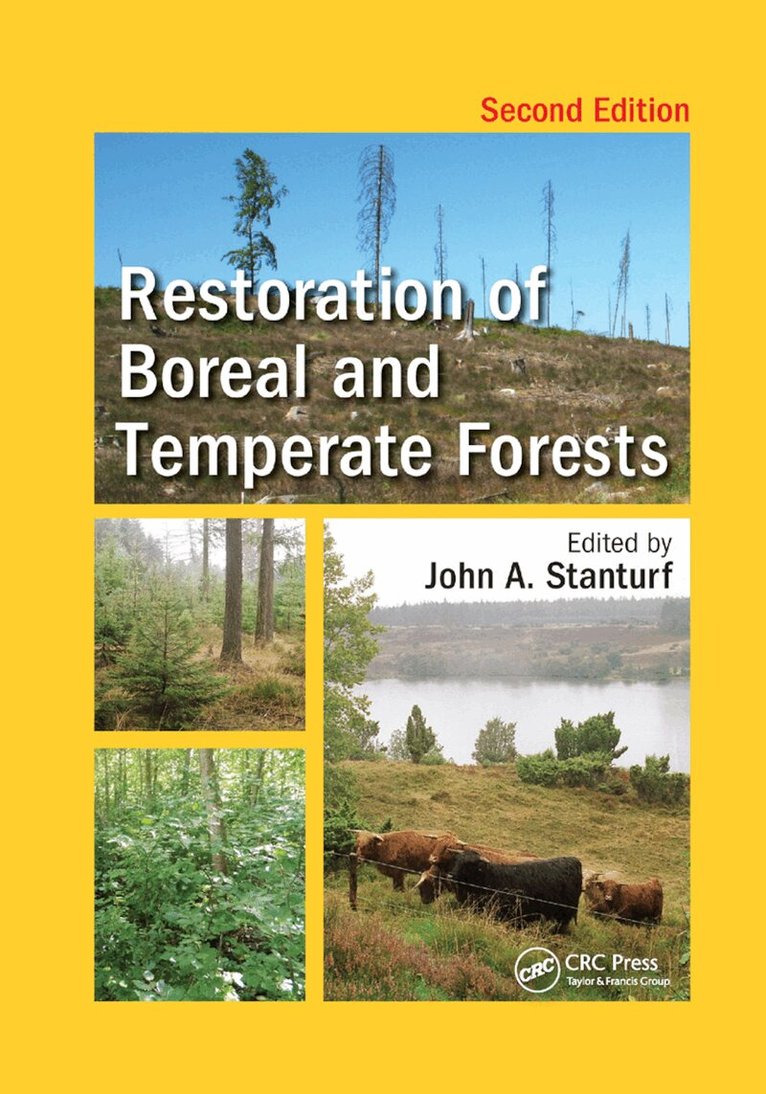
Humans have influenced the landscapes and forests throughout the temperate and boreal zones for millennia. Restoration of Boreal and Temperate Forests, Second Edition focuses on the negative impact of human activity, and explains the importance of forest restoration as a way to repair habitat, restore forest structure and function, and counteract the lasting effects of humanity. The book offers broad geographic coverage, as well as a combination of review and case study chapters providing social and policy contexts for restoration of specific forest types.This revised edition begins with a historical context for restoration, provides a conceptual framework for understanding the relationship between degradation and restoration, and defines terms within that framework. While building on the first edition, it presents the response of restorationists to the current challenges of interpreting scattered science on forest history, stand development, and natural processes. It combines applicable experience designed to improve present and future ecological and social sustainability.Describes restoration in the context of rapid social, economic, environmental, and climate changeLooks toward the future, presenting several completely new topics in forest restorationCovers different starting points for restoration, from non-forest to degraded forest Restoration of Boreal and Temperate Forests, Second Editionaids in the understanding of the diverse cultural and ecological contexts for restoration of temperate and boreal forests, and the creation of a better foundation of documented knowledge to support future and existing restoration decisions.
2 317 kr
Skickas inom 10-15 vardagar
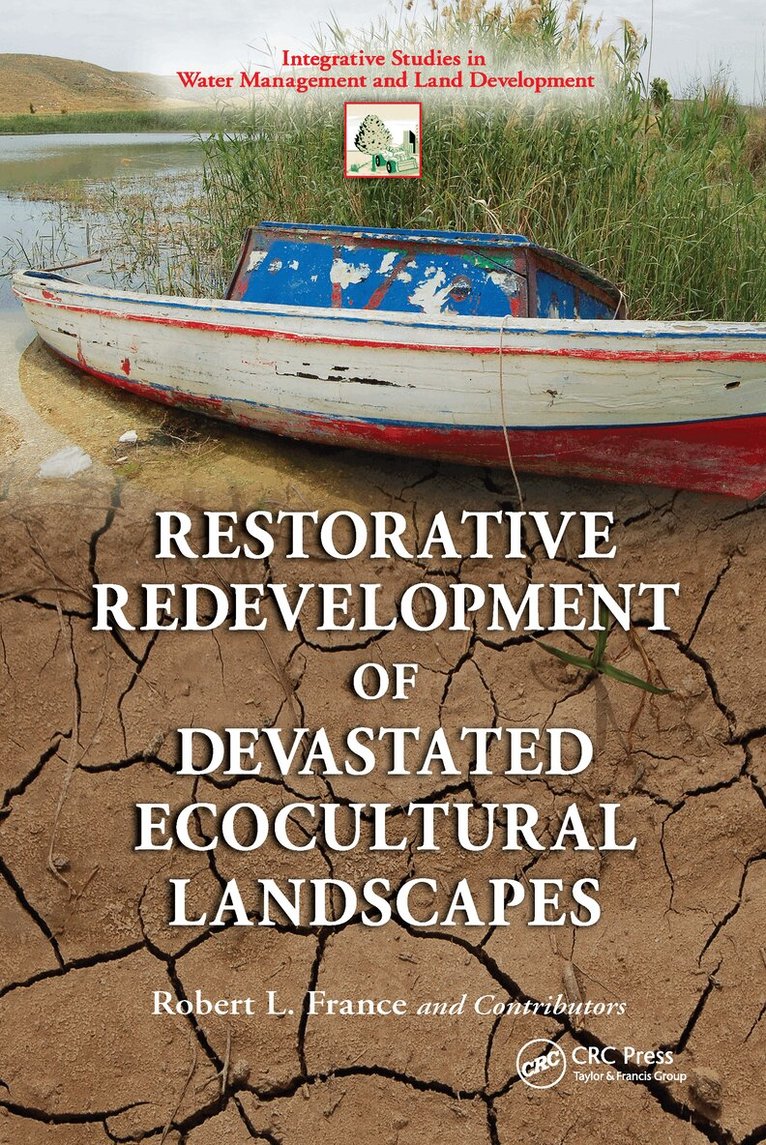
A fusion of ecological restoration and sustainable development, restorative redevelopment represents an emerging paradigm for remediating landscapes. Rather than merely fixing the broken bits and pieces of nature, restorative development advocates the reuse of devastated landscapes to improve the value and livability of a location for humans at the same time as effectively reinstating natural processes and functions. Restorative Redevelopment of Devastated Ecocultural Landscapes explores the use of this approach to address the long-term, sustainable reparation of the fabled marshlands of southern Iraq destroyed by Saddam Hussein, as well as numerous examples of other ecologically sensitive regions.Case studies presented include: Southern marshlands IraqHula swamp, IsraelAzraq Oasis, JordanLas Vegas Wash, USA Xochimilco, MexicoPantanal, BrazilClark County Wetlands Park, USATonle Sap, CambodiaLake Titicaca, PeruNature Reserves, JordanThe book reviews successfully-implemented and celebrated case studies from more than 15 countries around the world which, either in whole or in part, can offer valuable insight into the restorative development of the Iraqi marshlands as well as other devastated ecocultural landscapes. It presents practical approaches for sustaining the process of restoration efforts, both during and after the reparation work has been accomplished. The editor suggests solutions targeted for Iraq but that also have resonance in other regions devastated by conflict and natural disasters. He takes a synoptic or cross-system approach to problem solving when repairing large-scale landscapes that have been devastated by conflict or natural disasters such as tsunami-damaged Indonesia and earthquake-ravaged Haiti.
3 715 kr
Skickas inom 10-15 vardagar
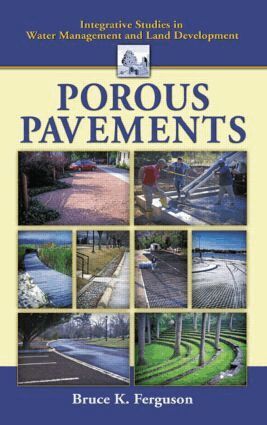
Pavements are the most ubiquitous of all man-made structures, and they have an enormous impact on environmental quality. They are responsible for hydrocarbon pollutants, excess runoff, groundwater decline and the resulting local water shortages, temperature increases in the urban "heat island," and for the ability of trees to extend their roots in order to live. Porous pavements, despite their ability to mitigate these factors, remain the object of much skepticism and controversy.Written by a renowned expert with 25 years of experience in urban watershed management, Porous Pavements is the first comprehensive "encyclopedia" of porous pavement materials. The book begins with five chapters that lay a foundation for all porous pavement materials and applications, introducing the types of materials and arrangements, their roles in the urban environment, and the principles of pavement structure, hydrology, and rooting space. The following nine chapters outline the costs, maintenance requirements, advantages and disadvantages for different applications, installation methods, sources of standard specifications, and performance levels for each family of porous pavement materials.Relying on case studies and factual data from observed experience, and containing abundant references for further information, Porous Pavements gives responsible practitioners a complete toolbox from which to select the appropriate material for site-specific conditions, providing a "green" alternative to impervious pavements.
1 140 kr
Skickas inom 10-15 vardagar
Any alteration of the natural processes occurring on a piece of land will have expected as well as unanticipated effects, and those effects have little regard for arbitrary human boundaries. Consequently, it is not enough for land managers to consider only how they might maintain the parcels for which they are responsible; they must also anticipate how changes to neighboring lands might impact their properties. Land Use Scenarios: Environmental Consequences of Development demonstrates how the success of local decision making is largely determined by factors that are difficult to control or forecast. It shows the importance of geographic vulnerability analysis, which takes into consideration possible scenarios about how, where, and when future patterns of land use might develop. It points to the consideration of critical uncertainties—those aspects of the future, that while difficult to predict, may have a profound impact on pending decisions. Detailing research supported by the United States Marine Corps, the text presents a study of the region of Marine Corps Base Camp Pendleton and Air Station Miramar in California. While this area remains largely un-built, but extensively used, ongoing regional growth is having dramatic impact on the land and must be factored into any decision making. This research— Provides a better understanding of the potential consequences of urban development on native flora and fauna Describes theoretical concerns prompted by scenario-based projections Gives an overview of the history of scenario-based techniques for urban and regional planning Helps define measures for maintaining undeveloped lands in rapidly developing areasIn publishing this research, the investigators provide information regarding issues of urban development and possible environmental consequences to stakeholders and jurisdictions whose actions may influence the future of the region. More broadly, the book will aid managers and stakeholders from other areas to engage spatial contingencies toward the goal of developing more resilient landscapes.
3 140 kr
Skickas inom 7-10 vardagar
Any alteration of the natural processes occurring on a piece of land will have expected as well as unanticipated effects, and those effects have little regard for arbitrary human boundaries. Consequently, it is not enough for land managers to consider only how they might maintain the parcels for which they are responsible; they must also anticipate how changes to neighboring lands might impact their properties. Land Use Scenarios: Environmental Consequences of Development demonstrates how the success of local decision making is largely determined by factors that are difficult to control or forecast. It shows the importance of geographic vulnerability analysis, which takes into consideration possible scenarios about how, where, and when future patterns of land use might develop. It points to the consideration of critical uncertainties—those aspects of the future, that while difficult to predict, may have a profound impact on pending decisions. Detailing research supported by the United States Marine Corps, the text presents a study of the region of Marine Corps Base Camp Pendleton and Air Station Miramar in California. While this area remains largely un-built, but extensively used, ongoing regional growth is having dramatic impact on the land and must be factored into any decision making. This research— Provides a better understanding of the potential consequences of urban development on native flora and fauna Describes theoretical concerns prompted by scenario-based projections Gives an overview of the history of scenario-based techniques for urban and regional planning Helps define measures for maintaining undeveloped lands in rapidly developing areasIn publishing this research, the investigators provide information regarding issues of urban development and possible environmental consequences to stakeholders and jurisdictions whose actions may influence the future of the region. More broadly, the book will aid managers and stakeholders from other areas to engage spatial contingencies toward the goal of developing more resilient landscapes.
2 131 kr
Skickas inom 10-15 vardagar
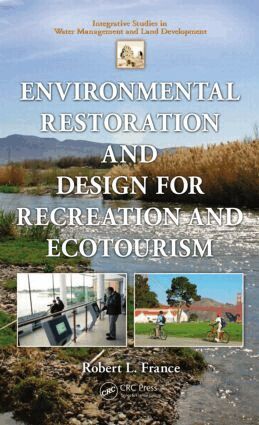
A wetland center in London, parks in downtown San Francisco, a wildlife sanctuary in Arcata, and a wetlands park on the outskirts of Las Vegas—what do these urban and suburban locations have in common? They are leading examples of a new restoration design approach that is squarely placed at the interface of nature and culture. This multidisciplinary paradigm bridges the gap between an ecological approach preoccupied with returning damaged landscapes to an imagined original state and a landscape design approach concerned with creating a place for people to reinhabit.Environmental Restoration and Design for Recreation and Ecotourism is the first book to provide a detailed examination of the entire process of restoring damaged or abandoned landscapes to benefit both nature and people, specifically for the purposes of recreation and ecotourism. With a focus on history, planning, methodology, design, and construction, it explores five case studies of successful regenerative landscape design projects and gives readers an inside look at the evolution of design projects. Two of the cases offer a particularly comprehensive review of award-winning projects: the reparation of the degraded Las Vegas Wash into Clark County Wetlands Park and the transformation of the abandoned Barn Elms Reservoirs into the London Wetland Centre. Supported by extensive photographs, tables, maps, sketches, and schematics, these case studies trace how ideas are first conceived and then adopted, transformed, or even abandoned along the way. Each case study also includes a questions-and-answers discussion with designers and managers. Emphasizing the need for interdisciplinary cooperation, the book presents lessons learned from some of the most innovative projects in regenerative landscape design.
2 588 kr
Skickas inom 10-15 vardagar
The use of organic management practices in field cropping continues to rise globally, and these methods have proven to be a viable way to produce food with reduced resource use and environmental damage. Managing Energy, Nutrients, and Pests in Organic Field Crops challenges the popular misconception that organic systems are weak at managing energy, nutrients, and pests and shows how innovative farm designs can enhance organic performance. It provides information for assessing the current state of knowledge on organic field cropping and for making the systems more viable.Each chapter summarizes the latest data from a wide range of sources, creating a comprehensive and coherent picture of the issues and integrating agronomic, economic, and policy aspects. Many chapters also include recent research from the authors. Section I, Soil Health, examines the importance of phosphorus balance, soil fertility, and tillage reduction. Section II, Pest Management, focuses on integrated weed management and long-term approaches to insect management.Section III, Integrating Approaches, addresses multiple field cropping challenges. Chapters cover the oldest organic rotational trials in Canada, the issue of using cereals bred for conventional systems and more targeted organic cereal breeding strategies, and case studies of a broad spectrum of farming experiences that explore the broader social and ecological landscape. The final section, Economics, Energy, and Policy, examines environmental issues not previously addressed in the text as well as consumer, economic, and rural community matters. It also presents a reprint of an article that describes policies and programs (and their costs) needed to advance adoption of organic farming in Ontario. The text wraps up with key conclusions and a discussion of overarching themes for the book, summarizing the strengths of the available tool box for organic producers and the challenges that remain.
2 779 kr
Skickas inom 7-10 vardagar
Humans have influenced the landscapes and forests throughout the temperate and boreal zones for millennia. Restoration of Boreal and Temperate Forests, Second Edition focuses on the negative impact of human activity, and explains the importance of forest restoration as a way to repair habitat, restore forest structure and function, and counteract the lasting effects of humanity. The book offers broad geographic coverage, as well as a combination of review and case study chapters providing social and policy contexts for restoration of specific forest types.This revised edition begins with a historical context for restoration, provides a conceptual framework for understanding the relationship between degradation and restoration, and defines terms within that framework. While building on the first edition, it presents the response of restorationists to the current challenges of interpreting scattered science on forest history, stand development, and natural processes. It combines applicable experience designed to improve present and future ecological and social sustainability.Describes restoration in the context of rapid social, economic, environmental, and climate changeLooks toward the future, presenting several completely new topics in forest restorationCovers different starting points for restoration, from non-forest to degraded forest Restoration of Boreal and Temperate Forests, Second Editionaids in the understanding of the diverse cultural and ecological contexts for restoration of temperate and boreal forests, and the creation of a better foundation of documented knowledge to support future and existing restoration decisions.
3 743 kr
Skickas inom 10-15 vardagar
Design options and planning procedures must be critically examined to ensure that landscapes are created with sensitivity to water quality and management issues as well as overall ecological integrity. Handbook of Water Sensitive Planning and Design presents the history of water as a design and planning element in landscape architecture and describes new interpretations of water management. This text pushes the frontiers of standard water management in new directions, challenging readers into abandoning the comfortable safety of conducting business-as-usual within narrow disciplinary confines, and instead directing views outward to the exciting and incompletely mapped regions of true interdisciplinary water sensitive planning and design.With contributions from renowned practitioners, Part I provides seventeen chapters addressing the subject of site-specific water sensitive design and Part II presents another seventeen chapters focusing on issues relating to the water sensitive planning of riparian buffers and watersheds. In addition, Professor France has provided a "Response" to accompany each chapter, which succinctly underscores the salient features in more detail and emphasizes cross-linking to other chapters in the book. The "Overview" provides a brief road-map to navigate through the section. Finally, the discussion summaries at the end of each section elaborate on past problems, current challenges, and future directions. Handbook of Water Sensitive Planning and Design puts forward the very best of modern water sensitive planning and design and should be required reading for everyone involved in this dynamic and crucial field.
2 588 kr
Skickas inom 10-15 vardagar
Forests at the wildland-urban interface are at increasing risk due to the impacts of urbanization. Conserving and managing these forestlands for continued ecological and social benefits is a critical and complex challenge facing natural resource managers, land-use planners, and policymakers.Forests at the Wildland-Urban Interface: Conservation and Management provides information, strategies, and tools to enhance natural resource management, planning, and policymaking at the wildland-urban interface. The text is arranged in five sections: forestland changes at the wildland-urban interface and why they are occurring; economic, policy, and land-use planning tools that can be used to manage growth; methods for communicating with and engaging the public; ecosystem management tools for sustaining the provision of ecological goods and services from interface forests; and ways in which various types of landowners are pursuing conservation and management of forests in the interface.By combining science and management, theory and practical problem solving, this book addresses a broad range of issues associated with the wildland-urban interface and provides possible solutions. Natural resource professionals and urban planners will find this a crucial resource for coordinating and implementing sound policy and practice.
2 185 kr
Tillfälligt slut
Economic literature is often too theoretical for engineers and policymakers to put into practical use, while scientific literature on the remediation of contaminated aquifers rarely considers costs and benefits. Written by a hydrogeologist and an economist, The Economics of Groundwater Remediation and Protection integrates economics and cost-benefit analysis tools with optimal protection and remediation strategies for groundwater resources.The book provides a thorough introduction of the concepts of groundwater flow and contaminant transport, and the basics of economic decision making techniques. It illustrates the types of risks and impacts caused by groundwater contamination, and the economic benefits of its remediation. The volume reviews a wide range of issues such as cost, implementation, and expectations of success for the latest remediation trends and techniques. The book shows how economic analysis can be used to determine how much we should pay for groundwater clean-up, and when spending too much - or too little - actually makes us all worse-off. The authors' step-by-step methodology for decision-making focuses on determining optimal remedial objectives, from containment to extensive cleanup, and the selection of least-cost alternatives. They use examples from their personal experience to illustrate the methodologies in action and put the issues into perspective.Combining the theoretical and practical aspects of science, policy, and economics, this book places the importance of groundwater remediation in the context of environmental economics, protection, and preservation. The Economics of Groundwater Remediation and Protection is also an excellent introduction to innovative solutions for funding remediation projects, education, and incentive programs, such as mitigation banking, land pollution credit schemes, and conservation credit alternatives.