New Directions in Anthropological Archaeology – serie
Visar alla böcker i serien New Directions in Anthropological Archaeology. Handla med fri frakt och snabb leverans.
11 produkter
11 produkter
Inbunden, Engelska, 2016
1 443 kr
Skickas inom 5-8 vardagar
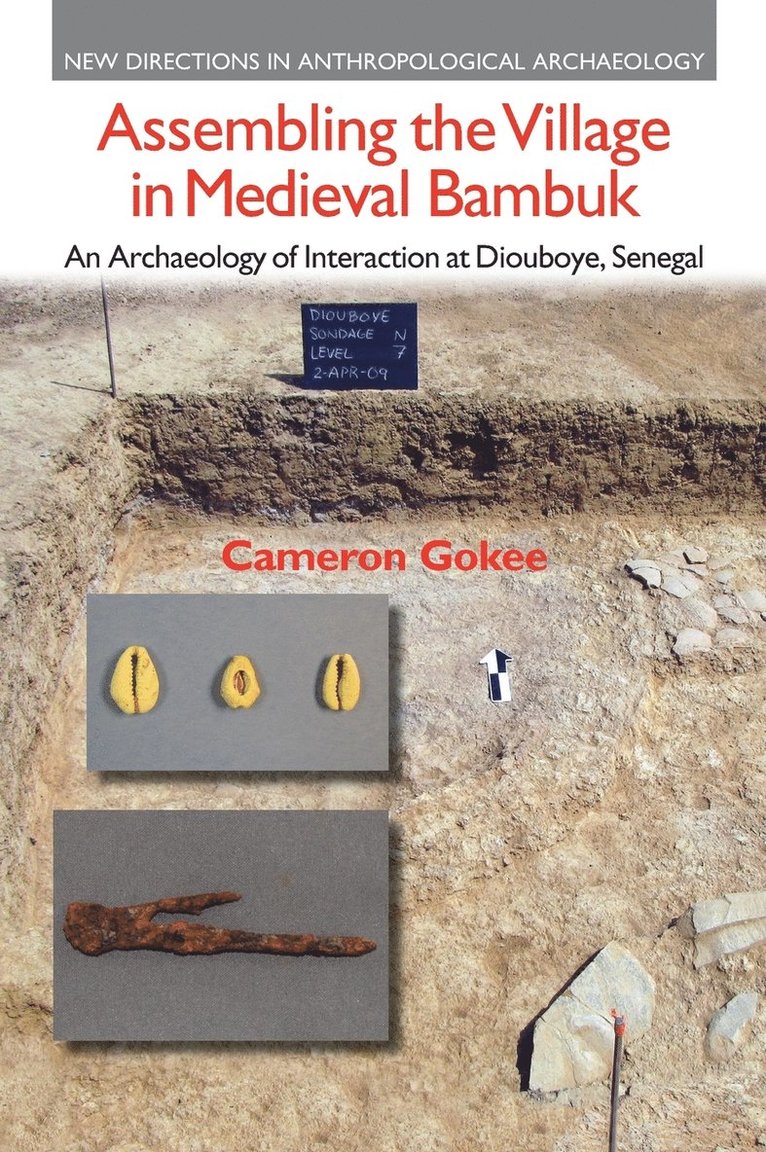
The land of Bambuk was an important source of gold for trans-Saharan trade and the imperial polities of Ghana and Mali, yet the non-centralized societies of this region remain largely peripheral in the historiography of West Africa. Drawing on recent archaeological research at the site of Diouboye in eastern Senegal, this book explores social life in medieval Bambuk from the standpoint of a village occupied over several centuries (1000-1400 CE). Material and spatial data from excavations, together with those from survey of the middle Falemme River basin, enable a critical look at how interactions across multiple scales-among neighboring houses, between cultural and craft traditions, and within a much broader political economy-created both possibilities for and challenges to the ongoing production of a local community at Diouboye. By moving back and forth across these scales centered on a single village, Assembling the Village in Medieval Bambuk outlines a relational archaeology of community applicable to the study of seemingly peripheral societies and processes of pre-modern globalization across Africa and beyond.
Inbunden, Engelska, 2016
1 430 kr
Skickas inom 5-8 vardagar
This volume explores processes of colonisation and cultural integration from the end of the last Ice Age to the present from a cross-cultural and interdisciplinary perspective.All kinds of human mobility, short-distance as well as long-distance movements, short-term and long-term interactions are potential triggers for change and also cultural integration. The colonisation of an area most clearly brings into focus what kind of social fabric encompassed the actual historical processes. Recent perspectives on the social and cultural embeddedness of exchange, and how objects facilitate constructions of identities and political legitimacy, serve to frame and explicate the role of material culture in such processes.The contributions to this volume shed light on various social aspects of movement, migration and colonisation among hunter-gatherers and Neolithic groups as well as in chiefdoms and state societies. Geographically, an area spanning from the Mediterranean to Central Europe and the North Sea Region, Greenland and Siberia is covered.Three social and historical processes - the social aspects of colonisation, cultural integration and maritime interaction - are particularly discussed as interrelated phenomena.
Inbunden, Engelska, 2022
1 522 kr
Skickas inom 5-8 vardagar
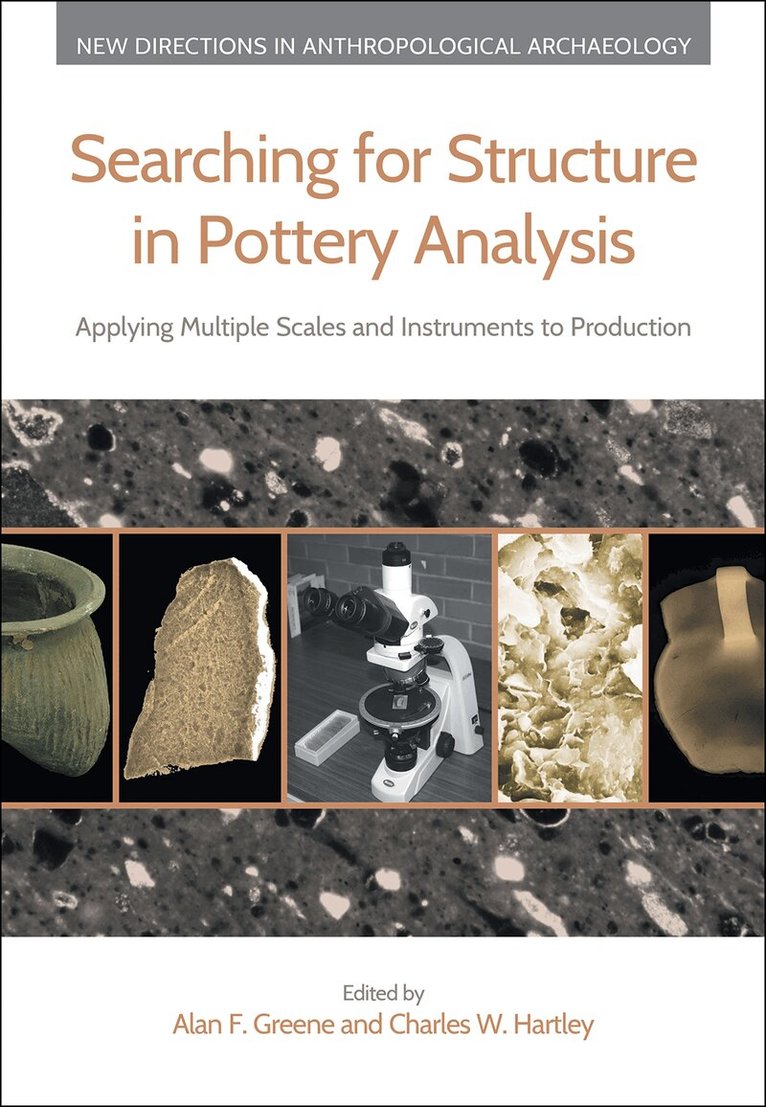
Searching for Structure in Pottery Analysis addresses the theoretical and methodological imperatives involved in (re)integrating descriptive, structural, and compositional analytical methods in a series of contributions from a diverse group of experts in archaeological pottery. Drawing on the life's work of materials scientist Cyril Stanley Smith (The Search For Structure, MIT Press, 1981), a pioneering materials scientist who brought an important focus on structure to studies of a variety of archaeological materials, the contributors focus on those forms of analysis which investigate structural characteristics of ceramics and the methodologies that link such structural characteristics with the typological and compositional data that compose the majority of evidence in contemporary ceramic analyses. The chapters include essays organized into two sections: the first focuses on how the practices of ceramic production and the structures they generate enable inferences about the social relations between producers and consumers of pottery; and the second focuses on the role structure plays in the refraction and maintenance of different forms of social grouping and identity. These two themes serve as orienting foci for a broad set of heuristic and technical tools that have the potential to alter how archaeologists extract and identify the social information captured in the multifarious properties of pottery and transform contemporary understandings of the different roles ceramics played in past societies.
Inbunden, Engelska, 2016
1 194 kr
Skickas inom 5-8 vardagar
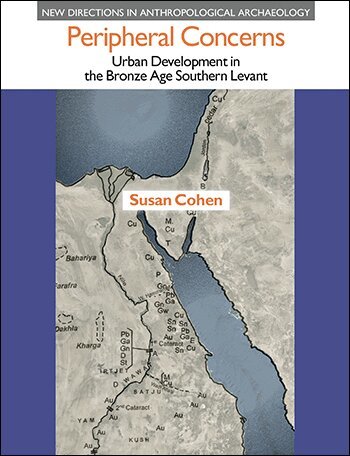
Peripheral Concerns examines the influence of one "core" region of the ancient Near Eastern world-Egypt-on urban development in the southern Levant in the Early and Middle Bronze Ages, with emphasis on the relative stability and sustainability of this development in each era. The study utilizes a very broad scale "macro" approach to examine urban development using core-periphery theories, specifically in regard to southern Levantine-Egyptian interactions.While many studies examine urban development in both the Early Bronze Age and the Middle Bronze Age, few compare this phenomenon in the two periods. Likewise, there are few studies of urban development in the southern Levant that compare contemporary Egyptian policies in that region to those in Nubia, despite the fact that Egyptian activities linked the eastern Mediterranean, the Nile Valley, and Nubia into one interactive system. The broad chronological and geographic framework utilized in this study therefore allows for a new approach to urban development in the southern Levant.
Inbunden, Engelska, 2016
1 273 kr
Skickas inom 5-8 vardagar
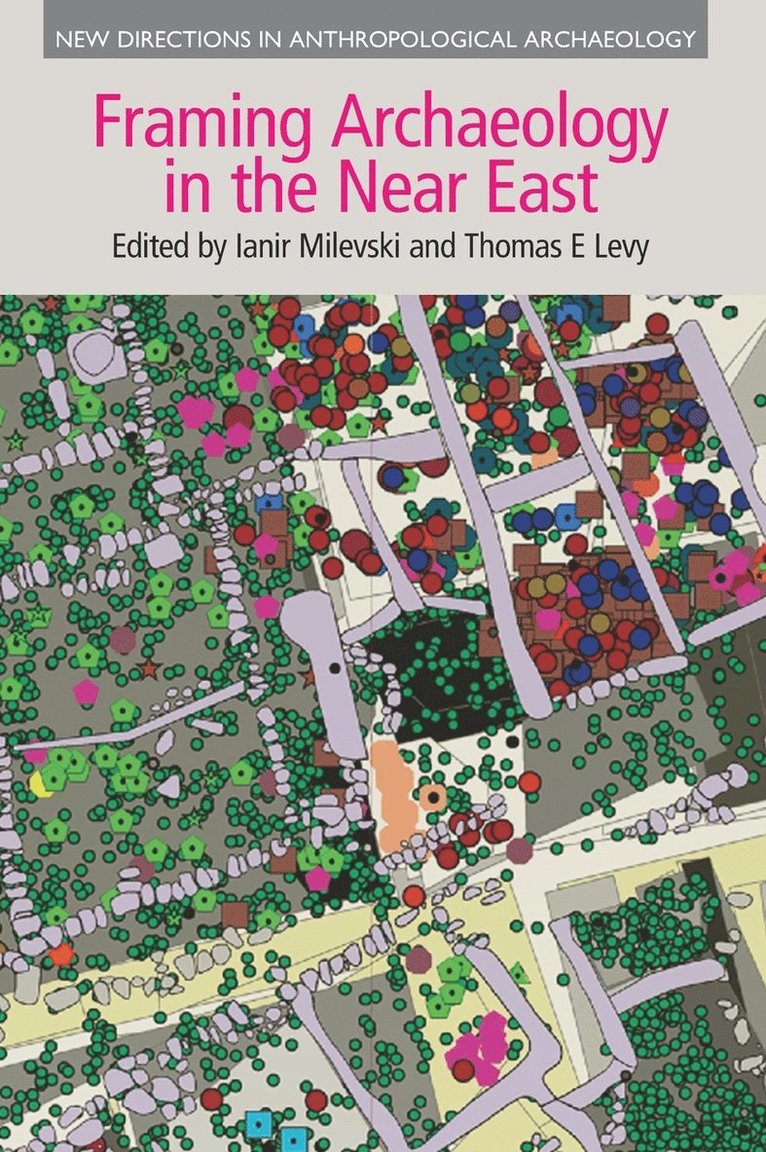
This volume presents a series of studies by scholars working in Middle Eastern archaeology who actively apply social theory to interpret their fieldwork. It aims to highlight the value of using social theory in the interpretation of field work in a region where, traditionally, such approaches have not played a major role.There are a number of factors that account for why social theory is often under-exploited by archaeologists in this part of the world. In many countries, where large numbers of the foreign archaeologists are involved, a division between those doing fieldwork and those undertaking archaeological interpretation can easily arise. Or, the lack of interest in social theory may stem from a legacy of positivism that overrides other approaches. There is also the fact that archaeology and anthropology often belong to separate academic departments and are considered two separate disciplines disconnected from each other. In some cases the centrality of historical paradigms has precluded the use of social theory.There are also divisions between universities and other research institutions, such as departments of antiquities, which is not conductive to interdisciplinary cooperation.This factor is especially debilitating in contexts of rapid destruction of sites and the exponential growth of salvage excavations and emergency surveys.The papers integrate a wide range of perspectives including 'New' or 'Processual' archaeology, Marxist, 'Post-Processual', evolutionist, cognitive, symbolic, and Cyber- archaeologies and touch on many topics including 3D representation, GIS, mapping and social theory, semiotics and linguistics, gender and bioarchaeology, social and technical identities, and modern historical modellingy and social practices in Middle Eastern archaeology.
Inbunden, Engelska, 2021
1 509 kr
Skickas inom 5-8 vardagar
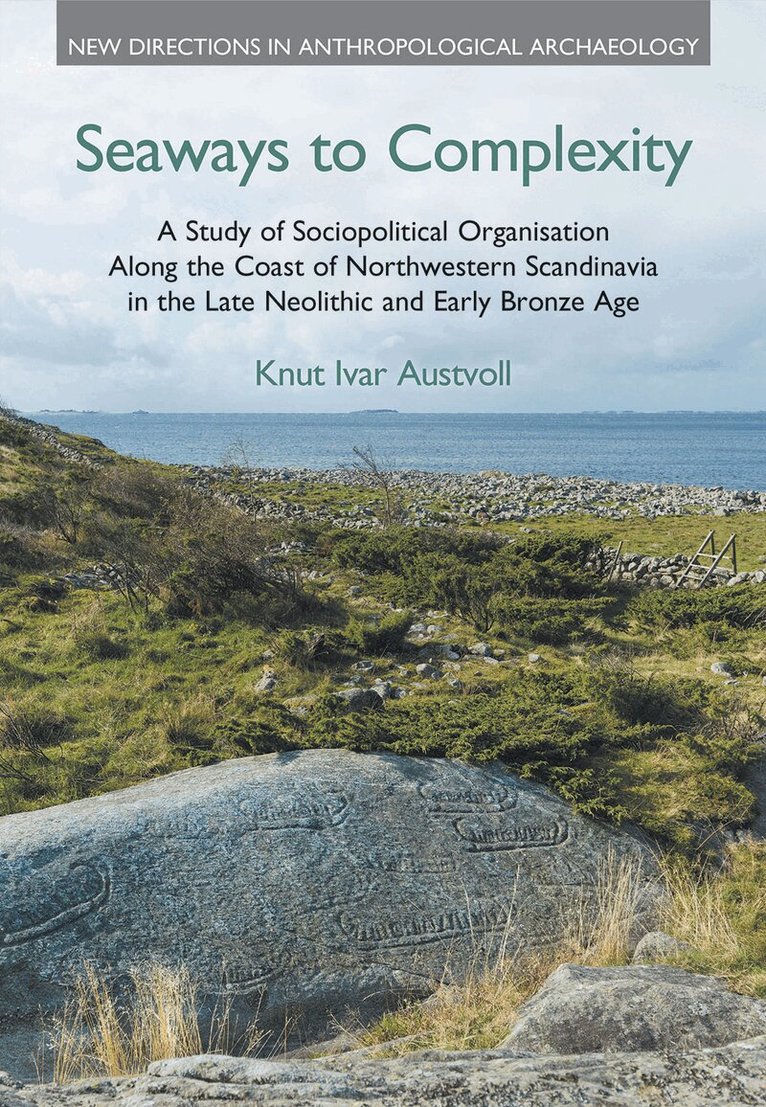
This book focuses on the sociopolitical development and the organisa-tional differences between societies in northwestern Scandinavia in the Late Neolithic and Early Bronze Age (2350-1100 BCE). Grounded in a political economy approach, the book presents a theo-retical model that emphases a dialectic negotiation between societies exercising coercive or cooperative strategies through processes of categorisation. Within this theoretical model the archaeological mate-rial is studied using a two-tiered approach. First, an extensive archaeo-logical corpus, consisting of settlement and burial patterns, lithics, metal, and rock art is investigated comparatively for patterns of dia-chronic, regional and societal differences. Second, patterns from the first-tier are scrutinised and three case studies are selected, each ex-pressing different organisational patterns based on local ecological advantages and/or restrictions. These aspects are then discussed on an interregional level, suggesting that utilisation of the seaway was one of the primary movers of increased complexity along the coast. The book presents the first big synthesis of the sociopolitical develop-ment in northwestern Scandinavia and outlines a theoretical model for concurrent but contrasting sociopolitical strategies that can be applied cross-culturally.
Inbunden, Engelska, 2022
1 364 kr
Skickas inom 5-8 vardagar
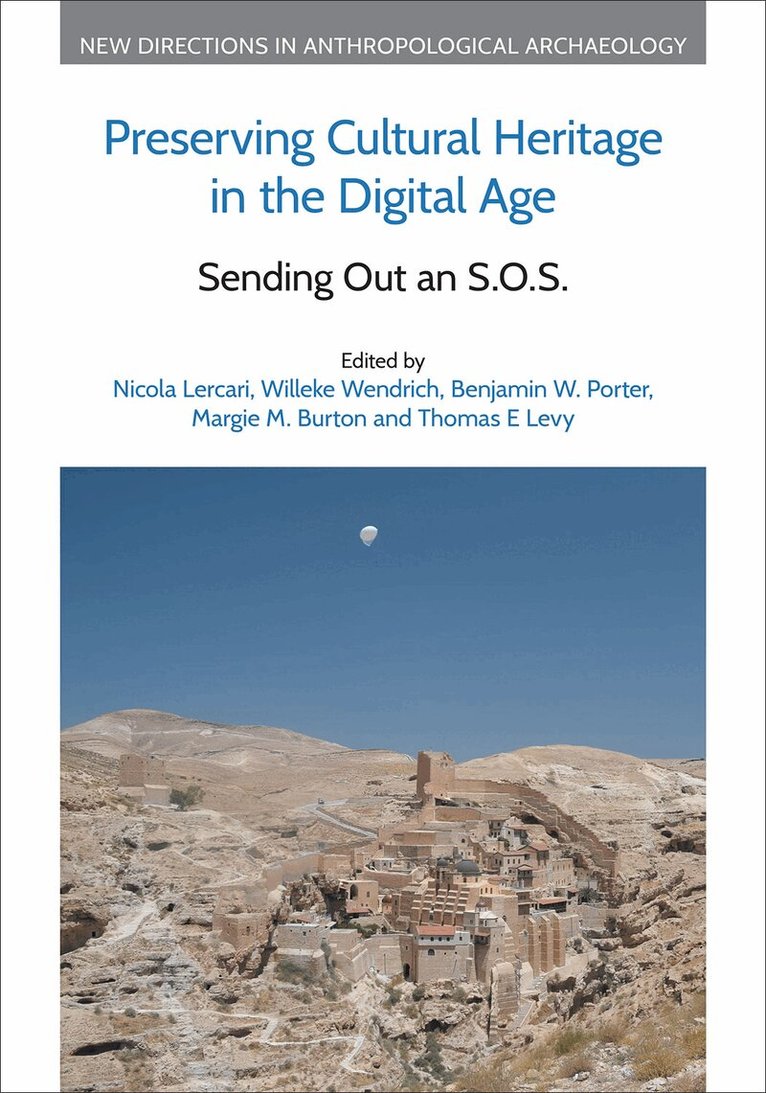
In late August 2015, international media outlets and cultural institutions reported that the Islamic State beheaded the Syrian scholar Khaled al Asaad and destroyed the 1st-century CE Temple of Bel in Palmyra, Syria. The world was horrorstruck. Apart from the human tragedy, archaeologists and the international communities were shocked by the wanton destruction of ancient remains that had survived for millennia. However, warfare and ideological destruction contribute just a fraction of the ongoing devastation of our forebears' traces. This book brings attention to the magnitude of the silent loss of cultural heritage occurring worldwide and the even more insidious loss of knowledge due to the lack of publication and preservation of original data, notes, plans, and photographs of excavated archaeological sites. Highlighting a growing sense of urgency to intervene in whatever way possible, this book provides readers with a non-technical overview of how archaeologists and other stakeholders are increasingly turning to digital methods to mitigate some of the threats to at-risk cultural heritage. This volume is a gateway to enhancing the scale and reach of capturing, analyzing, managing, curating, and disseminating cultural heritage knowledge in sustainable ways and promoting collaboration among scholars and stakeholder communities.
Inbunden, Engelska, 2024
1 443 kr
Skickas inom 5-8 vardagar
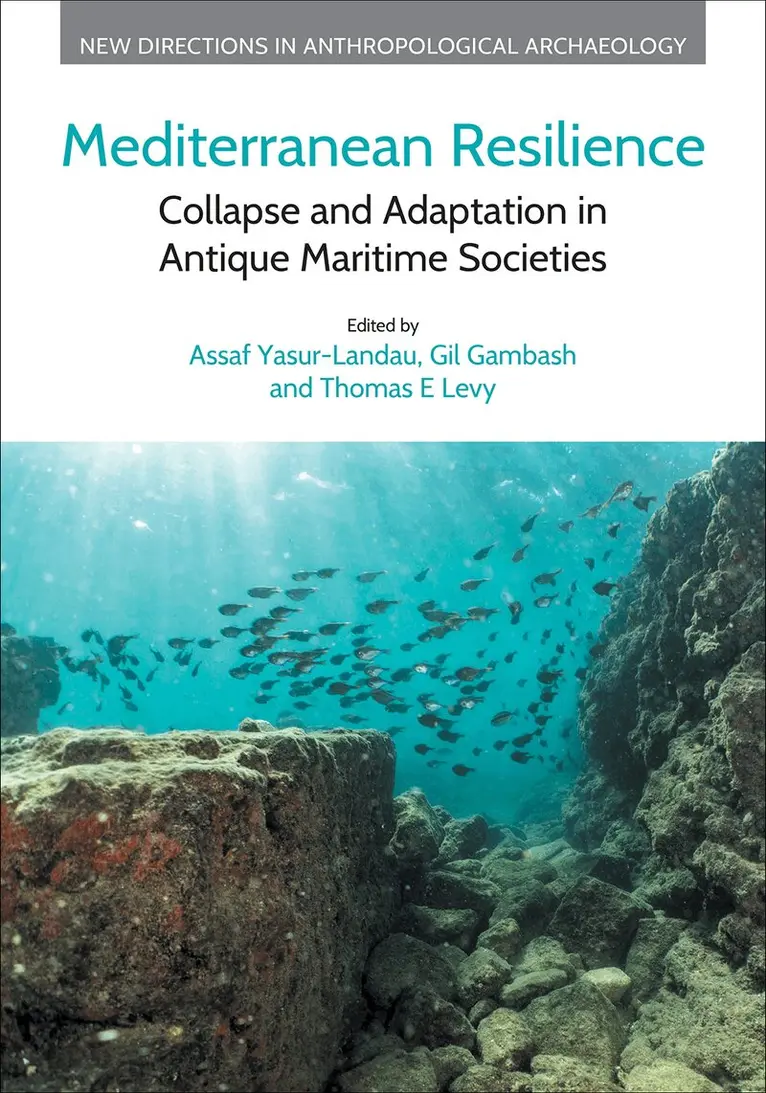
Mediterranean Resilience examines various forms of adaptation adopted by coastal societies in the ancient Mediterranean in response to external pressures they occasionally experienced. The investigation spans the longue durée stretching from the epi-paleolithic to the Medieval period. Special attention is given to the impact of two groups of variables: climate and sea level changes on the one hand, and fluctuations in political circumstances connected with the domination of empires, on the other hand. For adaptation, the volume analyses modes of coastal residence, subsistence, and maritime connectivity, not as a static feature, constant throughout history, but as a process that requires permanent adjustments due to changes in environmental, social and political conditions. Methodologically, various forms of case studies are employed, isolating thematic issues, geographic micro-regions, temporal boundaries, and disciplinary perspectives, ultimately seeking to embrace as wide an array of phenomena as possible in the human experience of collapse and adaptation.
Inbunden, Engelska, 2024
1 245 kr
Skickas
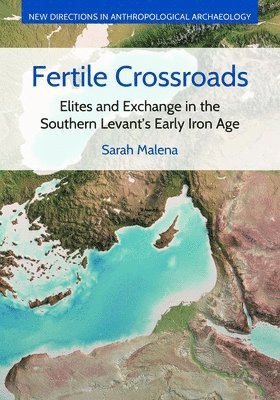
The southern Levant linked the major powers of the ancient Near East. More often than not, peoples of this land were politically and economically dominated by greater kingdoms and empires. During the transition between the Iron I and II Ages (late eleventh to early ninth centuries BCE) however, imperial occupation and active colonization diminished, and local leadership emerged. Fertile Crossroads examines how, despite the lack of large-scale institutional support throughout the ancient world, small-scale leaders persisted in long-distance interactions and established the foundations for Iron Age polities. Malena critically examines the most direct evidence of these developments with the aid of historical and anthropological approaches regarding intercultural interaction and social change. Despite challenging disparity among historical, literary, and archaeological sources, Fertile Crossroads demonstrates that interactions (including diplomacy, commerce, competitive emulation, and aggression) were taking place within the southern Levant and with more distant neighbors, such as Egypt, Arabia, Phoenicia, Cyprus, and even the Aegean. In this new application of interaction models and synthesis of evidence, Malena shows how small scale exchange had a significant impact on socio-political changes in the region, especially involving shifts in elite networks, territories, group identities, and political power.
Inbunden, Engelska, 2024
1 143 kr
Skickas
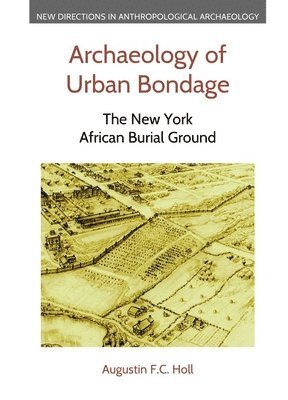
The unexpected re-discovery and the ensuing excavation of the African Burial Ground - known in the 18th century as the "Negro Burial Ground" - lifted the lid on the early history of African presence in this part of the United States East Coast. The African Burial Ground Memorial is today one of the land-mark managed by the National Park Service, as a tribute to these men, women, and children, enslaved to build the wealth of that extraordinary and vibrant metropolis. The author of Archaeology of Urban Bondage has been part of the African Burial research project from its beginning in 1993 to its end in 2006 and this volume is the only comprehensive presentation of this unique project in its multidisciplinary dimension. It looks at the enslavement of Africans in the Atlantic world from their origins in Africa, their life and death in New Amsterdam-New York in the 17th-18th East coast, relying on history, archaeology, and bio-anthropology. The argumentation is rigorously fact-based and inferences data driven. The archaeology and history of the African presence in northeast United States are not limited to a European-African face to face. The genesis of the "Negro Burial Ground" is the result of different strands of history. Some issues, like the location of the African burial ground, generally taken for granted as starting point, are problematized in this book. Important questions as "why is the African burial ground located where it was?", "how was the cemetery built up?", "what are the key patterns of the buried population?", "can agency and intentionality be discerned in the archaeological record at hand?", are framed and addressed. Organized in two parts and framed from the "Global Africa" theoretical perspective, the book weaves data from history, archaeology, and biological anthropology to craft an integrated narrative on the deceased buried in the African Burial Ground.
Inbunden, Engelska, 2020
874 kr
Tillfälligt slut
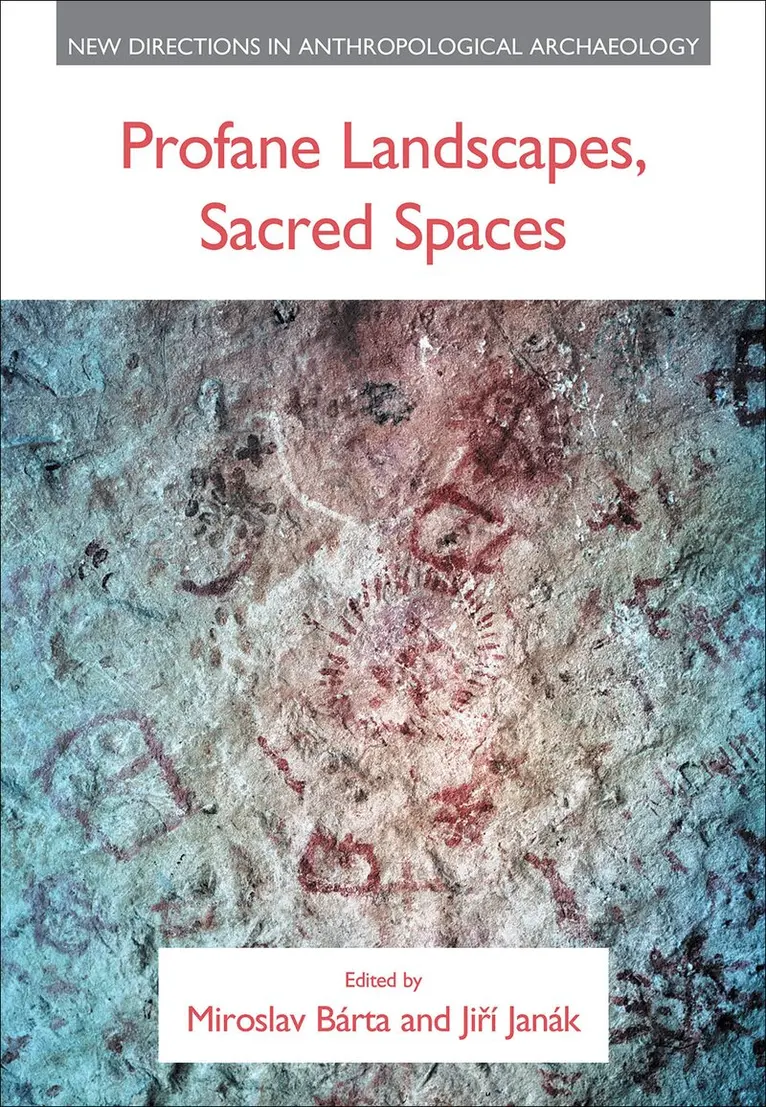
Ever since Herodotus, it has been observed that Egypt – that is, ancient Egyptian civilisation – was a gift of the Nile. However, only recently have Egyptologists come to appreciate that Egypt was as much a gift of the desert as a gift of the water, at least as regards its very beginnings. To understand the civilisation that originally settled along the Nile Valley and in the Delta, we must study not only the remains of ancient monuments, excavated artefacts and reconstructed texts, but take proper account of the landscape, conditions and environment that shaped Egypt’s culture, religion and ideology. This volume addresses various aspects of how the world was perceived in the minds of Egyptians, and how Egyptians subsequently reshaped their surrounding landscape in harmony with their view of geography and cosmological ideas. Profane landscape and sacred space thus blend into one multi-faceted concept.