RFF Press Water Policy Series - Böcker
Visar alla böcker i serien RFF Press Water Policy Series. Handla med fri frakt och snabb leverans.
13 produkter
13 produkter
2 172 kr
Skickas inom 10-15 vardagar
Water scarcity is an increasing problem in many parts of the world, yet conventional supply-side economics and management are insufficient to deal with it. In this book the role of water trading as an instrument of integrated water resources management is explored in depth. It is also shown to be an instrument for conflict resolution, where it may be necessary to reallocate water in the context of increasing scarcity. Recent experiences of implementation in different river basins have shown their potential as instruments for improving allocation. These experiences, however, also show that there are implementation challenges and some limitations to trading that need to be considered. This book explores the various types of water trading formulas through the experience of using them in different parts of the world. The final result is varied because, in most cases, trading is conditioned by the legal and institutional framework in which the transactions are carried out. The role of government and the definition of water rights and licenses are critical for the success of water trading. The book studies the institutional framework and how transactions have been undertaken, drawing some lessons on how trading can improve. It also analyses whether trading has really been a positive instrument to manage scarcity and improve water ecosystems and pollution emission problems in those parts of the world which are most affected. The book concludes by making policy proposals to improve the implementation of water trading.
535 kr
Skickas inom 10-15 vardagar
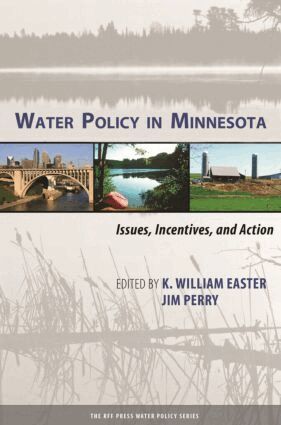
Minnesota has a unique role in U.S. water policy. Hydrologically, it is a state with more than 12,000 lakes, an inland sea, and the headwaters of three major river systems: the St Lawrence, the Red River of the North, and the Mississippi. Institutionally, Minnesota is also unique. All U.S. states use Total Maximum Daily Load (TMDL) approaches to addressing impaired waters. Every TMDL requires a substantial investment of resources, including data collection, modeling, stakeholder input and analysis, a watershed management plan, as well as process and impact monitoring. Minnesota is the only state in the union that has passed legislation (the 2007 Clean Water Legacy Act) providing significant resources to support the TMDL process. The book will be an excellent guide for policymakers and decision makers who are interested in learning about alternative approaches to water management. Non-governmental organizations interested in stimulating effective water quality policy will also find this a helpful resource. Finally, there are similarities between the lessons learned in Minnesota and the goals of water policy in several other states and nations, where there are competing uses of water for households, agriculture, recreation, and navigation.
442 kr
Skickas inom 10-15 vardagar
As a water-scarce state with deep cultural attachments to private property rights, Texas has taken a unique evolutionary path with regard to water management. This new resource surveys past and current challenges for managing both groundwater and surface water, telling a comprehensive story about water policy in Texas, and identifying opportunities for improving future governance. Texas is the U.S. state that has experimented most thoroughly with water markets. In Water Policy in Texas, experts from broad disciplinary perspectives describe and analyze Texas water laws and management agencies, and the practices of water marketing and rate making in Texas. They explore the unique cases of the Edwards and Ogallala aquifers, the science and policy of environmental water stewardship, the extensive history of formalized water sharing with neighboring states and Mexico, and the opportunities for harnessing new technologies that might aid in addressing scarcity. This multidimensional, interdisciplinary book will be a valuable resource for students and researchers of Texas water policy, as well as for water managers worldwide, particularly those working within contexts of water scarcity.
724 kr
Skickas inom 10-15 vardagar
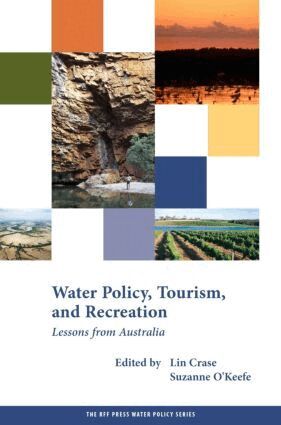
This book explores the complicated interrelationships between freshwater resources and tourism and recreation. The focus is on Australia, but comparisons with the experience of other countries are also made throughout. Yet Australia has been at the forefront of conflicts over drought and water use, particularly for irrigated agriculture, as well as of the design of policies and institutions for water policy, so there are many lessons which can be applied to other parts of the world. The authors examine in detail the relationships between water economics and supply, and the needs for tourism and recreation. The book discusses water use and access and the conflict between urban and recreational demands. It considers the institutional arrangements around water and the significance of property rights, including water markets and water pricing. Theoretical and practical models for increasing collaboration and cooperation such as the use of trusts are also developed and water trusts in the USA are examined. Specific chapters highlight the role of interest groups, such as the boating industry, to influence policy thinking and the practical trade-offs between access to urban water supplies and the requirements of recreation. Tourist behavior in relation to water use and pricing is also assessed.
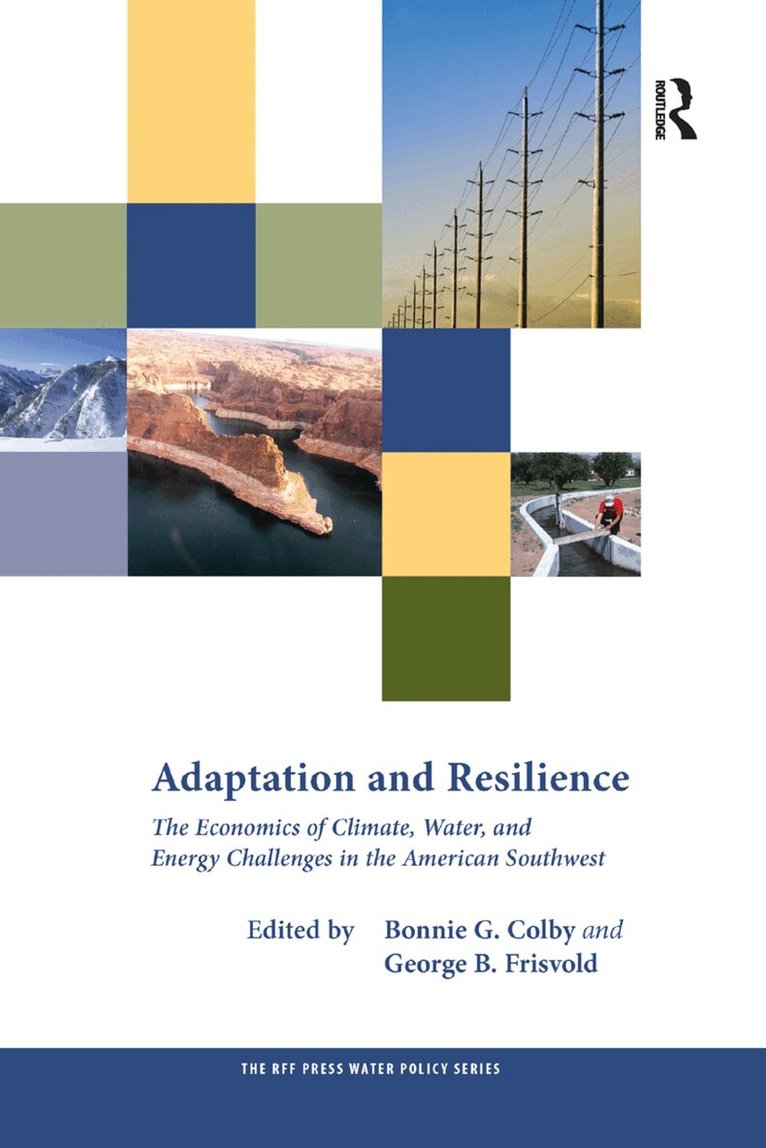
Adaptation and Resilience
The Economics of Climate, Water, and Energy Challenges in the American Southwest
Häftad, Engelska, 2019
683 kr
Skickas inom 10-15 vardagar
In America's arid southwest, climate change will occur in the context of already-keen competition for water for agriculture, urban growth, electricity generation, water-based recreation, and environmental protections. This book explores the challenges that climate change and variability pose for water and energy managers and users, communities, and policy makers in the arid Southwest and demonstrates the application of economic methods to address these challenges. It provides valuable tools for both those interested in resource management and climate change, and those seeking to understand how economic methods can be used to analyze contemporary social problems and craft appropriate responses. The book considers both adaptation to long-term climate change and more immediate issues of water and electricity management in the face of inter-annual climate variability and drought. Thus, no matter what one's perspective on long-run climate change projections, the book provides useful lessons for some of the region's most pressing resource management problems.
724 kr
Skickas inom 10-15 vardagar
Water scarcity is an increasing problem in many parts of the world, yet conventional supply-side economics and management are insufficient to deal with it. In this book the role of water trading as an instrument of integrated water resources management is explored in depth. It is also shown to be an instrument for conflict resolution, where it may be necessary to reallocate water in the context of increasing scarcity. Recent experiences of implementation in different river basins have shown their potential as instruments for improving allocation. These experiences, however, also show that there are implementation challenges and some limitations to trading that need to be considered. This book explores the various types of water trading formulas through the experience of using them in different parts of the world. The final result is varied because, in most cases, trading is conditioned by the legal and institutional framework in which the transactions are carried out. The role of government and the definition of water rights and licenses are critical for the success of water trading. The book studies the institutional framework and how transactions have been undertaken, drawing some lessons on how trading can improve. It also analyses whether trading has really been a positive instrument to manage scarcity and improve water ecosystems and pollution emission problems in those parts of the world which are most affected. The book concludes by making policy proposals to improve the implementation of water trading.
1 969 kr
Skickas inom 10-15 vardagar
Minnesota has a unique role in U.S. water policy. Hydrologically, it is a state with more than 12,000 lakes, an inland sea, and the headwaters of three major river systems: the St Lawrence, the Red River of the North, and the Mississippi. Institutionally, Minnesota is also unique. All U.S. states use Total Maximum Daily Load (TMDL) approaches to addressing impaired waters. Every TMDL requires a substantial investment of resources, including data collection, modeling, stakeholder input and analysis, a watershed management plan, as well as process and impact monitoring. Minnesota is the only state in the union that has passed legislation (the 2007 Clean Water Legacy Act) providing significant resources to support the TMDL process. The book will be an excellent guide for policymakers and decision makers who are interested in learning about alternative approaches to water management. Non-governmental organizations interested in stimulating effective water quality policy will also find this a helpful resource. Finally, there are similarities between the lessons learned in Minnesota and the goals of water policy in several other states and nations, where there are competing uses of water for households, agriculture, recreation, and navigation.
2 104 kr
Skickas inom 10-15 vardagar
This book explores the complicated interrelationships between freshwater resources and tourism and recreation. The focus is on Australia, but comparisons with the experience of other countries are also made throughout. Yet Australia has been at the forefront of conflicts over drought and water use, particularly for irrigated agriculture, as well as of the design of policies and institutions for water policy, so there are many lessons which can be applied to other parts of the world. The authors examine in detail the relationships between water economics and supply, and the needs for tourism and recreation. The book discusses water use and access and the conflict between urban and recreational demands. It considers the institutional arrangements around water and the significance of property rights, including water markets and water pricing. Theoretical and practical models for increasing collaboration and cooperation such as the use of trusts are also developed and water trusts in the USA are examined. Specific chapters highlight the role of interest groups, such as the boating industry, to influence policy thinking and the practical trade-offs between access to urban water supplies and the requirements of recreation. Tourist behavior in relation to water use and pricing is also assessed.
1 969 kr
Skickas inom 10-15 vardagar
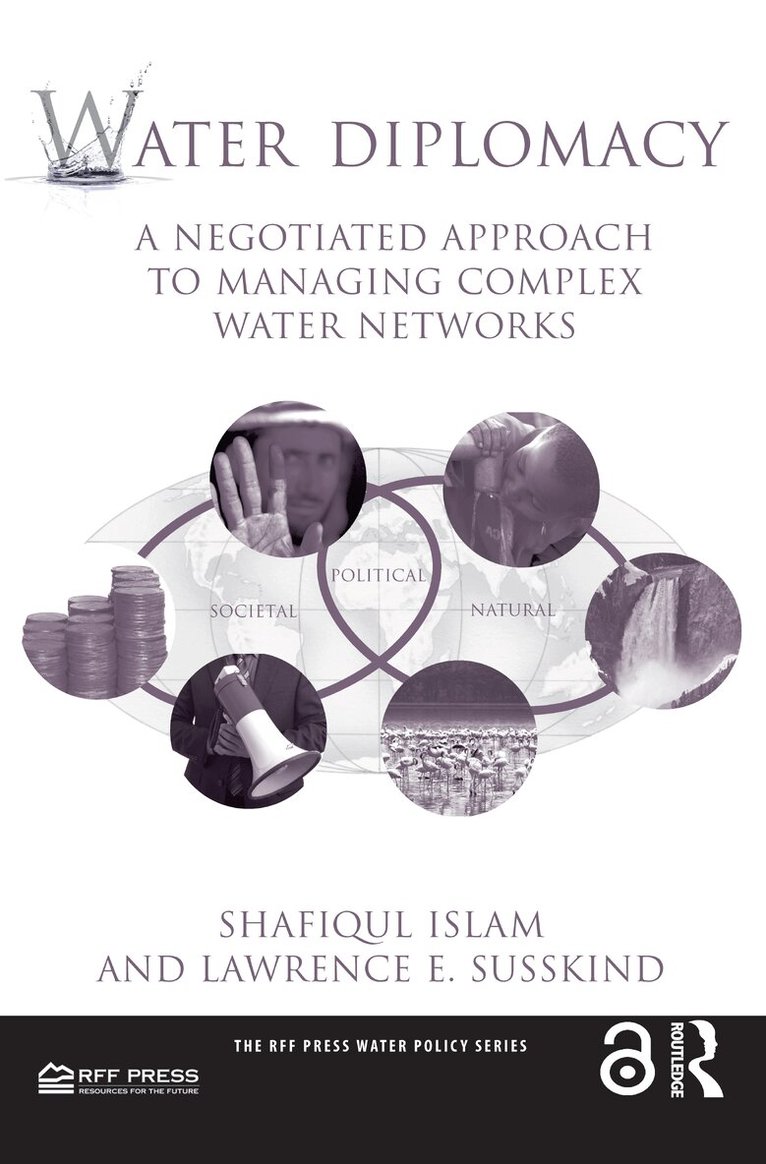
Water is the resource that will determine the wealth, welfare, and stability of many countries in the twenty-first century. This book offers a new approach to managing water that will overcome the conflicts that emerge when the interactions among natural, societal, and political forces are overlooked. At the heart of these conflicts are complex water networks. In managing them, science alone is insufficient and so is policy-making that doesn't take science into account. Solutions will only emerge if a negotiated or diplomatic approach that blends science, policy, and politics is used to manage water networks. The authors show how open and constantly changing water networks can be managed successfully using collaborative adaptive techniques to build informed agreements among disciplinary experts, water users with conflicting interests, and governmental bodies with countervailing claims. Shafiqul Islam is an engineer with over twenty-five years of practical experience in addressing water issues. Lawrence Susskind is founder of MIT's Environmental Policy and Planning Program and a leader of the Program on Negotiation at Harvard Law School. Together they have developed a text that is relevant for students and experienced professionals working in a variety of engineering, science, and applied social science fields. They show how new thinking about water conflict can replace the zero-sum battles that pit experts, politicians, and stakeholders against each other in counter-productive ways. Their volume not only presents the key elements of a theory of water diplomacy; it includes excerpts and commentary from more than two dozen seminal readings as well as practice exercises that challenge readers to apply what they have learned.
548 kr
Skickas inom 10-15 vardagar
Water is the resource that will determine the wealth, welfare, and stability of many countries in the twenty-first century. This book offers a new approach to managing water that will overcome the conflicts that emerge when the interactions among natural, societal, and political forces are overlooked. At the heart of these conflicts are complex water networks. In managing them, science alone is insufficient and so is policy-making that doesn't take science into account. Solutions will only emerge if a negotiated or diplomatic approach that blends science, policy, and politics is used to manage water networks. The authors show how open and constantly changing water networks can be managed successfully using collaborative adaptive techniques to build informed agreements among disciplinary experts, water users with conflicting interests, and governmental bodies with countervailing claims. Shafiqul Islam is an engineer with over twenty-five years of practical experience in addressing water issues. Lawrence Susskind is founder of MIT's Environmental Policy and Planning Program and a leader of the Program on Negotiation at Harvard Law School. Together they have developed a text that is relevant for students and experienced professionals working in a variety of engineering, science, and applied social science fields. They show how new thinking about water conflict can replace the zero-sum battles that pit experts, politicians, and stakeholders against each other in counter-productive ways. Their volume not only presents the key elements of a theory of water diplomacy; it includes excerpts and commentary from more than two dozen seminal readings as well as practice exercises that challenge readers to apply what they have learned.
1 563 kr
Skickas inom 10-15 vardagar
As a water-scarce state with deep cultural attachments to private property rights, Texas has taken a unique evolutionary path with regard to water management. This new resource surveys past and current challenges for managing both groundwater and surface water, telling a comprehensive story about water policy in Texas, and identifying opportunities for improving future governance. Texas is the U.S. state that has experimented most thoroughly with water markets. In Water Policy in Texas, experts from broad disciplinary perspectives describe and analyze Texas water laws and management agencies, and the practices of water marketing and rate making in Texas. They explore the unique cases of the Edwards and Ogallala aquifers, the science and policy of environmental water stewardship, the extensive history of formalized water sharing with neighboring states and Mexico, and the opportunities for harnessing new technologies that might aid in addressing scarcity. This multidimensional, interdisciplinary book will be a valuable resource for students and researchers of Texas water policy, as well as for water managers worldwide, particularly those working within contexts of water scarcity.
Adaptation and Resilience
The Economics of Climate, Water, and Energy Challenges in the American Southwest
Inbunden, Engelska, 2011
2 113 kr
Skickas
In America's arid southwest, climate change will occur in the context of already-keen competition for water for agriculture, urban growth, electricity generation, water-based recreation, and environmental protections. This book explores the challenges that climate change and variability pose for water and energy managers and users, communities, and policy makers in the arid Southwest and demonstrates the application of economic methods to address these challenges. It provides valuable tools for both those interested in resource management and climate change, and those seeking to understand how economic methods can be used to analyze contemporary social problems and craft appropriate responses. The book considers both adaptation to long-term climate change and more immediate issues of water and electricity management in the face of inter-annual climate variability and drought. Thus, no matter what one's perspective on long-run climate change projections, the book provides useful lessons for some of the region's most pressing resource management problems.
1 969 kr
Skickas inom 10-15 vardagar
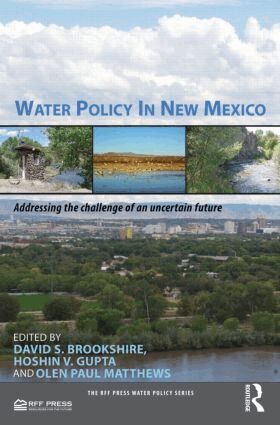
This book addresses water management issues in the State of New Mexico. It focuses on our current understanding of the natural world, capabilities in numerical modeling, existing and evolving regulatory frameworks, and specific issues such as water quality, endangered species and the evolution of new water management institutions. Similar to its neighboring states, New Mexico regularly experiences cycles of drought. It is also experiencing rapid economic growth while at the same time is experiencing a fundamental climate shift. These factors place severe demands on its scarce water resources. In addition to historical uses by the native inhabitants of the region and the agricultural sector, new competitive uses have emerged which will require reallocation. This effort is complicated by unadjudicated water rights, the need to balance the ever-increasing needs of growing urban and rural populations, and the requirements of the ecosystem and traditional users. It is clear that New Mexico, as with other semi-arid states and regions, must find efficient ways to reallocate water among various beneficial uses. This book discusses how a proper coordination of scientific understanding, modeling advancements, and new and emerging institutional structures can help in achieving improved strategies for water policy and management. To do so, it calls upon the expertise of academics from multiple disciplines, as well as officials from federal and state agencies, to describe in understandable terms the issues currently being faced and how they can be addressed via an iterative strategy of adaptive management.