Routledge Studies in Critical Marketing – Serie
Visar alla böcker i serien Routledge Studies in Critical Marketing. Handla med fri frakt och snabb leverans.
13 produkter
13 produkter
646 kr
Skickas inom 10-15 vardagar
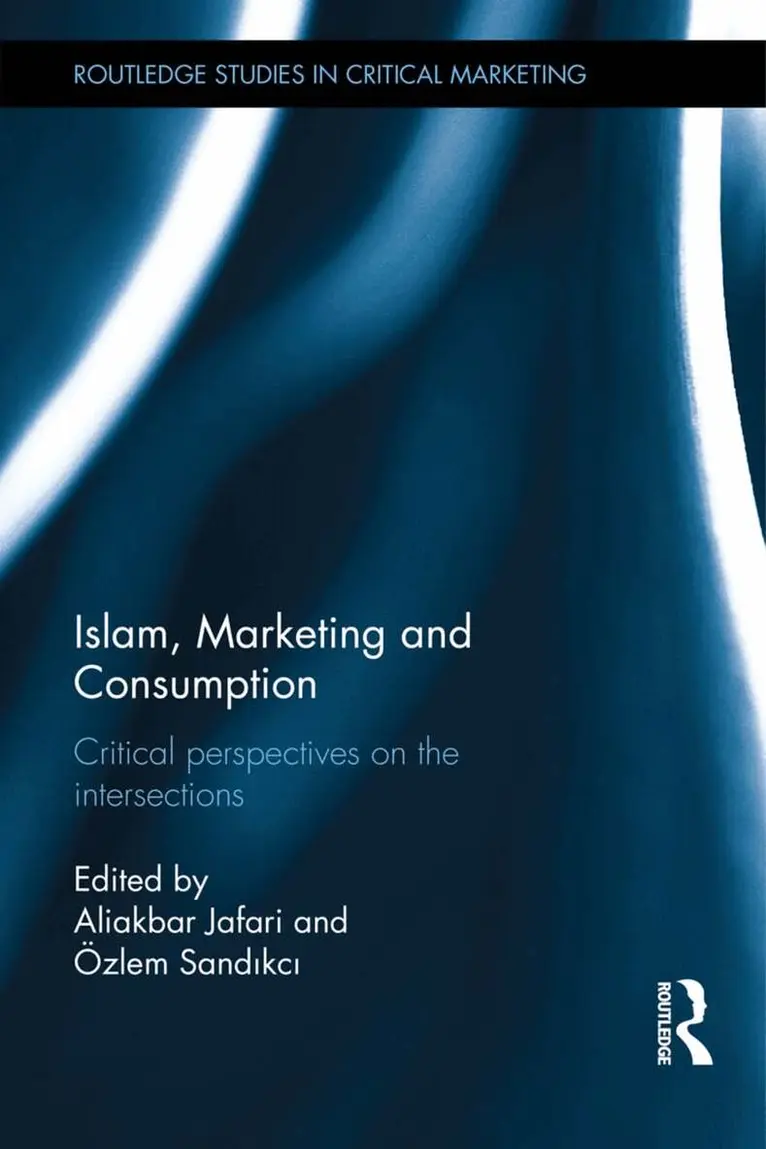
In recent years, a critically oriented sub-stream of research on Muslim consumers and businesses has begun to emerge. This scholarship, located both within and outside the marketing field, adopts a socio-culturally situated approach to Islam and investigates the complex and multifaceted intersections between Islam and markets.This book seeks to reflect various unheard and emerging critical voices from within the Muslim world, and provide a series of critical insights on how, if and why Islam matters to marketing theory and practice. It questions the existing assumptions and polarising discussions which underpin the portrayal of Islam as the ‘other’ of Modernity, while acknowledging that Muslims themselves are partially responsible for creating stereotyped representations of Islam and ‘the Muslim’. This wide-ranging and insightful collection will advance emerging critical perspectives, and provide new insights that will influence the generation and application of knowledge in the context of Muslim societies. It will open up fresh conversations for scholars in marketing as well as the broader humanities and social sciences.
2 176 kr
Skickas inom 10-15 vardagar
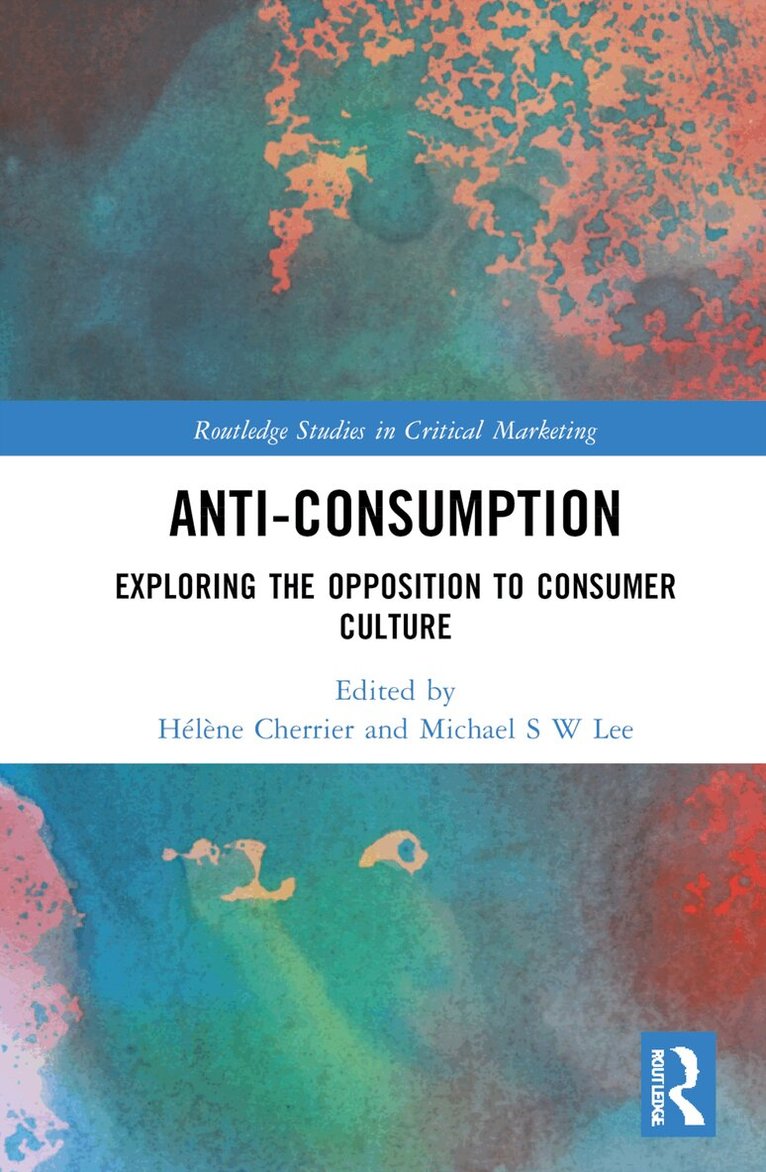
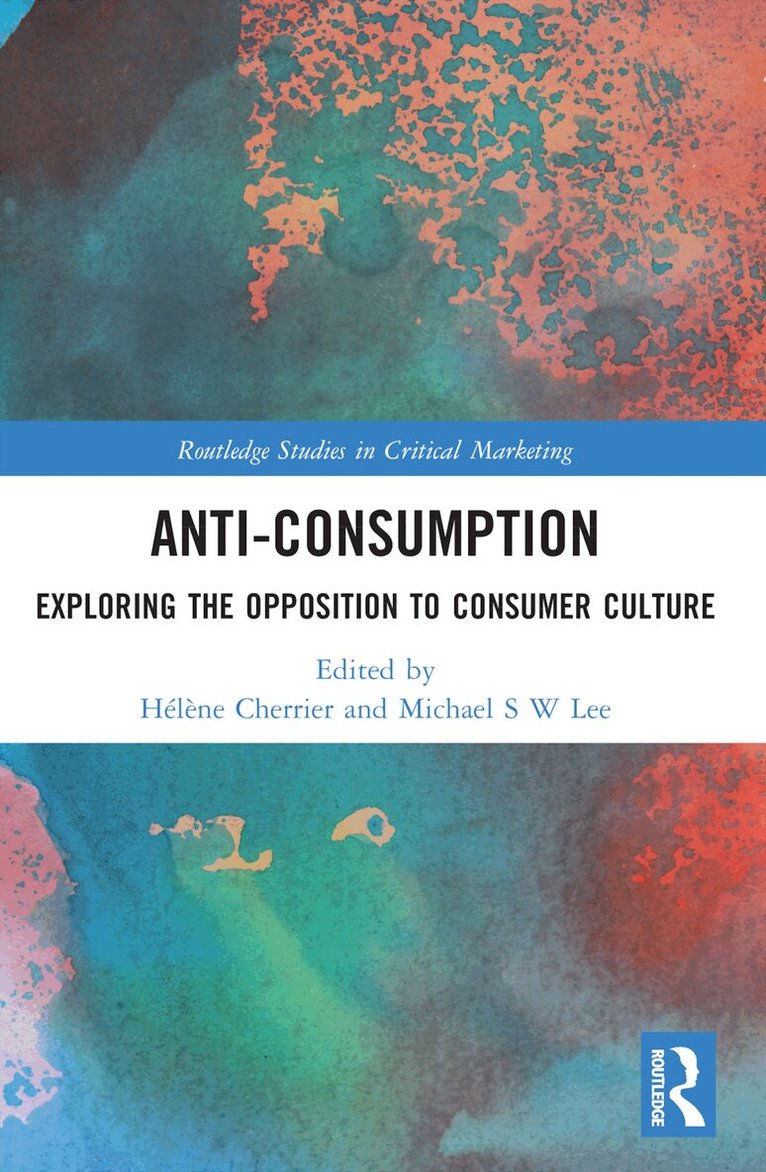
In this edited volume, the leading scholars in the field engage with consumers, marketers, corporations and policymakers as well as space dynamics and network formation to provide an in-depth examination of anti-consumption: a voluntary behavioural inclination to minimise rather than grow, to decelerate and simplify and to reduce the unnecessary exploitation of resources fuelled by consumer culture. This book does not place anti-consumption on the high moral ground but rather demonstrates its complexity to spur innovative and critical thinking on how people, organisations, businesses and governments can treat consumption more as a necessity for survival than as a tool for self-expression, pleasure and economic growth.The first part of this book looks at anti-consumption from a diversity of perspectives. It analyses voluntary simplicity, a self-motivated engagement in consumption reduction, and boycotting, a politically-motivated reaction against unacceptable corporate practices, as distinct manifestations of anti-consumption that nonetheless remain rooted in the logic of the market. Paving the way to critical perspectives on the interface between anti-consumption, people and the environment, the second part of the book projects anti-consumption to issues of waste production and provides possible answers to global challenges of resources depletion, social inequalities and global warming. In this section, anti-consumption is critically assessed as an actor of change, both in terms of social change and paradigm change. To move the field forward, the third part of this book presents several theoretical frameworks that help set a roadmap for future research.Anti-Consumption will be of direct interest to scholars and researchers within the fields of marketing, consumer research, business studies, environmental studies and sustainability. It will also be of value to those researching the economics and/or sociology of markets.
618 kr
Skickas inom 10-15 vardagar
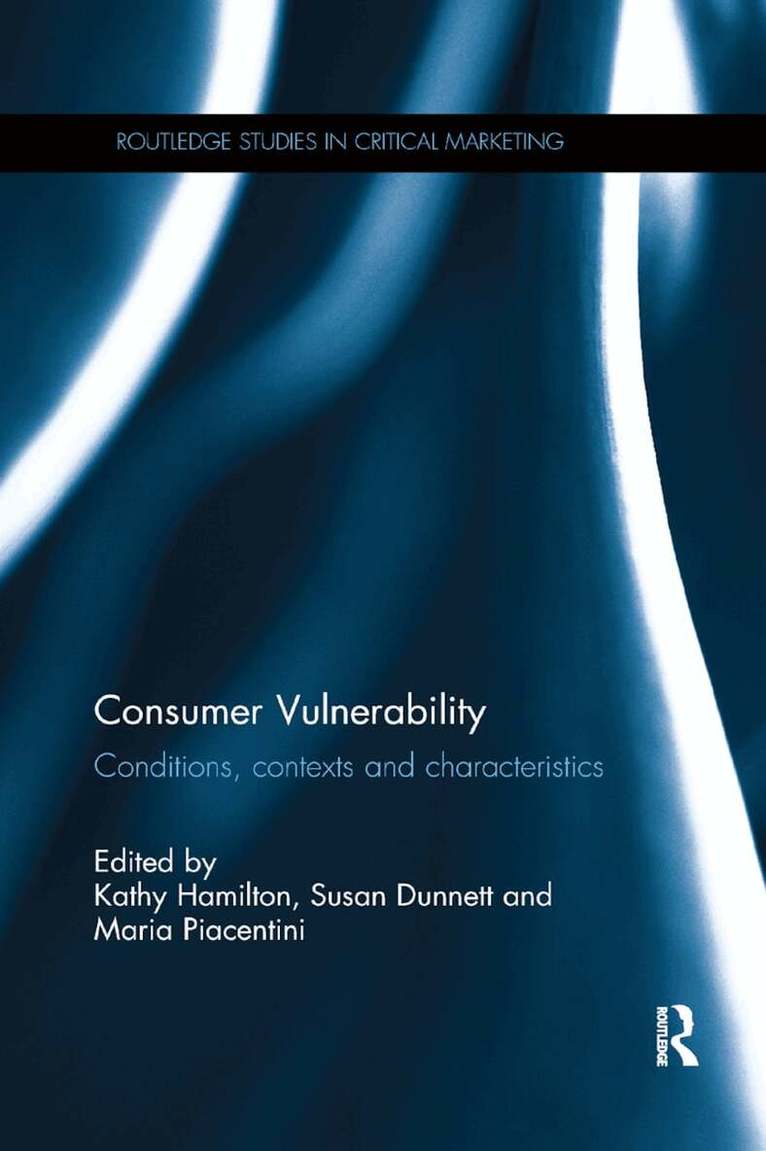
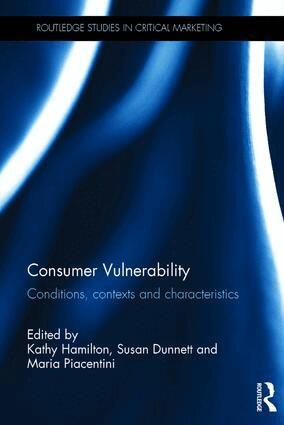
Consumer vulnerability is of growing importance as a research topic for those exploring wellbeing. This book provides space to critically engage with the conditions, contexts and characteristics of consumer vulnerability, which affect how people experience and respond to the marketplace and vice versa.Focussing on substantive, ethical, social and methodological issues, this book brings together key researchers in the field and practitioners who work with vulnerability on a daily basis. Organised into 4 sections, it considers consumer vulnerability and key life stages, health and wellbeing, poverty, and exclusion. Methodologically the chapters draw on qualitative research, employing a variety of methods from interview, to the use of poetry, film and other cultural artefacts. This book will be of interest to marketing and consumer research scholars and students and also to researchers in other disciplines including sociology, public policy and anthropology, and practitioners, policy makers and charitable organisations working with vulnerable groups.
665 kr
Skickas inom 10-15 vardagar
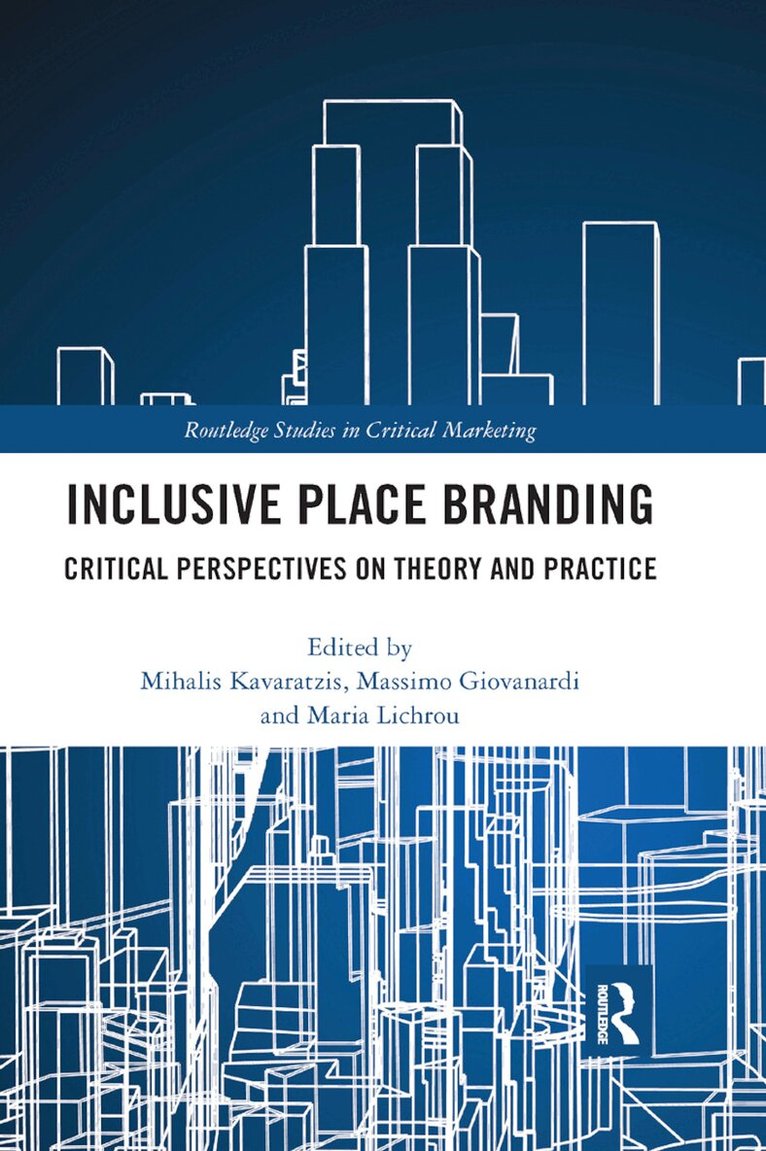
Place branding is often a response to inter-place competition and discussed as if it operated in a vacuum, ignoring the needs of local communities. It has developed a set of methods – catchy slogans, colourful logos, ‘star-chitects’, bidding for City of Culture status etc. – that are applied as quick-fix solutions regardless of geographical and socio-political contexts. Critical views of place branding are emerging which focus on its unexplored consequences on the physical and social fabric of places. These more critical approaches reveal place branding as an essentially political activity, serving hidden agendas and marginalizing social groups. Scholars and practitioners can no longer ignore the need for more responsible and socially sensitive approaches to cater for a wider range of stakeholders, and which fully acknowledge the importance of resident participation in decision-making. The contributions in this innovative book set out to introduce new critical ways of thinking around place branding and practices that encourage it to be more inclusive and participatory. It will be of interest to researchers and advanced students of branding, critical marketing, and destination marketing as well as critical tourism and environmental design.
2 316 kr
Skickas inom 10-15 vardagar
In recent years, a critically oriented sub-stream of research on Muslim consumers and businesses has begun to emerge. This scholarship, located both within and outside the marketing field, adopts a socio-culturally situated approach to Islam and investigates the complex and multifaceted intersections between Islam and markets.This book seeks to reflect various unheard and emerging critical voices from within the Muslim world, and provide a series of critical insights on how, if and why Islam matters to marketing theory and practice. It questions the existing assumptions and polarising discussions which underpin the portrayal of Islam as the ‘other’ of Modernity, while acknowledging that Muslims themselves are partially responsible for creating stereotyped representations of Islam and ‘the Muslim’. This wide-ranging and insightful collection will advance emerging critical perspectives, and provide new insights that will influence the generation and application of knowledge in the context of Muslim societies. It will open up fresh conversations for scholars in marketing as well as the broader humanities and social sciences.
2 181 kr
Skickas inom 10-15 vardagar
Consumer vulnerability is of growing importance as a research topic for those exploring wellbeing. This book provides space to critically engage with the conditions, contexts and characteristics of consumer vulnerability, which affect how people experience and respond to the marketplace and vice versa.Focussing on substantive, ethical, social and methodological issues, this book brings together key researchers in the field and practitioners who work with vulnerability on a daily basis. Organised into 4 sections, it considers consumer vulnerability and key life stages, health and wellbeing, poverty, and exclusion. Methodologically the chapters draw on qualitative research, employing a variety of methods from interview, to the use of poetry, film and other cultural artefacts. This book will be of interest to marketing and consumer research scholars and students and also to researchers in other disciplines including sociology, public policy and anthropology, and practitioners, policy makers and charitable organisations working with vulnerable groups.
578 kr
Skickas inom 10-15 vardagar
In this edited volume, the leading scholars in the field engage with consumers, marketers, corporations and policymakers as well as space dynamics and network formation to provide an in-depth examination of anti-consumption: a voluntary behavioural inclination to minimise rather than grow, to decelerate and simplify and to reduce the unnecessary exploitation of resources fuelled by consumer culture. This book does not place anti-consumption on the high moral ground but rather demonstrates its complexity to spur innovative and critical thinking on how people, organisations, businesses and governments can treat consumption more as a necessity for survival than as a tool for self-expression, pleasure and economic growth.The first part of this book looks at anti-consumption from a diversity of perspectives. It analyses voluntary simplicity, a self-motivated engagement in consumption reduction, and boycotting, a politically-motivated reaction against unacceptable corporate practices, as distinct manifestations of anti-consumption that nonetheless remain rooted in the logic of the market. Paving the way to critical perspectives on the interface between anti-consumption, people and the environment, the second part of the book projects anti-consumption to issues of waste production and provides possible answers to global challenges of resources depletion, social inequalities and global warming. In this section, anti-consumption is critically assessed as an actor of change, both in terms of social change and paradigm change. To move the field forward, the third part of this book presents several theoretical frameworks that help set a roadmap for future research.Anti-Consumption will be of direct interest to scholars and researchers within the fields of marketing, consumer research, business studies, environmental studies and sustainability. It will also be of value to those researching the economics and/or sociology of markets.
Sexuality in Marketing and Consumption
Queer Theory, Feminist Research, and Intersectionality
Inbunden, Engelska, 2024
1 855 kr
Skickas inom 10-15 vardagar
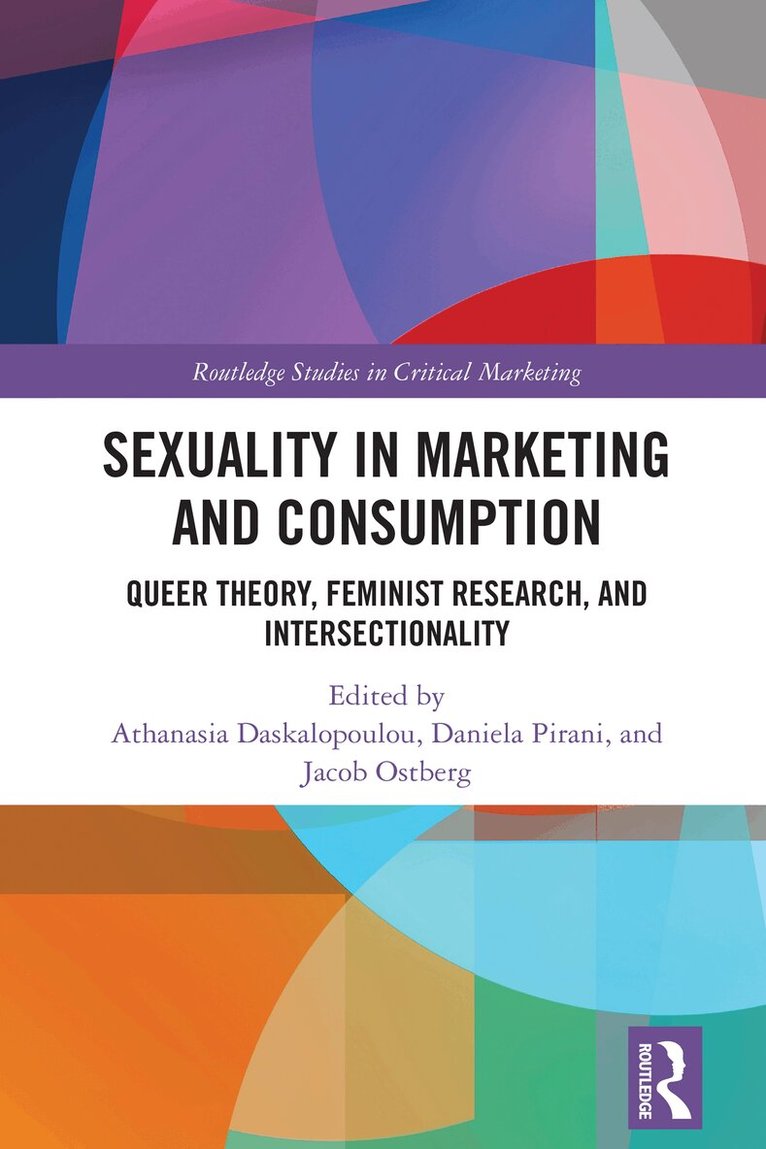
This volume provides an in-depth examination of the role of sexuality in consumers’ life course and in the marketing of products and services.Leading scholars in the field define the most up-to-date picture of theories of sexuality in marketing and consumer research, mapping the topic through diverse theoretical lenses, addressing queer and feminist research, and putting sexuality and consumption in context. The book brings together leading international marketing scholars to build on the growing interest in theories of sexuality, queer theory, and intersectionality, which are gaining more interest among institutions and researchers interested in equality and diversity. While this book builds on existing expertise in consumer culture scholarship, it is the first time a marketing book focuses on sexuality, adding value to the existing repertoire in gender and feminist literature. The chapters are organised into three key sections: Part 1 maps the marketing and consumer research field, discussing how sexuality can be studied through different lenses; Part 2 focuses on queer and feminist theorising, drawing on LGBTQIA+ theory, queer theory, and theories of intersectionality to analyse how overlapping social categories interact to influence consumer behaviour, identity, and experiences in the marketplace; and Part 3 explores the personal and social aspects of sexuality, offering a broad overview of issues of gender and sexuality, digitalisation, and the sexual body.This text will be of direct interest to scholars and researchers within the fields of marketing, consumer research, sociology, and media studies. The aim of this book is to help scholars and students to develop a broader understanding about the interplay between sexuality, society, and the market.
Sexuality in Marketing and Consumption
Queer Theory, Feminist Research, and Intersectionality
Häftad, Engelska, 2026
675 kr
Kommande
This volume provides an in-depth examination of the role of sexuality in consumers’ life course and in the marketing of products and services.Leading scholars in the field define the most up-to-date picture of theories of sexuality in marketing and consumer research, mapping the topic through diverse theoretical lenses, addressing queer and feminist research, and putting sexuality and consumption in context. The book brings together leading international marketing scholars to build on the growing interest in theories of sexuality, queer theory, and intersectionality, which are gaining more interest among institutions and researchers interested in equality and diversity. While this book builds on existing expertise in consumer culture scholarship, it is the first time a marketing book focuses on sexuality, adding value to the existing repertoire in gender and feminist literature. The chapters are organised into three key sections: Part 1 maps the marketing and consumer research field, discussing how sexuality can be studied through different lenses; Part 2 focuses on queer and feminist theorising, drawing on LGBTQIA+ theory, queer theory, and theories of intersectionality to analyse how overlapping social categories interact to influence consumer behaviour, identity, and experiences in the marketplace; and Part 3 explores the personal and social aspects of sexuality, offering a broad overview of issues of gender and sexuality, digitalisation, and the sexual body.This text will be of direct interest to scholars and researchers within the fields of marketing, consumer research, sociology, and media studies. The aim of this book is to help scholars and students to develop a broader understanding about the interplay between sexuality, society, and the market.
775 kr
Skickas inom 10-15 vardagar
Are marketers, the proponenst for continuous economic growth, the ultimate climate criminals? So far, their job has been to create unnecessary demand and to promote the overconsumption and waste that threatens our very existence on this planet. In this book however, the authors explore the potential of marketing to do the opposite–that is to help create a more ecologically sustainable future. This book argues that marketing researchers and practitioners have a crucial role to play in reimagining and promoting alternatives to growth capitalism.Existing sustainability narratives focus on sacrifice and limitation, rendering potential futures uninspiring and unappealing. Drawing on critical marketing scholarship and degrowth principles, this book proposes an alternative way of thinking—dystopian optimism—which allows us to imagine degrowth as desirable. The authors suggest that the transition to a post-growth future can be achieved by theoretically reimagining that future and outline practical ways for critical marketers to contribute to this transition. This book adds to the small but growing stream of marketing literature that concerns itself with marketing’s role in the currently unfolding ecological calamity. Marketers and marketing researchers will learn how marketing’s role in the calamity is threatening its legitimacy but, by following the chapter-by-chapter analysis, they will also learn how marketing can transform itself by focusing on selling sustainable futures.This book is essential reading for those who want to understand why it is so hard for us to imagine desirable, sustainable futures and who want to be part of changing that. For those who are interested in saving, not just marketing’s legitimacy, but also the planet, it is a must read for scholars and upper-level students of critical marketing, marketing ethics, marketing theory, and consumer culture.
2 113 kr
Skickas inom 10-15 vardagar
What fuels capitalism and what stops it from collapsing? Does marketing communications support and sustain the economic and political status quo?This book is not about describing the ways in which businesses can optimize the messages they put across or about adding to the marketing communicator’s toolkit. This book argues that marketing communications plays an increasingly important role in bolstering contemporary capitalism. Drawing on conceptualizations of the ‘market’ from political economy and sociology, it focusses on five logics that underpin and sustain the form of capitalism in which we live: the logic of competition, the logic of sustainability, the logic of individualism, the logic of objectivity, and the logic of distraction. It does this by exploring those arenas which are increasingly dominated by the communicative activities of business: sport, CSR, social media, statistics, and entertainment.Bringing theories from marketing and consumer research, sociology, cultural studies, technology and media studies to bear on marketing communications, this book is necessary reading for undergraduate and postgraduate students and academics who wish to understand the broader role of marketing communications in the reproduction of contemporary capitalism.
564 kr
What fuels capitalism and what stops it from collapsing? Does marketing communications support and sustain the economic and political status quo?This book is not about describing the ways in which businesses can optimize the messages they put across or about adding to the marketing communicator’s toolkit. This book argues that marketing communications plays an increasingly important role in bolstering contemporary capitalism. Drawing on conceptualizations of the ‘market’ from political economy and sociology, it focusses on five logics that underpin and sustain the form of capitalism in which we live: the logic of competition, the logic of sustainability, the logic of individualism, the logic of objectivity, and the logic of distraction. It does this by exploring those arenas which are increasingly dominated by the communicative activities of business: sport, CSR, social media, statistics, and entertainment.Bringing theories from marketing and consumer research, sociology, cultural studies, technology and media studies to bear on marketing communications, this book is necessary reading for undergraduate and postgraduate students and academics who wish to understand the broader role of marketing communications in the reproduction of contemporary capitalism.
2 246 kr
Skickas inom 10-15 vardagar
Place branding is often a response to inter-place competition and discussed as if it operated in a vacuum, ignoring the needs of local communities. It has developed a set of methods – catchy slogans, colourful logos, ‘star-chitects’, bidding for City of Culture status etc. – that are applied as quick-fix solutions regardless of geographical and socio-political contexts. Critical views of place branding are emerging which focus on its unexplored consequences on the physical and social fabric of places. These more critical approaches reveal place branding as an essentially political activity, serving hidden agendas and marginalizing social groups. Scholars and practitioners can no longer ignore the need for more responsible and socially sensitive approaches to cater for a wider range of stakeholders, and which fully acknowledge the importance of resident participation in decision-making. The contributions in this innovative book set out to introduce new critical ways of thinking around place branding and practices that encourage it to be more inclusive and participatory. It will be of interest to researchers and advanced students of branding, critical marketing, and destination marketing as well as critical tourism and environmental design.