RSC Foundations - Böcker
Visar alla böcker i serien RSC Foundations. Handla med fri frakt och snabb leverans.
9 produkter
9 produkter
799 kr
Skickas inom 5-8 vardagar
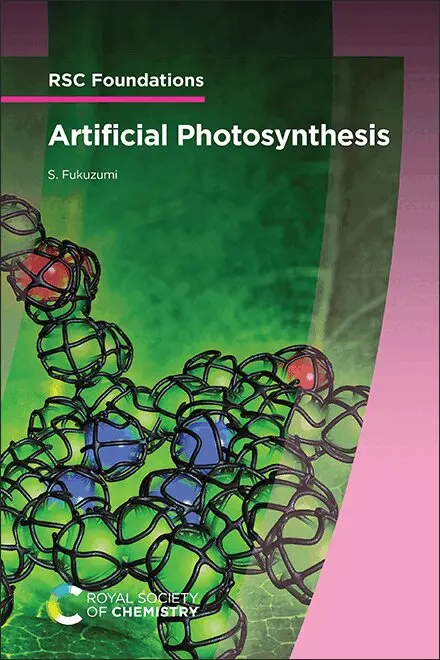
Artificial photosynthesis, in broad terms, is the process for converting solar energy into a useful fuel for storage and mobile use, as photosynthesis in plants and algae does. Replication of the photosynthetic process would mark a significant achievement in the production of clean energy while also reducing CO2 in the atmosphere. Artificially replicating the process however, presents several challenges and thus far, extensive efforts have been devoted to water splitting to produce hydrogen as a solar fuel in heterogeneous photocatalysis. The molecular-based mimicry of the fundamental processes occurring in photosynthesis has attracted much attention including: light harvesting, charge separation, water oxidation, NAD(P)+ reduction and CO2 fixation. Each of these processes, however, has been researched separately in their respective fields of study. This book aims to provide a unified view, and future perspective, of artificial photosynthesis while discussing and reviewing all of the artificial molecular processes together. It is an ideal single-source reference for any student or early career researcher interested in the study of molecular-based artificial photosynthesis systems.
799 kr
Skickas inom 5-8 vardagar
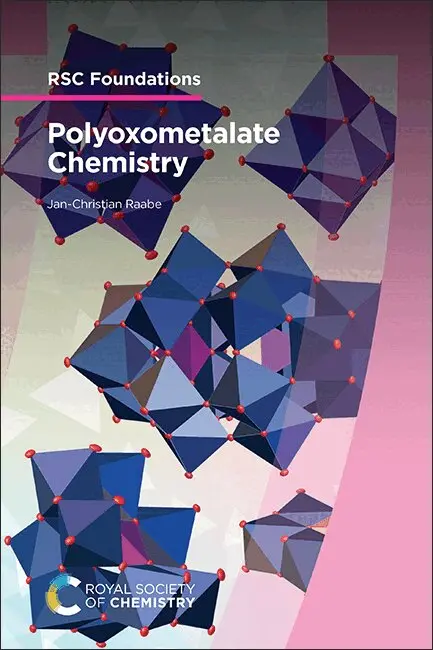
Polyoxometalates (POMs) are an established family of metal–oxygen clustered compounds. Their unique properties, discovered over the last century, have allowed them to find applications in catalysis, reaction technology, biochemistry and biomedicine. These materials are used in sustainable and green chemistry processes or in the fight against different diseases due to their solubility in water, a green and environmentally friendly solvent. In addition, the solubility is easy to tailor for the desired application by choosing the correct cation and they can be produced on a large scale.This short book brings PhD students and postdocs, unfamiliar with the specifics of the area, up-to-date. It provides the reader with an overview of the developments and current trends in POM chemistry. The full potential of polyoxometalates has not yet been exhausted. These materials are therefore proving to be interesting candidates for developing further technologies and areas of application to prepare humanity for the challenges of this century.
799 kr
Skickas inom 5-8 vardagar
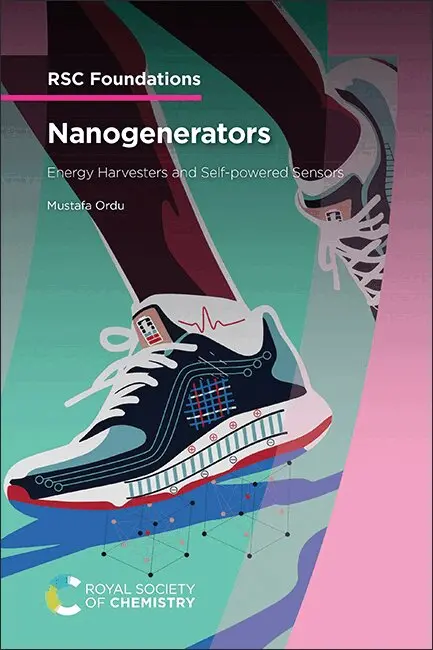
Nanogenerators are an emerging technology, a novel provider of renewable energy in a range of applications, such as energy harvesters and self-powered sensors. Understanding how physical phenomena can be converted into electricity is key to the design of energy harvesters and sensors and their future applications. With a focus on mechanical and biomechanical energy, this book introduces the physical principles of piezoelectricity and triboelectricity and directs the reader to the materials and fabrication methods available. The pros and cons of both are considered, and a further chapter explores hybrid and alternative systems.In taking this approach the author presents the most essential information on nanogenerators. Applications provide a practical context and the book concludes with the author’s views on the future. References to the literature throughout guide the reader to explore this exciting topic further.
661 kr
Skickas
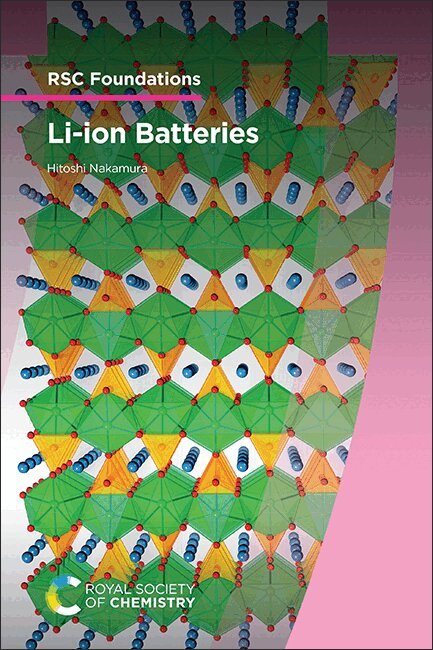
This concise book, expertly written by a Li-ion battery specialist, provides an overview of the topic in a format and style that is suitable for non-experts and experts alike. The contents cover essential themes like theory, practice, manufacture and safety. The book describes the technical systems that make up the Li-ion battery, covering themes such as basic principles, manufacturing and safety. It has a wide-ranging audience, acting as a suitable introduction to the field for lay-readers, but is equally as useful and encompassing for students and researchers looking to explore a new topic.
652 kr
Kommande
AI Revolution in Chemistry is a practical, vendor-neutral field guide for chemists who want to use AI with confidence. It demystifies core methods—machine learning, deep learning, generative models, and digital twins—and shows how they create value from bench to plant: reaction prediction and synthesis planning, autonomous experimentation, materials design, process control (including PAT) and quality. Readers get durable principles and checklists for data, validation and scale-up; plain-English guidance on ethics, bias and regulation; and case-style examples that make clear where AI helps, where it fails and how to course-correct. Written for practising chemists (not data scientists), it keeps chemical intuition at the centre while providing just enough AI to be dangerous—in the best way. The result is a concise, actionable primer that stays relevant as tools evolve, helping teams design, pilot and scale projects across discovery, development and GMP.
863 kr
Kommande
Machine learning and artificial intelligence are hot topics across the sciences but what are they? How do machines learn and how can we apply them to problems in the chemical sciences?Written as a primer for anyone new to the area of machine learning, this book provides an overview of the principles that underly its use in science and discusses its use as a practical tool in research. Readers will develop an understanding of key terminology and learn about the critical factors to be taken into account when using machine learning in science.Drawing on examples from chemistry, this book covers topics including the mechanics of networks and training, representations in chemistry and solving issues with data. With a focus on practical implementation and how to ensure that your applications are robust, this is a fantastic starting point for anyone looking to incorporate machine learning into their work.
652 kr
Kommande
Spanning energy regimes from ultracold atoms to plasma chemistry, this concise volume presents a unified treatment of termolecular reaction dynamics, integrating statistical models, direct three-body recombination, and classical mechanisms such as Lindemann–Hinshelwood. With applications ranging from atmospheric ozone formation to hydrogen combustion and ion solvation, the book bridges theory and experiment across chemical physics, physical chemistry, and molecular dynamics. Each chapter critically evaluates theoretical frameworks against experimental data, highlighting open questions and future directions. Designed for postgraduate students and researchers, this accessible yet rigorous text consolidates decades of scattered literature into a single, authoritative resource. Written by Jesús Pérez-Ríos, a leading figure in molecular reaction theory, this volume is essential reading for anyone seeking to understand or model complex reaction pathways in gas-phase chemistry.
863 kr
Kommande
This book explores the chemistry and practical application of natural food preservation techniques using biopreservatives sourced from microorganisms, plants and animals. It highlights key bioactive agents including bacteriocins, lysozyme, lactoferrin, chitosan, essential oils and plant extracts and their roles in enhancing food safety, extending shelf life and maintaining quality across diverse food systems such as dairy, meat, seafood and fresh produce.Designed for both academic and industry professionals, the book offers targeted solutions tailored to specific food matrices, including optimal concentration ranges and storage conditions. It also explores the mechanisms of action behind these agents while addressing critical challenges such as regulatory compliance, safety assessments and consumer acceptance.In response to growing demand for clean-label and sustainable preservation methods, the book introduces emerging technologies like nanoencapsulation, synergistic biopreservative combinations, active packaging innovations and the use of food industry by-products. Backed by current market data indicating growth in the biopreservatives sector, it positions natural preservation as a compelling alternative to chemical additives – one that supports both environmental stewardship and public health.
652 kr
Kommande
Modern technologies rely heavily on a number of inorganic elements. From the lithium in your laptop battery to the helium that cools hospital MRI machines inorganic materials are crucial to many parts of life. The supply of these materials that we can extract from the environment is finite and many of them present an environmental hazard when concentrated in landfill waste. Recycling is therefore key to being able to continue to sustainably use these elements.Examining in detail the many materials that can be classified as inorganic, and for which recycling is either non-existent or only in its infancy this book will help you to understand whether such materials can be re-used in some way, and how we might make advances into the recycling, re-use, and possible repurposing of any such materials or objects. Throughout, the discussion of how or if these materials can be recycled is balanced with economic and practical considerations.