Scion Publishing – serie
Visar alla böcker i serien Scion Publishing. Handla med fri frakt och snabb leverans.
19 produkter
19 produkter
704 kr
Tillfälligt slut
DNA Microarrays: Methods Express covers the very latest in DNA microarray technology, with a clear focus on how these techniques can be used in the lab to gain the very best results. The authors are from some of the leading laboratories in the field and write with real authority on the latest methodology. Every chapter provides detailed step-by-step protocols with valuable hints and tips for success, as well as giving typical experimental results and selected literature citations. This book is a 'must have' manual for researchers in all fields of biology, medicine and agriculture.
1 221 kr
Tillfälligt slut
DNA Microarrays: Methods Express covers the very latest in DNA microarray technology, with a clear focus on how these techniques can be used in the lab to gain the very best results. The authors are from some of the leading laboratories in the field and write with real authority on the latest methodology. Every chapter provides detailed step-by-step protocols with valuable hints and tips for success, as well as giving typical experimental results and selected literature citations.This book is a 'must have' manual for researchers in all fields of biology, medicine and agriculture.
370 kr
Tillfälligt slut
Getting into GP Training is a practical guide for anyone planning to become a GP and so looking to enrol in a GP Specialty Training Programme.Uniquely, this book covers all stages of the application process, from the initial longlisting and application to a General Practice Deanery (Stage 1), through the computer-based tests at Stage 2, the selection tests at Stage 3, and allocation to a Deanery (Stage 4).Written by an author who has recently been through the whole application process himself, this book includes full practice papers for the Stage 2 and 3 exams. It is packed full of hints and tips for all stages of the application process to help the reader succeed in the application process and enter the training programme of their choice.
1 221 kr
Tillfälligt slut
This book covers the key techniques that can be employed in any lab with access to cell imaging equipment, even if they do not currently specialize in imaging. It focuses on live cell imaging and light microscopy applications, but is equally relevant to the imaging of fixed specimens.
1 221 kr
Tillfälligt slut
PCR is the most widely used technique in molecular biology. New PCR variants offering substantial benefits to existing protocols appear on a frequent basis. PCR: Methods Express describes the very latest PCR-based methodologies and approaches to provide the most up-to-date practical advice on how to tackle a broad range of biological problems including:*real time qRT-PCR*rapid generation of gene targeting constructs*PCR multiplexes*PCR-based mutagenesis*identification of microdeletions and microduplications*DNA methylation analysis*forensic genetic DNA typing*genotyping*identification of mutations in single cells*whole genome amplification*diagnosis of infectious diseases*inverse PCR-based RFLPThis book is a comprehensive research guide; every chapter discusses the merits and limitations of the available approaches and then provides fully-proven protocols with hints and tips for success. PCR: Methods Express is an essential laboratory manual for researchers in all life science fields and at all levels, from postgraduate student to principal investigator.
1 221 kr
Tillfälligt slut
Protein expression is an increasingly important tool for research on gene function. What is needed is not just a lab manual providing established methods as well as the latest state-of-the-art protocols, but also clear advice on what expression system to choose when. Expression Systems: Methods Express uniquely fills this need. It covers expression across a broad range of systems, including the following. *Baculovirus expression vectors*CHO cells* E. coli*HEK293-EBNA1 cells* Lactococcus lactis and other gram positive bacteria* S. cerevisiae*transfected insect cells* Pichia pastoris*mammalian cells using BacMam viruses*lentiviral vectors*wheat germ cell-free systemThe book takes the reader through how to make an informed choice of appropriate system, taking into account the protein target, the time involved, the ultimate use of the expressed protein, and the laboratory equipment required. It also provides step-by-step methods for each system. In addition, the book describes the optimisation of expression strategies, expression engineering using ribosome display, and how to select protein variants with improved expression. Every chapter discusses the merits and limitations of the approaches available, describes the key techniques in full practical detail, and provides sensible advice for immediate use at the bench. In summary, Expression Systems: Methods Express is a comprehensive laboratory manual and information resource for researchers at all levels, from postgraduate student to principal investigator.
760 kr
Tillfälligt slut
Physics: A Student Companion offers readers a thorough overview of basic physics with rapid access to fundamental concepts and their derivations. Covering the core fields of mechanics and relativity, electromagnetism, waves and optics, quantum mechanics, and thermal physics, this book is an essential learning tool for students, as well as a handy reference for graduates and researchers in the physical sciences. The perfect companion to the mainstream physics textbooks, providing fast access to the essential material Highlights and consolidates the key equations, derivations, theories and concepts that are the fundamentals of your physics course Provides a structured outline of the core ideas, to be used alongside lecture notes and classes Offers an ideal reference for graduates and researchers in the physical sciencesInformal style – written by a recent student specifically for students Notes are used to highlight the major equations, show where they come from and how they can be used and applied The aim is to consolidate understanding, not teach the basics from scratch If you are looking for a better option than digging through college textbooks for that forgotten something, reviewing material for an examination, or preparing for graduate entry, then Physics: A Student Companion is the right book for you. From reviews:"Every undergraduate physicist ought to own a copy of this remarkable, unique and innovative textbook... I truly believe this textbook should be taken advantage of by all undergraduates, and I wish it had been published earlier in my undergraduate degree."Student Review, Times Higher Education, May 2012
791 kr
Tillfälligt slut
497 kr
Tillfälligt slut
Human Genetics 2e begins by describing basic human genetics, introduces the variety of techniques available for disease diagnosis and details how these are used in the lab, before concluding with information on prenatal diagnosis, genetic counselling and ethical considerations. As such, the book is the ideal handbook for biomedical science students and for anyone working in a diagnostic genetics lab. This second edition has been comprehensively rewritten to take into account the major changes in recent years, particularly with regard to human molecular genetics:greater coverage of recently identified genes and their role in diseaseupdated to include an expanded section on breast cancerexpanded description of epigenetics including methylation and acetylationupdated to include all the latest diagnostic tools: QF-PCR, MLPA, RT-PCR, microarrays, etc.more on the impact of genetics on society; ethics and dilemmasfull colour photographs have been included to allow readers to see real laboratory results If you need to know the difference between SNPs and CNVs, when to use QF–PCR or microarrays, or wondered which screening method to use for mutation detection, then you need to read this book. Reviews:"This revised edition of Human Genetics covers an impressive variety of topics within the field, and would certainly be suitable for an audience ranging from basic science undergraduates to people working within genetics in the medical profession...The material in this book is clearly laid out, and provides a comprehensive overview of the subject. The explicit list of learning objectives at the start of each chapter will be valued by students and teachers alike, and the explanatory sentence or two after each one provides a quick reference to the key take-home messages. Within the text, important facts and definitions are highlighted in boxes, and reinforced by straightforward and logical figures. The authors acknowledge that this is an introductory text, but also provide key references to further reading, enabling readers to easily expand their knowledge in specific areas of interest, yet achieving a fundamental grasp of the areas being presented. This further reading, along with the incredibly valuable self-assessment questions, will allow students to identify and address the limits of their knowledge.The emphasis on genetic disorders throughout the book will make it relevant to those studying the science of human genetics, but also to medical students throughout their studies. The glossary of disorders at the end of the book provides an excellent quick reference point, and the comprehensive list of internet sites directs the reader to many other well recognised resources for further information. In the age of information overload via the internet, such a list is incredibly valuable for helping students assess the quality of the information they are retrieving from online sources...This book will appeal to anyone with an interest in human genetics, particularly those approaching the subject from the point of view of a diagnostic laboratory."Dr Sally Chappell, IJMEG, April 2010"Advances in genetics are continually being made, and Human Genetics provides an overview of up to date practice within this field. It reviews the basics of DNA, different modes of inheritance and gene function. This volume takes the reader through the different techniques used in both molecular genetics and cytogenetic laboratories, concluding with the clinical aspects of genetics. All aspects are clearly explained using diagrams and photographs to achieve clarity and promote understanding.This book acts as a good reference and revision guide for those working in the genetics field or for those new to genetics. It would also be useful to undergraduates in biomedical sciences, providing a quick reference guide to complement other text books in the field of genetics, which individually study the different areas outlined in Human Genetics in more detail.Human Genetics is easily navigated with clear chapters broken down into individual sections. It allows the reader to dip in and out of the book as required, yet at the same time, ensures that each area can be studied in more detail. The quick reference guide of conditions at the back of the book will be of particular value for clinicians. It not only gives a brief outline of the clinical aspects of the different conditions, but it also clearly states which laboratory techniques are used in the diagnosis of each condition. This will be invaluable for any clinician requesting testing, but unsure exactly which test is needed, and therefore uncertain as to what sample should be taken from the patient. Although this book provides an overview, it does, however, point the reader in the right direction to find more information on each individual area both through further reading and internet resources.The chapter on mechanisms of disease may not be new to scientists, but for those working in the clinical field without a strong science background these concepts may be fairly new to them. Human Genetics will aid in their understanding of different conditions, and the reports issued enabling them to translate this in a clear manner to patients.Throughout the book clear illustrations are used to clarify the techniques described and complement the text. It is particularly helpful to have ‘true to life’ pictures when the authors have described certain techniques, such as raw DNA sequence information as well as some of the cancer genetics techniques. These can only be truly understood by seeing a realistic output of the data to be analysed.The book is clearly written from a scientific perspective and, although it touches on some of the aspects of clinical genetics, it is important to realise that this is only very brief. This is the weaker side of the book, and so anyone in the clinical field would certainly need to be exploring clinical issues further, particularly in relation to complex family issues and the psychosocial aspects of genetic counselling.This book would be a useful text for those studying biomedical sciences or a Masters course in genetic counselling. Although there is no great depth to the book, and students will need to look elsewhere for more comprehensive texts on particular aspects, it does bring together the laboratory and clinical aspects of genetics. It also traces the path from the original discussion with a patient, through sample extraction to the laboratory techniques as well as exploring the mechanisms underlying the origin of the relevant genetic changes."C. Kirwan, Human Genetics, vol. 128, August 2010"In order to evaluate a book one should know its intended audience. The preface to this book says that it, as was the first edition, should be relevant to first year undergraduates and newcomers to the medical profession; it is intended as an introduction to human genetics, to supplement other basic textbooks. The implication that the reader should already have a grounding in basic genetics is well founded. I doubt that the introductory chapters on cytogenetics (which gets into exons and introns) and molecular genetics would be understood without a previous grasp of the relation between the DNA triplet sequence in a gene with the amino-acid sequence of the corresponding protein. The authors have done a commendable job of updating the remarkable advances in molecular genetics of the past few years, ranging from new epigenetic insights, through automated techniques for high through-put screening, to the use of microarrays in molecular cytogenetics. But scanning of the volume suggests that it would be more suitably directed to laboratory, rather than clinical geneticists. There is, for example, a full page box listing the constituents of a culture medium, more suited to a lab manual than a text book. Nowhere does the book list the credentials of the authors, but a Google search reveals that Dr Davies is Head of Laboratories at the Southmead Hospital, Bristol, UK. Laboratory geneticists should find the sections on molecular cytogenetics (FISH, CGH), molecular genetics (Southern blotting, PCR), cancer genetics, and prenatal diagnosis particularly useful. Clinical geneticists may appreciate them as a source of information about what lies behind the reports of molecular diagnoses they receive from the laboratories. Clinical geneticists would be better off to turn to one of the other texts recommended at the ends of each chapter. Multifactorial inheritance gets short shrift, having only a few sentences in a section entitled “Gradation of Inheritance”. And multifactorial conditions are not in the list of reasons for referral to genetic services – presumably because they usually do not engender requisitions for laboratory tests. The chapter on genetic counseling does not mention the use of empirical recurrence risks in genetic counseling, or include anything about its psychodynamics. There are remarkably few typographical errors (I only found one), and a few unclear or incorrect statements. The colored illustrations are of good quality, and some are beautiful, including that on the cover, but the black and white ones need some improvement. In recognition of our increasing predilection for abbreviations, the book begins with a useful two and a half page list of them."F. Clarke Fraser, American Journal of Medical Genetics, Part A, July 2010
689 kr
Skickas inom 5-8 vardagar
Anatomy and Physiology in Healthcare focuses on what healthcare students need to know about the biological principles which underpin the practice of healthcare.All healthcare students have to study anatomy and physiology. They often find it a challenging subject and struggle to see how the subject will link to their professional practice.This book is unique in that it integrates clinical cases with the essential biological facts to provide all students with a thorough understanding of how anatomy and physiology can be applied in healthcare.By using clinical cases throughout , the book helps the reader grasp the practical relevance of anatomy and physiology to decision-making and care delivery.The clinical cases have been carefully selected to reflect common conditions encountered in practice today, and the changing patterns of disease and healthcare.Clear high-quality full colour illustrations, links to appropriate web-based content, and self-assessment material make this the perfect, practical textbook for all healthcare students.Review:"This textbook presents anatomy and physiology in a fun and interactive way.... It is divided into 14 chapters and the way the authors have introduced the information gives it a modern twist. For example, instead of titling a chapter 'The reproductive system', it is called 'From one generation to the next'. ..... What works particularly well is the way the authors have used case studies that reflect the reality of the changing patterns of health and disease.... This book provides a good foundation in clinical application and it seeks to link theory to practice."; Nursing Standard, 27 September 2017, volume 32 number 5
370 kr
Tillfälligt slut
693 kr
Tillfälligt slut
Highly commended in the Anaesthesia category of the 2014 BMA Medical Books awards!From reviews:"Altogether, this textbook offers an excellent detailed overview of basic principles, mechanics, and physics of technical equipment used in anaesthesia and intensive care medicine." Critical Care, Feb 2014"This book is excellent. I have read a number of equipment related books and found most of them stale and filled with minutia. Instead this fresh look at equipment really makes it interesting to read and keeps your attention. With sections that give quick answers to how things work, advantages and disadvantages, in an easy to read format you get exactly what you want to know RIGHT away. In addition the full color photos and well done charts really add to the depth of this book.It is my opinion this may be one of the best books on the market for quick review of anesthesia and critical care equipment. Let's be honest, no one is sitting at home reading equipment books for pleasure so when you NEED the information you likely need it right away. This book does exactly that; easy format, clear and concise information with everything you need to know about a piece of equipment easy to find and within a page or two. I would recommend this to all trainees in anesthesia but also for those providers who like to be prepared in the operating room to deal with any issue that might arise." www.nurse-anesthesia.org, 8 Feb 2014Equipment in Anaesthesia and Critical Care specifically follows the syllabus published by the Royal College of Anaesthetists and is the perfect guide for candidates studying for their FRCA qualifications.The book is beautifully illustrated and features high quality colour photographs throughout. The text is engaging and comprehensive, relating each piece of equipment back to its basic physics, mechanics and clinical context. The clear, concise and standardised format means that information is easy to access and perfect for revision. Every major piece of equipment is featured alongside colour photos, reproducible line diagrams, and information on its uses, how it works, pros and cons, and safety considerations.The authors, all senior registrars in anaesthesia and critical care, appreciate exactly what candidates need to know to pass the FRCA exam. They have identified and tackled difficult subjects which are often glossed over or omitted in other resources, to produce a book that is comprehensive, engaging and to the point. In addition to FRCA candidates, the book is also suitable for operating department practitioners, critical care staff, and physicians with an interest in anaesthesia or critical care.
518 kr
Skickas
This latest edition has been comprehensively updated to include new information on the latest clinical evidence, national guidelines, and from the recent medical literature:all existing cases have been revisednew cases have been added to cover pre-diabetes and premature ejaculationpsoriasis, sore throat, thyroid disease and the PSA test are covered in even more detailThe first three editions have helped thousands of candidates through the CSA exam. The original approach has therefore been retained so the book continues to offer readers a concise ‘need-to-know’ guide to passing the CSA, with the emphasis on successfully completing a case in the allotted ten minutes using a structured consultation framework that works.The aim of the book is to leave exam candidates with more time to concentrate on passing the CSA exam itself.
518 kr
Tillfälligt slut
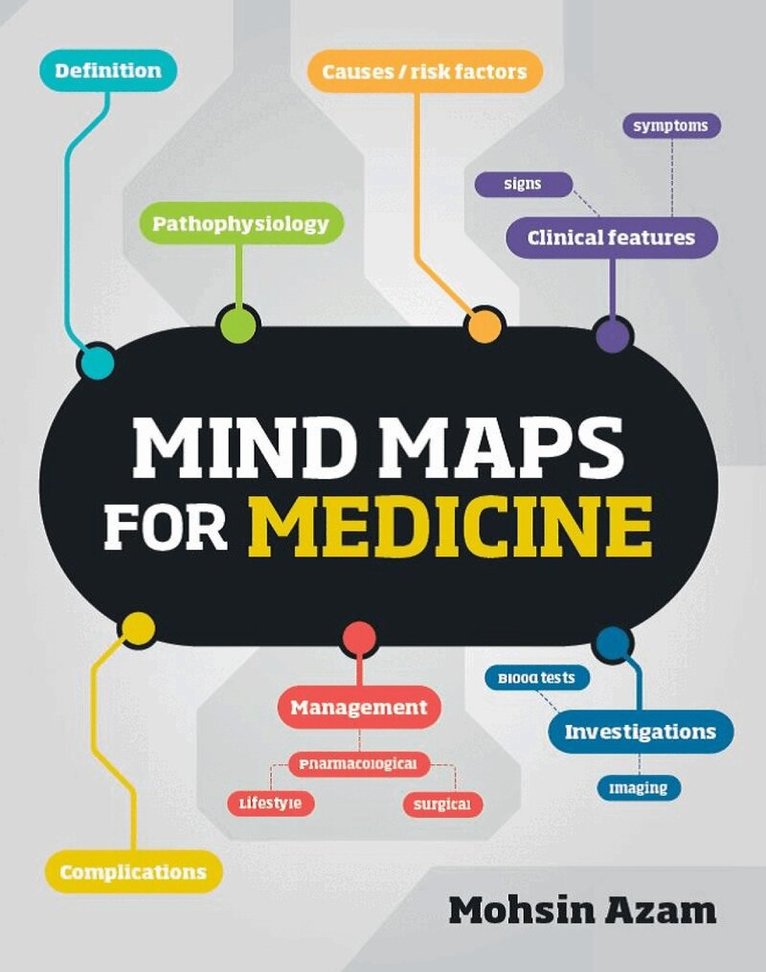
An innovative, visual textbook for medical students to help learn and understand core medical conditions.Over 100 mind maps:The book features over 100 easy to follow, full colour mind maps of clinically relevant medical conditions using a systems-based structure:CardiologyRespiratoryGastroenterologyRenalEndocrinologyNeurologyRheumatologyInfectious diseasesThe mind maps give you quick access to key information in a visually appealing way. Where appropriate the mind map is followed by additional reference information to remind you about, for example, risk assessment tools, staging criteria, and treatment algorithms. Consistent structure:All mind maps are presented consistently and cover:DefinitionPathophysiologyCauses and Risk factorsClinical features: signs and symptomsEpidemiologyInvestigations: blood tests and imagingManagement: lifestyle, pharmacological and surgicalComplicationsOther key features:Images are provided throughout the book to help illustrate key signs.Mnemonics are used throughout to aid learning.Information is up-to-date and based around the latest guidelines.All topics are clinically relevant or likely to appear in medical school examinations.Mind Maps for Medicine is a key medical textbook for all medical students but particularly those who consider themselves visual learners.
512 kr
Tillfälligt slut
An up-to-date and concise book providing all the essential information required for a successful psychiatry rotation. Written by two senior psychiatry professors, the book offers an exam-centered, reader-friendly style backed up with concise clinical guidance.The book covers diagnosis and management based upon the DSM-5 Criteria. For every psychiatric condition:the diagnostic pathway is provided with suggested phrasing for sensitive questionsthe relevant clinical features to look out for in the mental status examination are listeda concise definition and basic pathophysiology/etiology is outlined.To aid your learning, self-assessment questions are provided at the end of each chapter. A chapter is dedicated to OSCE scenarios to help practicing with colleagues in preparation for exams. Board-style exam questions with detailed answers are also provided. Printed with an attractive full color design, the book includes mnemonics, clinical photos, diagrams, OSCE tips, and key fact boxes. Clinical Psychiatry is exactly the type of book medical students, residents, and psychiatry trainees need to help develop a strong psychiatric understanding. From reviews:"This is a well-organized, easily accessible overview of psychiatry for learners, specifically medical students rotating in psychiatry... a wonderful resource for those looking for a general introduction to clinical psychiatry." Doody's Reviews, April 2020 Clinical Psychiatry has been adapted for the US market from Psychiatry: a clinical handbook.
406 kr
Skickas
A new and creative way of thinking about the consultation in primary care, for both trainees and practising GPsThe book features a unique Two Houses model to help the reader move away from completing a series of tasks to focusing on the two key objectives at the heart of every consultation:Working out what matters (The House of Discovery)Deciding with the patient what to do about it (The House of Decision) Using the rich metaphors contained within these houses, the book explores common pitfalls that can beset those who are learning the craft of consulting in primary care, and encourages the reader to fill their toolbox with the skills needed to develop their own patient-centred consultation style.The GP Consultation Reimagined is based on the author's experience of teaching communication skills over 10 years as a GP Training Programme Director. "This book will not teach you to improve your consultations. That is its great merit. Instead, it will encourage you to learn how to consult better." From the Foreword by Roger Neighbour
Graphic Anaesthesia, second edition
Essential diagrams, equations and tables for anaesthesia
Häftad, Engelska, 2023
693 kr
Skickas
Graphic Anaesthesia is a compendium of the diagrams, graphs, equations and tables needed in anaesthetic practice. Each page covers a separate topic to aid rapid review and assimilation. The relevant illustration, equation or table is presented alongside a short description of the fundamental principles of the topic and with clinical applications where appropriate.Now fully updated, this second edition contains 35 new topics, including significant additions to the drugs and equipment sections, and new sections on clinical prediction and anatomy related to regional anaesthesia.The book includes main sections on:physiologypharmacodynamics and kineticsphysicsequipmentanatomydrugsclinical measurementclinical predictionstatistics.By combining all the illustrations, equations and tables with concise, clinically relevant explanations, Graphic Anaesthesia is therefore:the ideal revision book for all anaesthetists in traininga valuable aide-memoire for senior anaesthetists to use when teaching and examining trainees.From reviews of the previous edition:"Graphic Anaesthesia is a well-written, easy-to-read book, ideal for trainees studying for primary FRCA examinations... It will be an ideal companion for preparing for exams." Ulster Medical Journal, May 2016"Graphic Anaesthesia is an excellent revision tool that allows trainees approaching exams to prepare in an efficient and simple format. It is a refreshing and unique resource that should be included on any essential revision reading list." European Journal of Anaesthesiology 2016; 33: 610."The diagrams are very clear, the explanations accurate and concise and to pack 245 items into a small reference book is no mean feat…. Each diagram is drawn in just four colours to enable them to be reproduced easily from memory. This intuitive approach was an eye-opener to me and a valuable lesson in simplicity without losing any essential detail. This is something from which many educators could learn and indeed transfer that skill…This is a quality book that could be a useful investment across the spectrum of practitioners involved in anaesthesia and the teaching of anaesthesia." Journal of Perioperative Practice March 2017, volume 27, issue 3
486 kr
Skickas
Totally revised and updated edition now mapped to the UKMLA (Medical Licensing Assessment) curriculum“I like the unique style … It is simple, engaging and easy to read, whatever your learning preferences (I particularly like the colour coding!). It also covers topics comprehensively, making it not only a great aide-memoire but also a very useful everyday book on the ward.” From the Foreword by Professor Farah Bhatti OBE, Consultant Cardiothoracic SurgeonAll the core knowledge you need at medical school in one place!General Medicine and Surgery: Medical Student Revision Guide contains the core information you need on: Cardiology; Endocrinology; Gastroenterology; Hepato-pancreato-biliary; Haematology; Immunology & Allergy; Neurology; Renal; Respiratory; General surgical principles; The acute abdomen; Gastrointestinal surgery; The breast; Vascular surgery; Urology; Critical illness; Emergency presentations; Rheumatology; Trauma & orthopaedics.Throughout medical school, and the years thereafter, a huge volume of knowledge must be acquired and retained, to achieve the standards expected of a safe and successful doctor. This is a mammoth task.General Medicine and Surgery: Medical Student Revision Guide is designed to make accessing and remembering core knowledge as easy as possible: each topic is presented in a colourful, revision-ready note format, with extensive use of diagrams, tables and flowchartskey points are highlighted and core concepts summarised, making the information easier to digest, assimilate and memorisea consistent structure means you always have access to clinical presentation, investigations and management, risk factors and complications.Every chapter has been peer-reviewed by a specialist in the field, to ensure it is accurate and reflects the most up-to-date guidelines.In addition, these specialists have also used their own personal experience of studying for medical exams to ensure that the books focus on the most important conditions, concepts and vocabulary needed to pass finals.General Medicine and Surgery: Medical Student Revision Guide is the perfect companion for your medicine degree, exam revision, medical finals and your early career as a foundation doctor.
Essential ECG
A practical guide to recording, interpreting, and reporting ECGs with confidence
Häftad, Engelska, 2026
441 kr
Skickas inom 5-8 vardagar
Essential ECG is a hands-on, accessible guide to recording, interpreting, and reporting ECGs with confidence.The book begins with a clear explanation of the heart’s normal conduction system, then walks readers through lead placement and anatomical perspectives. It breaks down every component of a normal ECG before introducing a straightforward, practical algorithm for interpreting ECGs in any clinical scenario.Covers all major ECG abnormalities – from prolonged intervals and electrolyte imbalances to pericardial disease and pulmonary embolism.Seamlessly blends ECG findings with relevant clinical context for better real-world application.Features an extensive library of real-life ECGs, all clearly annotated and consistently presented to highlight key abnormalities.Ends with a ‘test yourself’ section: 50 ECGs that are common, critical or potentially life-threatening, each paired with a concise interpretation and diagnostic insight.Essential ECG is the go-to resource for medical students, residents, and allied health professionals looking to sharpen their ECG interpretation skills and apply them effectively in everyday clinical practice.