Social Cognition and Social Neuroscience – Serie
Visar alla böcker i serien Social Cognition and Social Neuroscience. Handla med fri frakt och snabb leverans.
12 produkter
12 produkter
2 046 kr
Skickas inom 5-8 vardagar
Agency has two meanings in psychology and neuroscience. It can refer to one's capacity to affect the world and act in line with one's goals and desires--this is the objective aspect of agency. But agency can also refer to the subjective experience of controlling one's actions, or how it feels to achieve one's goals or affect the world. This subjective aspect is known as the sense of agency, and it is an important part of what makes us human. Interest in the sense of agency has exploded since the early 2000s, largely because scientists have learned that it can be studied objectively through analyses of human judgment, behavior, and the brain. This book brings together some of the world's leading researchers to give structure to this nascent but rapidly growing field. The contributors address questions such as: What role does agency play in the sense of self? Is agency based on predicting outcomes of actions? And what are the links between agency and motivation?Recent work on the sense of agency has been markedly interdisciplinary. The chapters collected here combine ideas and methods from fields as diverse as engineering, psychology, neurology, neuroscience, and philosophy of mind, making the book a valuable resource for any student or researcher interested in action, volition, and exploring how mind and brain are organized.
1 578 kr
Skickas inom 5-8 vardagar
The importance of facial expressions has led to a steadily growing body of empirical findings and theoretical analyses. Every decade has seen work that extends or challenges previous thinking on facial expression. The Science of Facial Expression provides an updated review of the current psychology of facial expression . This book summarizes current conclusions and conceptual frameworks from leading figures who have shaped the field in their various subfields, and will therefore be of interest to practitioners, students, and researchers of emotion in cognitive psychology, neuroscience, biology, anthropology, linguistics, affective computing, and homeland security.Organized in eleven thematic sections, The Science of Facial Expression offers a broad perspective of the "geography" of the science of facial expression. It reviews the scientific history of emotion perception and the evolutionary origins and functions of facial expression. It includes an updated compilation on the great debate around Basic Emotion Theory versus Behavioral Ecology and Psychological constructionism. The developmental psychology and social psychology of facial expressions is explored in the role of facial expressions in child development, social interactions, and culture. The book also covers appraisal theory, concepts, neural and behavioral processes, and lesser-known facial behaviors such as yawing, vocal crying, and vomiting. In addition, the book reflects that research on the "expression of emotion" is moving towards a significance of context in the production and interpretation of facial expression The authors expose various fundamental questions and controversies yet to be resolved, but in doing so, open many sources of inspiration to pursue in the scientific study of facial expression.
726 kr
Skickas inom 5-8 vardagar
Over the past two decades, a new picture of the cognitive unconscious has emerged from a variety of disciplines that are broadly part of cognitive science. According to this picture, unconscious processes seem to be capable of doing many things that were thought to require intention, deliberation, and conscious awareness. Moreover, they accomplish these things without the conflict and drama of the psychoanalytic unconscious. These processes range from complex information processing, through goal pursuit and emotions, to cognitive control and self-regulation. This collection of 20 original chapters by leading researchers examines the cognitive unconscious from social, cognitive, and neuroscientific viewpoints, presenting some of the most important developments at the heart of this new picture of the unconscious. The volume, the first book in the new Social Cognition and Social Neuroscience series, will be an important resource on the cognitive unconscious for researchers in cognitive psychology and neuroscience.
1 701 kr
Skickas inom 7-10 vardagar
In the last decade, there has been a tremendous surge of research on the mechanisms of human action. This volume brings together this new knowledge in a single, concise source, covering most if not all of the basic questions regarding human action: what are the mechanisms by which action plans are acquired, mentally represented, activated, selected, and expressed? The chapters provide up-to-date summaries of the published research on this question, with an emphasis on underlying mechanisms.This 'bible' of action research brings together the current thinking of eminent researchers in the domains of motor control, behavioural and cognitive neuroscience, psycholinguistics, biology, as well as cognitive, developmental, social, and motivational psychology. It represents a determined multidisciplinary effort, spanning across various areas of science as well as national boundaries.
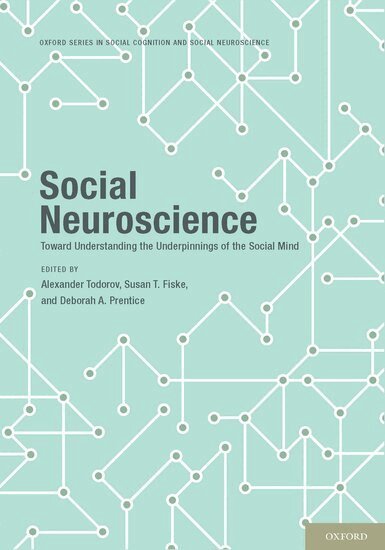
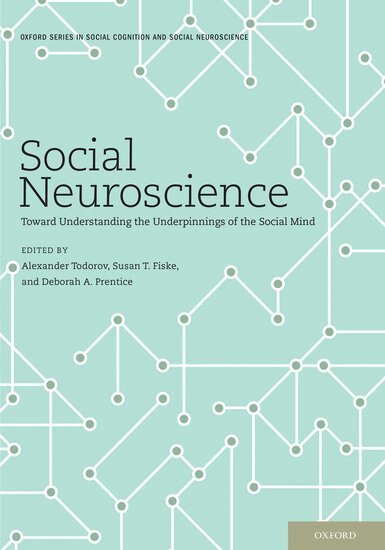
Social Neuroscience
Toward Understanding the Underpinnings of the Social Mind
Inbunden, Engelska, 2011
1 487 kr
Skickas inom 5-8 vardagar
The field of social cognitive neuroscience has captured the attention of many researchers during the past ten years. Much of the impetus for this new field came from the development of functional neuroimaging methods that made it possible to unobtrusively measure brain activation over time. Using these methods over the last 30 years has allowed psychologists to move from simple validation questions -- would flashing stimuli activate the visual cortex -- to those about the functional specialization of brain regions-- are there regions in the inferior temporal cortex dedicated to face processing-- to questions that, just a decade ago, would have been considered to be intractable at such a level of analysis. These so-called "intractable" questions are the focus of the chapters in this book, which introduces social cognitive neuroscience research addressing questions of fundamental importance to social psychology: How do we understand and represent other people? How do we represent social groups? How do we regulate our emotions and socially undesirable responses? This book also presents innovative combinations of multiple methodologies, including behavioral experiments, computer modeling, functional Magnetic Resonance Imaging (fMRI) experiments, Event-Related Potential (ERP) experiments, and brain lesion studies. It is divided into four sections. The first three sections present the latest research on, respectively, understanding and representing other people, representing social groups, and the interplay of cognition and emotion in social regulation. In the fourth section, contributors step back and consider a range of novel topics that have emerged in the context of social neuroscience research: understanding social exclusion as pain, deconstructing our moral intuitions, understanding cooperative exchanges with other agents, and the effect of aging on brain function and its implications for well-being. Taken together, these chapters provide a rich introduction to an exciting, rapidly developing and expanding field that promises a richer and deeper understanding of the social mind.
Del 5 - Social Cognition and Social Neuroscience
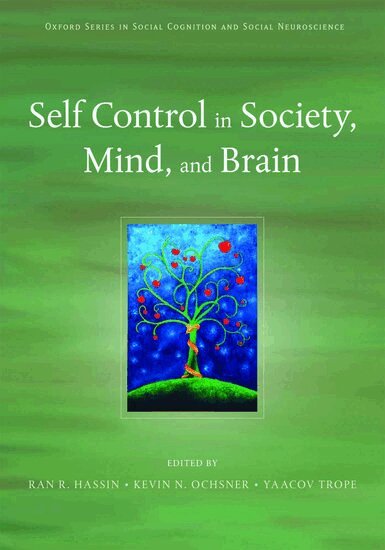
Self Control in Society, Mind, and Brain
Inbunden, Engelska, 2010
1 827 kr
Skickas inom 7-10 vardagar
How do we - societies and individuals alike - (sometimes) manage to act in line with our high priority goals when faced with tempting-yet-conflicting alternatives? In other words, how do we (sometimes) resolve a conflict between a superordinate, global goal and a subordinate, local one, and do so in favor of the global goal? These types of self-control dilemmas can be found in many contexts and may be described at many levels of analysis. Examples include the dilemmas faced by groups fostering cooperation among their members, when defection is more beneficial for each individual; dieters resisting a tempting cake, and the cognitive system trading off speed for accuracy in conflict tasks like the Stroop. This book presents social, cognitive and neuroscientific approaches to the study of self-control, connecting recent work in cognitive and social psychology with recent advances in cognitive and social neuroscience. It consists of three sections: The Social, The Mental, and The Brain. The "Mental" section is the book's anchor, examining within-individual self-control processes at all levels: from low-level attention to motivation and motivational systems. The "Social" section looks at group processes, broadly defined, and how groups and societies (attempt to) resolve conflicts between their global goals and the individual's self interest. The "Brain" section explores the brain processes that underlie self control attempts and speak directly to mental-level processes. In bringing together multiple perspectives on self-control dilemmas from internationally renowned researchers within various allied disciplines, this will be the first single-reference volume to illustrate the richness, depth, and breadth of the research in the new field of self control.
555 kr
Skickas inom 5-8 vardagar
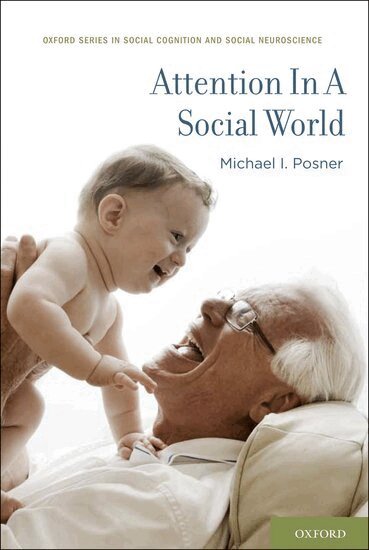
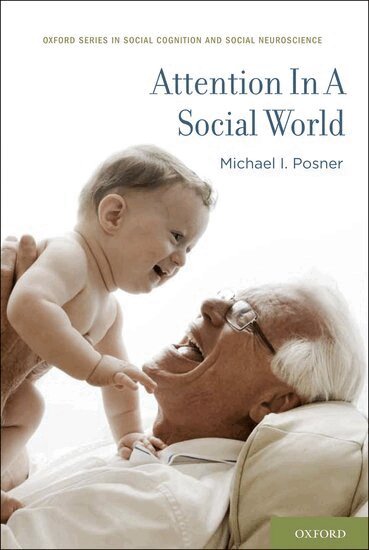
The study of attention is central to psychology. In this work, Michael Posner, a pioneer in attention research, presents the science of attention in a larger social context, which includes our ability to voluntarily choose and act upon an object of thought. The volume is based on fifty years of research involving behavioral, imaging, developmental, and genetic methods. It describes three brain networks of attention that carry out the functions of obtaining and maintaining the alert state, orienting to sensory events, and regulating responses. The book ties these brain networks to anatomy, connectivity, development, and socialization and includes material on pathologies that involve attentional networks, as well as their role in education and social interaction.
948 kr
Skickas inom 7-10 vardagar
The field of social cognitive neuroscience has captured the attention of many researchers during the past ten years. Much of the impetus for this new field came from the development of functional neuroimaging methods that made it possible to unobtrusively measure brain activation over time. Using these methods over the last 30 years has allowed psychologists to move from simple validation questions -- would flashing stimuli activate the visual cortex -- to those about the functional specialization of brain regions -- are there regions in the inferior temporal cortex dedicated to face processing -- to questions that, just a decade ago, would have been considered intractable at such a level of analysis. These so-called "intractable" questions are the focus of the chapters in this book, which introduces social cognitive neuroscience research addressing questions of fundamental importance to social psychology: How do we understand and represent other people? How do we represent social groups? How do we regulate our emotions and socially undesirable responses? This book also presents innovative combinations of multiple methodologies, including behavioral experiments, computer modeling, functional Magnetic Resonance Imaging (fMRI) experiments, Event-Related Potential (ERP) experiments, and brain lesion studies. It is divided into four sections. The first three sections present the latest research on, respectively, understanding and representing other people, representing social groups, and the interplay of cognition and emotion in social regulation. In the fourth section, contributors step back and consider a range of novel topics that have emerged in the context of social neuroscience research: understanding social exclusion as pain, deconstructing our moral intuitions, understanding cooperative exchanges with other agents, and the effect of aging on brain function and its implications for well-being. Taken together, these chapters provide a rich introduction to an exciting, rapidly developing and expanding field that promises a richer and deeper understanding of the social mind.
Navigating the Social World
What Infants, Children, and Other Species Can Teach Us
Häftad, Engelska, 2014
751 kr
Skickas inom 5-8 vardagar
Navigating the social world requires sophisticated cognitive machinery that, although present quite early in crude forms, undergoes significant change across the lifespan. This book will be the first to report on evidence that has accumulated on an unprecedented scale, showing us what capacities for social cognition are present at birth and early in life, and how these capacities develop through learning in the first years of life. The volume will highlight what is known about the discoveries themselves but also what these discoveries imply about the nature of early social cognition and the methods that have allowed these discoveries -- what is known concerning the phylogeny and ontogeny of social cognition. To capture the full depth and breadth of the exciting work that is blossoming on this topic in a manner that is accessible and engaging, the editors invited 70 leading researchers to develop a short report of their work that would be written for a broad audience. The purpose of this format was for each piece to focus on a single core message: are babies aware of what is right and wrong, why do children have the same implicit intergroup preferences that adults do, what does language do to the building of category knowledge, and so on. The unique format and accessible writing style will be appealing to graduate students and researchers in cognitive psychology, developmental psychology, and social psychology.
1 322 kr
Skickas inom 5-8 vardagar
How does motivation work? The classic answer is that people are motivated to approach pleasure and avoid pain, that they are motivated by "carrots and sticks." But to understand human motivation, it is necessary to go beyond pleasure and pain. What people want is to be effective in their life pursuits, and there are three distinct ways that people want to be effective. They want to be effective in having desired results (value), which includes having pleasure but is not limited to pleasure. They want to be effective in managing what happens (control) and in establishing what's real (truth), even if the process of managing what happens or establishing what's real is painful. These three distinct ways of wanting to be effective go beyond just wanting pleasure, but there is even more to the story of how motivation works. These ways of wanting to be effective do not function in isolation. Rather, they work together. Indeed, the ways that value, truth, and control work together is the central story of motivation. By understanding how motivation works as an organization of value, truth, and control motives, we can re-think basic motivational issues, such the nature of personality and culture, how the motives of others can be managed effectively, and what is "the good life."
1 095 kr
Skickas inom 5-8 vardagar
The study of attention is central to psychology. In this work, Michael Posner, a pioneer in attention research, presents the science of attention in a larger social context, which includes our ability to voluntarily choose and act upon an object of thought. The volume is based on fifty years of research involving behavioral, imaging, developmental, and genetic methods. It describes three brain networks of attention that carry out the functions of obtaining and maintaining the alert state, orienting to sensory events, and regulating responses. The book ties these brain networks to anatomy, connectivity, development, and socialization and includes material on pathologies that involve attentional networks, as well as their role in education and social interaction.
Navigating the Social World
What Infants, Children, and Other Species Can Teach Us
Inbunden, Engelska, 2013
1 888 kr
Skickas inom 5-8 vardagar
Navigating the social world requires sophisticated cognitive machinery that, although present quite early in crude forms, undergoes significant change across the lifespan. This book will be the first to report on evidence that has accumulated on an unprecedented scale, showing us what capacities for social cognition are present at birth and early in life, and how these capacities develop through learning in the first years of life. The volume will highlight what is known about the discoveries themselves but also what these discoveries imply about the nature of early social cognition and the methods that have allowed these discoveries -- what is known concerning the phylogeny and ontogeny of social cognition. To capture the full depth and breadth of the exciting work that is blossoming on this topic in a manner that is accessible and engaging, the editors invited 70 leading researchers to develop a short report of their work that would be written for a broad audience. The purpose of this format was for each piece to focus on a single core message: are babies aware of what is right and wrong, why do children have the same implicit intergroup preferences that adults do, what does language do to the building of category knowledge, and so on. The unique format and accessible writing style will be appealing to graduate students and researchers in cognitive psychology, developmental psychology, and social psychology.