SUNY series in Korean Studies – serie
Visar alla böcker i serien SUNY series in Korean Studies. Handla med fri frakt och snabb leverans.
25 produkter
25 produkter
Häftad, Engelska, 1997
448 kr
Skickas inom 5-8 vardagar
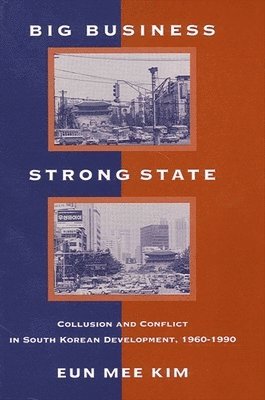
Focuses on the paradox of development in the newly industrializing country of South Korea.This book debunks the rosy success story about South Korean economic development by analyzing how the state and businesses formed an alliance, while excluding labor, in order to attain economic development, and how these three entities were transformed in the process. The author analyzes the paradox of South Korean development from 1960 to 1990-a period during which the country experienced dramatic social, economic, and political changes. By reexamining South Korea's development through the collaboration and conflict between the state and the chaebol (big businesses), she illuminates the inherent limitations and problems of the developmental state.
Häftad, Engelska, 1997
435 kr
Skickas inom 5-8 vardagar
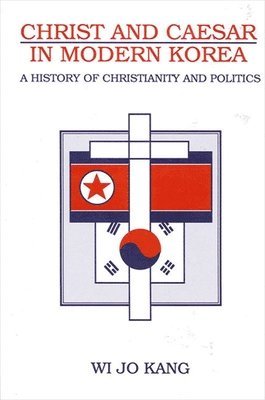
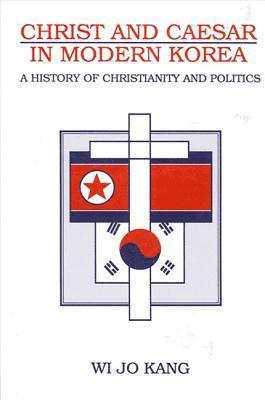
A well-documented work on the history of modern Korea focusing on the history of Christianity in relation to politics.
Häftad, Engelska, 1998
461 kr
Skickas inom 5-8 vardagar
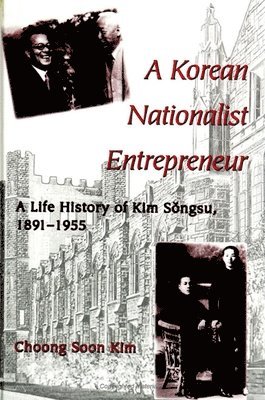
During the period of Japanese domination, Kim Songsu emerged as one of Korea's leading cultural nationalists. This life history details his contribution to the self-strengthening programs moderate nationalists advocated as the foundation for Korea's independence.This book delineates the drive for Korean modernization by cultural nationalists during the colonial era in the early twentieth century. The cultural nationalism movement, led by moderate nationalists, eschewed overt resistance to Japanese imperialism and advocated self-strengthening programs to lay the foundation for future Korean independence. To describe this movement, this book focuses on Kim Sŏngsu and his various projects for Korean modernization. The author provides a narrative that includes encapsulated stories and sheds light on the Japanese colonial policies concerning Korea.A Korean Nationalist Entrepreneur examines Kim's projects in chronological order, reflecting historian Carter J. Erkert's statement that Kim's life history has been so closely intertwined with some of the deepest currents of modern Korean history itself. The book describes how Kim took over and developed a post-elementary school, founded Korea's first modern textile firm, established one of Korea's major newspapers, and established Posong Junior College (which later became Koryo University). In 1946, after Korea's liberation from Japan, Kim became a pivotal figure in the conservative Korean Democratic Party, which became the main opposition party in Korea in the 1950s. He eventually became vice president in 1951 under Syngman Rhee.
Häftad, Engelska, 1998
553 kr
Skickas inom 3-6 vardagar
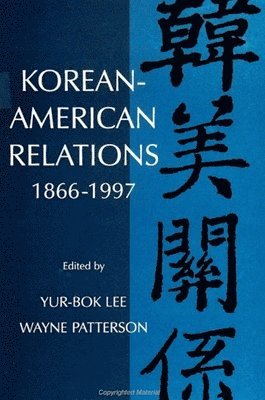
Leading historians and Asian-specialists explore key aspects of United States-Korean relations.Built upon the highly successful volume One Hundred Years of Korean-American Relations, 1882-1982, this book describes Korea's importance to the United States and the development of the current relationship. The ramifications of this relationship are evident by the facts that South Korea now constitutes America's seventh largest trading partner and 37,000 American troops remain stationed there on alert. North Korea, however, continues to harbor a deep resentment of the United States and its southern neighbor and maintains the fifth largest standing army in the world, situated just north of the world's most fortified demarcation line at the 38th parallel.
Häftad, Engelska, 2001
458 kr
Skickas inom 5-8 vardagar
Presents an indispensable survey of contemporary Korean politics.Essential reading for anyone interested in contemporary Korea and East Asia, this book provides a comprehensive and balanced introduction to contemporary Korean politics. It explicates the great changes in South Korea, which has gone from being one of the poorest nations to a proud member of the Organization for Economic Development and Cooperation while making the transition to democracy. The work focuses on the geopolitical and cultural setting, historical evolution, institutional foundation, dynamics of political leadership, and political and administrative processes of Korean politics. It also features chapters on political determinants of the rise and decline of the Korean economy, foreign and unification policy of South Korea, and political development and decay in North Korea.
Häftad, Engelska, 2009
427 kr
Skickas inom 5-8 vardagar
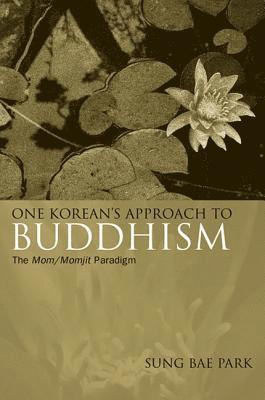
Insights into the experience and philosophy of Buddhism from a Korean perspective.This book presents the author's lifelong study and practice of Buddhism from a Korean perspective. With depth, sensitivity, and candor, Sung Bae Park discusses his country's contribution to Mahayana Buddhism and also shares his personal experience. A monk in the Korean Chogye order during his early twenties, Park is uniquely qualified to offer the reader some valuable insights into the experience and philosophy of the Zen Buddhist.Focusing on the Korean concepts mom (which refers to the body) and momjit (which refers to its gestures or functions), Park examines their nondual, interdependent nature and their relevance to ordinary human beings who are living in these turbulent times. He also introduces a specialized spiritual practice using the hwadu, which aids the religious practitioner in loosening his conceptual, intellectual grip on his life and the world around him. In addition, the author explores the relevance of his views to other religions and philosophies, including Taoism, Confucianism, and Christianity. Those well acquainted with Buddhism will find much food for thought here, as familiar topics such as emptiness, nonduality, and enlightenment are presented in a refreshingly original way, and those new to Buddhist thought may find themselves stimulated to learn more. A helpful glossary of terms is included.
Inbunden, Engelska, 2016
1 485 kr
Skickas inom 3-6 vardagar
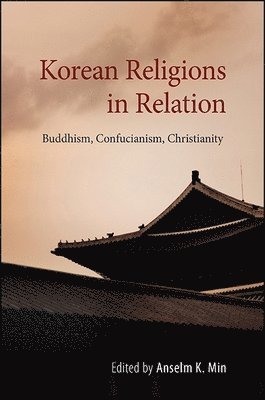
Examines Buddhism, Confucianism, and Christianity in Korea, focusing on their mutual accommodation, exclusion, conflict, and assimilation.Instead of simply being another survey of the three dominant religions in contemporary Korea-Buddhism, Confucianism, and Christianity-this unique book studies them in relation to each other in terms of assimilation, accommodation, conflict, and exclusion. The contributors focus on major issues that have historically challenged the relations between the three religions from the Goryeo period to the present and how each religion has responded to them. The essays bring a new perspective to the study of Korean religions, one that is especially pertinent in the current age of religious pluralism with all its tensions.
Inbunden, Engelska, 1994
1 042 kr
Tillfälligt slut
This book is an annotated translation, with introduction and commentary, of the correspondence between Yi Hwang (T'oegye, 1500-1570) and Ki Taesung (Kobong, 1527-1572) and between Yi I (Yulgok, 1536-1584) and Song Hon (Ugye, 1535-1598), known as the Four-Seven Debate, the most famous philosophical controversy in Korean Neo-Confucian thought. The most complex issues and difficult tensions in the great Neo-Confucian synthesis are at the juncture between the metaphysics of the cosmos and the human psyche. The Four-Seven Debate is perhaps the most searching examination of this tension ever carried out.
Häftad, Engelska, 1994
377 kr
Tillfälligt slut
This book is an annotated translation, with introduction and commentary, of the correspondence between Yi Hwang (T'oegye, 1500-1570) and Ki Taesung (Kobong, 1527-1572) and between Yi I (Yulgok, 1536-1584) and Song Hon (Ugye, 1535-1598), known as the Four-Seven Debate, the most famous philosophical controversy in Korean Neo-Confucian thought. The most complex issues and difficult tensions in the great Neo-Confucian synthesis are at the juncture between the metaphysics of the cosmos and the human psyche. The Four-Seven Debate is perhaps the most searching examination of this tension ever carried out.
Inbunden, Engelska, 1995
1 042 kr
Tillfälligt slut
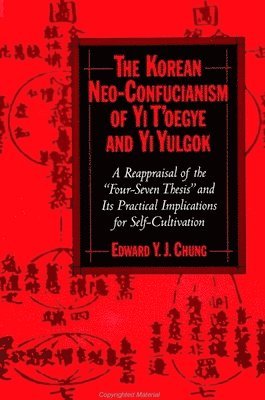
A study of the most significant debate in Korean Neo-Confucianism between the two most eminent Neo-Confucian thinkers, summarizing their philosophies and providing refreshing insights into Confucian language and cultureThis comparative study of Yi T'oegye (1501-1570) and Yi Yulgok (1536-1584), Korea's two most eminent Neo-Confucian thinkers, is a seminal work on the Four-Seven Debate, the most significant and controversial intellectual event in the Korean Confucian tradition. The Four-Seven thesis, a magnificent example of East Asian Confucian discourse at its best, remains each thinker's masterpiece, a compressed but integrated systemization of metaphysics, ethics, and spirituality. It addresses fascinating philosophical, moral, and psychological questions about the fundamental problem of feelings and emotions, as well as their implications for moral and spiritual self-transformation.This book is indispensable for those interested in Korean thought or intellectual history. It will enable specialists in Confucian studies to understand unique paradigms of Korean Neo-Confucianism. It will stimulate comparative philosophers or religionists and general humanists to consider Korean Neo-Confucianism seriously as a major resource for understanding East Asian philosophy and religion.
Häftad, Engelska, 1995
397 kr
Tillfälligt slut
A study of the most significant debate in Korean Neo-Confucianism between the two most eminent Neo-Confucian thinkers, summarizing their philosophies and providing refreshing insights into Confucian language and cultureThis comparative study of Yi T'oegye (1501-1570) and Yi Yulgok (1536-1584), Korea's two most eminent Neo-Confucian thinkers, is a seminal work on the Four-Seven Debate, the most significant and controversial intellectual event in the Korean Confucian tradition. The Four-Seven thesis, a magnificent example of East Asian Confucian discourse at its best, remains each thinker's masterpiece, a compressed but integrated systemization of metaphysics, ethics, and spirituality. It addresses fascinating philosophical, moral, and psychological questions about the fundamental problem of feelings and emotions, as well as their implications for moral and spiritual self-transformation.This book is indispensable for those interested in Korean thought or intellectual history. It will enable specialists in Confucian studies to understand unique paradigms of Korean Neo-Confucianism. It will stimulate comparative philosophers or religionists and general humanists to consider Korean Neo-Confucianism seriously as a major resource for understanding East Asian philosophy and religion.
Häftad, Engelska, 1996
388 kr
Tillfälligt slut
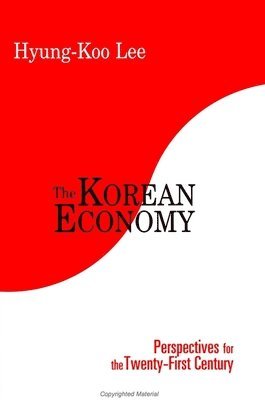
Lee, former South Korean government Minister of Labor for the South Korean government, discusses the country's economic development from 1945-1994 and the public policies that shaped it, arguing that if South Korea is to become a major economic power, the government should withdraw from the economic front line.In The Korean Economy, Hyung-Koo Lee, formerly South Korea's Minister of Labor, chronicles South Korea's economic development from 1945–1994 and the public policies that have shaped that development. In the past, the South Korean government supported protectionist policies. Mr. Lee, arguing that these policies no longer serve the long-term interest of South Korea's economy, supports the allowance of greater private-sector initiatives, a fundamental paradigm shift in South Korea's economic policy. He argues that if South Korea is to become a major economic power, the government should withdraw from the economic front line. He also provides a succinct analysis of the vast economic potential of a reunified Korea and discusses the pros and cons of two alternative scenarios for the South Korean economy.
Häftad, Engelska, 1997
377 kr
Tillfälligt slut
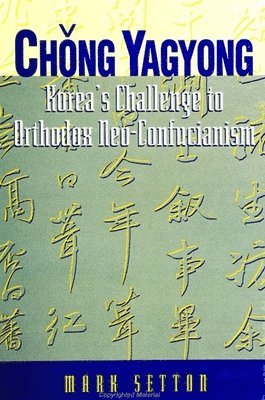
Describes the historical background and philosophy of the reform-minded, eighteenth-century Korean thinker, Chong Yagyong.During the last decade, Chŏng Yagyong, also known as Tasan, the eighteenth-century Korean thinker who dared attack the hallowed orthodoxy of his dynasty, has become a household name in Korea. In this study, the first ever in English, Mark Setton presents a highly readable analysis of the world view behind Tasan's reforms. Setton challenges the very concept of a school of "Practical Learning," presenting an alternative view of Tasan's historical background in terms of the interplay between Confucian schools and political factions.By carefully decrypting Tasan's philosophical writings, Setton shows that he was not simply a reformer bent on unraveling the ruling ideology, but an incisive thinker who sought to "draw aside the veil" of Buddhist and Taoist-inspired Neo-Confucian commentaries and uncover the pristine message of Confucius and Mencius. On the basis of this classical scholarship, Tasan sought for points of resonance between Confucianism and the Catholicism which had deeply inspired him in his youth.Comparing it with parallel schools of thought in both China and Japan, including the "Evidential Learning" of the Ch'ing dynasty and the "Ancient Learning" movement of the Tokugawa, Setton shows that Tasan's rigorous scholarship represents a major contribution to the development of East Asian Confucianism, particularly concerning unresolved issues such as human nature and the foundations of morality.
Inbunden, Engelska, 1997
1 042 kr
Tillfälligt slut
A well-documented work on the history of modern Korea focusing on the history of Christianity in relation to politics.
Inbunden, Engelska, 1999
1 042 kr
Tillfälligt slut
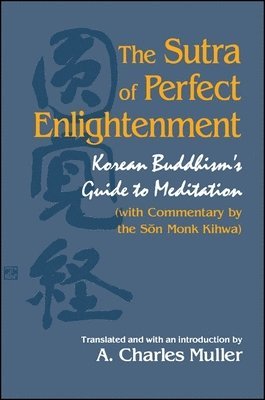
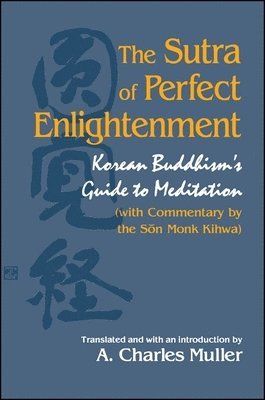
A concise guide to the key practice systems of the East Asian Meditational schools Ch'an, Son, and Zen.The Sūtra of Perfect Enlightenment, used in monastic education for more than a millennium, is a concise guide to the key paradigms of the practice systems of the East Asian meditational schools (Ch'an, Sǒn, and Zen). Contained in its twelve chapters are definitive explanations of the meaning of innate and actualized enlightenment, sudden and gradual enlightenment, the true nature of ignorance and suffering, along with numerous examples of methods of contemplation that accord with and reflect the basic Ch'an views on enlightenment and practice. Although the Sutra was popular throughout the East Asian region, it attained its highest canonical status within the Korean Chogye school, where it is still a key text in the core curriculum of modern-day monks and nuns. The Sutra is translated here in full, along with the eloquent and revelatory commentary of the Chǒson monk Kihwa (1376–1433).
Häftad, Engelska, 1999
377 kr
Tillfälligt slut
A concise guide to the key practice systems of the East Asian Meditational schools Ch'an, Son, and Zen.The Sūtra of Perfect Enlightenment, used in monastic education for more than a millennium, is a concise guide to the key paradigms of the practice systems of the East Asian meditational schools (Ch'an, Sǒn, and Zen). Contained in its twelve chapters are definitive explanations of the meaning of innate and actualized enlightenment, sudden and gradual enlightenment, the true nature of ignorance and suffering, along with numerous examples of methods of contemplation that accord with and reflect the basic Ch'an views on enlightenment and practice. Although the Sutra was popular throughout the East Asian region, it attained its highest canonical status within the Korean Chogye school, where it is still a key text in the core curriculum of modern-day monks and nuns. The Sutra is translated here in full, along with the eloquent and revelatory commentary of the Chǒson monk Kihwa (1376–1433).
Häftad, Engelska, 2001
397 kr
Tillfälligt slut
An accessible, comprehensive source of information on the Korean language—its structure and history to its cultural and sociological setting.This book describes the structure and history of the Korean language, ranging from its cultural and sociological setting, writing system, and modern dialects, to how Koreans themselves view their language and its role in society. An accessible, comprehensive source of information on the Korean language, Lee and Ramsey's work is an important resource for all those interested in Korean history and culture, offering information not readily available elsewhere in the English-language literature.
Inbunden, Engelska, 2001
1 042 kr
Tillfälligt slut
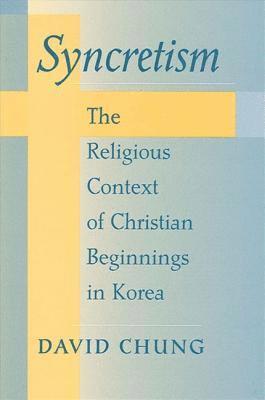
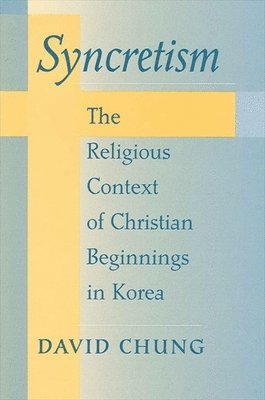
Argues that a syncretic worldview encouraged the remarkable growth of Christianity in Korea.This book explains the explosive growth of Christianity since its introduction into Korea in the eighteenth century. In no other Asian country has Christianity taken root so strongly.Author David Chung argues that it was the syncretic tendency of Korean religious culture that provided the context for the successful acceptance of Christianity. Working from the perspective of comparative religions, he explores how Korean society accommodated and assimilated religions of foreign origin, such as Confucianism, Taoism, Buddhism, and Christianity through crude equation and subtle identification of these religions with Korean indigenous beliefs. Fundamentally shamanistic, Korean society received and grafted these religions onto its own and made a remarkable tapestry of beliefs, rites, and values into a comprehensive pattern. Syncretism finds this "religious tapestry" or internal chemistry working between Korean and Christian worldviews.
Häftad, Engelska, 2001
377 kr
Tillfälligt slut
Argues that a syncretic worldview encouraged the remarkable growth of Christianity in Korea.This book explains the explosive growth of Christianity since its introduction into Korea in the eighteenth century. In no other Asian country has Christianity taken root so strongly.Author David Chung argues that it was the syncretic tendency of Korean religious culture that provided the context for the successful acceptance of Christianity. Working from the perspective of comparative religions, he explores how Korean society accommodated and assimilated religions of foreign origin, such as Confucianism, Taoism, Buddhism, and Christianity through crude equation and subtle identification of these religions with Korean indigenous beliefs. Fundamentally shamanistic, Korean society received and grafted these religions onto its own and made a remarkable tapestry of beliefs, rites, and values into a comprehensive pattern. Syncretism finds this "religious tapestry" or internal chemistry working between Korean and Christian worldviews.
Inbunden, Engelska, 2009
1 042 kr
Tillfälligt slut
Insights into the experience and philosophy of Buddhism from a Korean perspective.This book presents the author's lifelong study and practice of Buddhism from a Korean perspective. With depth, sensitivity, and candor, Sung Bae Park discusses his country's contribution to Mahayana Buddhism and also shares his personal experience. A monk in the Korean Chogye order during his early twenties, Park is uniquely qualified to offer the reader some valuable insights into the experience and philosophy of the Zen Buddhist.Focusing on the Korean concepts mom (which refers to the body) and momjit (which refers to its gestures or functions), Park examines their nondual, interdependent nature and their relevance to ordinary human beings who are living in these turbulent times. He also introduces a specialized spiritual practice using the hwadu, which aids the religious practitioner in loosening his conceptual, intellectual grip on his life and the world around him. In addition, the author explores the relevance of his views to other religions and philosophies, including Taoism, Confucianism, and Christianity. Those well acquainted with Buddhism will find much food for thought here, as familiar topics such as emptiness, nonduality, and enlightenment are presented in a refreshingly original way, and those new to Buddhist thought may find themselves stimulated to learn more. A helpful glossary of terms is included.
Inbunden, Engelska, 2010
1 042 kr
Tillfälligt slut
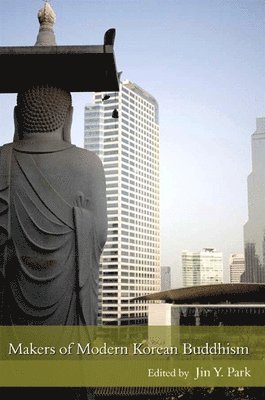
An overview of Korean Buddhism and its major figures in the modern period.The first book in English devoted exclusively to modern Korean Buddhism, this work provides a comprehensive exploration for scholars, students, and serious readers. Makers of Modern Korean Buddhism focuses on three key areas: Buddhist reform, Zen revival, and the interrelationship of religion, history, and politics. In Korea, the modern period in Buddhism begins in earnest in the late nineteenth century, during the closing years of the Chosŏn dynasty, which was characterized by a repressive brand of neo-Confucianism. Buddhist reformers arose to seek change in both Buddhism and Korean society at large. The work begins with a look at five of these reformers and their thought and work. The Zen revival that began at the end of the nineteenth century is covered from that period to contemporary times through an exploration of the life and thought of important Zen masters. The influence of Japanese Buddhist missionaries, the emergence of Korean engaged Buddhism, known as Minjung Buddhism, and the formation of modern Buddhist scholarship in Korea are discussed as well."This outstanding collection will be highly valued by the scholarly community for the way it deals comprehensively and insightfully with an important though relatively unexplored topic in the modern era." - Steven Heine, author of Zen Skin, Zen Marrow: Will the Real Zen Buddhism Please Stand Up?Jin Y. Park is Associate Professor of Philosophy and Religion at American University. She is the author of Buddhism and Postmodernity: Zen, Huayan, and the Possibility of Buddhist Postmodern Ethics and the editor of several books, including Buddhisms and Deconstructions.
Häftad, Engelska, 2010
397 kr
Tillfälligt slut
An overview of Korean Buddhism and its major figures in the modern period.The first book in English devoted exclusively to modern Korean Buddhism, this work provides a comprehensive exploration for scholars, students, and serious readers. Makers of Modern Korean Buddhism focuses on three key areas: Buddhist reform, Zen revival, and the interrelationship of religion, history, and politics. In Korea, the modern period in Buddhism begins in earnest in the late nineteenth century, during the closing years of the Chosŏn dynasty, which was characterized by a repressive brand of neo-Confucianism. Buddhist reformers arose to seek change in both Buddhism and Korean society at large. The work begins with a look at five of these reformers and their thought and work. The Zen revival that began at the end of the nineteenth century is covered from that period to contemporary times through an exploration of the life and thought of important Zen masters. The influence of Japanese Buddhist missionaries, the emergence of Korean engaged Buddhism, known as Minjung Buddhism, and the formation of modern Buddhist scholarship in Korea are discussed as well."This outstanding collection will be highly valued by the scholarly community for the way it deals comprehensively and insightfully with an important though relatively unexplored topic in the modern era." - Steven Heine, author of Zen Skin, Zen Marrow: Will the Real Zen Buddhism Please Stand Up?Jin Y. Park is Associate Professor of Philosophy and Religion at American University. She is the author of Buddhism and Postmodernity: Zen, Huayan, and the Possibility of Buddhist Postmodern Ethics and the editor of several books, including Buddhisms and Deconstructions.
Inbunden, Engelska, 2012
1 042 kr
Tillfälligt slut
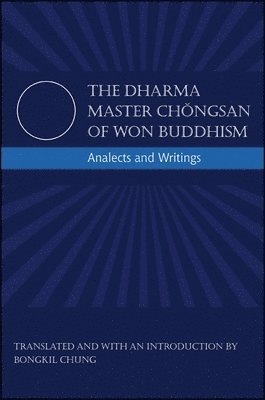
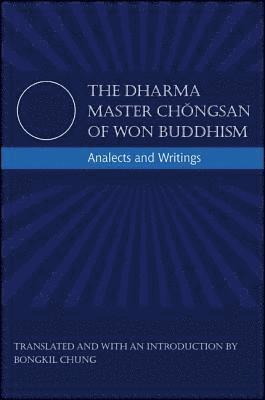
The first English translations of the writings of Chŏngsan (1900-62), who codified the central doctrines of Won Buddhism.Won Buddhism emerged in early twentieth-century Korea after a long period of anti-Buddhist repression. It is a syncretic tradition, a form of Buddhism strongly influenced by the Chŏson dynasty's Neo-Confucian ethical heritage and by Daoism. Seeking to deliver sentient beings from suffering and to create a just and ethical world, Won Buddhism stresses practical application of the dharma and service. It offers a vision of people as one family, morally perfected.This book provides the first English translations of the writings of Chŏngsan (1900–62), the second dharma master of Won Buddhism, who codified the new religion's central doctrines. The translations here include Chŏngsan's discussion of Buddha-nature, described as a mind-seal and symbolized by the Irwŏnsang (a unitary circle); his synthesis of Confucian moral and political programs with Buddhist notions of emancipation from birth and death; and his expositions on realizing the ideal of all people as one family.
Häftad, Engelska, 2013
360 kr
Tillfälligt slut
The first English translations of the writings of Chŏngsan (1900-62), who codified the central doctrines of Won Buddhism.Won Buddhism emerged in early twentieth-century Korea after a long period of anti-Buddhist repression. It is a syncretic tradition, a form of Buddhism strongly influenced by the Chŏson dynasty's Neo-Confucian ethical heritage and by Daoism. Seeking to deliver sentient beings from suffering and to create a just and ethical world, Won Buddhism stresses practical application of the dharma and service. It offers a vision of people as one family, morally perfected.This book provides the first English translations of the writings of Chŏngsan (1900–62), the second dharma master of Won Buddhism, who codified the new religion's central doctrines. The translations here include Chŏngsan's discussion of Buddha-nature, described as a mind-seal and symbolized by the Irwŏnsang (a unitary circle); his synthesis of Confucian moral and political programs with Buddhist notions of emancipation from birth and death; and his expositions on realizing the ideal of all people as one family.
Häftad, Engelska, 2017
397 kr
Tillfälligt slut
Examines Buddhism, Confucianism, and Christianity in Korea, focusing on their mutual accommodation, exclusion, conflict, and assimilation.Instead of simply being another survey of the three dominant religions in contemporary Korea-Buddhism, Confucianism, and Christianity-this unique book studies them in relation to each other in terms of assimilation, accommodation, conflict, and exclusion. The contributors focus on major issues that have historically challenged the relations between the three religions from the Goryeo period to the present and how each religion has responded to them. The essays bring a new perspective to the study of Korean religions, one that is especially pertinent in the current age of religious pluralism with all its tensions.