• Fri frakt över 249 kr
  • •
  • Snabba leveranser
  • •
  • Billiga böcker
Kundservice

Du är på sajten för privatpersoner.

Företag, bibliotek eller offentlig verksamhet?

Du handlar på classic.bokus.com, där alla dina funktioner finns intakta.
Till classic.bokus.com
Bokus logotyp. Gå till startsidan.
  • Erbjudanden
  • Nyheter
  • Student
  • Topplistor
  • Barn & ungdom
  • Bokus Play
  • E-böcker
  • Pocketböcker
  • Spel & pussel

10% rabatt på allt med kod NYSTART10 →

Sidfot

Mina sidor

    Hjälp

    • Kundservice
    • Vanliga frågor och svar
    • Frakt och leverans
    • Retur vid ångerrätt
    • Reklamera vara
    • Betalning
    • Köpvillkor
    • Allmänna villkor
    • Information om webbplatsens tillgänglighet

    Om Bokus

    • Om oss
    • Pressrum
    • För studenter
    • För företag
    • För bibliotek och offentlig verksamhet
    • För leverantörer
    • Hållbarhet

    Populärt

    • Aktuella erbjudanden
    • Presentkort
    • Studentlitteratur
    • Nya böcker
    • Topplistor
    • Signerade böcker
    • Engelska böcker

    Inspiration

    • Boktips
    • BookTok
    • Populära bokserier
    • Barnbokskaraktärer
    • Populära författare
    Logotyp för Bokus
    Följ oss på Facebook (extern länk)Följ oss på Instagram (extern länk)Följ oss på YouTube (extern länk)Följ oss på TikTok (extern länk)
    bokus @ CookiesAnpassa cookiesIntegritetspolicyKöpvillkor
    Till Citymail hemsida (extern länk)Till Budbee hemsida (extern länk)Till Postnord hemsida (extern länk)Till Schenker hemsida (extern länk)Till Early Bird hemsida (extern länk)Till Walleys hemsida (extern länk)
    1. Naturvetenskap och teknik
    2. Teknik och industri
    3. Tillverkningsteknik

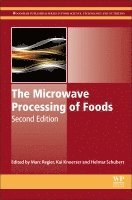
    The Microwave Processing of Foods

    AvMarc Regier,Kai Knoerzer

    Inbunden, Engelska, 2016

    Del i serien Woodhead Publishing Series in Food Science, Technology and Nutrition

    1 814 kr

    Beställningsvara. Skickas inom 10-15 vardagar. Fri frakt över 249 kr.

    Beskrivning

    The Microwave Processing of Foods, Second Edition, has been updated and extended to include the many developments that have taken place over the past 10 years. Including new chapters on microwave assisted frying, microwave assisted microbial inactivation, microwave assisted disinfestation, this book continues to provide the basic principles for microwave technology, while also presenting current and emerging research trends for future use development. Led by an international team of experts, this book will serve as a practical guide for those interested in applying microwave technology.


    • Provides thoroughly up-to-date information on the basics of microwaves and microwave heating
    • Discusses the main factors for the successful application of microwaves and the main problems that may arise
    • Includes current and potential future applications for real-world application as well as new research and advances
    • Includes new chapters on microwave-assisted frying, microbial inactivation, and disinfestation

    Produktinformation

    • Utgivningsdatum:2016-11-21
    • Mått:152 x 229 x undefined mm
    • Vikt:900 g
    • Format:Inbunden
    • Språk:Engelska
    • Serie:Woodhead Publishing Series in Food Science, Technology and Nutrition
    • Antal sidor:484
    • Upplaga:2
    • Förlag:Elsevier Science
    • ISBN:9780081005286

    Utforska kategorier

    • Tillverkningsteknik inom Naturvetenskap och teknik

    Mer om författaren

    Prof. Dr.-Ing. Marc Regier studied at the University of Karlsruhe physics before he received his doctorate at the Institute of Food Process Engineering (Prof. Dr.-Ing. Helmar Schubert) in the field of microwave drying of food and provision of water distribution by means of magnetic resonance imaging in 2003. In his time at the Federal Research Centre for Nutrition and Food (today Max Rubner Institute) he worked among others with the drying, microwave applications and other new methods. After another stay at the Institute of Food Process Engineering, he was in 2007 as Professor of Food Process Engineering at the Technische Fachhochschule Berlin (today Beuth University of Applied Sciences) called from where he moved to the University of Trier in 2010. As research priorities, Mr. Regier busy drying processes, microwave applications, and magnetic resonance imaging. In teaching, Mr. Regier represents mathematics, thermodynamics, fluid mechanics, thermal process engineering as well as new methods of food technology. Dr. Kai Knoerzer has a background in process engineering (BSc), chemical engineering (MSc) and food process engineering (PhD, summa cum laude), all awarded from the Karlsruhe Institute of Technology (Germany). In 2006, he commenced work with Food Science Australia (a joint venture of the Commonwealth Scientific and Industrial Research Organisation (CSIRO) and the Victorian Government) as a Postdoctoral fellow. He has since become a Principal Research Scientist in CSIRO Agriculture and Food. Kai has a proven track record in food process engineering research and development, particularly of innovative technologies. Currently, he is leading research and venture science activities across a number of innovative food processing technologies, including high pressure thermal processing and extrusion technology. Kai’s work has shown both science impact, with more than 100 peer-reviewed journal publications, conference proceedings and book chapters, 7 patents/applications, 4 edited books and over 100 oral and 50 poster presentations at national and international conferences, as well as commercial impact in the food industry. His work has also been recognised with various international awards for research excellence. Kai has been an active member of IFT’s International Division in the leadership team for >10 years and is past chair of this division. Kai serves Elsevier's Food Science Reference Collections as the Food Process Engineering section editor. Schubert studied Mechanical and Process Engineering at the TU Berlin and the University of Karlsruhe. In 1972 he was a PhD Chemical Engineering in the field at Hans Rumpf and habilitated there in 1981. Since 1986 until his retirement in April 2004 he held the Chair of Food Process Engineering, and was head of the same institute of the University of Karlsruhe (TH), today KIT. Schubert was also director of the Institute of Chemical Engineering of the Federal Research Centre for Nutrition in Karlsruhe from 1977 to 1991. Subsequently, he worked from 1982 to 1984 Head of the Federal Research Institutes for Food and GVC-Chairman from 2001 to 2004. In addition, he from 2002 to 2004, Vice-Chairman DECHEMA Society for Chemical Engineering and Biotechnology eV He also led the GVC technical committee "Food Process Engineering" and was a member of the specialist committees "interfaces" and "Agglomerisation- and bulk solids technology". Schubert is a member in the Berlin-Brandenburg Academy of Sciences since 2001. He is also a member of the International Academy of Food Science and Technology and the German Academy of Science and Engineering. Helmar Schubert is a founding member of the International Association for Engineering and Food IAEF and since 2004 Chairman of the European Federation of Chemical Engineering EFCE Section on Food. In addition, he has worked as an author. The European.

    Innehållsförteckning

    • 1. Introducing microwave-assisted processing of food: Fundamentals of the technology2. Microwave heating and the dielectric properties of foods3. Determination of the dielectric properties of foods4. Impact of microwave processing on nutritional, sensory, and other quality attributes5. Microwave technology for food processing: An overview of current and future applications6. Microwave-assisted baking7. Microwave-assisted frying8. Microwave-assisted drying9. Microwave-assisted blanching10. Microwave-assisted pasteurization and sterilization—commercial perspective11. Microwaves for microbial inactivation—efficiency and inactivation kinetics12. Microwave-assisted thawing and tempering13. Packaging for microwave foods14. The heating performance of domestic microwave ovens15. Measuring temperature distributions during microwave processing16. Microwave plant requirements and process control for advanced applications17. Improving the heating uniformity in microwave processing18. Simulation of microwave processes