• Fri frakt över 249 kr
  • •
  • Snabba leveranser
  • •
  • Billiga böcker
Kundservice

Du är på sajten för privatpersoner.

Företag, bibliotek eller offentlig verksamhet?

Du handlar på classic.bokus.com, där alla dina funktioner finns intakta.
Till classic.bokus.com
Bokus logotyp. Gå till startsidan.
  • Erbjudanden
  • Nyheter
  • Student
  • Topplistor
  • Barn & ungdom
  • Bokus Play
  • E-böcker
  • Pocketböcker
  • Spel & pussel

10% rabatt på allt med kod: NYSTART10 →

Sidfot

Mina sidor

    Hjälp

    • Kundservice
    • Vanliga frågor och svar
    • Frakt och leverans
    • Retur vid ångerrätt
    • Reklamera vara
    • Betalning
    • Köpvillkor
    • Allmänna villkor
    • Information om webbplatsens tillgänglighet

    Om Bokus

    • Om oss
    • Pressrum
    • För studenter
    • För företag
    • För bibliotek och offentlig verksamhet
    • För leverantörer
    • Hållbarhet

    Populärt

    • Aktuella erbjudanden
    • Presentkort
    • Studentlitteratur
    • Nya böcker
    • Topplistor
    • Signerade böcker
    • Engelska böcker

    Inspiration

    • Boktips
    • BookTok
    • Populära bokserier
    • Barnbokskaraktärer
    • Populära författare
    Logotyp för Bokus
    Följ oss på Facebook (extern länk)Följ oss på Instagram (extern länk)Följ oss på YouTube (extern länk)Följ oss på TikTok (extern länk)
    bokus @ CookiesAnpassa cookiesIntegritetspolicyKöpvillkor
    Till Citymail hemsida (extern länk)Till Budbee hemsida (extern länk)Till Postnord hemsida (extern länk)Till Schenker hemsida (extern länk)Till Early Bird hemsida (extern länk)Till Walleys hemsida (extern länk)
    1. Psykologi och pedagogik
    2. Psykologi
    3. Biologisk psykologi och neuropsykologi

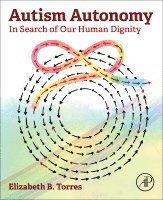
    Autism Autonomy

    In Search of Our Human Dignity

    AvElizabeth B. Torres

    Häftad, Engelska, 2024

    1 436 kr

    Beställningsvara. Skickas inom 10-15 vardagar. Fri frakt över 249 kr.

    Fler format och utgåvor

    E-bok

    2 042 kr

    Beskrivning

    Autism Autonomy: In Search of Our Human Dignity provides a new and unifying methodological framework and discusses machine learning and biometrics techniques to diagnose, characterize, and treat patterns of sensory motor control underlying autism symptoms. With the hope of improving basic research in these areas, this volume will allow readers to design better interventions and provide awareness of a number of new technologies used in the autism field. Wearable bio-sensing technologies, machine learning, and AI methods are all discussed regarding their applications to provide better self-awareness, interaction, diagnosis, and prognosis.

    This volume is useful for researchers and clinicians interested in learning about these new technologies and how to enhance machine learning use in ASD for the betterment of patients.

    • Describes advanced tools and techniques from machine learning and biometrics to diagnose and treat autism
    • Provides methods and their implementation using real data and simple computer programs for diagnosis and prognosis
    • Presents the methods used to quantify social and individual neurobiological phenomena explained and implemented
    • Chapters contain links to a companion website containing the computer code in MATLAB�/PythonT languages and the data samples to generate the graphics displayed on the figures for each chapter

    Produktinformation

    • Utgivningsdatum:2024-09-27
    • Mått:191 x 235 x undefined mm
    • Vikt:450 g
    • Format:Häftad
    • Språk:Engelska
    • Antal sidor:442
    • Förlag:Elsevier Science
    • ISBN:9780128188095

    Utforska kategorier

    • Biologisk psykologi och neuropsykologi inom Psykologi och pedagogik
    • Naturvetenskaplig forskning inom Naturvetenskap och teknik
    • Biovetenskap inom Naturvetenskap och teknik

    Mer om författaren

    Dr. Torres is a Computational Neuroscientist who has been working on theoretical and empirical aspects of sensory motor integration and human cognition since the late 90’s. She graduated from Mathematics and Computer Science and spent a year at the NIH as a Pre-IRTA fellow, applying her skill set to the medical field. This work led to Pre-doctoral-fellowship funding (5 years) of graduate school. During her PhD at UCSD, she developed a new theoretical framework for the study of sensory motor integration, employing elements of Differential (Riemannian) geometry and tensor calculus adapted from Contemporary Mechanics and Dynamics to the realm of Cognitive Neuroscience. Upon PhD completion, she moved to CALTECH to receive postdoctoral training in electrophysiology and Computational Neural Systems as a Sloan-Swartz Fellow, a Della Martin Fellow and a Neuroscience Scholar. In parallel, she translated her models to work with humans suffering from pathologies of the nervous systems and built a new platform for personalized analyses of human naturalistic behaviors. She joined Rutgers University in 2008 and deployed her new platform to work on neurodevelopmental disorders with a focus on issues with social interactions. Under an NSF Cyber Enabled Discovery Award, she then launched a transformative research program in autism seeking to build synergies with industry, funded by the NSF Innovation Corps initiative. She filed four patent technologies and with the generous funding of the Nancy Lurie Marks Family Foundation and the New Jersey Governor’s Council for the treatment and research of autism, she extended the new platform to study natural dyadic and social behaviors in general. Her lab’s vision has paved the way to seek new frontiers in personalized mobile-Health, dynamic diagnostics systems and new objectively-driven drug development for clinical trials. The overarching goal of her group is to create the means to quantify and track improvements in the person’s quality of life. Photo credit - Roy Groething. Video https://www.youtube.com/watch?v=e27da3rxnMg

    Innehållsförteckning

    • 1. Introduction: The Super Systems and Human Neurodevelopment2. From Pavlov to Skinner to Applied Behavioral Analyses: In Search of a New Cognitive Revolution Using AI, Open Data Science, and Machine Learning3. How Babies Attain Volitional Control4. Screening and Diagnosing Autism5. The Autistic Experience Revealed through Digital Phenotyping6. Autistic Adults 7. Building Autonomy to Regain our Agency in Science8. The Future Generation Got This9. ConclusionsGlossary