• Fri frakt över 249 kr
  • •
  • Snabba leveranser
  • •
  • Billiga böcker
Kundservice

Du är på sajten för privatpersoner.

Företag, bibliotek eller offentlig verksamhet?

Du handlar på classic.bokus.com, där alla dina funktioner finns intakta.
Till classic.bokus.com
Bokus logotyp. Gå till startsidan.
  • Erbjudanden
  • Nyheter
  • Student
  • Topplistor
  • Barn & ungdom
  • Bokus Play
  • E-böcker
  • Pocketböcker
  • Spel & pussel

10% rabatt på allt med kod: NYSTART10 →

Sidfot

Mina sidor

    Hjälp

    • Kundservice
    • Vanliga frågor och svar
    • Frakt och leverans
    • Retur vid ångerrätt
    • Reklamera vara
    • Betalning
    • Köpvillkor
    • Allmänna villkor
    • Information om webbplatsens tillgänglighet

    Om Bokus

    • Om oss
    • Pressrum
    • För studenter
    • För företag
    • För bibliotek och offentlig verksamhet
    • För leverantörer
    • Hållbarhet

    Populärt

    • Aktuella erbjudanden
    • Presentkort
    • Studentlitteratur
    • Nya böcker
    • Topplistor
    • Signerade böcker
    • Engelska böcker

    Inspiration

    • Boktips
    • BookTok
    • Populära bokserier
    • Barnbokskaraktärer
    • Populära författare
    Logotyp för Bokus
    Följ oss på Facebook (extern länk)Följ oss på Instagram (extern länk)Följ oss på YouTube (extern länk)Följ oss på TikTok (extern länk)
    bokus @ CookiesAnpassa cookiesIntegritetspolicyKöpvillkor
    Till Citymail hemsida (extern länk)Till Budbee hemsida (extern länk)Till Postnord hemsida (extern länk)Till Schenker hemsida (extern länk)Till Early Bird hemsida (extern länk)Till Walleys hemsida (extern länk)
    1. Psykologi och pedagogik
    2. Psykologi
    3. Biologisk psykologi och neuropsykologi

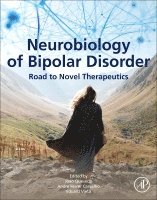
    Neurobiology of Bipolar Disorder

    Road to Novel Therapeutics

    AvJoao L. de Quevedo,Andre Ferrer Carvalho

    Häftad, Engelska, 2020

    1 958 kr

    Beställningsvara. Skickas inom 10-15 vardagar. Fri frakt över 249 kr.

    Beskrivning

    The Neurobiology of Bipolar Disorder: Road to Novel Therapeutics combines the basic neurobiology of bipolar disorder with discussions of the most recent advances in research, including the interacting pathways implicated in the pathophysiology of bipolar disorder, genetic approaches and the pharmacogenomics of bipolar disorder. The basic foundational understanding of the neurobiology underlying the disorder, along with a comprehensive summary of the most recent advances in research combine to aid advanced students and researchers in their understanding of bipolar disorder management using novel and fast-acting pharmaceutical and neuromodulatory approaches.

    • Aids readers in understanding bipolar disorder in the context of NIMH Research Domain Criteria (RDoC) recommendations
    • Covers a range of existing and potential pharmacologic and non-pharmacologic treatment options, from lifestyle adjustments to novel therapeutics
    • Synthesizes a discussion of the cellular and molecular mechanisms underlying symptoms with clinical aspects of bipolar disorder

    Produktinformation

    • Utgivningsdatum:2020-11-26
    • Mått:216 x 276 x undefined mm
    • Vikt:1 270 g
    • Format:Häftad
    • Språk:Engelska
    • Antal sidor:470
    • Förlag:Elsevier Science
    • ISBN:9780128191828

    Utforska kategorier

    • Biologisk psykologi och neuropsykologi inom Psykologi och pedagogik
    • Biovetenskap inom Naturvetenskap och teknik
    • Kognitiv psykologi inom Psykologi och pedagogik

    Mer om författaren

    João L. de Quevedo, MD, Ph.D., obtained his Medical Degree and completed residency training in Psychiatry, a fellowship in Psychopharmacology, and a Ph.D. in Biological Sciences (Biochemistry), all from the Federal University of Rio Grande do Sul, Porto Alegre, Brazil. He is the John S. Dunn Distinguished Professor at the Faillace Department of Psychiatry and Behavioral Sciences, McGovern Medical School, The University of Texas Health Science Center at Houston (UTHealth Houston). He also serves as Professor, Vice-Chair for Faculty Development and Outreach, Executive Director of the Center for Interventional Psychiatry, Chief of the Division of Interventional Psychiatry, Director of the Treatment-Resistant Depression Program, and Program Director of the Interventional Psychiatry Fellowship. Dr. Joao L. de Quevedo is an Associate Editor for Molecular Psychiatry, a Springer Nature journal.Research profiles:ResearcherID: E-5491-2013Scopus Author ID: 56971689500https://orcid.org/0000-0003-3114-6611André F Carvalho is associate professor at the Department of Psychiatry at the University of Toronto and a clinician scientist at the Centre for Addiction and Mental Health (CAMH). He was elected member of the board of councilors of the International Society of Bipolar Disorders (2016-2017) and the vice-chair of the section of private practice psychiatry of the World Psychiatric Association (2015-2017). He sits on the editorial board of several international peer-reviewed journals, including Psychotherapy and Psychosomatics, and has served as a peer reviewer for several leading journals and funding agencies. He is an expert in mood disorders, psychiatric epidemiology, and evidence-based mental health. Dr. Carvalho is a sought after speaker in several national and international meetings, and is the author of over 300 publications. Eduard Vieta is Professor of Psychiatry at the University of Barcelona and Chair of the Department of Psychiatry and Psychology at the Hospital Clinic, where he also leads the Bipolar Disorders Program in Barcelona, Catalonia, Spain. The Bipolar Unit is one of the worldwide leaders in clinical care, teaching and research on bipolar disorder.Dr. Vieta is the current Director of the Bipolar Research Program at the Spanish Research Network on Mental Diseases (CIBERSAM), funded by the Spanish Ministry of Economy and Competitiveness. Professor Vieta has received several awards, including the Aristotle award (2005), the Mogens Schou award (2007), the Strategic Research award of the Spanish Society of Biological Psychiatry (2009), the Official College of Physicians award to Professional Excellence (2011) and the Colvin Price on Outstanding Achievement in Mood Disorders Research by the Brain and Behaviour Research Foundation (2012).He has made significant contributions to many of the published bipolar disorder treatment guidelines and has authored more than 500 original articles, 350 book chapters and 30 complete books. His H index is 66 and has over 16000 citations, which makes him the most cited scientist worldwide in the field of bipolar disorder over the last 5 years. Furthermore, he is on the editorial board of a range of international scientific journals and has served as invited professor at Harvard University and as neuroscience scientific advisor to the European Presidency.

    Innehållsförteckning

    • 1. Tackling the heterogeneity of bipolar disorder in the era of the Research Domain Criteria (RDoC)2. The neurodevelopmental basis of Bipolar Disorder: Mechanisms and Implications3. The neuroprogressive nature of Bipolar Disorder: Mechanisms and Implications4. Immune mechanisms in Bipolar Disorder: evidence and implications5. Mitochondrial pathways in Bipolar Disorder: mechanisms and implications6. Neuro-oxidative and neuro-nitrosative mechanisms in bipolar disorder: evidence and implications7. Mechanisms underpinning neurocognitive dysfunction in bipolar disorder8. The evolution of animal models for bipolar disorder9. Alteration in Circadian rhythms in bipolar disorder: mechanisms and implications10. The genetics of bipolar disorder11. Pharmacogenomics of bipolar disorder12. Blood-brain barrier dysfunction as a pathophysiological mechanism of bipolar disorder13. Induced Pluripotent stem cells as tools for the investigation of the neurobiology of bipolar disorder14. Bipolar disorder as a gliopathy15. Molecular Imaging findings in Bipolar disorder16. Structural and functional neuroimaging findings in bipolar disorder17. Epigenetic mechanisms of bipolar disorder18. Bipolar disorder and cardiovascular dysfunction: mechanisms and implications19. At-risk mental states for bipolar disorder20. Stress, allostatic load and bipolar disorder: mechanisms and implications21. Bipolar disorder, obesity and metabolic disturbances: mechanisms and implications22. The gut-brain axis in bipolar disorder23. The hypothalamic-pituitary-adrenal axis in bipolar disorder24. Disturbed neuroplasticity pathways in bipolar disorder: mechanisms and implications25. Aberrations in intracellular signaling pathways in bipolar disorder26. The impact of early-life stress in the development and course of bipolar disorder: mechanisms and implications27. Bipolar disorder and accelerated aging: mechanisms and implications28. Suicidal behaviors in bipolar disorder29. Pediatric bipolar disorder30. Late-life bipolar disorder31. Biomarkers for Bipolar Disorder32. The mechanisms of action of lithium in bipolar disorder33. Is there a biosignature for lithium response in bipolar disorder? Evidence and implications34. Exercise as a treatment for bipolar disorder35. Non-invasive neuromodulatory approaches for bipolar disorder36. Novel therapeutic drug targets for bipolar disorder37. The treatment of bipolar disorder in the era of precision psychiatry: challenges and opportunities