• Fri frakt över 249 kr
  • •
  • Snabba leveranser
  • •
  • Billiga böcker
Kundservice

Du är på sajten för privatpersoner.

Företag, bibliotek eller offentlig verksamhet?

Du handlar på classic.bokus.com, där alla dina funktioner finns intakta.
Till classic.bokus.com
Bokus logotyp. Gå till startsidan.
  • Erbjudanden
  • Nyheter
  • Student
  • Topplistor
  • Barn & ungdom
  • Bokus Play
  • E-böcker
  • Pocketböcker
  • Spel & pussel

10% rabatt på allt med kod: NYSTART10 →

Sidfot

Mina sidor

    Hjälp

    • Kundservice
    • Vanliga frågor och svar
    • Frakt och leverans
    • Retur vid ångerrätt
    • Reklamera vara
    • Betalning
    • Köpvillkor
    • Allmänna villkor
    • Information om webbplatsens tillgänglighet

    Om Bokus

    • Om oss
    • Pressrum
    • För studenter
    • För företag
    • För bibliotek och offentlig verksamhet
    • För leverantörer
    • Hållbarhet

    Populärt

    • Aktuella erbjudanden
    • Presentkort
    • Studentlitteratur
    • Nya böcker
    • Topplistor
    • Signerade böcker
    • Engelska böcker

    Inspiration

    • Boktips
    • BookTok
    • Populära bokserier
    • Barnbokskaraktärer
    • Populära författare
    Logotyp för Bokus
    Följ oss på Facebook (extern länk)Följ oss på Instagram (extern länk)Följ oss på YouTube (extern länk)Följ oss på TikTok (extern länk)
    bokus @ CookiesAnpassa cookiesIntegritetspolicyKöpvillkor
    Till Citymail hemsida (extern länk)Till Budbee hemsida (extern länk)Till Postnord hemsida (extern länk)Till Schenker hemsida (extern länk)Till Early Bird hemsida (extern länk)Till Walleys hemsida (extern länk)
    1. Psykologi och pedagogik
    2. Psykologi
    3. Kognitiv psykologi

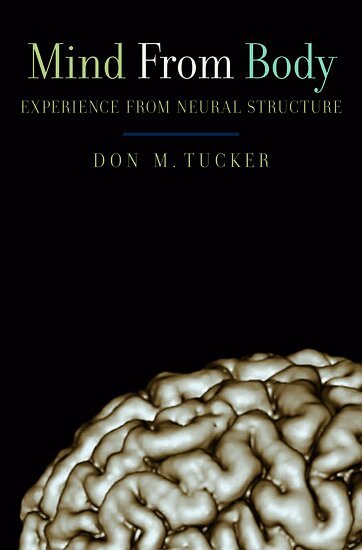
    Mind from Body

    Experience from neural structure

    AvDon M. Tucker

    Inbunden, Engelska, 2007

    1 790 kr

    Beställningsvara. Skickas inom 5-8 vardagar. Fri frakt över 249 kr.

    Fler format och utgåvor

    E-bok

    941 kr

    E-bok

    941 kr

    Beskrivning

    The neural structures of the brain exist to construct information. They do this by creating concepts that relate internal, personal need to external, environmental reality. Meaning is formed in the brain by neural network patterns that traverse these two structures of experience: the visceral nervous system (representing personal need) and the somatic nervous system (interfacing with external reality). How exactly does the brain get from constructing information to creating meaning, and what can this process tell us about the nature of experience? This book addresses both of these questions, making an important contribution to both neuroscience and philosophy.

    Produktinformation

    • Utgivningsdatum:2007-07-12
    • Mått:234 x 163 x 27 mm
    • Vikt:638 g
    • Format:Inbunden
    • Språk:Engelska
    • Antal sidor:336
    • Förlag:OUP USA
    • ISBN:9780195316988

    Utforska kategorier

    • Kognitiv psykologi inom Psykologi och pedagogik
    • Biovetenskap inom Naturvetenskap och teknik
    • Filosofiska discipliner inom Filosofi och religion

    Mer om författaren

    Don M. Tucker is the CEO and Chief Scientist at Electrical Geodesics, Inc. He is Professor of Psychology and Associate Director of the NeuroInformatics Institute at the University of Oregon. His research examines self-regulatory mechanisms of the human brain.

    Recensioner i media

    "To paraphrase many contemporary phenomenologists, the mind is what the brain-body does. Tucker explains the brain as the creative conductor of the orchestral parts of the body, including itself. Writing for beginning psychology students in adolescence and early maturity, he describes with masterly clarity how the brain constructs information by organizing its sensory, motor, and autonomic organs in accord with its own dimensions: top-down, left-right,inside-out, and hierarchically, from reflexes to scholarly reflections." --Walter J. Freeman, Professor of the Graduate School Department of Molecular and Cell Biology, Division of Neurobiology, University ofCalifornia at Berkeley"This book is an original, bold, and extremely creative contribution to the growing field of cognitive neuroscience that focuses on the emergence of mind and thought in organism-environment interactions. It should take its place among the works of people like Antonio Damasio, Gerald Edelman, and Joseph LeDoux--neuroscientists who understand the important philosophical implications of recent brain science." --Mark Johnson, Knight Professor of Liberal Arts andSciences, Department of Philosophy, University of Oregon"In a clear, easy and down-to-earth style that will appeal to students, Don Tucker, a pioneer of human brain recording, explains and enlightens how body and mind are inextricably connected. Tucker grounds the mind both in the brain's 'deep' mechanisms that regulate our bodily needs and urges and the 'surface' networks of the cerebral cortex that connect us to our world. Between these boundaries spanning the internal and the external, the subjective and theobjective, meaningful information takes form. Mind from Body is a reconciliation of body and mind that is sure to draw the attention of philosophers and neuroscientists alike." --J. A. Scott Kelso, authorof Dynamic Patterns: The Self-Organization of Brain and Behavior and co-author of The Complementary Nature"This book is a delightful romp through insights and evidence, held together by a powerful theory of brain functioning. Tucker portrays the brain as an organ of subjectivity that creates experience through its mechanisms of motivation and memory. The writing is accessible, agile, and often humorous, while remaining intellectually rigorous. Tucker's vision of the bodily basis of mind is larger and more courageous than anything we expected. For both the scientistand the interested lay person, this book feels like the intellectual adventure of the year." --Marc D. Lewis, Professor, Department of Human Development and Applied Psychology, University of Toronto"Tucker uses psychological narratives of subjective experience to light up the brain's workings and neuroscientific accounts of the brain to illuminate the mental depths hidden within everyday experience. What results is an original and compelling synthesis of psychology and neuroscience that reveals the bodily roots and neural ramifications of mental life. Engaging and informative, Mind from Body steps toward a new kind of self-knowledge--anexperiential neuropsychology of the human mind." --Evan Thompson, Professor of Philosophy, University of Toronto and author of Mind in Life: Biology, Phenomenology, and the Sciences of Mind"To paraphrase many contemporary phenomenologists, the mind is what the brain-body does. Tucker explains the brain as the creative conductor of the orchestral parts of the body, including itself. Writing for beginning psychology students in adolescence and early maturity, he describes with masterly clarity how the brain constructs information by organizing its sensory, motor, and autonomic organs in accord with its own dimensions: top-down, left-right,inside-out, and hierarchically, from reflexes to scholarly reflections." --Walter J. Freeman, Professor of the Graduate School Department of Molecular and Cell Biology, Division of Neurobiology, University ofCalifornia at Berkeley"This book is an original, bold, and extremely creative contribution to the growing field of cognitive neuroscience that focuses on the emergence of mind and thought in organism-environment interactions. It should take its place among the works of people like Antonio Damasio, Gerald Edelman, and Joseph LeDoux--neuroscientists who understand the important philosophical implications of recent brain science." --Mark Johnson, Knight Professor of Liberal Arts andSciences, Department of Philosophy, University of Oregon"In a clear, easy and down-to-earth style that will appeal to students, Don Tucker, a pioneer of human brain recording, explains and enlightens how body and mind are inextricably connected. Tucker grounds the mind both in the brain's 'deep' mechanisms that regulate our bodily needs and urges and the 'surface' networks of the cerebral cortex that connect us to our world. Between these boundaries spanning the internal and the external, the subjective and theobjective, meaningful information takes form. Mind from Body is a reconciliation of body and mind that is sure to draw the attention of philosophers and neuroscientists alike." --J. A. Scott Kelso, authorof Dynamic Patterns: The Self-Organization of Brain and Behavior and co-author of The Complementary Nature"This book is a delightful romp through insights and evidence, held together by a powerful theory of brain functioning. Tucker portrays the brain as an organ of subjectivity that creates experience through its mechanisms of motivation and memory. The writing is accessible, agile, and often humorous, while remaining intellectually rigorous. Tucker's vision of the bodily basis of mind is larger and more courageous than anything we expected. For both the scientistand the interested lay person, this book feels like the intellectual adventure of the year." --Marc D. Lewis, Professor, Department of Human Development and Applied Psychology, University of Toronto"Tucker uses psychological narratives of subjective experience to light up the brain's workings and neuroscientific accounts of the brain to illuminate the mental depths hidden within everyday experience. What results is an original and compelling synthesis of psychology and neuroscience that reveals the bodily roots and neural ramifications of mental life. Engaging and informative, Mind from Body steps toward a new kind of self-knowledge--anexperiential neuropsychology of the human mind." --Evan Thompson, Professor of Philosophy, University of Toronto and author of Mind in Life: Biology, Phenomenology, and the Sciences of Mind"The present volume makes a major contribution to the alternative approach to the traditional view of the brain as an information processing and interpreting computer. This volumes paints a panoramic picture of the nervous system...the author weaves a fascinating story, moving from the speculative to the philosophical but never abandons reliance on a substantial amount of scientific information gathered from various disciplines...There is almost no topic ofcentral importance to neuroscience that Tucker does not touch upon..."--The Journal of Nervous and Mental Disease

    Innehållsförteckning

    • 1. Mind in the information age ; 2. Structures of intelligence ; 3. Principles of representation and control ; 4. Motivated experience ; 5. Visceral and somatic frames of mind ; 6. Subjective intelligence ; 7. Objective experience ; 8. Information in the age of mind