• Fri frakt över 249 kr
  • •
  • Snabba leveranser
  • •
  • Billiga böcker
Kundservice

Du är på sajten för privatpersoner.

Företag, bibliotek eller offentlig verksamhet?

Du handlar på classic.bokus.com, där alla dina funktioner finns intakta.
Till classic.bokus.com
Bokus logotyp. Gå till startsidan.
  • Erbjudanden
  • Nyheter
  • Student
  • Topplistor
  • Barn & ungdom
  • Bokus Play
  • E-böcker
  • Pocketböcker
  • Spel & pussel

10% rabatt på allt med kod: NYSTART10 →

Sidfot

Mina sidor

    Hjälp

    • Kundservice
    • Vanliga frågor och svar
    • Frakt och leverans
    • Retur vid ångerrätt
    • Reklamera vara
    • Betalning
    • Köpvillkor
    • Allmänna villkor
    • Information om webbplatsens tillgänglighet

    Om Bokus

    • Om oss
    • Pressrum
    • För studenter
    • För företag
    • För bibliotek och offentlig verksamhet
    • För leverantörer
    • Hållbarhet

    Populärt

    • Aktuella erbjudanden
    • Presentkort
    • Studentlitteratur
    • Nya böcker
    • Topplistor
    • Signerade böcker
    • Engelska böcker

    Inspiration

    • Boktips
    • BookTok
    • Populära bokserier
    • Barnbokskaraktärer
    • Populära författare
    Logotyp för Bokus
    Följ oss på Facebook (extern länk)Följ oss på Instagram (extern länk)Följ oss på YouTube (extern länk)Följ oss på TikTok (extern länk)
    bokus @ CookiesAnpassa cookiesIntegritetspolicyKöpvillkor
    Till Citymail hemsida (extern länk)Till Budbee hemsida (extern länk)Till Postnord hemsida (extern länk)Till Schenker hemsida (extern länk)Till Early Bird hemsida (extern länk)Till Walleys hemsida (extern länk)
    1. Samhälle och politik
    2. Samhälle och kultur
    3. Kultur och medier
    4. Kulturvetenskap

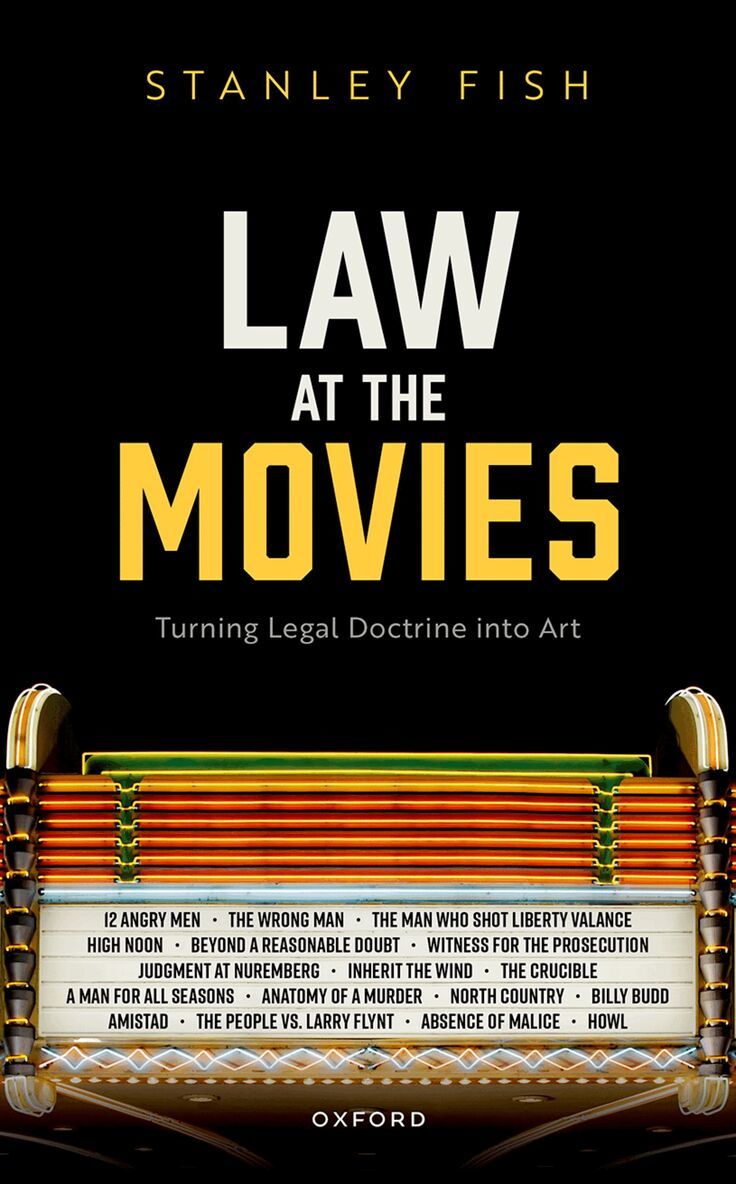
    Law at the Movies

    Turning Legal Doctrine into Art

    AvStanley Fish

    Inbunden, Engelska, 2024

    Del i serien Law and Literature

    450 kr

    Skickas . Fri frakt över 249 kr.

    Fler format och utgåvor

    E-bok

    345 kr

    E-bok

    345 kr

    Beskrivning

    This book asks "How can legal doctrine be turned into filmic art?" By "legal doctrine" Stanley Fish does not mean the sonorous abstractions that usually accompany the self-presentation of law--Justice, Equity, Equality, Liberty, Autonomy, and the like. Rather he has in mind the specific rules and procedures invoked and analyzed by courts on the way to declaring a decision--lawyer/client confidentiality, the distinction between interdicted violence and the violence performed by the legal system, the interplay of positive law and laws rooted in morality, the difference between civilian law and military law, the death penalty, the admissibility of different forms of evidence. In the movies he discusses, these and other points of doctrine and procedure do not serve as a background, occasionally visited, to the substantive issues that drive the plot and provide the characters with choices; they declare the plot, and character is formed and tested in relationship to their demands. Apparently technical matters are pressed until they occupy both foreground and background and become the movie's true subject. If large, abstract concepts emerge, they emerge at the back end of doctrine and are, in effect, produced by doctrine. These are not law-themed movies; they are movies about the unfolding of legal process.

    Produktinformation

    • Utgivningsdatum:2024-02-29
    • Mått:140 x 225 x 15 mm
    • Vikt:378 g
    • Format:Inbunden
    • Språk:Engelska
    • Serie:Law and Literature
    • Antal sidor:218
    • Förlag:OUP OXFORD
    • ISBN:9780198898726
    • Utmärkelser:Winner, 2025 Prix Eiffel for Interpretation of Cinema from the Eiffel Award

    Utforska kategorier

    • Kulturvetenskap inom Samhälle och politik
    • Lag och samhälle inom Juridik
    • Litteraturteori inom Skönlitteratur

    Mer om författaren

    Stanley Fish is Davidson-Kahn Distinguished University Professor and Professor of Law at Florida International University in Miami, and Dean Emeritus at the College of Liberal Arts and Sciences and Distinguished Professor of English, Criminal Justice and Political Science at the University of Illinois at Chicago. In addition to being one of the leading public intellectuals in the US, Fish is an extraordinarily prolific author whose works include over 200 scholarly publications and books, including The First: How to Think About Hate Speech, Campus Speech, Religious Speech, Fake News, Post-Truth, and Donald Trump (2019), Winning Arguments: What Works and Doesn't Work in Politics, the Bedroom, the Courtroom, and the Classroom (2016), and Versions of Academic Freedom: From Professionalism to Revolution (2014).

    Recensioner i media

    The book is a stimulating read.

    Innehållsförteckning

    • Introduction 1: Liberal Heroism and Reasonable Doubt: 12 Angry Men 2: The Law as Blind Machine: The Wrong Man 3: The Law Emerges from Violence: The Man Who Shot Liberty Valance and High Noon 4: The Law as the Object of Manipulation: Beyond a Reasonable Doubt and Witness for the Prosecution 5: Natural Law vs. Positive Law: Judgment at Nuremberg 6: The Law's Dogma and Religious Dogma: Inherit the Wind 7: Visible and Spectral Evidence: The Crucible 8: Man-made Law as a Refuge from Both the Devil's Assaults and God's Commands: A Man for All Seasons 9: Law as Craft: Anatomy of a Murder 10: Sex, Class, and Class Action: North Country 11: Speech, Radical Innocence, and the Law: Billy Budd 12: The Law and Storytelling: Amistad 13: Free Speech for Good or Ill: The People vs. Larry Flynt and Absence of Malice 14: Poetry Is Against the Law: Howl Conclusion: No More Delivered than Promised