• Fri frakt över 249 kr
  • •
  • Snabba leveranser
  • •
  • Billiga böcker
Kundservice

Du är på sajten för privatpersoner.

Företag, bibliotek eller offentlig verksamhet?

Du handlar på classic.bokus.com, där alla dina funktioner finns intakta.
Till classic.bokus.com
Bokus logotyp. Gå till startsidan.
  • Erbjudanden
  • Nyheter
  • Student
  • Topplistor
  • Barn & ungdom
  • Bokus Play
  • E-böcker
  • Pocketböcker
  • Spel & pussel

10% rabatt på allt med kod: NYSTART10 →

Sidfot

Mina sidor

    Hjälp

    • Kundservice
    • Vanliga frågor och svar
    • Frakt och leverans
    • Retur vid ångerrätt
    • Reklamera vara
    • Betalning
    • Köpvillkor
    • Allmänna villkor
    • Information om webbplatsens tillgänglighet

    Om Bokus

    • Om oss
    • Pressrum
    • För studenter
    • För företag
    • För bibliotek och offentlig verksamhet
    • För leverantörer
    • Hållbarhet

    Populärt

    • Aktuella erbjudanden
    • Presentkort
    • Studentlitteratur
    • Nya böcker
    • Topplistor
    • Signerade böcker
    • Engelska böcker

    Inspiration

    • Boktips
    • BookTok
    • Populära bokserier
    • Barnbokskaraktärer
    • Populära författare
    Logotyp för Bokus
    Följ oss på Facebook (extern länk)Följ oss på Instagram (extern länk)Följ oss på YouTube (extern länk)Följ oss på TikTok (extern länk)
    bokus @ CookiesAnpassa cookiesIntegritetspolicyKöpvillkor
    Till Citymail hemsida (extern länk)Till Budbee hemsida (extern länk)Till Postnord hemsida (extern länk)Till Schenker hemsida (extern länk)Till Early Bird hemsida (extern länk)Till Walleys hemsida (extern länk)
    1. Psykologi och pedagogik
    2. Pedagogik
    3. Pedagogisk psykologi

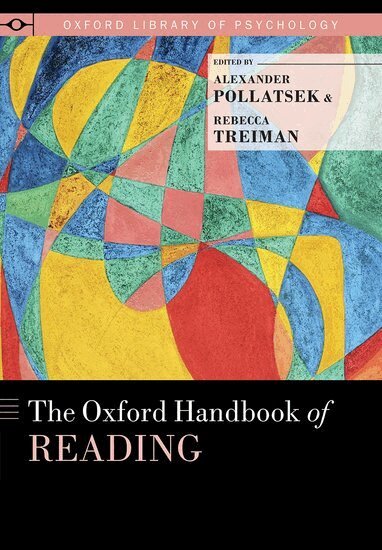
    The Oxford Handbook of Reading

    AvAlexander Pollatsek,Rebecca Treiman

    Inbunden, Engelska, 2015

    Del i serien Oxford Library of Psychology

    3 128 kr

    Beställningsvara. Skickas inom 5-8 vardagar. Fri frakt över 249 kr.

    Beskrivning

    Writing is one of humankind's greatest inventions, and modern societies could not function if their citizens could not read and write. How do skilled readers pick up meaning from markings on a page so quickly, and how do children learn to do so? The chapters in the Oxford Handbook of Reading synthesize research on these topics from fields ranging from vision science to cognitive psychology and education, focusing on how studies using a cognitive approach can shed light on how the reading process works. To set the stage, the opening chapters present information about writing systems and methods of studying reading, including those that examine speeded responses to individual words as well as those that use eye movement technology to determine how sentences and short passages of text are processed. The following section discusses the identification of single words by skilled readers, as well as insights from studies of adults with reading disabilities due to brain damage. Another section considers how skilled readers read a text silently, addressing such issues as the role of sound in silent reading and how readers' eyes move through texts. Detailed quantitative models of the reading process are proposed throughout. The final sections deal with how children learn to read and spell, and how they should be taught to do so. These chapters review research with learners of different languages and those who speak different dialects of a language; discuss children who develop typically as well as those who exhibit specific disabilities in reading; and address questions about how reading should be taught with populations ranging from preschoolers to adolescents, and how research findings have influenced education.The Oxford Handbook of Reading will benefit researchers and graduate students in the fields of cognitive psychology, developmental psychology, education, and related fields (e.g., speech and language pathology) who are interested in reading, reading instruction, or reading disorders.

    Produktinformation

    • Utgivningsdatum:2015-08-27
    • Mått:180 x 254 x 33 mm
    • Vikt:1 066 g
    • Format:Inbunden
    • Språk:Engelska
    • Serie:Oxford Library of Psychology
    • Antal sidor:522
    • Förlag:OUP USA
    • ISBN:9780199324576

    Utforska kategorier

    • Pedagogisk psykologi inom Psykologi och pedagogik
    • Barnpsykologi och utvecklingspsykologi inom Psykologi och pedagogik
    • Kognitiv psykologi inom Psykologi och pedagogik

    Mer om författaren

    Alexander Pollatsek, Ph.D., is Professor Emeritus in the Department of Psychology at the University of Massachusetts, Amherst.Rebecca Treiman, Ph.D., is Burke and Elizabeth High Baker Professor of Child Developmental Psychology at Washington University in St. Louis.

    Innehållsförteckning

    • Part I. Introduction ; 1. Introduction ; Alexander Pollatsek and Rebecca Treiman ; 2. Writing Systems: Their Properties and Implications for Reading ; Brett Kessler and Rebecca Treiman ; 3. Visual Word Recognition ; Melvin J. Yap and David A. Balota ; 4. The Work of the Eyes during Reading ; Elizabeth R. Schotter and Keith Rayner ; Part II. Words ; 5. Visual Word Recognition in the Bayesian Reader Framework ; Sachiko Kinoshita ; 6. Neighborhoods and Word Reading ; Manuel Perea ; 7. Cross-Linguistic Perspectives on Letter-Order Processing: Empirical Findings and Theoretical Considerations ; Ram Frost ; 8. The Nature of Lexical Representation in Visual Word Recognition ; Marcus Taft ; 9. Are Polymorphemic Words Processed Differently from Other Words during Reading? ; Jukka Hyona ; 10. Literacy and Literacy Development in Bilinguals ; Debra Jared ; 11. Individual Differences among Skilled Readers: The Role of Lexical Quality ; Sally Andrews ; 12. What Acquired Dyslexia Reveals about Reading in the Mind and Brain ; Anna Woollams ; Part III. Sentences and Texts ; 13. The Role of Sound in Silent Reading ; Alexander Pollatsek ; 14. Reading Sentences: Syntactic Parsing and Semantic Interpretation ; Adrian Staub ; 15. Models of Discourse Comprehension ; Edward O'Brien and Anne Cook ; 16. The Role of Words in Chinese Reading ; Xingshan Li, Simon Liversedge, Chuanli Zang, and Alexander Pollatsek ; 17. How Is Information Integrated across Fixations in Reading? ; Michael G. Cutter, Denis Drieghe, and Simon P. Liversedge ; 18. Direct Lexical and Non-Lexical Control of Fixation Duration in Reading ; Eyal Reingold, Heather Sheridan, and Erik Reichle ; 19. E-Z Reader: A Sketch of the Reading Architecture ; Erik Reichle and Heather Sheridan ; Part IV. Development ; 20. How Children Learn to Read Words ; Linnea C. Ehri ; 21. Children's Spelling Development: Theories and Evidence ; S. Helene Deacon and Erin Sparks ; 22. Learning to Read and Spell Words in Different Writing Systems ; Marketa Caravolas ; 23. Children's Reading Comprehension and Comprehension Difficulties ; Jane Oakhill, Molly S. Berenhaus, and Kate Cain ; 24. Development of Dyslexia ; Bruce Pennington and Robin Peterson ; 25. How Learning to Read Influences Language and Cognition ; Regine Kolinsky ; Part V. Instruction ; 26. Young Children's Home Literacy Experiences ; Monique Senechal ; 27. Primary Grade Reading Instructions in the United States ; Carol Connor and Stephanie Al Otaiba ; 28. African American English and Its Link to Reading Achievement ; Holly K. Craig ; 29. Teachers' Knowledge about Reading Development and Instruction ; Anne Cunningham and Colleen Ryan O'Donnell ; 30. Adolescent Literacy: Development and Instruction ; Susan R. Goldman and Catherine E. Snow ; Index