• Fri frakt över 249 kr
  • •
  • Snabba leveranser
  • •
  • Billiga böcker
Kundservice

Du är på sajten för privatpersoner.

Företag, bibliotek eller offentlig verksamhet?

Du handlar på classic.bokus.com, där alla dina funktioner finns intakta.
Till classic.bokus.com
Bokus logotyp. Gå till startsidan.
  • Erbjudanden
  • Nyheter
  • Student
  • Topplistor
  • Barn & ungdom
  • Bokus Play
  • E-böcker
  • Pocketböcker
  • Spel & pussel

10% rabatt på allt med kod: NYSTART10 →

Sidfot

Mina sidor

    Hjälp

    • Kundservice
    • Vanliga frågor och svar
    • Frakt och leverans
    • Retur vid ångerrätt
    • Reklamera vara
    • Betalning
    • Köpvillkor
    • Allmänna villkor
    • Information om webbplatsens tillgänglighet

    Om Bokus

    • Om oss
    • Pressrum
    • För studenter
    • För företag
    • För bibliotek och offentlig verksamhet
    • För leverantörer
    • Hållbarhet

    Populärt

    • Aktuella erbjudanden
    • Presentkort
    • Studentlitteratur
    • Nya böcker
    • Topplistor
    • Signerade böcker
    • Engelska böcker

    Inspiration

    • Boktips
    • BookTok
    • Populära bokserier
    • Barnbokskaraktärer
    • Populära författare
    Logotyp för Bokus
    Följ oss på Facebook (extern länk)Följ oss på Instagram (extern länk)Följ oss på YouTube (extern länk)Följ oss på TikTok (extern länk)
    bokus @ CookiesAnpassa cookiesIntegritetspolicyKöpvillkor
    Till Citymail hemsida (extern länk)Till Budbee hemsida (extern länk)Till Postnord hemsida (extern länk)Till Schenker hemsida (extern länk)Till Early Bird hemsida (extern länk)Till Walleys hemsida (extern länk)
    1. Naturvetenskap och teknik
    2. Geovetenskap
    3. Miljövetenskap och miljöpolitik

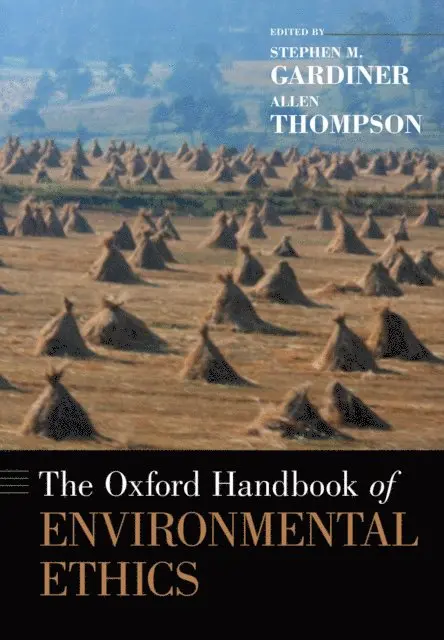
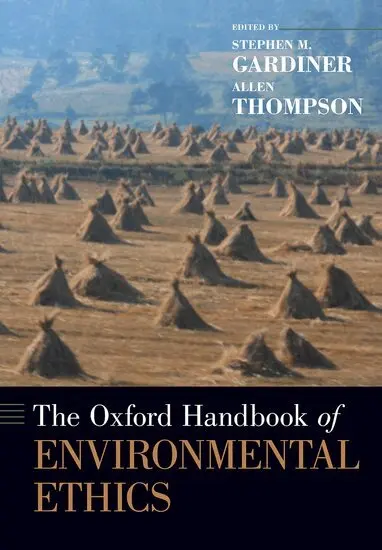
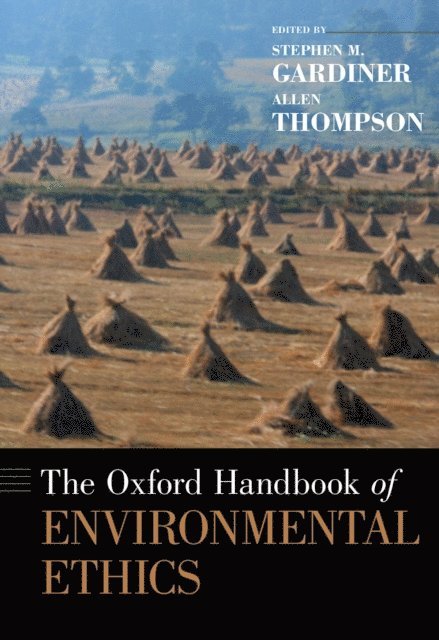
    The Oxford Handbook of Environmental Ethics

    AvStephen M. Gardiner,Allen Thompson

    Inbunden, Engelska, 2016

    Del i serien Oxford Handbooks

    2 689 kr

    Beställningsvara. Skickas inom 7-10 vardagar. Fri frakt över 249 kr.

    Beskrivning

    We live during a crucial period of human history on Earth. Anthropogenic environmental changes are occurring on global scales at unprecedented rates. Despite a long history of environmental intervention, never before has the collective impact of human behaviors threatened all of the major bio-systems on the planet. Decisions we make today will have significant consequences for the basic conditions of all life into the indefinite future. What should we do? How should we behave? In what ways ought we organize and respond? The future of the world as we know it depends on our actions today.A cutting-edge introduction to environmental ethics in a time of dramatic global environmental change, this collection contains forty-five newly commissioned articles, with contributions from well-established experts and emerging voices in the field. Chapters are arranged in topical sections: social contexts (history, science, economics, law, and the Anthropocene), who or what is of value (humanity, conscious animals, living individuals, and wild nature), the nature of value (truth and goodness, practical reasons, hermeneutics, phenomenology, and aesthetics), how things ought to matter (consequences, duty and obligation, character traits, caring for others, and the sacred), essential concepts (responsibility, justice, gender, rights, ecological space, risk and precaution, citizenship, future generations, and sustainability), key issues (pollution, population, energy, food, water, mass extinction, technology, and ecosystem management), climate change (mitigation, adaptation, diplomacy, and geoengineering), and social change (conflict, pragmatism, sacrifice, and action). Each chapter explains the role played by central theories, ideas, issues, and concepts in contemporary environmental ethics, and their relevance for the challenges of the future.

    Produktinformation

    • Utgivningsdatum:2016-12-08
    • Mått:251 x 183 x 48 mm
    • Vikt:1 109 g
    • Format:Inbunden
    • Språk:Engelska
    • Serie:Oxford Handbooks
    • Antal sidor:612
    • Förlag:OUP USA
    • ISBN:9780199941339

    Utforska kategorier

    • Miljövetenskap och miljöpolitik inom Naturvetenskap och teknik
    • Filosofiska discipliner inom Filosofi och religion

    Mer om författaren

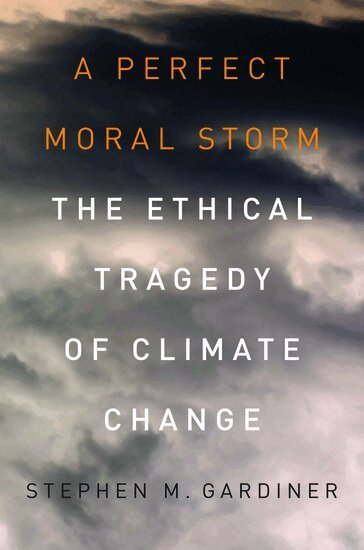
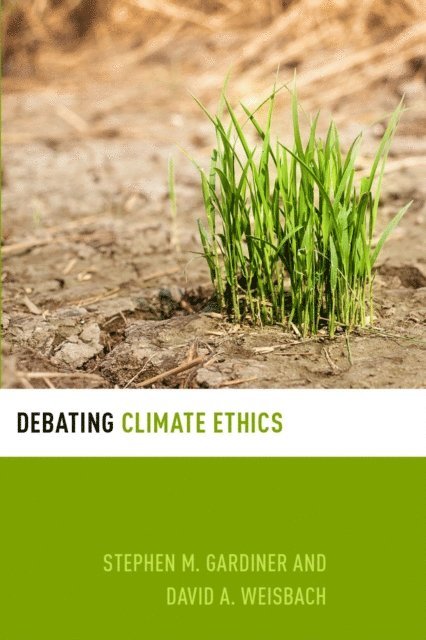
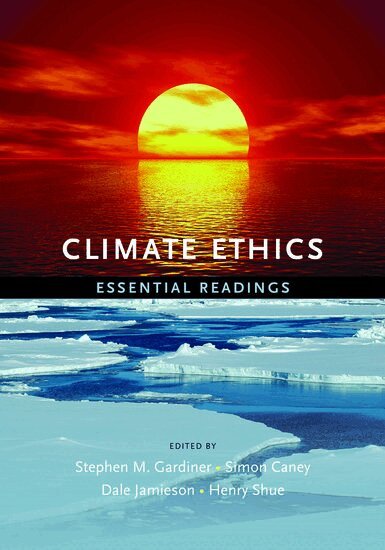
    Stephen M. Gardiner is Professor of Philosophy and Ben Rabinowitz Endowed Professor of the Human Dimensions of the Environment at the University of Washington, Seattle. He is the author of A Perfect Moral Storm (Oxford, 2011), co-author of Debating Climate Ethics (Oxford, 2016), editor of Virtue Ethics, Old and New (Cornell, 2005), and co-editor of Climate Ethics: Essential Readings (Oxford, 2010). His research focuses on global environmental problems, future generations and virtue ethics.Allen Thompson is Associate Professor of Philosophy at Oregon State University in Corvallis, Oregon, and a Fellow with the Rachel Carson Center for Environment and Society at Ludwig Maximilian University in Munich, Germany. He is co-editor of Ethical Adaptation to Climate Change: Human Virtues of the Future (MIT, 2012) and serves as an officer for the International Society for Environmental Ethics (Treasurer 2013-2015, Vice-President 2016-2018, and President 2019-2021).

    Recensioner i media

    Ultimately this handbook is a comprehensive exposition of the breadth and depth of the field of environmental ethics. It adeptly ranges over theoretical and practical aspects as well as various subtle challenges, both conceptual/philosophical and those that impede the ability to effect change. It can serve equally well as a reference or introductory groundwork. As a result, it would be a welcome addition to any environmental ethics library. Anyone from a curious beginning student to a teacher or other professional, in practical fields ranging from academia, or politics to environmental science, will be well served with this volume.

    Innehållsförteckning

    • PART I. CONTEXT: BROAD SOCIAL CONTEXTS IN WHICH WE FIND OURSELVES; PART II. SUBJECTS OF VALUE: WHAT OUGHT TO COUNT MORALLY AND HOW; PART III. NATURE OF VALUE: THE MEANING OF VALUE AND NORMATIVE CLAIMS; PART IV. HOW THINGS MATTER: THEORETICAL PERSPECTIVES ON THE WAY WE OUGHT TO ACT; PART V. KEY CONCEPTS: TOOLS FOR FRAMING AND ADDRESSING PROBLEMS; PART VI. CENTRAL ISSUES: SPECIFIC AREAS OF ENVIRONMENTAL CONCERN; PART VII. CLIMATE CHANGE: THE DEFINING ENVIRONMENTAL PROBLEM OF OUR TIME; PART VIII. SOCIAL CHANGE: DOING WHAT WE OUGHT TO DO