• Fri frakt över 249 kr
  • •
  • Snabba leveranser
  • •
  • Billiga böcker
Kundservice

Du är på sajten för privatpersoner.

Företag, bibliotek eller offentlig verksamhet?

Du handlar på classic.bokus.com, där alla dina funktioner finns intakta.
Till classic.bokus.com
Bokus logotyp. Gå till startsidan.
  • Erbjudanden
  • Nyheter
  • Student
  • Topplistor
  • Barn & ungdom
  • Bokus Play
  • E-böcker
  • Pocketböcker
  • Spel & pussel

10% rabatt på allt med kod NYSTART10 →

Sidfot

Mina sidor

    Hjälp

    • Kundservice
    • Vanliga frågor och svar
    • Frakt och leverans
    • Retur vid ångerrätt
    • Reklamera vara
    • Betalning
    • Köpvillkor
    • Allmänna villkor
    • Information om webbplatsens tillgänglighet

    Om Bokus

    • Om oss
    • Pressrum
    • För studenter
    • För företag
    • För bibliotek och offentlig verksamhet
    • För leverantörer
    • Hållbarhet

    Populärt

    • Aktuella erbjudanden
    • Presentkort
    • Studentlitteratur
    • Nya böcker
    • Topplistor
    • Signerade böcker
    • Engelska böcker

    Inspiration

    • Boktips
    • BookTok
    • Populära bokserier
    • Barnbokskaraktärer
    • Populära författare
    Logotyp för Bokus
    Följ oss på Facebook (extern länk)Följ oss på Instagram (extern länk)Följ oss på YouTube (extern länk)Följ oss på TikTok (extern länk)
    bokus @ CookiesAnpassa cookiesIntegritetspolicyKöpvillkor
    Till Citymail hemsida (extern länk)Till Budbee hemsida (extern länk)Till Postnord hemsida (extern länk)Till Schenker hemsida (extern länk)Till Early Bird hemsida (extern länk)Till Walleys hemsida (extern länk)
    1. Naturvetenskap och teknik
    2. Matematik och naturvetenskap
    3. Matematik
    4. Tillämpad matematik

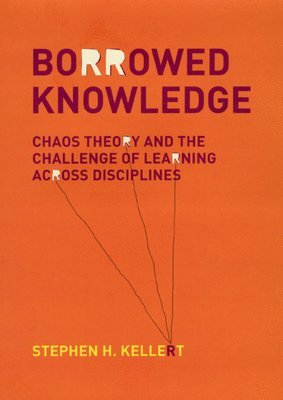
    Borrowed Knowledge

    Chaos Theory and the Challenge of Learning across Disciplines

    AvStephen H. Kellert

    Inbunden, Engelska, 2008

    Del i serien Emersion: Emergent Village resources for communities of faith

    406 kr

    Beställningsvara. Skickas inom 5-8 vardagar. Fri frakt över 249 kr.

    Fler format och utgåvor

    E-bok

    899 kr

    Beskrivning

    What happens to scientific knowledge when researchers outside the natural sciences bring elements of the latest trend across disciplinary boundaries for their own purposes? Researchers in fields from anthropology to family therapy and traffic planning employ the concepts, methods, and results of chaos theory to harness the disciplinary prestige of the natural sciences, to motivate methodological change or conceptual reorganization within their home discipline, and to justify public policies and aesthetic judgments.Using the recent explosion in the use (and abuse) of chaos theory, "Borrowed Knowledge and the Challenge of Learning across Disciplines" examines the relationship between science and other disciplines as well as the place of scientific knowledge within our broader culture. Stephen H. Kellert's detailed investigation of the myriad uses of chaos theory reveals serious problems that can arise in the interchange between science and other knowledge-making pursuits, as well as opportunities for constructive interchange.By engaging with recent debates about interdisciplinary research, Kellert contributes a theoretical vocabulary and a set of critical frameworks for the rigorous examination of borrowing.

    Produktinformation

    • Utgivningsdatum:2008-11-01
    • Mått:17 x 24 x 2 mm
    • Vikt:567 g
    • Format:Inbunden
    • Språk:Engelska
    • Serie:Emersion: Emergent Village resources for communities of faith
    • Antal sidor:288
    • Förlag:The University of Chicago Press
    • ISBN:9780226429786

    Utforska kategorier

    • Tillämpad matematik inom Naturvetenskap och teknik
    • Naturvetenskap:allmänt inom Naturvetenskap och teknik

    Mer om författaren

    Stephen H. Kellert is professor of philosophy at Hamline University in St. Paul, Minnesota.

    Recensioner i media

    "Over the next several decades, we will continue to see the issues raised in Borrowed Knowledge and the Challenge of Learning across Disciplines as important to understanding both the natural and human sciences." - Douglas Kiel, University of Texas at Dallas"