• Fri frakt över 249 kr
  • •
  • Snabba leveranser
  • •
  • Billiga böcker
Kundservice

Du är på sajten för privatpersoner.

Företag, bibliotek eller offentlig verksamhet?

Du handlar på classic.bokus.com, där alla dina funktioner finns intakta.
Till classic.bokus.com
Bokus logotyp. Gå till startsidan.
  • Erbjudanden
  • Nyheter
  • Student
  • Topplistor
  • Barn & ungdom
  • Bokus Play
  • E-böcker
  • Pocketböcker
  • Spel & pussel

10% rabatt på allt med kod: NYSTART10 →

Sidfot

Mina sidor

    Hjälp

    • Kundservice
    • Vanliga frågor och svar
    • Frakt och leverans
    • Retur vid ångerrätt
    • Reklamera vara
    • Betalning
    • Köpvillkor
    • Allmänna villkor
    • Information om webbplatsens tillgänglighet

    Om Bokus

    • Om oss
    • Pressrum
    • För studenter
    • För företag
    • För bibliotek och offentlig verksamhet
    • För leverantörer
    • Hållbarhet

    Populärt

    • Aktuella erbjudanden
    • Presentkort
    • Studentlitteratur
    • Nya böcker
    • Topplistor
    • Signerade böcker
    • Engelska böcker

    Inspiration

    • Boktips
    • BookTok
    • Populära bokserier
    • Barnbokskaraktärer
    • Populära författare
    Logotyp för Bokus
    Följ oss på Facebook (extern länk)Följ oss på Instagram (extern länk)Följ oss på YouTube (extern länk)Följ oss på TikTok (extern länk)
    bokus @ CookiesAnpassa cookiesIntegritetspolicyKöpvillkor
    Till Citymail hemsida (extern länk)Till Budbee hemsida (extern länk)Till Postnord hemsida (extern länk)Till Schenker hemsida (extern länk)Till Early Bird hemsida (extern länk)Till Walleys hemsida (extern länk)
    1. Samhälle och politik
    2. Samhälle och kultur
    3. Sociala grupper och identitet
    4. Etnicitet
    • Nyhet

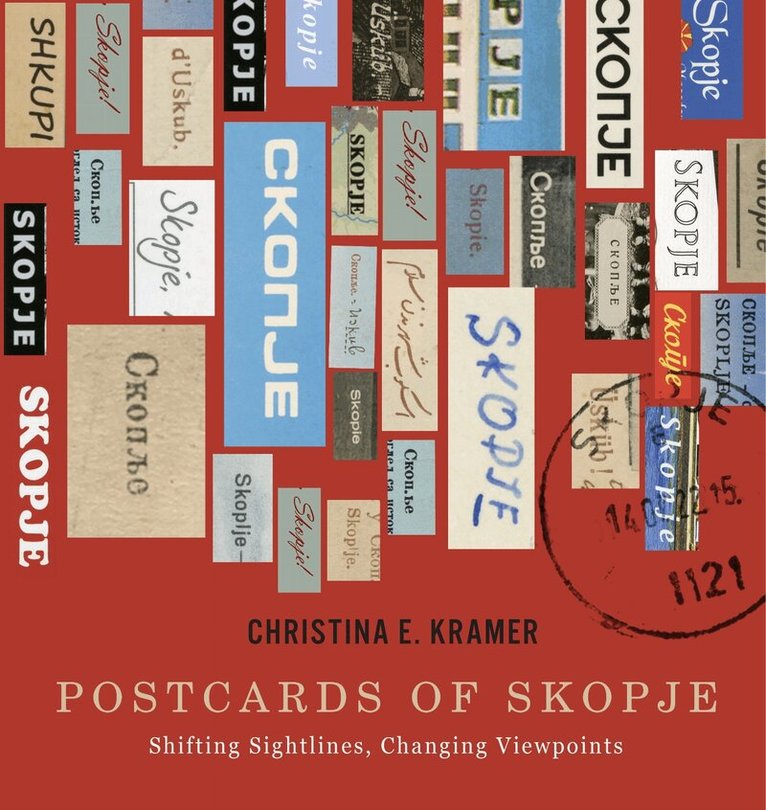
    Postcards of Skopje

    Shifting Sightlines, Changing Viewpoints

    AvChristina E. Kramer

    Häftad, Engelska, 2026

    507 kr

    Beställningsvara. Skickas inom 10-15 vardagar. Fri frakt över 249 kr.

    Beskrivning

    Over the course of the twentieth century the Macedonian city of Skopje was contested and continuously changing. Picture postcards sent and received by Skopje’s people and its visitors document turbulent periods of partition, wars, natural disasters, and independence.In Postcards of Skopje Christina Kramer argues that postcards provide an extraordinary archive from which to read and make visible political history. Fragmentary, ephemeral, and transitory in nature, postcards frame the shifting history of the capital city of what is now called the Republic of North Macedonia. Individually, the postcards serve as snapshots of Skopje and the people who lived there. Taken chronologically, they capture the incremental transformations in the landscape, the languages that describe and define it, and the changing flow of people through the city. Kramer analyzes more than eight hundred postcards both from her personal collection, amassed over the course of almost fifty years of visiting Skopje, and from archives in Macedonia. She demonstrates that postcards do not merely depict a single moment in time but rather represent multi-temporal montages.Postcards of Skopje reveals the many ways in which the creators, writers, and recipients of postcards experienced, understood, and presented the Macedonian city.

    Produktinformation

    • Utgivningsdatum:2026-09-15
    • Mått:216 x 229 x 23 mm
    • Vikt:658 g
    • Format:Häftad
    • Språk:Engelska
    • Antal sidor:288
    • Förlag:McGill-Queen's University Press
    • ISBN:9780228027973

    Utforska kategorier

    • Etnicitet inom Samhälle och politik
    • Europas historia inom Historia och arkeologi
    • Socialhistoria och kulturhistoria inom Historia och arkeologi

    Mer om författaren

    Christina E. Kramer is professor emerita of Slavic languages and linguistics at the University of Toronto and a literary translator of Macedonian fiction.

    Recensioner i media

    “Carefully researched and thoughtfully written, Postcards of Skopje provides a layered story that brings together visual and historical insight in a way that feels both original and grounded. It is a compelling account of how even the most ordinary objects can hold complex histories.” - Rozita Dimova, Center for Advanced Interdisciplinary Research, Ss. Cyril and Methodius University