• Fri frakt över 249 kr
  • •
  • Snabba leveranser
  • •
  • Billiga böcker
Kundservice

Du är på sajten för privatpersoner.

Företag, bibliotek eller offentlig verksamhet?

Du handlar på classic.bokus.com, där alla dina funktioner finns intakta.
Till classic.bokus.com
Bokus logotyp. Gå till startsidan.
  • Erbjudanden
  • Student
  • Topplistor
  • Barn & ungdom
  • Bokus Play
  • E-böcker
  • Ljudböcker
  • Pocketböcker
  • Spel & pussel

10% rabatt på allt med kod NYSTART10 →

Sidfot

Mina sidor

    Hjälp

    • Kundservice
    • Vanliga frågor och svar
    • Frakt och leverans
    • Retur vid ångerrätt
    • Reklamera vara
    • Betalning
    • Köpvillkor
    • Allmänna villkor
    • Information om webbplatsens tillgänglighet

    Om Bokus

    • Om oss
    • Pressrum
    • För studenter
    • För företag
    • För bibliotek och offentlig verksamhet
    • För leverantörer
    • Hållbarhet

    Populärt

    • Aktuella erbjudanden
    • Presentkort
    • Studentlitteratur
    • Nya böcker
    • Topplistor
    • Signerade böcker
    • Engelska böcker

    Inspiration

    • Boktips
    • BookTok
    • Populära bokserier
    • Barnbokskaraktärer
    • Populära författare
    Logotyp för Bokus
    Följ oss på Facebook (extern länk)Följ oss på Instagram (extern länk)Följ oss på YouTube (extern länk)Följ oss på TikTok (extern länk)
    bokus @ CookiesAnpassa cookiesIntegritetspolicyKöpvillkor
    Till Citymail hemsida (extern länk)Till Budbee hemsida (extern länk)Till Postnord hemsida (extern länk)Till Schenker hemsida (extern länk)Till Early Bird hemsida (extern länk)Till Walleys hemsida (extern länk)
    1. Ekonomi och Ledarskap
    2. Nationalekonomi
    3. Ekonomisk politik

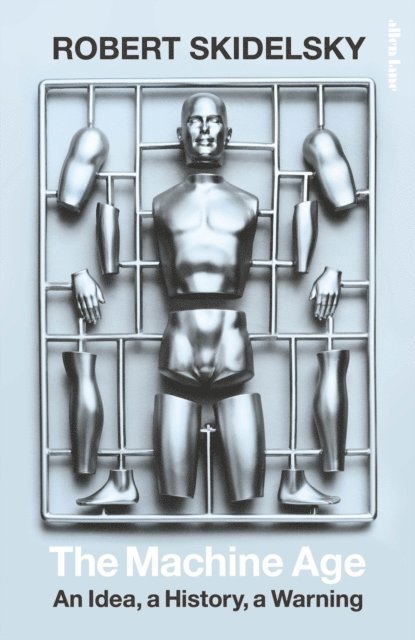
    Machine Age

    An Idea, a History, a Warning

    AvRobert Skidelsky

    E-bok
    Engelska, 2023

    104 kr

    Läs direkt i Bokus Reader – eller ladda ned till din enhet

    Fler format och utgåvor

    Häftad

    129 kr

    Beskrivning

    A sweeping history of and meditation on humanity's relationship with machines, showing how we got here and what happens nextFaith in technological fixes for our problems is waning. Automation, which promised relief from toil, has reactivated the long-standing fear of job redundancy. Information technology, meant to liberate us from traditional authority, is placing unprecedented powers of surveillance and control in the hands of a purely secular Big Brother. And for the first time, artificial intelligence threatens anthropogenic disaster – disaster caused by our own activities. Scientists join imaginative writers in warning us of the fate of Icarus, whose wings melted because he flew too close to the sun.This book tells the story of our fractured relationship with machines from humanity’s first tools down to the present and into the future. It raises the crucial question of why some parts of the world developed a ‘machine civilisation’ and not others, and traces the interactions between capitalism and technology, and between science and religion, in the making of the modern world.Taking in the peaks of philosophy and triumphs of science, the foundation of economics and speculations of fiction, Robert Skidelsky embarks on a bold intellectual journey through the evolution of our understanding of technology and what this means for our lives and politics. ‘Unless we understand technology as a system of ideas rather than as a necessity,’ he writes, ‘we will be powerless to choose which technology is best suited to our needs and purposes.’

    Produktinformation

    • Utgivningsdatum:2023-11-02
    • Språk:Engelska
    • Filformat:EPUB
    • Kopieringsskydd:LCP
    • ISBN:9780241244623
    • Förlag:Penguin Books Ltd

    Utforska kategorier

    • Ekonomisk politik inom Ekonomi och Ledarskap
    • Naturvetenskap:allmänt inom Naturvetenskap och teknik
    • Naturvetenskapens historia inom Naturvetenskap och teknik

    Mer om författaren

    Robert Skidelsky is Emeritus Professor of Political Economy at the University of Warwick. His three volume biography of John Maynard Keynes (1983, 1992, 2000) received numerous prizes, including the Lionel Gelber Prize for International Relations and the Council on Foreign Relations Prize for International Relations. He was made a life peer in 1991, and a Fellow of the British Academy in 1994.