• Fri frakt över 249 kr
  • •
  • Snabba leveranser
  • •
  • Billiga böcker
Kundservice

Du är på sajten för privatpersoner.

Företag, bibliotek eller offentlig verksamhet?

Du handlar på classic.bokus.com, där alla dina funktioner finns intakta.
Till classic.bokus.com
Bokus logotyp. Gå till startsidan.
  • Erbjudanden
  • Student
  • Topplistor
  • Barn & ungdom
  • Bokus Play
  • E-böcker
  • Ljudböcker
  • Pocketböcker
  • Spel och pussel

Pocketfynda! Hundratals böcker för 49 kr/st →

Sidfot

Mina sidor

    Hjälp

    • Kundservice
    • Vanliga frågor och svar
    • Frakt och leverans
    • Retur vid ångerrätt
    • Reklamera vara
    • Betalning
    • Köpvillkor
    • Allmänna villkor
    • Information om webbplatsens tillgänglighet

    Om Bokus

    • Om oss
    • Pressrum
    • För studenter
    • För företag
    • För bibliotek och offentlig verksamhet
    • För leverantörer
    • Hållbarhet

    Populärt

    • Aktuella erbjudanden
    • Presentkort
    • Studentlitteratur
    • Nya böcker
    • Topplistor
    • Signerade böcker
    • Engelska böcker

    Inspiration

    • Boktips
    • BookTok
    • Barnbokskaraktärer
    • Populära författare
    Logotyp för Bokus
    Följ oss på Facebook (extern länk)Följ oss på Instagram (extern länk)Följ oss på YouTube (extern länk)Följ oss på TikTok (extern länk)
    bokus @ CookiesAnpassa cookiesIntegritetspolicyKöpvillkor
    Till Citymail hemsida (extern länk)Till Budbee hemsida (extern länk)Till Postnord hemsida (extern länk)Till Schenker hemsida (extern länk)Till Early Bird hemsida (extern länk)Till Walleys hemsida (extern länk)
    1. Ekonomi och Ledarskap
    2. Företagsekonomi
    3. Entreprenörskap

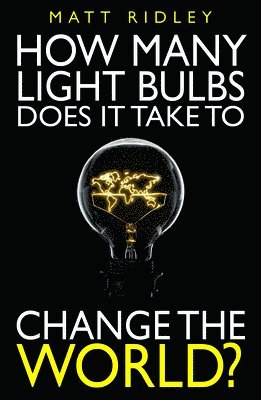
    How Many Light Bulbs Does It Take to Change the World?

    AvMatt Ridley,Stephen Davies

    Häftad, Engelska, 2019

    Del i serien IEA

    190 kr

    Beställningsvara. Skickas inom 5-8 vardagar. Fri frakt över 249 kr.

    Beskrivning

    Almost every schoolchild learns that Thomas Edison invented the light bulb. But did he? And if he hadn’t invented it, would we be still living in the dark? Acclaimed author Matt Ridley (The Rational Optimist, The Evolution of Everything) explains that at least 20 other people can lay claim to this breakthrough moment. Ridley argues that the light bulb emerged from the combined technologies and accumulated knowledge of the day – it was bound to emerge sooner or later. Based on his 2018 Hayek Memorial Lecture, Ridley contends that innovation – from invention through to development and commercialisation – is the most important unsolved problem in all of human society. We rely on it – but we do not fully understand it, we cannot predict it and we cannot direct it. In How Many Light Bulbs Does It Take to Change the World? Ridley examines the nature of innovation – and how people often fear its consequences. He dispels the myth that automation destroys jobs – and demonstrates how innovation leads to economic growth. And he argues that intellectual property rights, originally intended to encourage innovation, are now being used by big business to defend their monopolies. Ridley concludes that innovation is a mysterious and under-appreciated process that we discuss too rarely, hamper too much and value too little.

    Produktinformation

    • Utgivningsdatum:2019-11-21
    • Mått:129 x 198 x 18 mm
    • Vikt:102 g
    • Format:Häftad
    • Språk:Engelska
    • Serie:IEA
    • Antal sidor:86
    • Förlag:Institute of Economic Affairs
    • ISBN:9780255367851

    Utforska kategorier

    • Entreprenörskap inom Ekonomi och Ledarskap
    • Affärsutveckling inom Ekonomi och Ledarskap
    • Teknik: allmänt inom Naturvetenskap och teknik

    Mer om författaren

    Matt Ridley’s books have sold over a million copies, been translated into 31 languages and won several awards. They include The Red Queen, Genome, The Rational Optimist and The Evolution of Everything. Matt joined the House of Lords in February 2013 and has served on the science and technology select committee and the artificial intelligence committee. He was founding chairman of the International Centre for Life in Newcastle. He also created the Mind and Matter column in the Wall Street Journal in 2010, and was a columnist for The Times from 2013 to 2018. Matt won the Free Enterprise Award from the Institute of Economic Affairs in 2014. He is a fellow of the Royal Society of Literature and of the Academy of Medical Sciences, and a foreign honorary member of the American Academy of Arts and Sciences. Steve Davies is Head of Education at the Institute of Economic Affairs in London. From 1979 until 2009 he was Senior Lecturer in the Department of History and Economic History at Manchester Metropolitan University. He has also been a Visiting Scholar at the Social Philosophy and Policy Center at Bowling Green State University in Bowling Green, Ohio, and a programme officer at the Institute for Humane Studies in Arlington, Virginia. A historian, he graduated from St Andrews University in Scotland in 1976 and gained his PhD from the same institution in 1984. He was co-editor with Nigel Ashford of The Dictionary of Conservative and Libertarian Thought (Routledge 1991) and wrote several entries for The Encyclopedia of Libertarianism edited by Ronald Hamowy (Sage 2008), including the general introduction. He is also the author of Empiricism and History (Palgrave Macmillan 2003), The Wealth Explosion: The Nature and Origins of Modernity (Edward Everett Root 2019) and of several articles and essays on topics including the private provision of public goods and the history of crime and criminal justice.