• Fri frakt över 249 kr
  • •
  • Snabba leveranser
  • •
  • Billiga böcker
Kundservice

Du är på sajten för privatpersoner.

Företag, bibliotek eller offentlig verksamhet?

Du handlar på classic.bokus.com, där alla dina funktioner finns intakta.
Till classic.bokus.com
Bokus logotyp. Gå till startsidan.
  • Erbjudanden
  • Nyheter
  • Student
  • Topplistor
  • Barn & ungdom
  • Bokus Play
  • E-böcker
  • Pocketböcker
  • Spel & pussel

10% rabatt på allt med kod NYSTART10 →

Sidfot

Mina sidor

    Hjälp

    • Kundservice
    • Vanliga frågor och svar
    • Frakt och leverans
    • Retur vid ångerrätt
    • Reklamera vara
    • Betalning
    • Köpvillkor
    • Allmänna villkor
    • Information om webbplatsens tillgänglighet

    Om Bokus

    • Om oss
    • Pressrum
    • För studenter
    • För företag
    • För bibliotek och offentlig verksamhet
    • För leverantörer
    • Hållbarhet

    Populärt

    • Aktuella erbjudanden
    • Presentkort
    • Studentlitteratur
    • Nya böcker
    • Topplistor
    • Signerade böcker
    • Engelska böcker

    Inspiration

    • Boktips
    • BookTok
    • Populära bokserier
    • Barnbokskaraktärer
    • Populära författare
    Logotyp för Bokus
    Följ oss på Facebook (extern länk)Följ oss på Instagram (extern länk)Följ oss på YouTube (extern länk)Följ oss på TikTok (extern länk)
    bokus @ CookiesAnpassa cookiesIntegritetspolicyKöpvillkor
    Till Citymail hemsida (extern länk)Till Budbee hemsida (extern länk)Till Postnord hemsida (extern länk)Till Schenker hemsida (extern länk)Till Early Bird hemsida (extern länk)Till Walleys hemsida (extern länk)
    1. Psykologi och pedagogik
    2. Psykologi
    3. Kognitiv psykologi

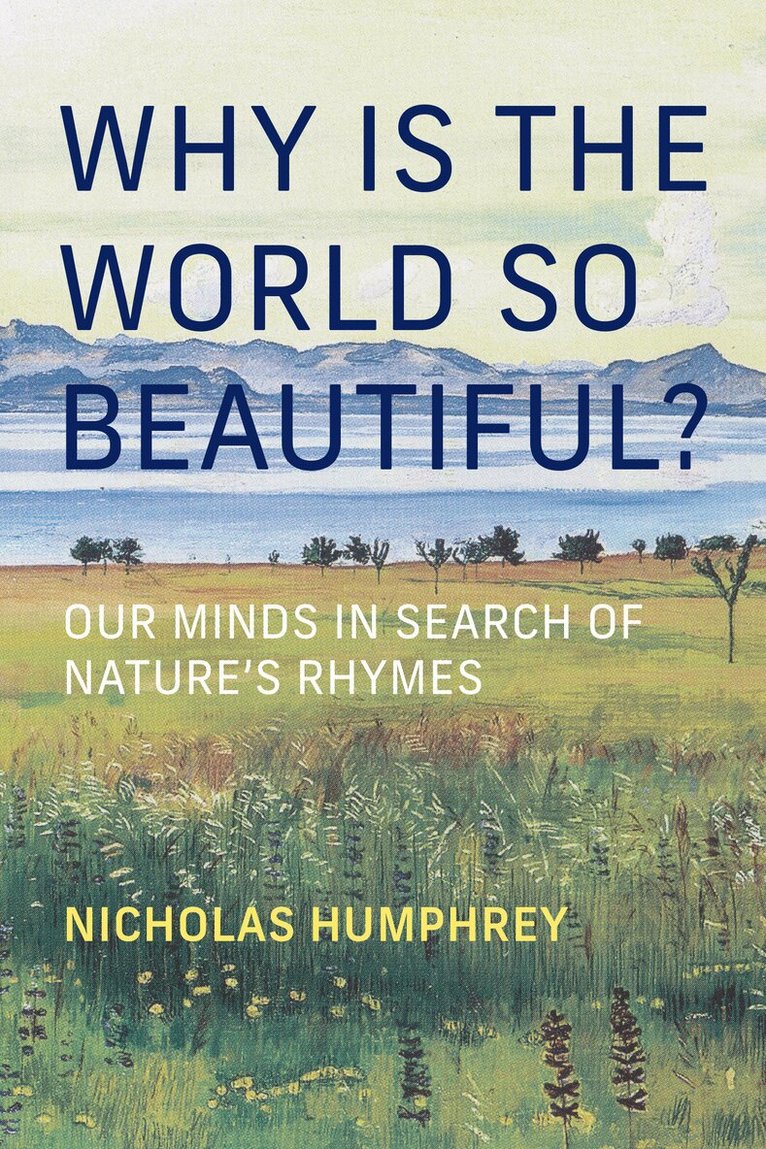
    Why Is the World So Beautiful?

    Our Minds in Search of Nature's Rhymes

    AvNicholas Humphrey

    Inbunden, Engelska, 2026

    281 kr

    Kommande

    Beskrivning

    A fascinating inquiry into why beauty matters and how it has played an evolutionary role in our understanding of the world. From a pioneering neuropsychologist and the winner of the Mind and Brain Prize.Why do we love beauty? And why is the world so full of it? From rainbows and mountain landscapes to piano sonatas and Cézanne paintings, much of what we find beautiful seems to serve no practical purpose, despite our instinctive attraction to it. In this path-breaking book Why Is the World So Beautiful?, psychologist Nicholas Humphrey explains that the benefits of being drawn to beauty are primarily cognitive: we’re training our minds.Inspired by a line from the poet Gerard Manley Hopkins, that “all beauty may be called rhyme,” the author argues that by actively searching for rhyming connections between things, we establish the “mental models” that guide our understanding of the world. These rhymes extend beyond sounds to shapes, colors, objects, and even abstract ideas. Just as we need food to nourish our bodies, we need rhymes to nourish our minds.Our attraction to rhymes and patterns culminates in a uniquely human form of aesthetic emotion, one that recognizes that all artistry must issue from an artist. This leads Humphrey to his boldest claim: when we encounter beauty in the natural world, we are responding as if to a hidden artist’s—or Creator’s—hand. The result is a daring and illuminating argument for why beauty moves us—and why our hunger for it is as fundamental as our need for meaning itself.

    Produktinformation

    • Utgivningsdatum:2026-10-06
    • Mått:133 x 203 x 20 mm
    • Vikt:567 g
    • Format:Inbunden
    • Språk:Engelska
    • Antal sidor:224
    • Förlag:MIT Press Ltd
    • ISBN:9780262056588

    Utforska kategorier

    • Kognitiv psykologi inom Psykologi och pedagogik

    Mer om författaren

    Nicholas Humphrey, Emeritus Professor of Psychology at the London School of Economics, is a theoretical psychologist based in Cambridge who studies the evolution of intelligence and consciousness. He was the first to demonstrate the existence of “blindsight” in monkeys. He has also studied mountain gorillas with Dian Fossey in Rwanda, proposed the celebrated theory of the “social function of intellect,” and investigated the evolutionary background of religion, art, healing, death awareness, and suicide. In 2026, Humphrey was awarded the Dennett Prize by the International Center for Consciousness Studies. His additional honors include the Martin Luther King Memorial Prize, the Pufendorf Medal, and the International Mind and Brain Prize. His most recent book is Sentience (MIT Press).

    Recensioner i media

    ENDORSEMENTS“Nicholas Humphrey has made major contributions to our understanding of topics that range across psychology, evolutionary theory, consciousness, and theory of mind. Now we can add Why Is the World So Beautiful? He tackles a topic that has been central to philosophizing since Plato but has never before been subjected to this particular intense combination of rigorous empirical examination and sharp philosophical analysis. A splendid book: provocative, passionate, and to a remarkable degree persuasive.”—Sir Geoffrey Lloyd, Faculty of Classics, University of Cambridge“Humphrey’s skills as an expositor on the science/philosophy interface shine through here. He doesn’t definitively answer the question in the title—nobody could! But he offers insights that will deepen any reader’s understanding of the issues.”—Lord Martin Rees, Astronomer Royal; Member of the UK’s House of Lords; former President of the Royal Society“In answer to the question ‘What is the essence of beauty?’ Humphrey offers a bold and compelling answer: our aesthetic instincts are shaped by an innate sensitivity to rhyme—not just in poetry, but in the echoes, patterns, and symmetries that pervade the visual, auditory, and even conceptual realms. This is an illuminating and deeply thought-provoking exploration—one that will reshape how we understand aesthetics, evolution, and the very nature of human experience.”—Paul Broks, neuropsychologist; author of The Darker the Night, the Brighter the Stars “Nicholas Humphrey’s enquiry into the nature of beauty is full of fresh insights. His emphasis on rhyme has primed me to look at flowers and trees anew and hear Bach’s music better. I am grateful for this sparklingly original book.”—Rupert Sheldrake, biologist; author of Science Set Free