• Fri frakt över 249 kr
  • •
  • Snabba leveranser
  • •
  • Billiga böcker
Kundservice

Du är på sajten för privatpersoner.

Företag, bibliotek eller offentlig verksamhet?

Du handlar på classic.bokus.com, där alla dina funktioner finns intakta.
Till classic.bokus.com
Bokus logotyp. Gå till startsidan.
  • Erbjudanden
  • Nyheter
  • Student
  • Topplistor
  • Barn & ungdom
  • Bokus Play
  • E-böcker
  • Pocketböcker
  • Spel & pussel

10% studentrabatt med kod TERM26

Sidfot

Mina sidor

    Hjälp

    • Kundservice
    • Vanliga frågor och svar
    • Frakt och leverans
    • Retur vid ångerrätt
    • Reklamera vara
    • Betalning
    • Köpvillkor
    • Allmänna villkor
    • Information om webbplatsens tillgänglighet

    Om Bokus

    • Om oss
    • Pressrum
    • För studenter
    • För företag
    • För bibliotek och offentlig verksamhet
    • För leverantörer
    • Hållbarhet

    Populärt

    • Aktuella erbjudanden
    • Presentkort
    • Studentlitteratur
    • Nya böcker
    • Topplistor
    • Signerade böcker
    • Engelska böcker

    Inspiration

    • Boktips
    • BookTok
    • Populära bokserier
    • Barnbokskaraktärer
    • Populära författare
    Logotyp för Bokus
    Följ oss på Facebook (extern länk)Följ oss på Instagram (extern länk)Följ oss på YouTube (extern länk)Följ oss på TikTok (extern länk)
    bokus @ CookiesAnpassa cookiesIntegritetspolicyKöpvillkor
    Till Citymail hemsida (extern länk)Till Budbee hemsida (extern länk)Till Postnord hemsida (extern länk)Till Schenker hemsida (extern länk)Till Early Bird hemsida (extern länk)Till Walleys hemsida (extern länk)
    1. Filosofi och religion
    2. Religion och tro
    3. Kristendom
    4. Biblar

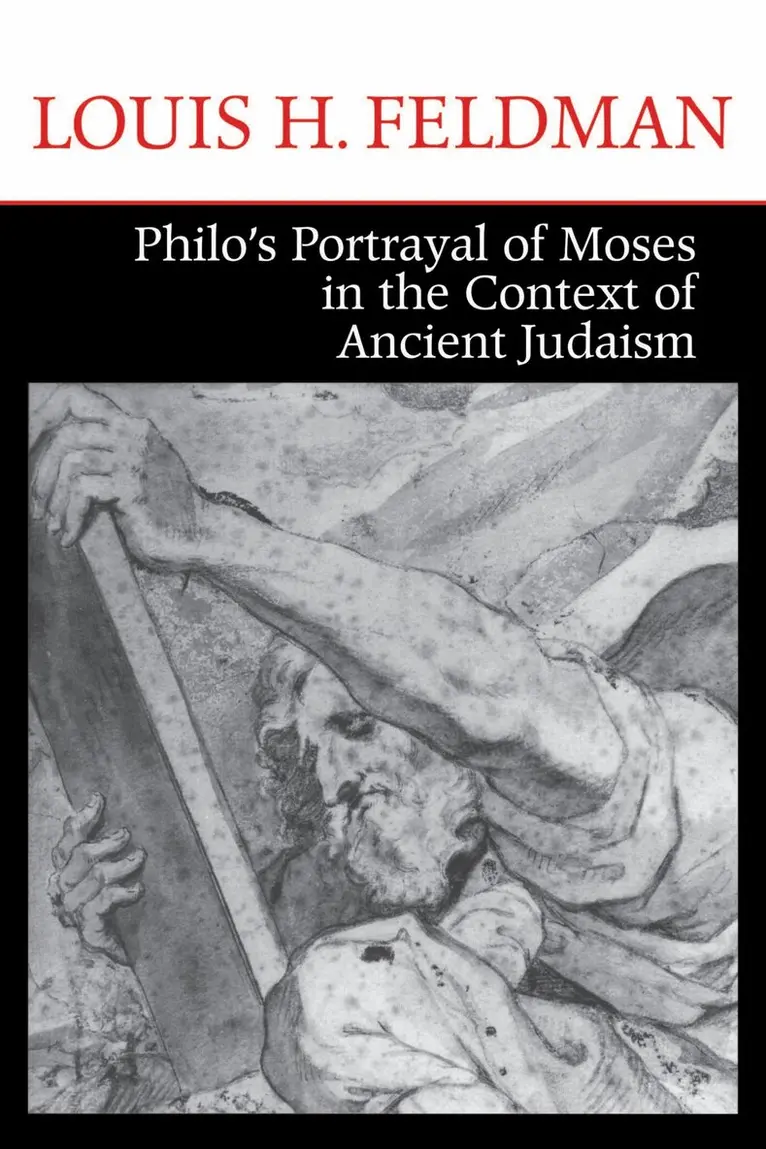
    Philo's Portrayal of Moses in the Context of Ancient Judaism

    AvLouis H. Feldman

    Inbunden, Engelska, 2007

    Del i serien Christianity and Judaism in Antiquity

    1 060 kr

    Beställningsvara. Skickas inom 5-8 vardagar. Fri frakt över 249 kr.

    Fler format och utgåvor

    Häftad

    554 kr

    Beskrivning

    Philo's Portrayal of Moses in the Context of Ancient Judaism presents the most comprehensive study of Philo's De Vita Mosis that exists in any language. Feldman, well known for his work on Josephus and ancient Judaism, here paves new ground using rabbinic material with philological precision to illuminate important parallels and differences between Philo's writing on Moses and rabbinic literature. One way in which Hellenistic culture marginalized Judaism was by exposing the apparent defects in Moses' life and character. Philo's De Vita Mosis is a counterattack to these charges and is a vital piece of his attempt to reconcile Judaism and Hellenism. Feldman rigorously examines the text and shows how Philo presents a narrative of Moses's life similar to that of a mythical divine and heroic figure, glorifying his birth, education, and virtues. Feldman demonstrates that Philo is careful to explain in a scientific way those portions of the Bible, particularly miracles, that appear incredible to his skeptical Hellenistic readers. Through Feldman's careful analysis, Moses emerges as unique among ancient lawgivers.Philo's Portrayal of Moses in the Context of Ancient Judaism mirrors the organization of Philo's biography of Moses, which is in two books, the first, in the style of Plutarch, proceeding chronologically, and the second, in the style of Suetonius, arranged topically. Following an introductory chapter, Feldman's study discusses the life of Moses chronologically in the second chapter and examines his virtues topically in the third. Feldman compares the particular features of Philo's portrait of Moses with the way in which Moses is viewed both by Jewish sources in antiquity (including Pseudo-Philo; Josephus; Graeco-Jewish historians, poets, and philosophers; and in the Apocrypha, Pseudepigrapha, Samaritan tradition, Dead Sea Scrolls, and rabbinic tradition) and by non-Jewish sources, notably the Greek and Roman writers who mention him.

    Produktinformation

    • Utgivningsdatum:2007-10-01
    • Mått:140 x 216 x 32 mm
    • Vikt:957 g
    • Format:Inbunden
    • Språk:Engelska
    • Serie:Christianity and Judaism in Antiquity
    • Antal sidor:564
    • Förlag:University of Notre Dame Press
    • ISBN:9780268029005

    Utforska kategorier

    • Biblar inom Filosofi och religion
    • Dramatik inom Skönlitteratur
    • Religion: allmänt inom Filosofi och religion

    Mer om författaren

    Louis H. Feldman is the Abraham Wouk Family Professor of Classics and Literature, Yeshiva University. He is the author and editor of over sixteen books, including Josephus's Interpretation of the Bible and most recently Judaism and Hellenism Reconsidered.

    Recensioner i media

    "This book represents the first full-length treatment of Philo's portrait of Moses in the De vita Moysis. The work is erudite and careful. As is characteristic of Professor Feldman's work as a whole, the strongest quality of this book is it comprehensive nature and encyclopedic learning. It will appeal to a significant number of scholars and students from a wide range of disciplines, including Second Temple Judaism, Rabbinic Judaism, New Testament, and the Early Church." —Gregory E. Sterling, associate professor of theology, University of Notre Dame"Feldman provides a characteristically thorough, even exhaustive, discussion of Philo's Life of Moses, informed by his unsurpassed knowledge of both Jewish and classical literature. This is a very substantial and welcome contribution to the detailed analysis of the major Jewish philosopher of antiquity." —John J. Collins, Yale Divinity School"This book is a gold mine of information. In two sections that follow the arrangement of Philo's two treatises on the life of Moses, Feldman expertly sets forth an impressive array of material from Philo, other Jewish sources, and non-Jewish sources. Each section on the life of Moses and on his virtues is clearly and helpfully organized into many subsections, and Feldman discusses each topic with characteristic erudition. This is the first book-length study to focus on these Philonic and other traditions about Moses, and readers from a variety of disciplines will find much here to appreciate." —Ellen Birnbaum, author of The Place of Judaism in Philo's Thought: Israel, Jews, and Proselytes"Feldman shows how Philo presents an aretalogy similar to that of a mythical divine and heroic figure by glorifying the birth, education, and virtues of Moses. He demonstrates that Philo is careful to explain in a scientific way those portions of the Bible, particularly miracles, that appear incredible to his skeptical Hellenistic readers. Moses, as presented by Philo, emerges as unique among ancient law givers." —International Review of Biblical Studies"Feldman's intention is to produce a comprehensive, systematic account of the depiction of Moses by Philo, chiefly by Philo's De Vita Mosis (Mos.). In this, he succeeds. He organizes his work in imitation of Mos.: part one proceeds chronologically through the life of Moses; part two he organizes topically around 'virtues' of Moses, as does Philo." —Bulletin for Biblical Research"While focusing on Philo's De vita Mosis, Feldman . . . attempts to place Philo's portrait on Moses in the context of what other Jews and non-Jews in antiquity said about him . . . Feldman concludes that Philo intended De vita Mosis primarily for non-Jews in order to answer the misunderstandings, disparagement, and maligning of Moses; and that he presented Moses as a philosopher king but objected strongly to the view of Moses as divine." —New Testament Abstracts"This book is a study of Philo's De Vita Mosis, Feldman, well known for his work on Josephus and ancient Judaism, here uses rabbinic material to illuminate important parallels and differences between Philo's writing on Moses and rabbinic literature. . . . Feldman shows how Philo glorifies the birth, education, and virtues of Moses and demonstrates that Philo is careful to explain in a scientific way those portions of the Bible, particularly miracles, that appear incredible to his skeptical Hellenistic readers." —Shofar(Shofar)