• Fri frakt över 249 kr
  • •
  • Snabba leveranser
  • •
  • Billiga böcker
Kundservice

Du är på sajten för privatpersoner.

Företag, bibliotek eller offentlig verksamhet?

Du handlar på classic.bokus.com, där alla dina funktioner finns intakta.
Till classic.bokus.com
Bokus logotyp. Gå till startsidan.
  • Erbjudanden
  • Nyheter
  • Student
  • Topplistor
  • Barn & ungdom
  • Bokus Play
  • E-böcker
  • Pocketböcker
  • Spel & pussel

10% rabatt på allt med kod NYSTART10 →

Sidfot

Mina sidor

    Hjälp

    • Kundservice
    • Vanliga frågor och svar
    • Frakt och leverans
    • Retur vid ångerrätt
    • Reklamera vara
    • Betalning
    • Köpvillkor
    • Allmänna villkor
    • Information om webbplatsens tillgänglighet

    Om Bokus

    • Om oss
    • Pressrum
    • För studenter
    • För företag
    • För bibliotek och offentlig verksamhet
    • För leverantörer
    • Hållbarhet

    Populärt

    • Aktuella erbjudanden
    • Presentkort
    • Studentlitteratur
    • Nya böcker
    • Topplistor
    • Signerade böcker
    • Engelska böcker

    Inspiration

    • Boktips
    • BookTok
    • Populära bokserier
    • Barnbokskaraktärer
    • Populära författare
    Logotyp för Bokus
    Följ oss på Facebook (extern länk)Följ oss på Instagram (extern länk)Följ oss på YouTube (extern länk)Följ oss på TikTok (extern länk)
    bokus @ CookiesAnpassa cookiesIntegritetspolicyKöpvillkor
    Till Citymail hemsida (extern länk)Till Budbee hemsida (extern länk)Till Postnord hemsida (extern länk)Till Schenker hemsida (extern länk)Till Early Bird hemsida (extern länk)Till Walleys hemsida (extern länk)
    1. Samhälle och politik
    2. Samhälle och kultur
    3. Kultur och medier
    4. Kulturvetenskap

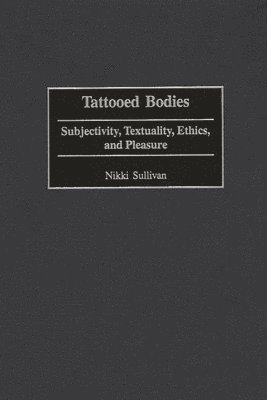
    Tattooed Bodies

    Subjectivity, Textuality, Ethics, and Pleasure

    AvNikki Sullivan

    Inbunden, Engelska, 2001

    1 048 kr

    Beställningsvara. Skickas inom 10-15 vardagar. Fri frakt över 249 kr.

    Beskrivning

    Drawing on the works of a number of postmodern theorists, this study suggests that the tattooed body is symptomatic of a general process of marking and being marked and is a social production of identity and difference. Shifting the focus away from what the tattooed body means to what it does, this work analyzes how it functions and what effects it produces. It challenges the ways in which identity and difference are discursively produced, particularly in psychological, criminological, and counter-cultural discourses. The writings of such theorists as Foucault, Levinas, Barthes, and Lingis are scrutinized to reveal how their discourse interprets the tattooed body as simply an aberrant threat to the body or simply a positive counter-cultural challenge. These theories are supplanted with this unique approach to notions of subjectivity, textuality, ethics, and pleasure and to the relationships among them.This examination of the role of the body in social, political, and ethical relations will attract scholars from a number of disciplines, including cultural studies, gender studies, philosophy, visual arts, sociology, and English. It will also appeal to critics and practitioners in contemporary practices of body modification.

    Produktinformation

    • Utgivningsdatum:2001-09-30
    • Mått:168 x 234 x 21 mm
    • Vikt:527 g
    • Format:Inbunden
    • Språk:Engelska
    • Antal sidor:216
    • Förlag:Bloomsbury Publishing Plc
    • ISBN:9780275966751

    Utforska kategorier

    • Kulturvetenskap inom Samhälle och politik
    • Kroppskonst och tatuering inom Kultur
    • Sociologi inom Samhälle och politik

    Mer om författaren

    NIKKI SULLIVAN is a lecturer in Critical and Cultural Studies at Macquarie University./e She has published articles on body modification, self-mutilation, and queer theory.

    Innehållsförteckning

    • IntroductionThe Subject in/of Tattooing(Re)Writing Subjectivity: A Different Economy of Bodies and Pleasures?Encountering the Other: Ontological (In)Difference and the Metaphysics of AlterityReading Body Writing: An Ethics of (Inter)Textual PleasureBodily Inscription: Figuration and the Discursive Production of Imaginary Bodies and Social ImaginariesConclusionBibliography