• Fri frakt över 249 kr
  • •
  • Snabba leveranser
  • •
  • Billiga böcker
Kundservice

Du är på sajten för privatpersoner.

Företag, bibliotek eller offentlig verksamhet?

Du handlar på classic.bokus.com, där alla dina funktioner finns intakta.
Till classic.bokus.com
Bokus logotyp. Gå till startsidan.
  • Erbjudanden
  • Nyheter
  • Student
  • Topplistor
  • Barn & ungdom
  • Bokus Play
  • E-böcker
  • Pocketböcker
  • Spel & pussel

10% rabatt på allt med kod: NYSTART10 →

Sidfot

Mina sidor

    Hjälp

    • Kundservice
    • Vanliga frågor och svar
    • Frakt och leverans
    • Retur vid ångerrätt
    • Reklamera vara
    • Betalning
    • Köpvillkor
    • Allmänna villkor
    • Information om webbplatsens tillgänglighet

    Om Bokus

    • Om oss
    • Pressrum
    • För studenter
    • För företag
    • För bibliotek och offentlig verksamhet
    • För leverantörer
    • Hållbarhet

    Populärt

    • Aktuella erbjudanden
    • Presentkort
    • Studentlitteratur
    • Nya böcker
    • Topplistor
    • Signerade böcker
    • Engelska böcker

    Inspiration

    • Boktips
    • BookTok
    • Populära bokserier
    • Barnbokskaraktärer
    • Populära författare
    Logotyp för Bokus
    Följ oss på Facebook (extern länk)Följ oss på Instagram (extern länk)Följ oss på YouTube (extern länk)Följ oss på TikTok (extern länk)
    bokus @ CookiesAnpassa cookiesIntegritetspolicyKöpvillkor
    Till Citymail hemsida (extern länk)Till Budbee hemsida (extern länk)Till Postnord hemsida (extern länk)Till Schenker hemsida (extern länk)Till Early Bird hemsida (extern länk)Till Walleys hemsida (extern länk)
    1. Naturvetenskap och teknik
    2. Teknik och industri
    3. Teknik: allmänt

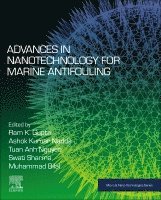
    Advances in Nanotechnology for Marine Antifouling

    AvRam K. Gupta,Ashok Kumar Nadda

    Häftad, Engelska, 2023

    Del i serien Micro and Nano Technologies

    2 250 kr

    Beställningsvara. Skickas inom 10-15 vardagar. Fri frakt över 249 kr.

    Beskrivning

    Advances in Nanotechnology for Marine Antifouling surveys the latest research in the application of nanotechnology for biofouling inhibition. The book gathers in-depth information on the various micro and nano-techniques, nanocoatings, polymeric composites paints, methods of application and prevention mechanisms. This is a valuable resource for researchers and advanced students across anti-biofouling, nanotechnology, nanomaterials, polymer nanocomposites, coatings, maritime technology, chemistry, chemical engineering, environmental science, and materials science and engineering. This is also essential reading for industrial scientists, engineers, R&D, and other professionals with an interest in the use of nanotechnology for antifouling, particularly in the maritime sector.

    Nanotechnologies have been recognized as a powerful tool in antifouling strategies with nanocoatings with efficient properties enabling increased durability and performance in the prevention of biofouling and corrosion while replacing potentially more harmful chemicals.


    • Examines the fundamentals of biofouling, conventional techniques, modeling and simulation, and biofouling based on natural materials
    • Provides detailed techniques for antifouling mechanisms and materials with a range of specific properties or applications
    • Addresses key environmental challenges, including risks of novel nanomaterials and coatings, development of eco-friendly nanocoatings, regulations and future scope

    Produktinformation

    • Utgivningsdatum:2023-04-13
    • Mått:191 x 235 x 24 mm
    • Vikt:860 g
    • Format:Häftad
    • Språk:Engelska
    • Serie:Micro and Nano Technologies
    • Antal sidor:402
    • Förlag:Elsevier Science
    • ISBN:9780323917629

    Utforska kategorier

    • Teknik: allmänt inom Naturvetenskap och teknik
    • Sjöfart och skeppsbyggnad inom Naturvetenskap och teknik
    • Miljöteknik inom Naturvetenskap och teknik

    Mer om författaren

    Ram Gupta is a Professor in the Department of Chemistry at Pittsburg State University, Kansas, United States. His research focus is in green energy production and storage using nanomaterials, optoelectronics and photovoltaics devices, organic-inorganic heterojunctions for sensors, nanomagnetism, conducting polymers and composites as well as bio-based polymers, bio-compatible nanofibers for tissue regeneration, scaffold and antibacterial applications, and bio-degradable metallic implants.Dr. Ashok Kumar Nadda is Assistant Professor in the Department of Biotechnology and Bioinformatics, at Jaypee University of Information Technology, India. His research interests are microbial biotechnology, biocatalysis, biopolymers, enzyme immobilization, bioenergy, and CO2 conversion. Dr. Swati Sharma (MSc, Dr. Yashwant Singh Parmar University of Horticulture and Forestry, Nauni Solan H.P. India; PhD. University Malaysia, Pahang, Malaysia) is Assistant Professor at University Institute of Biotechnology, the Chandigarh University Mohali, India. She worked as a visiting researcher in the College of Life and Environmental Sciences at Konkuk University, Seoul, South Korea. She has also worked as a program co-coordinator at the Himalayan Action Research Center (HARC), Dehradun, and Senior Research Fellow at the India Agricultural Research Institute in 2013-2014. Presently, Dr. Sharma's research is in the field of bioplastics, hydrogels, keratin nano-fibers and nano-particles, biodegradable polymers and polymers with antioxidant and anticancer activities and sponges. Dr. Swati has published numerous books and papers in various internationally reputed journals. Muhammad Bilal is working as an Associate Professor at the Faculty of Civil and Environmental Engineering, Gdansk University of Technology, Poland. Previously, he served as an assistant/associate Professor at Poznan University of Technology, Poland, and the School of Life Science and Food Engineering, Huaiyin Institute of Technology, Huaian, China. He earned his Ph.D. from Shanghai Jiao Tong University, specializing in bioengineering and applied biotechnology. His main research activities are oriented to Environmental biotechnology, nanotechnology, enzyme engineering, immobilization, chemical modifications, and industrial applications of microbial enzymes, liquid, and solid waste management. He has authored over 700 peer-reviewed articles, 150 book chapters, 25 edited books. Dr. Bilal is the associate editor of Frontiers in Chemical Engineering and Frontiers in Environmental Science (Frontiers), and an editorial board member for several journals. He was listed as a highly cited researcher (Clarivate) in 2021 and holds several "highly cited papers" in WOS. Tuan Anh Nguyen is a Senior Principal Research Scientist at the Institute for Tropical Technology, Vietnam Academy of Science and Technology, Hanoi, Vietnam. He received a BS in physics from Hanoi University in 1992, a BS in economics from Hanoi National Economics University in 1997, and a PhD in chemistry from the Paris Diderot University, France, in 2003. He was a Visiting Scientist at Seoul National University, South Korea, in 2004, and the University of Wollongong, Australia, in 2005. He then worked as a Postdoctoral Research Associate and Research Scientist at Montana State University, United States in 2006-09. In 2012 he was appointed as the Head of the Microanalysis Department at the Institute for Tropical Technology. His research areas of interest include smart sensors, smart networks, smart hospitals, smart cities, complexiverse, and digital twins. He has edited more than 74 books for Elsevier, 12 books for CRC Press, 1 book for Springer, 1 book for RSC, and 2 books for IGI Global. He is the Editor-in-Chief of Kenkyu Journal of Nanotechnology & Nanoscience.

    Innehållsförteckning

    • PART 1: BIOFOULING: FUNDAMENTALS 1. Biofouling: Current status and challenges2. Traditional antifouling technologies: Effects on aquatic life 3. Biofouling in the petroleum industry4. Biofouling in maritime technology5. Strategies for developing new biofouling based on natural products6. Mathematical modeling/simulation of biofouling growthPART 2: ANTIFOULING TECHNIQUES AND NANOMATERIALS7. Nanoscale techniques for the modification of the marine vessel8. Methods for design and formulations of underwater materials9. Marine organism and metabolites as antifouling agents10. Antifouling nanomaterials and composites11. Photochemical nanomaterials in antifouling12. Interfacial phenomena for improved anti-biofouling13. Bioinspired antifouling techniques and coatings14. Antifouling ceramic coating 15. Zwitterionic antifouling coating 16. Electrochemical sensors in antifoulingPART 3: ENVIRONMENTAL CHALLENGES AND IMPLICATIONS 17. Hazard of novel antifouling nanomaterials 18. Biocide-based coatings and marine life19. Self-healing and eco-friendly nano-coating for antifouling 20. Marine vessels and underwater structure management 21. Safety, regulations and economic impact of nanotechnology in maritime industries22. Future scope and perspectives for nanotechnology in marine antifouling