• Fri frakt över 249 kr
  • •
  • Snabba leveranser
  • •
  • Billiga böcker
Kundservice

Du är på sajten för privatpersoner.

Företag, bibliotek eller offentlig verksamhet?

Du handlar på classic.bokus.com, där alla dina funktioner finns intakta.
Till classic.bokus.com
Bokus logotyp. Gå till startsidan.
  • Erbjudanden
  • Nyheter
  • Student
  • Topplistor
  • Barn & ungdom
  • Bokus Play
  • E-böcker
  • Pocketböcker
  • Spel & pussel

10% rabatt på allt med kod NYSTART10 →

Sidfot

Mina sidor

    Hjälp

    • Kundservice
    • Vanliga frågor och svar
    • Frakt och leverans
    • Retur vid ångerrätt
    • Reklamera vara
    • Betalning
    • Köpvillkor
    • Allmänna villkor
    • Information om webbplatsens tillgänglighet

    Om Bokus

    • Om oss
    • Pressrum
    • För studenter
    • För företag
    • För bibliotek och offentlig verksamhet
    • För leverantörer
    • Hållbarhet

    Populärt

    • Aktuella erbjudanden
    • Presentkort
    • Studentlitteratur
    • Nya böcker
    • Topplistor
    • Signerade böcker
    • Engelska böcker

    Inspiration

    • Boktips
    • BookTok
    • Populära bokserier
    • Barnbokskaraktärer
    • Populära författare
    Logotyp för Bokus
    Följ oss på Facebook (extern länk)Följ oss på Instagram (extern länk)Följ oss på YouTube (extern länk)Följ oss på TikTok (extern länk)
    bokus @ CookiesAnpassa cookiesIntegritetspolicyKöpvillkor
    Till Citymail hemsida (extern länk)Till Budbee hemsida (extern länk)Till Postnord hemsida (extern länk)Till Schenker hemsida (extern länk)Till Early Bird hemsida (extern länk)Till Walleys hemsida (extern länk)
    1. Naturvetenskap och teknik
    2. Matematik och naturvetenskap
    3. Matematik
    4. Tillämpad matematik

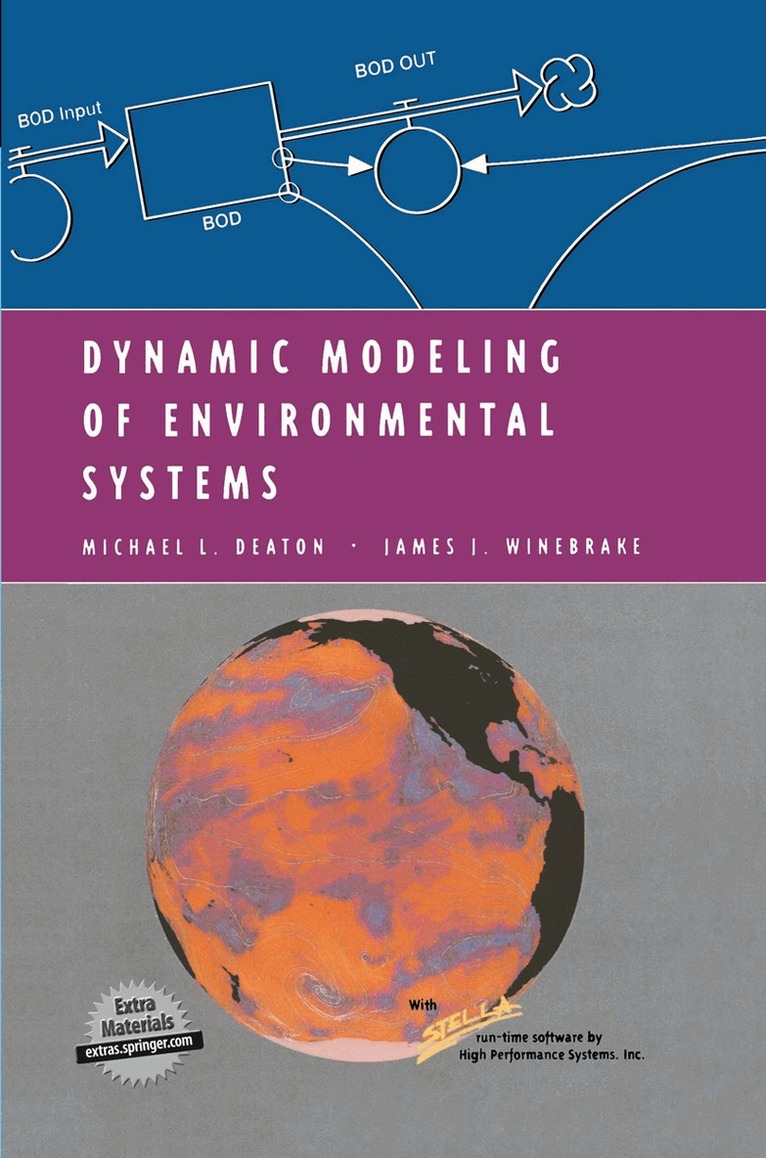
    Dynamic Modeling of Environmental Systems

    AvMichael L. Deaton,James J. Winebrake

    Inbunden, Engelska, 1999

    Del i serien Modeling Dynamic Systems

    816 kr

    Beställningsvara. Skickas inom 10-15 vardagar. Fri frakt över 249 kr.

    Fler format och utgåvor

    Häftad

    600 kr

    Beskrivning

    Dynamic Modeling of Environmental Systems is a primer on using models to understand environmental problems. With their many natural, economic, political, and technical aspects, environmental problems require a systems approach. This book provides an introduction to modeling concepts and applications that is specifically geared toward the environmental field. Sections on modeling terminology, the uses of models, the model-building process, and the interpretation of output provide the foundation for detailed applications. After an introduction to the basics of dynamic modeling, the book leads students through an analysis of several environmental problems, including surface-water pollution, matter-cycling disruptions, and global warming. The scientific and technical context is provided for each problem, and the methods for analyzing and designing appropriate modeling approaches is provided. While the mathematical content does not exceed the level of a first-semester Calculus course, the book gives students all of the background, examples, and practice exercises needed both to use and understand environmental modeling. It is suitable for upper-level undergraduate and beginning-graduate-level environmental science courses. The text is also useful for environmental professionals seeking an introduction to modeling in their field.

    Produktinformation

    • Utgivningsdatum:1999-12-03
    • Mått:155 x 235 x 20 mm
    • Vikt:509 g
    • Format:Inbunden
    • Språk:Engelska
    • Serie:Modeling Dynamic Systems
    • Antal sidor:197
    • Upplaga:2000
    • Förlag:Springer-Verlag New York Inc.
    • ISBN:9780387988801

    Utforska kategorier

    • Tillämpad matematik inom Naturvetenskap och teknik
    • Miljövetenskap och miljöpolitik inom Naturvetenskap och teknik
    • 3D-grafik och modellering inom Data och IT

    Innehållsförteckning

    • 1 Overview of Environmental Systems.- 1.1 Introduction.- 1.2 An Example of a Simple System.- 1.3 Uses of Systems Models.- 1.4 A Systems Approach to Environmental Problems.- 1.5 Applying Systems Thinking to Environmental Problems.- 1.6 Exercises.- 1.7 Appendix: Getting Around in STELLA®.- 2 Basic Modeling Concepts in Environmental Systems Models.- 2.1 Introduction: Building Blocks for Environmental Systems Models.- 2.2 Behavior Pattern #1: Linear Growth or Decay.- 2.3 Behavior Pattern #2: Exponential Growth or Decay.- 2.4 Behavior Pattern #3: Logistic Growth.- 2.5 Behavior Pattern #4: Overshoot and Collapse.- 2.6 Behavior Pattern #5: Oscillation.- 2.7 Exercises.- 2.8 Suggested Readings.- 3 Strategies for Analyzing and Using Environmental Systems Models.- 3.1 Analyzing a Systems Model: Overview.- 3.2 An Illustrative Model: Infectious Disease Dynamics.- 3.3 Applying the Strategy: Problem Definition.- 3.4 Applying the Strategy: Model Validation.- 3.5 Applying the Strategy: Exploratory Analysis.- 3.6 Applying the Strategy: Case Analysis.- 3.7 Exercises.- 3.8 Suggested Readings.- 3.9 Appendix: Modeling System Perturbations in STELLA®.- 4 Modeling Predator-Prey Systems.- 4.1 The Problem.- 4.2 Background Information.- 4.3 Difference Equations and the Steady-State Solution.- 4.4 Modeling the Dynamic Deer-Wolf System.- 4.5 Exercises.- 4.6 References Cited and Suggested Readings.- 5 Modeling Surface Water Contamination.- 5.1 The Problem.- 5.2 Background Information.- 5.3 Difference Equations and Relationships.- 5.4 Modeling the Dynamic DO System.- 5.5 Exercises.- 5.6 References Cited and Suggested Readings.- 6 Matter Cycling in Ecosystems.- 6.1 The Problem.- 6.2 Background Information.- 6.3 Difference Equations and the Steady-State Solution.- 6.4 Modeling the Dynamic Phosphorus System.- 6.5 Exercises.- 6.6 References Cited and Suggested Readings.- 7 Modeling Mobile Source Air Pollution Inventories.- 7.1 The Problem.- 7.2 Background Information.- 7.3 Difference Equations and Steady-State Solutions.- 7.4 Modeling the Dynamic Mobile Source Emissions System.- 7.5 Exercises.- 7.6 References Cited and Suggested Readings.- 8 Greenhouse Gases and Global Warming.- 8.1 The Problem.- 8.2 Background Information.- 8.3 Difference Equations.- 8.4 Modeling the Dynamic Greenhouse Gas System.- 8.5 Exercises.- 8.6 References Cited and Suggested Readings.- 9 Atmospheric Chemistry and Pollution Transport.- 9.1 The Problem.- 9.2 Background Information.- 9.3 Difference Equations and the Steady-State Solution.- 9.4 Modeling the Dynamic Acid Deposition System.- 9.5 Exercises.- 9.6 References Cited and Suggested Readings.- Epilogue.