• Fri frakt över 249 kr
  • •
  • Snabba leveranser
  • •
  • Billiga böcker
Kundservice

Du är på sajten för privatpersoner.

Företag, bibliotek eller offentlig verksamhet?

Du handlar på classic.bokus.com, där alla dina funktioner finns intakta.
Till classic.bokus.com
Bokus logotyp. Gå till startsidan.
  • Erbjudanden
  • Nyheter
  • Student
  • Topplistor
  • Barn & ungdom
  • Bokus Play
  • E-böcker
  • Pocketböcker
  • Spel & pussel

10% rabatt på allt med kod: NYSTART10 →

Sidfot

Mina sidor

    Hjälp

    • Kundservice
    • Vanliga frågor och svar
    • Frakt och leverans
    • Retur vid ångerrätt
    • Reklamera vara
    • Betalning
    • Köpvillkor
    • Allmänna villkor
    • Information om webbplatsens tillgänglighet

    Om Bokus

    • Om oss
    • Pressrum
    • För studenter
    • För företag
    • För bibliotek och offentlig verksamhet
    • För leverantörer
    • Hållbarhet

    Populärt

    • Aktuella erbjudanden
    • Presentkort
    • Studentlitteratur
    • Nya böcker
    • Topplistor
    • Signerade böcker
    • Engelska böcker

    Inspiration

    • Boktips
    • BookTok
    • Populära bokserier
    • Barnbokskaraktärer
    • Populära författare
    Logotyp för Bokus
    Följ oss på Facebook (extern länk)Följ oss på Instagram (extern länk)Följ oss på YouTube (extern länk)Följ oss på TikTok (extern länk)
    bokus @ CookiesAnpassa cookiesIntegritetspolicyKöpvillkor
    Till Citymail hemsida (extern länk)Till Budbee hemsida (extern länk)Till Postnord hemsida (extern länk)Till Schenker hemsida (extern länk)Till Early Bird hemsida (extern länk)Till Walleys hemsida (extern länk)
    1. Naturvetenskap och teknik
    2. Teknik och industri
    3. Agronomi och lantbruk

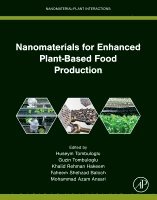
    Nanomaterials for Enhanced Plant-Based Food Production

    AvHuseyin Tombuloglu,Guzin Tombuloglu

    Häftad, Engelska, 2025

    Del i serien Nanomaterial-Plant Interactions

    2 038 kr

    Beställningsvara. Skickas inom 10-15 vardagar. Fri frakt över 249 kr.

    Beskrivning

    Nanomaterials for Enhanced Plant-Based Food Production a new release in the Nanomaterial-Plant Interactions series, presents up-to-date insights on the use of nano-enabled agricultural tools from nanofertilizers to nanosensors, including how to balance safety and environmental impact concerns to ensure optimal utilization. The book provides a range of solution options and guides the reader in identifying the most appropriate choice. With state-of-the-art, broad coverage of recent and potential applications, this book covers the most recent advances in the application of nanotechnology toward fulfilling the world's food demands for present and future generations.


    • Presents the advantages and challenges of utilizing nanomaterials for plant health improvement
    • Includes coverage of environmental impact concerns
    • Highlights the latest advances and future prospects for improving crop yield for improved food security

    Produktinformation

    • Utgivningsdatum:2025-07-28
    • Mått:216 x 276 x 20 mm
    • Vikt:1 050 g
    • Format:Häftad
    • Språk:Engelska
    • Serie:Nanomaterial-Plant Interactions
    • Antal sidor:376
    • Förlag:Elsevier Science
    • ISBN:9780443236884

    Utforska kategorier

    • Agronomi och lantbruk inom Naturvetenskap och teknik
    • Lantbruk, fiske och skogsbruk inom Ekonomi och Ledarskap
    • Biokemisk teknik inom Naturvetenskap och teknik

    Mer om författaren

    Huseyin Tombuloglu, PhD, is an Associate Professor at the Institute of Research and Medical Consultation (IRMC) of Imam Abdulrahman bin Faisal University, Dammam, Saudi Arabia. He received his BSc degree in Molecular Biology and Genetics, an MS degree in Biology and a PhD degree in Biotechnology. He has more than 15 years of teaching and research experience in Genetics, Molecular Biology, Plant Genomics, and Biotechnology, as well as Bioinformatics. His current research focuses on nanoparticle-plant interaction. He has published more than 60 internationally indexed articles. Among those, approximately 20 recent articles are related to nanoparticle and plant interactions at molecular and physiological levels. He has also edited two books published by a global publisher.Dr. Guzin Tombuloglu (PhD) received her MS degree (Biology) in 2008 and PhD degree (Biotechnology) in 2014. She has experience in transcriptome sequencing, genetics, molecular biology and genomics. During her PhD, she studied transcriptomics identification of boron tolerance mechanism in barley. She has experienced several projects on abiotic stress, plant stress responses, boron toxicity, transcriptomics, and nanoparticle-plant interaction on molecular level. She has given several courses on teaching Genetics, Molecular Biology, and Biotechnology education for more than 15 years. She also worked as a Chairman in Pathology Laboratory Techniques Programme and Assistant Manager at Vocational School of Medical Sciences at the university level. She is the co-editor of two international books published by Springer. Dr. Hakeem is a Professor at King Abdulaziz University, Jeddah, Saudi Arabia, and Head of the Plant Biotechnology Research Unit at the Princess Dr. Najlaa Bint Saud Al Saud Center for Distinguished Research in Biotechnology. His academic journey includes roles as Assistant Professor at the University of Kashmir and research appointments in Malaysia. He holds a Ph.D. in Botany from Jamia Hamdard, India, with expertise in plant eco-physiology, molecular biology, biotechnology, and medicinal plant research. He has authored numerous books, journal articles, and book chapters, and serves on editorial boards for leading publishers. He is a Fellow of the Royal Society of Biology and affiliated with international scientific societies. His work focuses on advancing plant science through global collaborations and research on eco-physiological and molecular processes. Faheem Shehzad Baloch is a professor of plant genetics at Mersin University, Mersin, Türkiye. He received his PhD in 2012 from the Faculty of Agriculture, Çukurova University, Adana, Türkiye, with a dissertation on QTL mapping in wheat, and was promoted to associate professor at Bolu Abant İzzet Baysal University in 2018. He has led and participated in numerous projects funded by national and international organizations and has completed international training in plant molecular genetics, including at ICARDA (Syria), the University of Copenhagen (Denmark), and the University of Minnesota (United States). A prolific and widely cited author, he has published extensively in Web of Science-indexed journals and has co-edited books and contributed numerous book chapters on molecular genetics in plant species. He serves on the editorial boards of several journals, including the Turkish Journal of Agriculture and Forestry, BMC Genomic Data, Agronomy Journal, Biotechnology and Biotechnological Equipment, BMC Plant Biology, and PLOS ONE, and has acted as a guest editor for Plants and Molecular Biology Reports and as a reviewer for many international journals. Dr. Mohammad Azam Ansari is currently working as Associate Professor at the Institute for Research & Medical Consultation, Imam Abdulrahman Bin Faisal University, Dammam, Saudi Arabia. His research interest is in green synthesis of different kinds of metal and metal oxides nanomaterials by using various part of the plants, and their interaction with plants, microbes and the environment. He is also working on the application of nanotechnology in food safety and security and removal of toxic pollutants from foods and environment. He has published in journals of repute including Science of The Total Environment, Plants, Chemosphere, Journal of Photochemistry and Photobiology B: Biology, Environmental Science: Water Research & Technology, Planta Medica, Saudi Journal Of Biological Sciences, Journal of Fungi. He has served as referee for a number of international journals, including Applied Microbiology, Biomolecules, Journal of Nanostructure, Advances in Natural Sciences: Nanoscience and Nanotechnology

    Innehållsförteckning

    • 1. Nano discovery and its potential benefits for plant systems on earth2. World food hunger in 2050 and nano solutions: probability and prospects based on plant based food3. Nanomaterial’s towards seed science and technology: an effective way to increase benefits4. Soil nutrient deficiency and nano solutions for plant productivity5. Nutrient deficiency in plants and Nano biotechnological interventions6. Plant diseases management through nano applications7. Technique based Nano synthesis impacts on crop plants: A comparative overview8. Role of agro nano chemicals in sustainable agriculture: effective way towards food safety and applications9. Impact of silica nano forms on the health and yield of crops10. Nanoparticles for plant-soil health management: effective solutions of multiple problems11. Nano-drug delivery in plants: Why, when and How?12. Nano-solutions and crop yield improvement13. Control release of nanofertilizer against stress in plants: solutions threats and opportunities14. Nanosensors are the solutions of future agriculture. A critical discussion15. Nanotechnology and artificial intelligence for sustainable and precision agriculture