• Fri frakt över 249 kr
  • •
  • Snabba leveranser
  • •
  • Billiga böcker
Kundservice

Du är på sajten för privatpersoner.

Företag, bibliotek eller offentlig verksamhet?

Du handlar på classic.bokus.com, där alla dina funktioner finns intakta.
Till classic.bokus.com
Bokus logotyp. Gå till startsidan.
  • Erbjudanden
  • Nyheter
  • Student
  • Topplistor
  • Barn & ungdom
  • Bokus Play
  • E-böcker
  • Pocketböcker
  • Spel & pussel

10% rabatt på allt med kod: NYSTART10 →

Sidfot

Mina sidor

    Hjälp

    • Kundservice
    • Vanliga frågor och svar
    • Frakt och leverans
    • Retur vid ångerrätt
    • Reklamera vara
    • Betalning
    • Köpvillkor
    • Allmänna villkor
    • Information om webbplatsens tillgänglighet

    Om Bokus

    • Om oss
    • Pressrum
    • För studenter
    • För företag
    • För bibliotek och offentlig verksamhet
    • För leverantörer
    • Hållbarhet

    Populärt

    • Aktuella erbjudanden
    • Presentkort
    • Studentlitteratur
    • Nya böcker
    • Topplistor
    • Signerade böcker
    • Engelska böcker

    Inspiration

    • Boktips
    • BookTok
    • Populära bokserier
    • Barnbokskaraktärer
    • Populära författare
    Logotyp för Bokus
    Följ oss på Facebook (extern länk)Följ oss på Instagram (extern länk)Följ oss på YouTube (extern länk)Följ oss på TikTok (extern länk)
    bokus @ CookiesAnpassa cookiesIntegritetspolicyKöpvillkor
    Till Citymail hemsida (extern länk)Till Budbee hemsida (extern länk)Till Postnord hemsida (extern länk)Till Schenker hemsida (extern länk)Till Early Bird hemsida (extern länk)Till Walleys hemsida (extern länk)
    1. Naturvetenskap och teknik
    2. Geovetenskap
    3. Miljövetenskap och miljöpolitik

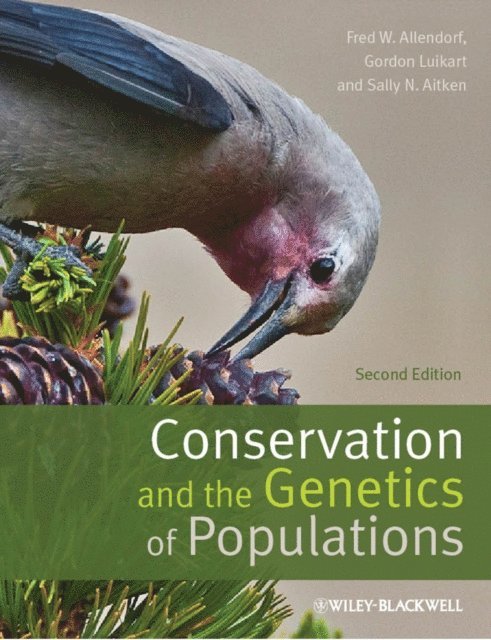
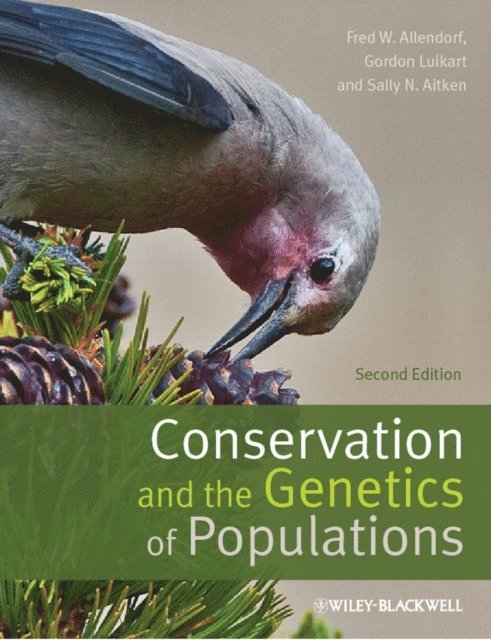
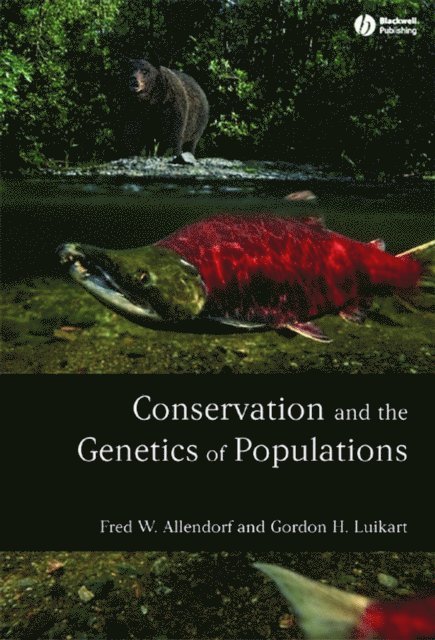
    Conservation and the Genetics of Populations

    AvFred W. Allendorf,Gordon H. Luikart

    Häftad, Engelska, 2012

    Del i serien *Wiley-Blackwell

    772 kr

    Beställningsvara. Skickas inom 5-8 vardagar. Fri frakt över 249 kr.

    Beskrivning

    Loss of biodiversity is among the greatest problems facing the world today. Conservation and the Genetics of Populations gives a comprehensive overview of the essential background, concepts, and tools needed to understand how genetic information can be used to conserve species threatened with extinction, and to manage species of ecological or commercial importance. New molecular techniques, statistical methods, and computer programs, genetic principles, and methods are becoming increasingly useful in the conservation of biological diversity. Using a balance of data and theory, coupled with basic and applied research examples, this book examines genetic and phenotypic variation in natural populations, the principles and mechanisms of evolutionary change, the interpretation of genetic data from natural populations, and how these can be applied to conservation. The book includes examples from plants, animals, and microbes in wild and captive populations. This second edition contains new chapters on Climate Change and Exploited Populations as well as new sections on genomics, genetic monitoring, emerging diseases, metagenomics, and more. One-third of the references in this edition were published after the first edition.Each of the 22 chapters and the statistical appendix have a Guest Box written by an expert in that particular topic (including James Crow, Louis Bernatchez, Loren Rieseberg, Rick Shine, and Lisette Waits). This book is essential for advanced undergraduate and graduate students of conservation genetics, natural resource management, and conservation biology, as well as professional conservation biologists working for wildlife and habitat management agencies.Additional resources for this book can be found at: http://www.wiley.com/go/allendorf/populations

    Produktinformation

    • Utgivningsdatum:2012-11-23
    • Mått:191 x 244 x 36 mm
    • Vikt:1 270 g
    • Format:Häftad
    • Språk:Engelska
    • Serie:*Wiley-Blackwell
    • Antal sidor:624
    • Upplaga:2
    • Förlag:John Wiley and Sons Ltd
    • ISBN:9780470671450

    Utforska kategorier

    • Miljövetenskap och miljöpolitik inom Naturvetenskap och teknik
    • Biovetenskap inom Naturvetenskap och teknik

    Mer om författaren

    Fred W. Allendorf is a Regents Professor at the University of Montana and a Professorial Research Fellow at Victoria University of Wellington in New Zealand. He has published over 200 articles on the population genetics and conservation of fish, amphibians, mammals, invertebrates, and plants. He is a past President of the American Genetic Association, and has served as Director of the Population Biology Program of the National Science Foundation. He has taught conservation genetics at the University of Montana, University of Oregon, University of Minnesota, University of Western Australia, Victoria University of Wellington, and the US National Conservation Training Center.Gordon Luikart is an Associate Professor at the Flathead Lake Biological Station of the University of Montana and a Visiting Scientist in the Center for Investigation of Biodiversity and Genetic Resources at the University of Porto, Portugal. He is also an award winning (Bronze Medal) Research Scientist with the Centre National de la Recherche Scientifique at the University Joseph Fourier in Grenoble, France. His research focuses on the conservation and genetics of wild and domestic animals, and includes over 100 publications. He was a Fulbright Scholar at La Trobe University, Melbourne, and he is a member of the IUCN Specialist Group for Caprinae (mountain ungulates) conservation.Sally N. Aitken is a Professor in the Department of Forest Sciences and Director of the Centre for Forest Conservation Genetics at the University of British Columbia. She studies the population, conservation, ecological genetics, and genomics of forest trees. She received her PhD from the University of California, Berkeley, and she was a faculty member at Oregon State University. She has received the Canadian Forestry Scientific Achievement Award, a Killam Faculty Research Fellowship, and a Killam Teaching Prize. She teaches forest biology, alpine ecology, and conservation genetics, and she is involved in forest genetic conservation initiatives in North America and Europe.

    Recensioner i media

    “Summing Up: Recommended.  Lower-division undergraduates and above.”  (Choice, 1 October 2013)

    Innehållsförteckning

    • Guest Box authors, ixPreface to the second edition, xiPreface to the first edition, xiiiList of symbols, xvPART I: INTRODUCTION, 11 Introduction, 31.1 Genetics and civilization, 41.2 What should we conserve?, 51.3 How should we conserve biodiversity?, 91.4 Applications of genetics to conservation, 101.5 The future, 12Guest Box 1: L. Scott Mills and Michael E. Soulé, The role of genetics in conservation, 132 Phenotypic variation in natural populations, 142.1 Color pattern, 172.2 Morphology, 202.3 Behavior, 232.4 Phenology, 252.5 Differences among populations, 272.6 Nongenetic inheritance, 31Guest Box 2: Chris J. Foote, Looks can be deceiving: countergradient variation in secondary sexual color in sympatric morphs of sockeye salmon, 323 Genetic variation in natural populations: chromosomes and proteins, 343.1 Chromosomes, 353.2 Protein electrophoresis, 453.3 Genetic variation within natural populations, 483.4 Genetic divergence among populations, 50Guest Box 3: E. M. Tuttle, Chromosomal polymorphism in the white-throated sparrow, 524 Genetic variation in natural populations: DNA, 544.1 Mitochondrial and chloroplast organelle DNA, 564.2 Single-copy nuclear loci, 604.3 Multiple locus techniques, 684.4 Genomic tools and markers, 694.5 Transcriptomics, 724.6 Other ‘omics’ and the future, 73Guest Box 4: Louis Bernatchez, Rapid evolutionary changes of gene expression in domesticated Atlantic salmon and its consequences for the conservation of wild populations, 74PART II: MECHANISMS OF EVOLUTIONARY CHANGE, 775 Random mating populations: Hardy- Weinberg principle, 795.1 Hardy-Weinberg principle, 805.2 Hardy-Weinberg proportions, 825.3 Testing for Hardy-Weinberg proportions, 835.4 Estimation of allele frequencies, 885.5 Sex-linked loci, 905.6 Estimation of genetic variation, 92Guest Box 5: Paul Sunnucks and Birgita D. Hansen, Null alleles and Bonferroni ‘abuse’: treasure your exceptions (and so get it right for Leadbeater’s possum), 936 Small populations and genetic drift, 966.1 Genetic drift, 976.2 Changes in allele frequency, 1006.3 Loss of genetic variation: the inbreeding effect of small populations, 1016.4 Loss of allelic diversity, 1026.5 Founder effect, 1066.6 Genotypic proportions in small populations, 1106.7 Fitness effects of genetic drift, 112Guest Box 6: Menna E. Jones, Reduced genetic variation and the emergence of an extinction-threatening disease in the Tasmanian devil, 1157 Effective population size, 1177.1 Concept of effective population size, 1187.2 Unequal sex ratio, 1197.3 Nonrandom number of progeny, 1217.4 Fluctuating population size, 1257.5 Overlapping generations, 1257.6 Variance effective population size, 1267.7 Cytoplasmic genes, 1267.8 Gene genealogies, the coalescent, and lineage sorting, 1297.9 Limitations of effective population size, 1307.10 Effective population size in natural populations, 132Guest Box 7: Craig R. Miller and Lisette P. Waits, Estimation of effective population size in Yellowstone grizzly bears, 1348 Natural selection, 1368.1 Fitness, 1388.2 Single locus with two alleles, 1388.3 Multiple alleles, 1448.4 Frequency-dependent selection, 1478.5 Natural selection in small populations, 1498.6 Natural selection and conservation, 151Guest Box 8: Paul A. Hohenlohe and William A. Cresko, Natural selection across the genome of the threespine stickleback fish, 1549 Population subdivision, 1569.1 F-Statistics, 1589.2 Spatial patterns of relatedness within local populations, 1619.3 Genetic divergence among populations and gene flow, 1639.4 Gene flow and genetic drift, 1659.5 Continuously distributed populations, 1689.6 Cytoplasmic genes and sex-linked markers, 1699.7 Gene flow and natural selection, 1729.8 Limitations of FST and other measures of subdivision, 1749.9 Estimation of gene flow, 1799.10 Population subdivision and conservation, 184Guest Box 9: M.K. Schwartz and J.M. Tucker, Genetic population structure and conservation of fisher in western North America, 18510 Multiple loci, 18710.1 Gametic disequilibrium, 18810.2 Small population size, 19210.3 Natural selection, 19210.4 Population subdivision, 19610.5 Hybridization, 19610.6 Estimation of gametic disequilibrium, 19910.7 Multiple loci and conservation, 200Guest Box 10: Robin S. Waples, Estimation of effective population size using gametic disequilibrium, 20311 Quantitative genetics, 20511.1 Heritability, 20611.2 Selection on quantitative traits, 21211.3 Finding genes underlying quantitative traits, 21711.4 Loss of quantitative genetic variation, 22011.5 Divergence among populations, 22311.6 Quantitative genetics and conservation, 225Guest Box 11: David W. Coltman, Response to trophy hunting in bighorn sheep, 22912 Mutation, 23012.1 Process of mutation, 23112.2 Selectively neutral mutations, 23512.3 Harmful mutations, 23912.4 Advantageous mutations, 23912.5 Recovery from a bottleneck, 241Guest Box 12: Michael W. Nachman, Color evolution via different mutations in pocket mice, 242PART III: GENETICS AND CONSERVATION, 24513 Inbreeding depression, 24713.1 Pedigree analysis, 24813.2 Gene drop analysis, 25213.3 Estimation of F with molecular markers, 25313.4 Causes of inbreeding depression, 25613.5 Measurement of inbreeding depression, 25813.6 Genetic load and purging, 26413.7 Inbreeding and conservation, 267Guest Box 13: Lukas F. Keller, Inbreeding depression in song sparrows, 26814 Demography and extinction, 27014.1 Estimation of census population Size, 27214.2 Inbreeding depression and extinction, 27414.3 Population viability analysis, 27714.4 Loss of phenotypic variation, 28614.5 Loss of evolutionary potential, 28814.6 Mitochondrial DNA, 28914.7 Mutational meltdown, 28914.8 Long-term persistence, 29114.9 The 50/500 rule, 292Guest Box 14: A. G. Young, M. Pickup, and B. G. Murray, Management implications of loss of genetic diversity at the selfincompatibility locus for the button wrinklewort, 29315 Metapopulations and fragmentation, 29615.1 The metapopulation concept, 29715.2 Genetic variation in metapopulations, 29815.3 Effective population size of metapopulations, 30115.4 Population divergence and connectivity, 30315.5 Genetic rescue, 30415.6 Landscape genetics, 30615.7 Long-term population viability, 311Guest Box 15: Robert C. Vrijenhoek, Fitness loss and genetic rescue in stream-dwelling topminnows, 31316 Units of conservation, 31616.1 What should we protect?, 31816.2 Systematics and taxonomy, 32016.3 Phylogeny reconstruction, 32216.4 Genetic relationships within species, 32716.5 Units of conservation, 33616.6 Integrating genetic, phenotypic, and environmental information, 34616.7 Communities, 348Guest Box 16: David J. Coates, Identifying units of conservation in a rich and fragmented flora, 35017 Hybridization, 35217.1 Natural hybridization, 35317.2 Anthropogenic hybridization, 35817.3 Fitness consequences of hybridization, 36017.4 Detecting and describing hybridization, 36417.5 Hybridization and conservation, 370Guest Box 17: Loren H. Rieseberg, Hybridization and the conservation of plants, 37518 Exploited populations, 37718.1 Loss of genetic variation, 37818.2 Unnatural selection, 38118.3 Spatial structure, 38518.4 Effects of releases, 38818.5 Management and recovery of exploited populations, 391Guest Box 18: Guðrún Marteinsdóttir, Long-term genetic changes in the Icelandic stock of Atlantic cod in response to harvesting, 39319 Conservation breeding and restoration, 39519.1 The role of conservation breeding, 39819.2 Reproductive technologies and genome banking, 40019.3 Founding populations for conservation breeding programs, 40319.4 Genetic drift in captive populations, 40519.5 Natural selection and adaptation to captivity, 40719.6 Genetic management of conservation breeding programs, 41019.7 Supportive breeding, 41219.8 Reintroductions and translocations, 414Guest Box 19: Robert C. Lacy, Understanding inbreeding depression: 25 years of experiments with Peromyscus mice, 41920 Invasive species, 42120.1 Why are invasive species so successful?, 42220.2 Genetic analysis of introduced species, 42520.3 Establishment and spread of invasive species, 42920.4 Hybridization as a stimulus for invasiveness, 43020.5 Eradication, management, and control, 43120.6 Emerging diseases and parasites, 433Guest Box 20: Richard Shine, Rapid evolution of introduced cane toads and native snakes, 43821 Climate change, 44021.1 Predictions and uncertainty about future climates, 44121.2 Phenotypic plasticity, 44221.3 Maternal effects and epigenetics, 44521.4 Adaptation, 44621.5 Species range shifts, 44821.6 Extirpation and extinction, 44921.7 Management in the face of climate change, 451Guest Box 21: S. J. Franks, Rapid evolution of flowering time by an annual plant in response to climate fluctuation, 45322 Genetic identification and monitoring, 45522.1 Species identification, 45722.2 Metagenomics and species composition, 46422.3 Individual identification, 46522.4 Parentage and relatedness, 46922.5 Population assignment and composition analysis, 47122.6 Genetic monitoring, 477Guest Box 22: C. Scott Baker, Genetic detection of illegal trade of whale meat results in closure of restaurants, 481Appendix: Probability and statistics, 484A1 Paradigms, 485A2 Probability, 487A3 Statistical measures and distributions, 489A4 Frequentist hypothesis testing, statistical errors, and power, 496A5 Maximum likelihood, 499A6 Bayesian approaches and MCMC (Markov Chain Monte Carlo), 500A7 Approximate Bayesian Computation (ABC), 504A8 Parameter estimation, accuracy, and precision, 504A9 Performance testing, 506A10 The coalescent and genealogical Information, 506Guest Box A: James F. Crow, Is mathematics necessary?, 511Glossary, 513References, 531Index, 587Color plates section between page 302 and page 303