• Fri frakt över 249 kr
  • •
  • Snabba leveranser
  • •
  • Billiga böcker
Kundservice

Du är på sajten för privatpersoner.

Företag, bibliotek eller offentlig verksamhet?

Du handlar på classic.bokus.com, där alla dina funktioner finns intakta.
Till classic.bokus.com
Bokus logotyp. Gå till startsidan.
  • Erbjudanden
  • Nyheter
  • Student
  • Topplistor
  • Barn & ungdom
  • Bokus Play
  • E-böcker
  • Pocketböcker
  • Spel & pussel

10% rabatt på allt med kod: NYSTART10 →

Sidfot

Mina sidor

    Hjälp

    • Kundservice
    • Vanliga frågor och svar
    • Frakt och leverans
    • Retur vid ångerrätt
    • Reklamera vara
    • Betalning
    • Köpvillkor
    • Allmänna villkor
    • Information om webbplatsens tillgänglighet

    Om Bokus

    • Om oss
    • Pressrum
    • För studenter
    • För företag
    • För bibliotek och offentlig verksamhet
    • För leverantörer
    • Hållbarhet

    Populärt

    • Aktuella erbjudanden
    • Presentkort
    • Studentlitteratur
    • Nya böcker
    • Topplistor
    • Signerade böcker
    • Engelska böcker

    Inspiration

    • Boktips
    • BookTok
    • Populära bokserier
    • Barnbokskaraktärer
    • Populära författare
    Logotyp för Bokus
    Följ oss på Facebook (extern länk)Följ oss på Instagram (extern länk)Följ oss på YouTube (extern länk)Följ oss på TikTok (extern länk)
    bokus @ CookiesAnpassa cookiesIntegritetspolicyKöpvillkor
    Till Citymail hemsida (extern länk)Till Budbee hemsida (extern länk)Till Postnord hemsida (extern länk)Till Schenker hemsida (extern länk)Till Early Bird hemsida (extern länk)Till Walleys hemsida (extern länk)
    1. Samhälle och politik
    2. Samhälle och kultur
    3. Kultur och medier
    4. Kulturvetenskap

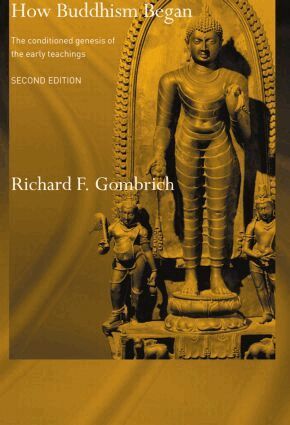
    How Buddhism Began

    The Conditioned Genesis of the Early Teachings

    AvRichard F. Gombrich

    Inbunden, Engelska, 1996

    Del i serien Jordan Lectures in Comparative Religion

    2 227 kr

    Beställningsvara. Skickas inom 10-15 vardagar. Fri frakt över 249 kr.

    Fler format och utgåvor

    Häftad

    723 kr

    Inbunden

    2 421 kr

    E-bok

    855 kr

    E-bok

    855 kr

    Beskrivning

    This book takes a fresh look at the earliest Buddhism texts and offers various suggestions how the teachings in them had developed. Two themes predominate. Firstly, it argues that we cannot understand the Buddha unless we understand that he was debating with other religious teachers, notably brahmins. For example, he denied the existence of a 'soul'; but what exactly was he denying? Another chapter suggests that the canonical story of the Buddha's encounter with a brigand who wore a garland of his victims' fingers probably reflects an encounter with a form of ecstatic religion. The other main theme concerns metaphor, allegory and literalism. By taking the words of the texts literally - despite the Buddha's warning not to - successive generations of his disciples created distinctions and developed doctrines far beyond his original intention. One chapter shows how this led to a scholastic categorisation of meditation. Failure to understand a basic metaphor also gave rise to the later argument between the Mahayana and the older tradition.Perhaps most important of all, a combination of literalism with ignorance of the Buddha's allusions to brahminism led buddhists to forget that the Buddha had preached that love, like christian charity, could itself be directly salvific.
    Produktinformation

    • Utgivningsdatum:1996-01-01
    • Mått:145 x 222 x 14 mm
    • Vikt:300 g
    • Format:Inbunden
    • Språk:Engelska
    • Serie:Jordan Lectures in Comparative Religion
    • Antal sidor:192
    • Förlag:Bloomsbury Publishing PLC
    • ISBN:9780485174175

    Utforska kategorier

    • Kulturvetenskap inom Samhälle och politik
    • Religion: allmänt inom Filosofi och religion
    • Buddhism inom Filosofi och religion

    Mer om författaren

    Richard F. Gombrich, University of Oxford

    Innehållsförteckning

    • Debate, skill and means, allegory and literalism; how, not what - "Kamma" as a reaction to Brahminism; metaphor, allegory, satire; retracing an ancient debate - how insight worsted concentration in the Pali canon; who was Angulimala?