• Fri frakt över 249 kr
  • •
  • Snabba leveranser
  • •
  • Billiga böcker
Kundservice

Du är på sajten för privatpersoner.

Företag, bibliotek eller offentlig verksamhet?

Du handlar på classic.bokus.com, där alla dina funktioner finns intakta.
Till classic.bokus.com
Bokus logotyp. Gå till startsidan.
  • Erbjudanden
  • Student
  • Topplistor
  • Barn & ungdom
  • Bokus Play
  • E-böcker
  • Ljudböcker
  • Pocketböcker
  • Spel & pussel

Upp till 25% på utvalda nyheter →

Sidfot

Mina sidor

    Hjälp

    • Kundservice
    • Vanliga frågor och svar
    • Frakt och leverans
    • Retur vid ångerrätt
    • Reklamera vara
    • Betalning
    • Köpvillkor
    • Allmänna villkor
    • Information om webbplatsens tillgänglighet

    Om Bokus

    • Om oss
    • Pressrum
    • För studenter
    • För företag
    • För bibliotek och offentlig verksamhet
    • För leverantörer
    • Hållbarhet

    Populärt

    • Aktuella erbjudanden
    • Presentkort
    • Studentlitteratur
    • Nya böcker
    • Topplistor
    • Signerade böcker
    • Engelska böcker

    Inspiration

    • Boktips
    • BookTok
    • Populära bokserier
    • Barnbokskaraktärer
    • Populära författare
    Logotyp för Bokus
    Följ oss på Facebook (extern länk)Följ oss på Instagram (extern länk)Följ oss på YouTube (extern länk)Följ oss på TikTok (extern länk)
    bokus @ CookiesAnpassa cookiesIntegritetspolicyKöpvillkor
    Till Citymail hemsida (extern länk)Till Budbee hemsida (extern länk)Till Postnord hemsida (extern länk)Till Schenker hemsida (extern länk)Till Early Bird hemsida (extern länk)Till Walleys hemsida (extern länk)
    1. Samhälle och politik
    2. Samhälle och kultur
    3. Kultur och medier
    4. Kulturvetenskap

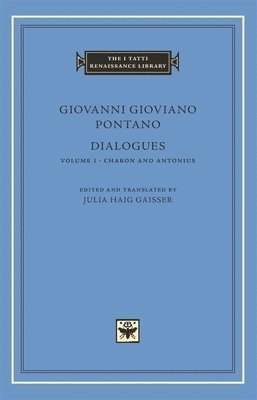
    Dialogues

    Charon and Antonius

    AvGiovanni Gioviano Pontano,Julia Haig Gaisser

    Inbunden, Engelska, 2012

    Del 53 i serien I Tatti Renaissance Library

    292 kr

    Beställningsvara. Skickas inom 5-8 vardagar. Fri frakt över 249 kr.

    Fler format och utgåvor

    Inbunden

    336 kr

    Inbunden

    336 kr

    Beskrivning

    Giovanni Pontano (1426–1503), whose academic name was Gioviano, was the most important Latin poet of the fifteenth century as well as a leading statesman who served as prime minister to the Aragonese kings of Naples. His Dialogues are our best source for the humanist academy of Naples which Pontano led for several decades. They provide a vivid picture of literary life in the capital of the Aragonese seaborne empire, based in southern Italy and the Western Mediterranean. This first volume contains the two earliest of Pontano’s five dialogues. Charon, set in the underworld of classical mythology, illustrates humanist attitudes to a wide range of topics, satirizing the follies and superstitions of humanity. Antonius, a Menippean satire named for the founder of the Neapolitan Academy, Antonio Beccadelli, is set in the Portico Antoniano in downtown Naples, where the academicians commemorate and emulate their recently-deceased leader, conversing on favorite topics and stopping from time to time to interrogate passersby.This volume contains a freshly-edited Latin text of these dialogues and the first translation of them into English.

    Produktinformation

    • Utgivningsdatum:2012-11-19
    • Mått:133 x 203 x 30 mm
    • Vikt:567 g
    • Format:Inbunden
    • Språk:Engelska
    • Serie:I Tatti Renaissance Library
    • Antal sidor:432
    • Förlag:Harvard University Press
    • ISBN:9780674054912
    • Översättare:Julia Haig Gaisser

    Utforska kategorier

    • Kulturvetenskap inom Samhälle och politik
    • Europas historia inom Historia och arkeologi
    • Filosofiska discipliner inom Filosofi och religion

    Mer om författaren

    Julia Haig Gaisser is Eugenia Chase Guild Professor Emeritus in the Humanities and Professor Emeritus of Latin at Bryn Mawr College.

    Recensioner i media

    The best possible tribute to Pontano is that his dialogues still make entertaining reading… A large part of this entertainment is Gaisser’s doing—this is as shrewd and effervescent a rendering as poor forgotten Pontano is ever likely to get. It’s another triumph for I Tatti, a benchmark of Pontano studies, and a required starting-point for all future textual scholars of his work. But it mainly makes readers think about the vanities of intellectuals and the joys of good raillery. It would be a shame if it found its way only into the hands of scholars and students, even though Pontano himself would probably have preferred it that way.