• Fri frakt över 249 kr
  • •
  • Snabba leveranser
  • •
  • Billiga böcker
Kundservice

Du är på sajten för privatpersoner.

Företag, bibliotek eller offentlig verksamhet?

Du handlar på classic.bokus.com, där alla dina funktioner finns intakta.
Till classic.bokus.com
Bokus logotyp. Gå till startsidan.
  • Erbjudanden
  • Nyheter
  • Student
  • Topplistor
  • Barn & ungdom
  • Bokus Play
  • E-böcker
  • Pocketböcker
  • Spel & pussel

10% rabatt på allt med kod: NYSTART10 →

Sidfot

Mina sidor

    Hjälp

    • Kundservice
    • Vanliga frågor och svar
    • Frakt och leverans
    • Retur vid ångerrätt
    • Reklamera vara
    • Betalning
    • Köpvillkor
    • Allmänna villkor
    • Information om webbplatsens tillgänglighet

    Om Bokus

    • Om oss
    • Pressrum
    • För studenter
    • För företag
    • För bibliotek och offentlig verksamhet
    • För leverantörer
    • Hållbarhet

    Populärt

    • Aktuella erbjudanden
    • Presentkort
    • Studentlitteratur
    • Nya böcker
    • Topplistor
    • Signerade böcker
    • Engelska böcker

    Inspiration

    • Boktips
    • BookTok
    • Populära bokserier
    • Barnbokskaraktärer
    • Populära författare
    Logotyp för Bokus
    Följ oss på Facebook (extern länk)Följ oss på Instagram (extern länk)Följ oss på YouTube (extern länk)Följ oss på TikTok (extern länk)
    bokus @ CookiesAnpassa cookiesIntegritetspolicyKöpvillkor
    Till Citymail hemsida (extern länk)Till Budbee hemsida (extern länk)Till Postnord hemsida (extern länk)Till Schenker hemsida (extern länk)Till Early Bird hemsida (extern länk)Till Walleys hemsida (extern länk)
    1. Samhälle och politik
    2. Samhälle och kultur
    3. Kultur och medier
    4. Kulturvetenskap

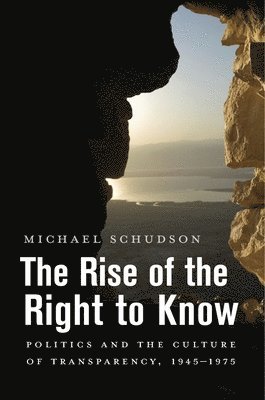
    Rise of the Right to Know

    Politics and the Culture of Transparency, 1945–1975

    AvMichael Schudson

    Häftad, Engelska, 2018

    274 kr

    Beställningsvara. Skickas inom 10-15 vardagar. Fri frakt över 249 kr.

    Beskrivning

    The American founders did not endorse a citizen’s right to know. More openness in government, more frankness in a doctor’s communication with patients, more disclosure in a food manufacturer’s package labeling, and more public notice of actions that might damage the environment emerged in our own time.As Michael Schudson shows in The Rise of the Right to Know, modern transparency dates to the 1950s, 1960s, and 1970s—well before the Internet—as reform-oriented politicians, journalists, watchdog groups, and social movements won new leverage. At the same time, the rapid growth of higher education after 1945, together with its expansive ethos of inquiry and criticism, fostered both insight and oversight as public values.“One of the many strengths of The Rise of the Right To Know is its insistent emphasis on culture and its interaction with law…What Schudson shows is that enforceable access to official information creates a momentum towards a better use of what is disclosed and a refinement of how disclosure is best done.”—George Brock, Times Literary Supplement“This book is a reminder that the right to know is not an automatic right. It was hard-won, and fought for by many unknown political soldiers.”—Monica Horten, LSE Review of Books

    Produktinformation

    • Utgivningsdatum:2018-10-15
    • Mått:127 x 201 x 28 mm
    • Vikt:400 g
    • Format:Häftad
    • Språk:Engelska
    • Antal sidor:368
    • Förlag:Harvard University Press
    • ISBN:9780674986930
    • Utmärkelser:Nominated for Goldsmith Book Prize 2016

    Utforska kategorier

    • Kulturvetenskap inom Samhälle och politik
    • Medievetenskap inom Samhälle och politik
    • Lag och samhälle inom Juridik

    Mer om författaren

    Michael Schudson is Professor of Journalism at Columbia University.

    Recensioner i media

    It’s hard to say anything new about the 1960s, but Michael Schudson has done it—in a big way. An originally conceptualized and eye-opening history, The Rise of the Right to Know identifies the emergence of transparency or openness in the 1960s and ’70s as a leading principle in American political culture. Across a wide range of political and social spheres, he traces the historic shift in our culture from the hidden to the open, the elite to the populist, the expert to the personal, and the rarefied to the accessible—rooted in the liberal, democratic demand that citizens have a right to know about the decisions that shape their lives. This book made me rethink the postwar era and its importance as very few works of scholarship have.