• Fri frakt över 249 kr
  • •
  • Snabba leveranser
  • •
  • Billiga böcker
Kundservice

Du är på sajten för privatpersoner.

Företag, bibliotek eller offentlig verksamhet?

Du handlar på classic.bokus.com, där alla dina funktioner finns intakta.
Till classic.bokus.com
Bokus logotyp. Gå till startsidan.
  • Erbjudanden
  • Nyheter
  • Student
  • Topplistor
  • Barn & ungdom
  • Bokus Play
  • E-böcker
  • Pocketböcker
  • Spel & pussel

10% rabatt på allt med kod: NYSTART10 →

Sidfot

Mina sidor

    Hjälp

    • Kundservice
    • Vanliga frågor och svar
    • Frakt och leverans
    • Retur vid ångerrätt
    • Reklamera vara
    • Betalning
    • Köpvillkor
    • Allmänna villkor
    • Information om webbplatsens tillgänglighet

    Om Bokus

    • Om oss
    • Pressrum
    • För studenter
    • För företag
    • För bibliotek och offentlig verksamhet
    • För leverantörer
    • Hållbarhet

    Populärt

    • Aktuella erbjudanden
    • Presentkort
    • Studentlitteratur
    • Nya böcker
    • Topplistor
    • Signerade böcker
    • Engelska böcker

    Inspiration

    • Boktips
    • BookTok
    • Populära bokserier
    • Barnbokskaraktärer
    • Populära författare
    Logotyp för Bokus
    Följ oss på Facebook (extern länk)Följ oss på Instagram (extern länk)Följ oss på YouTube (extern länk)Följ oss på TikTok (extern länk)
    bokus @ CookiesAnpassa cookiesIntegritetspolicyKöpvillkor
    Till Citymail hemsida (extern länk)Till Budbee hemsida (extern länk)Till Postnord hemsida (extern länk)Till Schenker hemsida (extern länk)Till Early Bird hemsida (extern länk)Till Walleys hemsida (extern länk)
    1. Naturvetenskap och teknik
    2. Matematik och naturvetenskap
    3. Naturvetenskap:allmänt
    4. Populärvetenskap

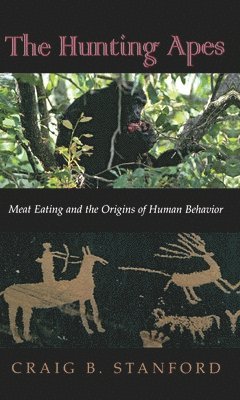
    Hunting Apes

    Meat Eating and the Origins of Human Behavior

    AvCraig B. Stanford

    Häftad, Engelska, 2001

    399 kr

    Beställningsvara. Skickas inom 5-8 vardagar. Fri frakt över 249 kr.

    Fler format och utgåvor

    E-bok

    553 kr

    Beskrivning

    What makes humans unique? What makes us the most successful animal species inhabiting the Earth today? Most scientists agree that the key to our success is the unusually large size of our brains. Our large brains gave us our exceptional thinking capacity and led to humans' other distinctive characteristics, including advanced communication, tool use, and walking on two legs. Or was it the other way around? Did the challenges faced by early humans push the species toward communication, tool use, and walking and, in doing so, drive the evolutionary engine toward a large brain? In this provocative new book, Craig Stanford presents an intriguing alternative to this puzzling question--an alternative grounded in recent, groundbreaking scientific observation. According to Stanford, what made humans unique was meat. Or, rather, the desire for meat, the eating of meat, the hunting of meat, and the sharing of meat. Based on new insights into the behavior of chimps and other great apes, our now extinct human ancestors, and existing hunting and gathering societies, Stanford shows the remarkable role that meat has played in these societies.Perhaps because it provides a highly concentrated source of protein--essential for the development and health of the brain--meat is craved by many primates, including humans. This craving has given meat genuine power--the power to cause males to form hunting parties and organize entire cultures around hunting. And it has given men the power to manipulate and control women in these cultures. Stanford argues that the skills developed and required for successful hunting and especially the sharing of meat spurred the explosion of human brain size over the past 200,000 years. He then turns his attention to the ways meat is shared within primate and human societies to argue that this all-important activity has had profound effects on basic social structures that are still felt today. Sure to spark a lively debate, Stanford's argument takes the form of an extended essay on human origins. The book's small format, helpful illustrations, and moderate tone will appeal to all readers interested in those fundamental questions about what makes us human.

    Produktinformation

    • Utgivningsdatum:2001-02-25
    • Mått:119 x 184 x 19 mm
    • Vikt:268 g
    • Format:Häftad
    • Språk:Engelska
    • Antal sidor:272
    • Förlag:Princeton University Press
    • ISBN:9780691088884

    Utforska kategorier

    • Populärvetenskap inom Naturvetenskap och teknik
    • Antropologi inom Samhälle och politik
    • Biovetenskap inom Naturvetenskap och teknik

    Mer om författaren

    Craig B. Stanford is Associate Professor of Anthropology and Co-Director of the Jane Goodall Research Center at the University of Southern California. He has conducted field studies of apes and monkeys in Africa, Asia, and Latin America. His other works include Chimpanzee and Red Colobus.

    Recensioner i media

    "A provocative, eminently digestible book... Stanford writes clearly and often deftly, and with admirable concision... [A] marvelous exploration of evolutionary hypotheses ... fascinating stuff."--Michael Pakenham, The Baltimore Sun "Anyone who would like to review all of the arguments on human origins should read The Hunting Apes... This book will go a long way in explaining why physical anthropologists and their colleagues fight so much."--Deborah L. Manzolillo, Times Literary Supplement "A brave academic endeavour and a fine piece of popular science writing... Stanford's book summarises a huge body of evidence in a pleasing, coherent and non-polemic way. You'll feel that you're talking with a learned ... dinner companion, rather than enduring a lecture or hectoring sermon from an academic pulpit."--Adrian Barnett, New Scientist "Stanford's ideas, while controversial, are amply documented by behavioral studies of nonhuman primates, anthropological studies of a number of human societies and archeological studies of early and pre-humans."--Publishers Weekly "[A] provocative new look at what made people so smart... This is a fascinating book, written for the nonspecialist."--Booklist "An unabashed celebration of the carnivorous tendencies of early humankind. Virtually every aspect of Stanford's thesis about the importance of meat acquisition and sharing among early humans is steeped in controversy."--Kirkus Reviews "[An] admirable little book... [Stanford's] meticulously constructed study is both readable and thought-provoking and gives fascinating insights into the behaviour of our species."--The Tablet "The Hunting Apes is a very enjoyable and quick read, written for a broad audience... These are well-written synopses--good for students, the general informed public, and those in anthropology and other sub-disciplines who want to keep up on these topics."--M. Tappen, Journal of the Royal Anthropological Institute

    Innehållsförteckning

    • Preface and Acknowledgments ix Chapter 1 The Indelible Stamp 3 Chapter 2 Man the Hunter and Other Stories 15 Chapter 3 Ape Nature 52 Chapter 4 The View from the Pliocene 103 Chapter 5 The Hunting People 136 Chapter 6 The Ghost in the Gorilla 163 Chapter 7 Meat's Patriarchy 199 Notes 219 References 229 Index 247