• Fri frakt över 249 kr
  • •
  • Snabba leveranser
  • •
  • Billiga böcker
Kundservice

Du är på sajten för privatpersoner.

Företag, bibliotek eller offentlig verksamhet?

Du handlar på classic.bokus.com, där alla dina funktioner finns intakta.
Till classic.bokus.com
Bokus logotyp. Gå till startsidan.
  • Erbjudanden
  • Nyheter
  • Student
  • Topplistor
  • Barn & ungdom
  • Bokus Play
  • E-böcker
  • Pocketböcker
  • Spel & pussel

Upp till 20% på populära nyheter →

Sidfot

Mina sidor

    Hjälp

    • Kundservice
    • Vanliga frågor och svar
    • Frakt och leverans
    • Retur vid ångerrätt
    • Reklamera vara
    • Betalning
    • Köpvillkor
    • Allmänna villkor
    • Information om webbplatsens tillgänglighet

    Om Bokus

    • Om oss
    • Pressrum
    • För studenter
    • För företag
    • För bibliotek och offentlig verksamhet
    • För leverantörer
    • Hållbarhet

    Populärt

    • Aktuella erbjudanden
    • Presentkort
    • Studentlitteratur
    • Nya böcker
    • Topplistor
    • Signerade böcker
    • Engelska böcker

    Inspiration

    • Boktips
    • BookTok
    • Populära bokserier
    • Barnbokskaraktärer
    • Populära författare

    Mina sidor

      Hjälp

      • Kundservice
      • Vanliga frågor och svar
      • Frakt och leverans
      • Retur vid ångerrätt
      • Reklamera vara
      • Betalning
      • Köpvillkor
      • Allmänna villkor
      • Information om webbplatsens tillgänglighet

      Om Bokus

      • Om oss
      • Pressrum
      • För studenter
      • För företag
      • För bibliotek och offentlig verksamhet
      • För leverantörer
      • Hållbarhet

      Populärt

      • Aktuella erbjudanden
      • Presentkort
      • Studentlitteratur
      • Nya böcker
      • Topplistor
      • Signerade böcker
      • Engelska böcker

      Inspiration

      • Boktips
      • BookTok
      • Populära bokserier
      • Barnbokskaraktärer
      • Populära författare
      Logotyp för Bokus
      Följ oss på Facebook (extern länk)Följ oss på Instagram (extern länk)Följ oss på YouTube (extern länk)Följ oss på TikTok (extern länk)
      bokus @ CookiesIntegritetspolicyKöpvillkor
      Till Citymail hemsida (extern länk)Till Budbee hemsida (extern länk)Till Postnord hemsida (extern länk)Till Schenker hemsida (extern länk)Till Early Bird hemsida (extern länk)Till Walleys hemsida (extern länk)
      1. Samhälle och politik
      2. Samhälle och kultur
      3. Kultur och medier
      4. Kulturvetenskap

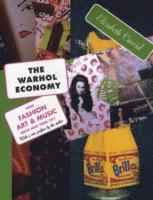
      Warhol Economy

      How Fashion, Art, and Music Drive New York City - New Edition

      AvElizabeth Currid-Halkett

      Häftad, Engelska, 2008

      368 kr

      Beställningsvara. Skickas inom 5-8 vardagar. Fri frakt över 249 kr.

      Fler format och utgåvor

      E-bok

      503 kr

      Beskrivning

      Which is more important to New York City's economy, the gleaming corporate office--or the grungy rock club that launches the best new bands? If you said "office," think again. In The Warhol Economy, Elizabeth Currid argues that creative industries like fashion, art, and music drive the economy of New York as much as--if not more than--finance, real estate, and law. And these creative industries are fueled by the social life that whirls around the clubs, galleries, music venues, and fashion shows where creative people meet, network, exchange ideas, pass judgments, and set the trends that shape popular culture. The implications of Currid's argument are far-reaching, and not just for New York. Urban policymakers, she suggests, have not only seriously underestimated the importance of the cultural economy, but they have failed to recognize that it depends on a vibrant creative social scene. They haven't understood, in other words, the social, cultural, and economic mix that Currid calls the Warhol economy. With vivid first-person reporting about New York's creative scene, Currid takes the reader into the city spaces where the social and economic lives of creativity merge.The book has fascinating original interviews with many of New York's important creative figures, including fashion designers Zac Posen and Diane von Furstenberg, artists Ryan McGinness and Futura, and members of the band Clap Your Hands Say Yeah. The economics of art and culture in New York and other cities has been greatly misunderstood and underrated. The Warhol Economy explains how the cultural economy works-and why it is vital to all great cities.

      Produktinformation

      • Utgivningsdatum:2008-10-19
      • Mått:178 x 229 x 19 mm
      • Vikt:454 g
      • Format:Häftad
      • Språk:Engelska
      • Antal sidor:280
      • Förlag:Princeton University Press
      • ISBN:9780691138749

      Utforska kategorier

      • Kulturvetenskap inom Samhälle och politik
      • Nationalekonomi inom Ekonomi och Ledarskap
      • Servicesektorn inom Ekonomi och Ledarskap

      Mer om författaren

      Elizabeth Currid is an assistant professor at the University of Southern California's School of Policy, Planning, and Development. She holds a Ph.D. in urban planning from Columbia University and divides her time between New York and Los Angeles.

      Recensioner i media

      "[Currid] describes the organic, informal, social networking side of the creative arts in a mixed tone of Rolling Stone new journalism and objective reporting that serves to advance her central thesis: that as an independent drive of an urban economy, the arts and its related industries should stop being viewed as the beautiful step-child of city environments."--Susan Gardner, Daily Kos "Not every PhD student blows her fellowship money at Barneys New York. But for the urban planner Elizabeth Currid, her passion for style led to some interesting statistics."--Anya Kamenetz, New York Times "Any discussion about New York City's economic well-being tends to start and end with one phrase: Wall Street. As the Street goes, we assume, so goes the city, which is why politicians will do almost anything to keep the brokerages and investment banks happy... [In] The Warhol Economy the social scientist Elizabeth Currid argues that this fixation is misdirected, and that it has led us to neglect the city's most vital and distinctive economic sector: the culture industry, which, in Currid's definition, includes everything from fashion, art, and music to night clubs. In other words, it's SoHo and Chelsea, not Wall Street, that the politicians should really be thinking about. Of course, everyone knows that art and culture help make New York a great place to live. But Currid goes much further, showing that the culture industry creates tremendous economic value in its own right."--James Surowiecki, The New Yorker "Elizabeth Currid's argument in this intelligent and innovative book is that New York, and certain other great cities in particular periods, function as the Factory on a greater scale, and that social policy out to reflect that fact."--Roz Kaveney, Times Literary Supplement "In detailing the inner workings of New York's creative industries...urban planning PhD Currid gives readers an eagle-eyed look at the networking mechanics of the art-as-business crowd. Colorful description abounds, as do colorful characters."--Publishers Weekly "Currid provides an interesting explanation of the transformation of New York City from bohemia to cultural economy as art, music, fashion, and design collided."--Business Economist "A brilliant analysis of the social mechanisms by which creative individuals and the industries they populate drive New York's economy...Beyond Ms. Currid's reasoned analysis and careful exposition of fact, The Warhol Economy is simply a pleasure to read in a way that sociological studies never are. Engaging, gossipy without being trashy, and just plain fun, The Warhol Economy is social science with a downtown mentality, it points to significant realities in the generation of cultural capital that are, important, and ready for broadcast."--Christina Panas, Soho Journal "An exploration of how fashion, art, and music drive New York City, The Warhol Economy argues that the city's cultural resources contribute more to the economy than most policy makers realize or admit. Interviews with well-known bands, designers, artists, club owners, and writers underscore the value of cultural producers; an appendix's worth of hard numbers back them up."--Annie Fischer, Village Voice "Sweeping, gossipy, flawed and fun, Currid's book stands alone as a work equally obsessed with the 'location quotient' of a given industry and with Marc Jacobs, the designer...It is the job of the social scientist to take a banal observation--for example, that New York is full of artists and musicians who like to go out at night and all seem to know one another--and worry over it to the point that the obvious seems to fairly glow with complexity. Currid pulls this trick off nicely, and she throws in some amusing backstage anecdotes for extra cultural currency."--Carly Berwick, Bloomberg Muse "Currid takes the reader on a concise tour of New York's 150-year history of being a haven and incubator for artists while offering a healthy reminder for any city interested in sustaining a lively arts scene: culture drives economic growth."--Andrew Brink, CityView "What Currid shows is that culture matters as much as high finance to the city's economy--150,00 new jobs in 2001, she says--but nobody's paying attention to how it really works: not the grants for plodding public art, not the checques for art world institutions, but the life. If you want to be world capital of culture, it may be more important to have low rents for big spaces and somewhere to dance...The importance of her work is that she's saying the obvious to policy wonks and city planners, hanging her arguments on an impressive framework of proper statistics."--Michael Pye, Scotsman "Elizabeth Currid argues forcefully that government policy plays an essential role in attracting or repelling cultural producers. She suggests that economic planners should apply themselves to building cultural hubs as assiduously as policy-makers did in developing Silicon Valley and the City of London as technological and financial centres."--Julia Fetherston, The Australian "The Warhol Economy is a provocative study of New York City's economy and how the creative industries such as fashion, art and music drive its economy as much as finance, real estate, and law. What's fascinating about this book is that she has used first-hand documentation and over 100 illuminating interviews with leading fashion designers, musicians, club owners, and artists such as Ryan McGinness, Lee Quinones, and Futura, to get an insider's account of how creativity is at work in New York from a sociological point of view."--Umbrella Magazine "Given the current hype about economic clusters, what a pleasure it is to read a book about a real cluster--one with all the competition and collaboration, the shared pool of skilled labor, and the intense face-to-face interaction that are essential to the true cluster. Others have discussed the New York City arts scene from the standpoint of economic geography, but none better than Currid. Her understanding of how the industry functions and her insightful analysis of its economics provides the basis for her discussion of what urban policy makers should do to foster growth of this essential element in the economy of the creative or knowledge city."--P.K. Kresl, Choice "This book is about how one urban conurbation, New York City, works and how creativity occurs within it. It sets out to provide an understanding of how creativity in fashion, art and music originates, why it happens and where it takes place. The book is a good read, generously illustrated with stories of the NYC creative milieu past and present, extensively noted and referenced."--Simon Roodhouse, Journal of Cultural Economy "Currid points to the glittery fashion industry, fabulous club life and art openings as more than just creative inspiration in the New York Scene. All are big financial players that help fill the Big Apple's own coffers... The Warhol Economy brings out the voices of New York scenesters, including fashion designers Diane von Furstenberg and Zac Posen, musicians Quincy Jones and the Talking Heads, as well as Hilly Kristal, founder of the famous but now defunct club CBGB."--Tanya Enberg, 24 Hours Toronto "Currid offers social science with a downtown mentality, crunching numbers with one eye on her data set and the other on the dance floor...The Warhol Economy performs the very useful role of demonstrating how that which appears ephemeral and unimportant in the life of a city actually serves as part of what makes it function... [The] book reforms and advances the debate on cities and the creative economy that continues to loom large in New York and across the country."--Joe Leduc, Big RED & Shiny "New York's creative industries are inextricably linked...[Currid] discusses not just the power of such social networks, but also the fusion of fashion and art."--Elissa Strauss, New York Sun "From a public policy perspective, art and culture are often thought of as mere frills--so-called 'quality of life' traits--that help attract the business talent that really drives a city's economy. But in The Warhol Economy, Currid argues that the cultural industries are actually a much larger economic force than is traditionally understood...The research in The Warhol Economy is specific to New York, but Currid argues that its larger lesson can and should be applied to any city that seeks a place in the new idea-driven economy."--Simon Houpt, The Globe and Mail "The numerous formal and informal--and even messy--interactions that connect the people and companies within a cluster come alive under Currid's direction. Currid offers a detailed, thorough account of how a cluster works at the micro level where people cross over related industries (graffiti artist and fashion designer, for example), cross-pollinate ideas, and work through word of mouth."--Wendy Waters, AllAboutCities.com "This book is about how one urban conurbation, New York City, works and how creativity occurs within it. It sets out to provide an understanding of how creativity in fashion, art and music originates, why it happens and where it takes place. The book is a good read, generously illustrated with stories of the NYC creative milieu past and present, extensively noted and referenced."--Simon Roodhouse, Journal of Cultural Economics "I would recommend The Warhol Economy to the already conversant regional development audience as it is a thought-provoking text and a most welcome contribution to the literature on cultural production and cities."--Nicholas Velluzzi, Regional Studies "[T]he book is well written in an entertaining style that relies heavily on storytelling and anecdotal evidence. Currid is not afraid to describe what she was wearing during her fieldwork or how she was feeling in certain situations. This style greatly humanizes the book and helps build a subtle and informative contextual background. While this choice of style can be criticized, it adds to the accessibility of the book and makes it one that I am sure many students and faculty alike will enjoy reading."--Dominic Power, Economic Geography

      Innehållsförteckning

      • PREFACE ix ACKNOWLEDGMENTS xiii CHAPTER 1: Art, Culture, and New York City 1 CHAPTER 2: How It All Began From the Rise of the Factory to the Rise of Bling 17 CHAPTER 3: Becoming Creative 45 CHAPTER 4: The Social Life of Creativity 66 CHAPTER 5: The Economics of a Dance Floor 87 CHAPTER 6: Creating Buzz, Selling Cool 114 CHAPTER 7: The Rise of Global Tastemakers What It All Means for the Policymakers 154 EPILOGUE 187 APPENDIX 191 NOTES 211 REFERENCES 233 INDEX 243
      Hoppa över listan

      Mer från samma författare

      Elizabeth Currid-Halkett - Sum of Small Things, Häftad

      Sum of Small Things

      Elizabeth Currid-Halkett

      Häftad, 2018

      207 kr

      Elizabeth Currid-Halkett - Starstruck: The Business of Celebrity, Häftad

      Starstruck: The Business of Celebrity

      Elizabeth Currid-Halkett

      Häftad, 2011

      285 kr

      Elizabeth Currid-Halkett - Sum of Small Things, E-bok

      Sum of Small Things

      Elizabeth Currid-Halkett

      E-bok
      2017

      210 kr

      Hoppa över listan

      Du kanske också är intresserad av

      Hugh Gilmartin, John Richardson - Wake Up and Smell the Profit, Häftad

      Wake Up and Smell the Profit

      Hugh Gilmartin, John Richardson

      Häftad, 2008

      148 kr

      Suzi M, James Glass, Ann Ominous, Xircon Z - Memories That Cost a Lifetime: The Immortal War Collection, Häftad

      Memories That Cost a Lifetime: The Immortal War Collection

      Suzi M, James Glass, Ann Ominous, Xircon Z

      Häftad, 2008

      198 kr

      Bill Tarrant - Reporting Indonesia, Häftad

      Reporting Indonesia

      Bill Tarrant

      Häftad, 2008

      289 kr

      E. Friedman, B. Gilley - Asia's Giants, Häftad

      Asia's Giants

      E. Friedman, B. Gilley

      Häftad, 2008

      559 kr

      Claudio Landete - Escultores De Hombres, Häftad

      Escultores De Hombres

      Claudio Landete

      Häftad, 2008

      130 kr

      Paul M. Collins - Trinity: A Guide for the Perplexed, E-bok

      Trinity: A Guide for the Perplexed

      Paul M. Collins

      E-bok
      2008

      397 kr

      Hervé Le Bras - Nature of Demography, Häftad

      Nature of Demography

      Hervé Le Bras

      Häftad, 2008

      787 kr

      Glenn Rogers - Colemans, Häftad

      Colemans

      Glenn Rogers

      Häftad, 2008

      272 kr

      Layla Rose Presant - Colette and the Golden Key, Häftad

      Colette and the Golden Key

      Layla Rose Presant

      Häftad, 2008

      346 kr

      Elizabeth Currid-Halkett - Warhol Economy, E-bok

      Warhol Economy

      Elizabeth Currid-Halkett

      E-bok
      2020

      503 kr