• Fri frakt över 249 kr
  • •
  • Snabba leveranser
  • •
  • Billiga böcker
Kundservice

Du är på sajten för privatpersoner.

Företag, bibliotek eller offentlig verksamhet?

Du handlar på classic.bokus.com, där alla dina funktioner finns intakta.
Till classic.bokus.com
Bokus logotyp. Gå till startsidan.
  • Erbjudanden
  • Nyheter
  • Student
  • Topplistor
  • Barn & ungdom
  • Bokus Play
  • E-böcker
  • Pocketböcker
  • Spel & pussel

10% rabatt på allt med kod: NYSTART10 →

Sidfot

Mina sidor

    Hjälp

    • Kundservice
    • Vanliga frågor och svar
    • Frakt och leverans
    • Retur vid ångerrätt
    • Reklamera vara
    • Betalning
    • Köpvillkor
    • Allmänna villkor
    • Information om webbplatsens tillgänglighet

    Om Bokus

    • Om oss
    • Pressrum
    • För studenter
    • För företag
    • För bibliotek och offentlig verksamhet
    • För leverantörer
    • Hållbarhet

    Populärt

    • Aktuella erbjudanden
    • Presentkort
    • Studentlitteratur
    • Nya böcker
    • Topplistor
    • Signerade böcker
    • Engelska böcker

    Inspiration

    • Boktips
    • BookTok
    • Populära bokserier
    • Barnbokskaraktärer
    • Populära författare
    Logotyp för Bokus
    Följ oss på Facebook (extern länk)Följ oss på Instagram (extern länk)Följ oss på YouTube (extern länk)Följ oss på TikTok (extern länk)
    bokus @ CookiesAnpassa cookiesIntegritetspolicyKöpvillkor
    Till Citymail hemsida (extern länk)Till Budbee hemsida (extern länk)Till Postnord hemsida (extern länk)Till Schenker hemsida (extern länk)Till Early Bird hemsida (extern länk)Till Walleys hemsida (extern länk)
    1. Samhälle och politik
    2. Politik och statsskick
    3. Statsskick och politiska processer
    4. Statsskick: demokrati

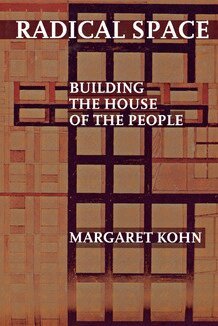
    Radical Space

    Building the House of the People

    AvMargaret Kohn

    Häftad, Engelska, 2003

    340 kr

    Beställningsvara. Skickas inom 10-15 vardagar. Fri frakt över 249 kr.

    Fler format och utgåvor

    Inbunden

    1 617 kr

    Beskrivning

    Epoch-making political events are often remembered for their spatial markers: the fall of the Berlin Wall, the storming of the Bastille, the occupation of Tiananmen Square. Until recently, however, political theory has overlooked the power of place. In Radical Space, Margaret Kohn puts space at the center of democratic theory. Kohn examines different sites of working-class mobilization in Europe and explains how these sites destabilized the existing patterns of social life, economic activity, and political participation. Her approach suggests new ways to understand the popular public sphere of the early twentieth century.This book imaginatively integrates a range of sources, including critical theory, social history, and spatial analysis. Drawing on the historical record of cooperatives, houses of the people, and chambers of labor, Kohn shows how the built environment shaped people's actions, identities, and political behavior. She illustrates how the symbolic and social dimensions of these places were mobilized as resources for resisting oppressive political relations. The author shows that while many such sites of resistance were destroyed under fascism, they created geographies of popular power that endure to the present.

    Produktinformation

    • Utgivningsdatum:2003-04-22
    • Mått:163 x 225 x 14 mm
    • Vikt:313 g
    • Format:Häftad
    • Språk:Engelska
    • Antal sidor:224
    • Förlag:Cornell University Press
    • ISBN:9780801488603
    • Utmärkelser:Honorable Mention, 2004 Best Book in European Poli

    Utforska kategorier

    • Statsskick: demokrati inom Samhälle och politik
    • Statsvetenskap och politisk teori inom Samhälle och politik
    • Sociala grupper och identitet inom Samhälle och politik

    Mer om författaren

    Margaret Kohn is Assistant Professor of Political Science at the University of Florida, Gainesville.

    Recensioner i media

    In this thoughtful and engaging book, Margaret Kohn makes the case that space is an important mechanism of social power. With Pierre Bourdieu, Michel Foucault, and Henri Lefebvre (among others), she agrees that space can function to reproduce and to reinforce relations of domination. Yet, she emphasizes, it also can play a transformative political role, enabling and encouraging the oppressed to challenge and to change social relations of power.... How can we restructure space in ways that disrupt its non-or antidemocratic effects.' That Radical Space helps raise such questions is one of its principal contributions to ongoing debates about democratic politics and popular resistance to power.- Clarissa Rile Hayward (Perspectives on Politics) Although political theorists have long shared the intuition of a crucial relationship between space and democracy, space has remained under-theorized in political theory. Responding to this omission, Margaret Kohn argues that spatial configurations serve as powerful social forces that can naturalize social divisions or call them into question.... Theorists engaged not only in the debates over the past and future of democracy, but also those exploring the role of deterritorialization in the age of global integration will find her book insightful and provocative.- Noam Lupu (Foundations of Political Theory Books) I like this book. Its concise and incisive argument on space and power is usefully pinned down in the specific cases it reviews. It is well written throughout, and carries a sense of hope seldom found in writing on space today, even in the work of Marxist geographers such as David Harvey or Edward Soja. It has a distinctly European intellectual quality in its scrutiny of the rhizomatic shifts of the urban lifeworld, and says much which remains relevant in today's desperate political climate.- Malcolm Miles (H-Urban Review) To the present day, visitors to Italy can find houses of the people in the industrial suburbs of Italian cities.... Kohn argues that these 'case del popolo' marked a new and promising approach towards socialism, one that was at once democratic and spontaneous.(Choice)

    Innehållsförteckning

    • Space and politics; The bourgeois public sphere; The disciplinary factory; The co-operative movement; The house of the people; The chamber of labour; Municipalism - the legacy of localism; Conclusion; Postscript - the local in an age of globalization.