• Fri frakt över 249 kr
  • •
  • Snabba leveranser
  • •
  • Billiga böcker
Kundservice

Du är på sajten för privatpersoner.

Företag, bibliotek eller offentlig verksamhet?

Du handlar på classic.bokus.com, där alla dina funktioner finns intakta.
Till classic.bokus.com
Bokus logotyp. Gå till startsidan.
  • Erbjudanden
  • Nyheter
  • Student
  • Topplistor
  • Barn & ungdom
  • Bokus Play
  • E-böcker
  • Pocketböcker
  • Spel & pussel

10% rabatt på allt med kod NYSTART10 →

Sidfot

Mina sidor

    Hjälp

    • Kundservice
    • Vanliga frågor och svar
    • Frakt och leverans
    • Retur vid ångerrätt
    • Reklamera vara
    • Betalning
    • Köpvillkor
    • Allmänna villkor
    • Information om webbplatsens tillgänglighet

    Om Bokus

    • Om oss
    • Pressrum
    • För studenter
    • För företag
    • För bibliotek och offentlig verksamhet
    • För leverantörer
    • Hållbarhet

    Populärt

    • Aktuella erbjudanden
    • Presentkort
    • Studentlitteratur
    • Nya böcker
    • Topplistor
    • Signerade böcker
    • Engelska böcker

    Inspiration

    • Boktips
    • BookTok
    • Populära bokserier
    • Barnbokskaraktärer
    • Populära författare
    Logotyp för Bokus
    Följ oss på Facebook (extern länk)Följ oss på Instagram (extern länk)Följ oss på YouTube (extern länk)Följ oss på TikTok (extern länk)
    bokus @ CookiesAnpassa cookiesIntegritetspolicyKöpvillkor
    Till Citymail hemsida (extern länk)Till Budbee hemsida (extern länk)Till Postnord hemsida (extern länk)Till Schenker hemsida (extern länk)Till Early Bird hemsida (extern länk)Till Walleys hemsida (extern länk)
    1. Samhälle och politik
    2. Politik och statsskick
    3. Statsvetenskap och politisk teori

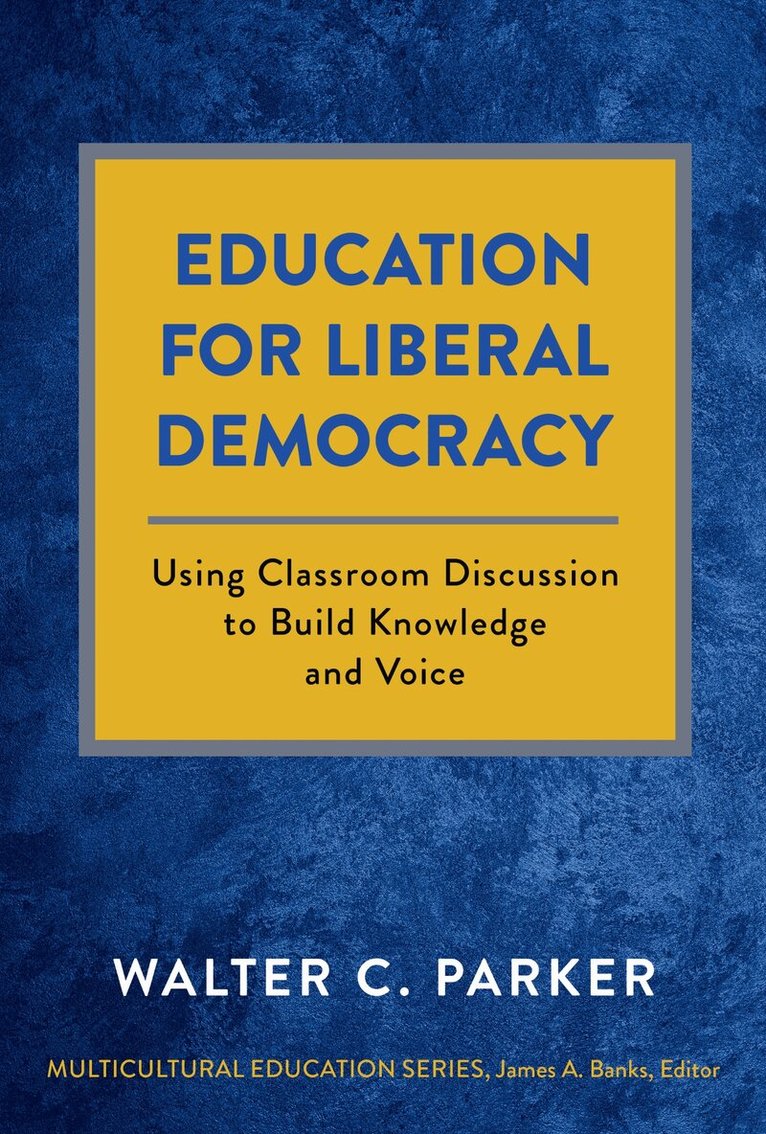
    Education for Liberal Democracy

    Using Classroom Discussion to Build Knowledge and Voice

    AvWalter C. Parker,James a. Banks

    Häftad, Engelska, 2023

    Del i serien Multicultural Education Series

    433 kr

    Beställningsvara. Skickas inom 5-8 vardagar. Fri frakt över 249 kr.

    Beskrivning

    Our democracy is in crisis. Both political trust and a shared standard of truth are broken. In this book, Walter Parker shows why and how a civic education can help. Offering a centrist approach suitable for a polarized society, Parker focuses on two linked curriculum objectives: disciplinary knowledge and voice. He illustrates how classroom discussion, alongside concept formation and deep reading, expand students' minds while developing their ability to speak with others and form opinions. When children come to school, they emerge from the private chrysalis of babyhood and kin to interact with a diverse student body along with teachers, curriculum, instruction, and the school's unique mission: education. Parker argues that these assets make school the ideal place to teach young people the liberal arts of studying and discussing public issues and academic controversies, both in and beyond school. The chapters in this collection, spanning 20 years and coming from one of civic education's most influential scholars, show that voice can be taught right alongside disciplinary knowledge. Drawing students into dialogue with one another on the curriculum's central questions is a teacher's most ambitious goal and, when it happens, teaching's greatest accomplishment.Book Features:Argues that the proper aim of civic education in schools is to shore up liberal democracy.Shows how discussion can be a main course, and not a side dish, of classroom instruction. Demonstrates how to use discussion to develop voice, defined as the freedom to make and express uncoerced decisions, and disciplinary knowledge, defined as the knowledge that results from a public process of error-seeking, contestation, and validation.Explains why students need to learn both disciplinary knowledge and voice if they are to take their place on the public stage and hold the "office of citizen" in a democracy.Treats subject-centered and student-centered instruction as partners, not opponents.

    Produktinformation

    • Utgivningsdatum:2023-04-28
    • Mått:160 x 220 x 17 mm
    • Vikt:272 g
    • Format:Häftad
    • Språk:Engelska
    • Serie:Multicultural Education Series
    • Antal sidor:224
    • Förlag:Teachers' College Press
    • ISBN:9780807768181

    Utforska kategorier

    • Statsvetenskap och politisk teori inom Samhälle och politik
    • Pedagogisk metodik inom Psykologi och pedagogik

    Mer om författaren

    Walter C. Parker is professor emeritus of social studies education at the University of Washington, a member of the National Academy of Education, a fellow of the American Educational Research Association, and author of Teaching Democracy: Unity and Diversity in Public Life.

    Recensioner i media

    "Walter C. Parker interweaves political philosophy and pedagogy to present a deep and useful primer for building a liberal democracy through civic education."—Theory and Research in Education

    Innehållsförteckning

    • Contents (Tentative)Foreword, by James A. BanksPrefaceAcknowledgmentsPart I: A Centrist Approach to Civic Education1. IntroductionLiberal and Illiberal DemocracyKnowledge and VoiceCurriculum and InstructionAn Autobiographical NoteOverview of ChaptersConclusion2. Teaching Academic ControversiesCooperative Learning and SACThe Revised ModelConclusion3. Teaching Against IdiocyDodging PubertySchools and IdiocySchools Are Public PlacesThree KeysThe Social CurriculumThe Academic CurriculumThe Three Rs?Part II: Toward Deeper Civic Learning4. Concept DevelopmentTeaching and Learning ConceptsClassifyingSome ExamplesConclusion5. Reinventing the High School Government CourseMethod and Design PrinciplesCurriculumDiscussionConclusion6. Listening to StrangersSeminar and DeliberationListening to StrangersPolitical FriendshipListening to Strangers at SchoolPractices of Listening to StrangersConclusion7. What Is Justice?Just IndividualsJust SocietiesCutting Through Conventional WisdomConclusionPart III: Global Civic Education8. Educating World CitizensNational SecurityMarginal VoicesA Solution on the Loose9. Human Rights Education's Curriculum ProblemProblem: Access to What?Solution: Toward an Episteme for HREConclusion10. The Right to Have RightsA Curriculum ProposalRationaleThe Immigrant Labor ParadoxClassroom ActivitiesInstructional SupportsConclusion11. Afterword: Cultivating JudgmentClassroom DiscussionUncoerced DecisionsThe Social StudiesConclusionEndnotesReferencesIndexAbout the Author