• Fri frakt över 249 kr
  • •
  • Snabba leveranser
  • •
  • Billiga böcker
Kundservice

Du är på sajten för privatpersoner.

Företag, bibliotek eller offentlig verksamhet?

Du handlar på classic.bokus.com, där alla dina funktioner finns intakta.
Till classic.bokus.com
Bokus logotyp. Gå till startsidan.
  • Erbjudanden
  • Nyheter
  • Student
  • Topplistor
  • Barn & ungdom
  • Bokus Play
  • E-böcker
  • Pocketböcker
  • Spel & pussel

10% rabatt på allt med kod NYSTART10 →

Sidfot

Mina sidor

    Hjälp

    • Kundservice
    • Vanliga frågor och svar
    • Frakt och leverans
    • Retur vid ångerrätt
    • Reklamera vara
    • Betalning
    • Köpvillkor
    • Allmänna villkor
    • Information om webbplatsens tillgänglighet

    Om Bokus

    • Om oss
    • Pressrum
    • För studenter
    • För företag
    • För bibliotek och offentlig verksamhet
    • För leverantörer
    • Hållbarhet

    Populärt

    • Aktuella erbjudanden
    • Presentkort
    • Studentlitteratur
    • Nya böcker
    • Topplistor
    • Signerade böcker
    • Engelska böcker

    Inspiration

    • Boktips
    • BookTok
    • Populära bokserier
    • Barnbokskaraktärer
    • Populära författare
    Logotyp för Bokus
    Följ oss på Facebook (extern länk)Följ oss på Instagram (extern länk)Följ oss på YouTube (extern länk)Följ oss på TikTok (extern länk)
    bokus @ CookiesAnpassa cookiesIntegritetspolicyKöpvillkor
    Till Citymail hemsida (extern länk)Till Budbee hemsida (extern länk)Till Postnord hemsida (extern länk)Till Schenker hemsida (extern länk)Till Early Bird hemsida (extern länk)Till Walleys hemsida (extern länk)
    1. Samhälle och politik
    2. Politik och statsskick
    3. Politisk aktivism

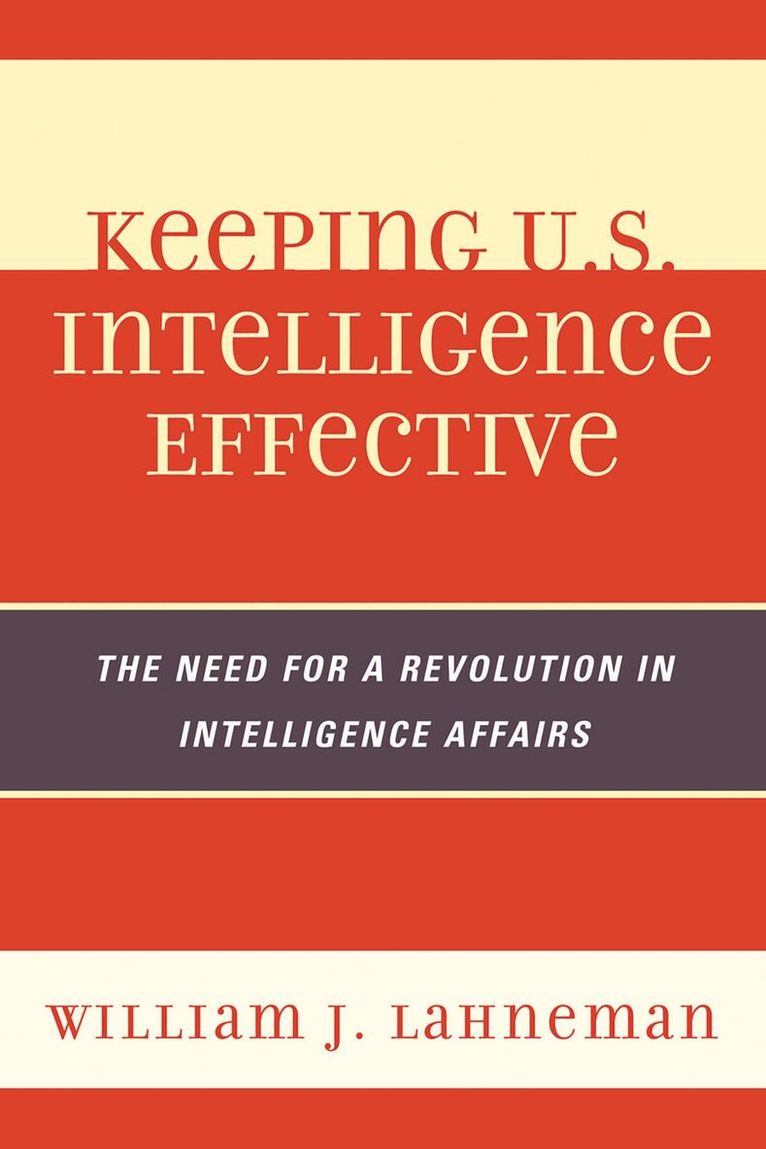
    Keeping U.S. Intelligence Effective

    The Need for a Revolution in Intelligence Affairs

    AvWilliam J. Lahneman

    Häftad, Engelska, 2011

    Del 13 i serien Security and Professional Intelligence Education Series

    794 kr

    Beställningsvara. Skickas inom 10-15 vardagar. Fri frakt över 249 kr.

    Fler format och utgåvor

    E-bok

    855 kr

    Beskrivning

    Keeping U.S. Intelligence Effective: The Need for a Revolution in Intelligence Affairs explores whether the U.S. intelligence enterprise will be able to remain effective in today's security environment. Based on the demands currently being placed upon the intelligence community, the analysis concludes that the effectiveness of U.S. intelligence will decline unless it embarks upon an aggressive, transformational course of action to reform various aspects of its operations.In keeping with the emerging literature on this subject, the book asserts that a so-called Revolution in Intelligence Affairs is needed. The need for a Revolution in Intelligence Affairs implies that no amount of evolutionary adjustments to existing intelligence community practices will keep U.S. intelligence effective. While evolutionary reforms might be necessary, they will not be sufficient to permit the intelligence community to target successfully the various threats and emerging issues that populate today's and tomorrow's security environment.

    Produktinformation

    • Utgivningsdatum:2011-03-15
    • Mått:155 x 235 x 17 mm
    • Vikt:340 g
    • Format:Häftad
    • Språk:Engelska
    • Serie:Security and Professional Intelligence Education Series
    • Antal sidor:228
    • Förlag:Scarecrow Press
    • ISBN:9780810878044

    Utforska kategorier

    • Politisk aktivism inom Samhälle och politik
    • Militärhistoria inom Historia och arkeologi
    • Politiskt förtryck inom Samhälle och politik

    Mer om författaren

    William J. Lahneman is assistant professor of Political Science at Towson University. He also is a Senior Research Scholar at the Center for International and Security Studies at the University of Maryland's School of Public Policy.

    Recensioner i media

    Lahneman is not optimistic about the continued effectiveness of the US intelligence community in the dynamic and complex security environment in which it operates today. The author notes that the intelligence community is still basically organized around the central task of "learning secrets" from a single, major, state-based threat, using technical means. It is not well situated to solve mysteries arising from multiple, widely dispersed threats of a non-state-supported nature. The contemporary security environment demands greater exploitation of human intelligence and open sources, areas in which the US intelligence community remains demonstrably weak. It is not that the intelligence community has simply refused to change since the Cold War but that the changes in methods and organization have been evolutionary while the changes in the security environment have been revolutionary. What is needed, according to Lahneman, is a "revolution in intelligence affairs." Whether such a revolution is forthcoming remains unclear, but the author's argument is well worth considering nonetheless. Recommended.