• Fri frakt över 249 kr
  • •
  • Snabba leveranser
  • •
  • Billiga böcker
Kundservice

Du är på sajten för privatpersoner.

Företag, bibliotek eller offentlig verksamhet?

Du handlar på classic.bokus.com, där alla dina funktioner finns intakta.
Till classic.bokus.com
Bokus logotyp. Gå till startsidan.
  • Erbjudanden
  • Nyheter
  • Student
  • Topplistor
  • Barn & ungdom
  • Bokus Play
  • E-böcker
  • Pocketböcker
  • Spel & pussel

10% studentrabatt med kod TERM26

Sidfot

Mina sidor

    Hjälp

    • Kundservice
    • Vanliga frågor och svar
    • Frakt och leverans
    • Retur vid ångerrätt
    • Reklamera vara
    • Betalning
    • Köpvillkor
    • Allmänna villkor
    • Information om webbplatsens tillgänglighet

    Om Bokus

    • Om oss
    • Pressrum
    • För studenter
    • För företag
    • För bibliotek och offentlig verksamhet
    • För leverantörer
    • Hållbarhet

    Populärt

    • Aktuella erbjudanden
    • Presentkort
    • Studentlitteratur
    • Nya böcker
    • Topplistor
    • Signerade böcker
    • Engelska böcker

    Inspiration

    • Boktips
    • BookTok
    • Populära bokserier
    • Barnbokskaraktärer
    • Populära författare

    Mina sidor

      Hjälp

      • Kundservice
      • Vanliga frågor och svar
      • Frakt och leverans
      • Retur vid ångerrätt
      • Reklamera vara
      • Betalning
      • Köpvillkor
      • Allmänna villkor
      • Information om webbplatsens tillgänglighet

      Om Bokus

      • Om oss
      • Pressrum
      • För studenter
      • För företag
      • För bibliotek och offentlig verksamhet
      • För leverantörer
      • Hållbarhet

      Populärt

      • Aktuella erbjudanden
      • Presentkort
      • Studentlitteratur
      • Nya böcker
      • Topplistor
      • Signerade böcker
      • Engelska böcker

      Inspiration

      • Boktips
      • BookTok
      • Populära bokserier
      • Barnbokskaraktärer
      • Populära författare
      Logotyp för Bokus
      Följ oss på Facebook (extern länk)Följ oss på Instagram (extern länk)Följ oss på YouTube (extern länk)Följ oss på TikTok (extern länk)
      bokus @ CookiesAnpassa cookiesIntegritetspolicyKöpvillkor
      Till Citymail hemsida (extern länk)Till Budbee hemsida (extern länk)Till Postnord hemsida (extern länk)Till Schenker hemsida (extern länk)Till Early Bird hemsida (extern länk)Till Walleys hemsida (extern länk)
      1. Naturvetenskap och teknik
      2. Matematik och naturvetenskap
      3. Biologi

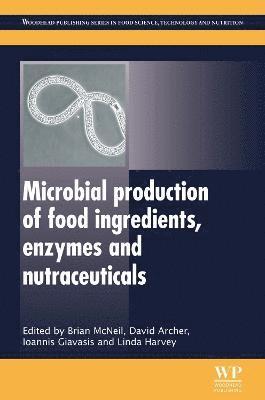
      Microbial Production of Food Ingredients, Enzymes and Nutraceuticals

      AvBrian McNeil,David Archer

      Inbunden, Engelska, 2013

      Del i serien Woodhead Publishing Series in Food Science, Technology and Nutrition

      2 741 kr

      Beställningsvara. Skickas inom 10-15 vardagar. Fri frakt över 249 kr.

      Beskrivning

      Bacteria, yeast, fungi and microalgae can act as producers (or catalysts for the production) of food ingredients, enzymes and nutraceuticals. With the current trend towards the use of natural ingredients in foods, there is renewed interest in microbial flavours and colours, food bioprocessing using enzymes and food biopreservation using bacteriocins. Microbial production of substances such as organic acids and hydrocolloids also remains an important and fast-changing area of research. Microbial production of food ingredients, enzymes and nutraceuticals provides a comprehensive overview of microbial production of food ingredients, enzymes and nutraceuticals.

      Part one reviews developments in the metabolic engineering of industrial microorganisms and advances in fermentation technology in the production of fungi, yeasts, enzymes and nutraceuticals. Part two discusses the production and application in food processing of substances such as carotenoids, flavonoids and terponoids, enzymes, probiotics and prebiotics, bacteriocins, microbial polysaccharides, polyols and polyunsaturated fatty acids.

      Microbial production of food ingredients, enzymes and nutraceuticals is an invaluable guide for professionals in the fermentation industry as well as researchers and practitioners in the areas of biotechnology, microbiology, chemical engineering and food processing.

      • Provides a comprehensive overview of microbial flavours and colours, food bioprocessing using enzymes and food biopreservation using bacteriocins
      • Begins with a review of key areas of systems biology and metabolic engineering, including methods and developments for filamentous fungi
      • Analyses the use of microorganisms for the production of natural molecules for use in foods, including microbial production of food flavours and carotenoids

      Produktinformation

      • Utgivningsdatum:2013-03-21
      • Mått:156 x 234 x undefined mm
      • Vikt:1 100 g
      • Format:Inbunden
      • Språk:Engelska
      • Serie:Woodhead Publishing Series in Food Science, Technology and Nutrition
      • Antal sidor:656
      • Förlag:Elsevier Science
      • ISBN:9780857093431

      Utforska kategorier

      • Biologi inom Naturvetenskap och teknik
      • Tillverkningsteknik inom Naturvetenskap och teknik

      Mer om författaren

      Brian McNeil is Professor of Microbiology at the University of Strathclyde, Glasgow, UK. David Archer is Professor of Microbial Biochemistry in the Faculty of Medicine and Health Sciences at the University of Nottingham, UK. Ioannis Giavasis is a Lecturer in Food Microbiology and Biotechnology at the Technological Educational Institute of Larissa, Greece. Dr Linda Harvey is a Reader in Microbiology at the University of Strathclyde.

      Innehållsförteckning

      • Contributor contact detailsWoodhead Publishing Series in Food Science, Technology and NutritionForewordChapter 1: Bioprocessing as a route to food ingredients: an introductionAbstract:1.1 Food fermentation as an ancient technology: an overview1.2 Solid substrate fermentations (SSF) and stirred tank reactor (STR) technology: relative industrial dominance1.3 Development of bioprocessing as a route to food ingredients: the history of koji1.4 Conclusion: food biotechnology past, present and futurePart I: Systems biology, metabolic engineering of industrial microorganisms and fermentation technologyChapter 2: Systems biology methods and developments of filamentous fungi in relation to the production of food ingredientsAbstract:2.1 Introduction2.2 Filamentous fungi as cell factories for food biotechnology2.3 Systems biology of food-related filamentous fungi2.4 Beyond functional genomics to metabolic modelling2.5 Systems biology perspectives on food biotechnology and ood safety2.6 AcknowledgementsChapter 3: Systems biology methods and developments for Saccharomyces cerevisiae and other industrial yeasts in relation to the production of fermented food and food ingredientsAbstract:3.1 Introduction3.2 History of yeast science: it all started with food3.3 Systems biology: possibilities and challenges in relation to food3.4 Systems biology tools for fermented food3.5 Production of flavours from yeasts3.6 Food colouring: functional colours3.7 Antioxidants3.8 Non-conventional yeasts for food and food ingredients3.9 Conclusions3.11 Appendix: glossary of the systems biology tool boxChapter 4: Applying systems and synthetic biology approaches to the production of food ingredients, enzymes and nutraceuticals by bacteriaAbstract:4.1 Introduction4.2 Definition and uses of systems biology in production4.3 Advantages of systems biology in the production of food ingredients, enzymes and nutraceuticals by bacteria4.4 Production of food grade amino acids through the exploitation of systems biology and ‘omics’ approaches4.5 Using systems approaches to develop enzymes for use in food production4.6 Future trends in the application of systems and synthetic biology to food microbiology4.7 Sources of further informationChapter 5: Production of foods and food components by microbial fermentation: an introductionAbstract:5.1 Introduction5.2 Food and food ingredients produced by microbial fermentation5.3 Principles of bioreactor design and operation5.4 Examples of fermentation processes used for the production of foods and foodstuffs5.5 Dealing with fermentation waste5.6 ConclusionsChapter 6: Fermentation monitoring and control of microbial cultures for food ingredient manufactureAbstract:6.1 Introduction6.2 Monitoring bioprocesses for food fermentation: an overview6.3 On line bioprocess monitoring for food fermentation6.4 Spectrometric monitoring of fermentation6.5 Future trends6.6 Sources of further information and adviceChapter 7: Industrial enzyme production for the food and beverage industries: process scale up and scale downAbstract:7.1 Introduction7.2 Difficulties of the scale up approach7.3 Consequences of changing scale7.4 Further complexities when changing scale7.5 Future trends and scale7.6 Conclusion: scale up is scale down7.7 AcknowledgementsPart II: Use of microorganisms for the production of natural molecules for use in foodsChapter 8: Microbial production of food flavoursAbstract:8.1 Introduction8.2 Production of flavours by microorganisms in their classical environment8.3 Microorganisms for biotechnological flavour production: first generation of biotechnological flavour compounds8.4 New attempts to produce flavour compounds when precursors are unavailable8.5 Analysing natural flavours in food8.6 Conclusion and future trends8.7 Sources of further information and adviceChapter 9: Microbial production of carotenoidsAbstract:9.1 Introduction9.2 Microbial sources of carotenoids9.3 Main biosynthetic pathways used for carotenoid production9.4 Regulation of carotenoid production9.5 Genetic improvement of carotenoid production9.6 Fermentation conditions9.7 Commercially significant carotenoids9.8 Conclusion9.9 AcknowledgementsChapter 10: Microbial production of flavonoids and terpenoidsAbstract:10.1 Introduction10.2 Overview of flavonoids and terpenoids10.3 Current and emerging techniques in microbial production of flavonoids and terpenoids10.4 Future trendsChapter 11: Microbial production of enzymes used in food applicationsAbstract:11.1 Introduction: microbial production of food enzymes11.2 Requirements of a good food enzyme11.3 Limitations of enzyme use in food applications11.4 Enzymes currently used in the food industry11.5 Good production strain criteria for the food industry11.6 Production processes11.7 Examples of heterologous enzyme production11.8 Regulatory aspects of food enzymesChapter 12: Microbial production of organic acids for use in foodAbstract:12.1 Introduction12.2 From filamentous fungi to genetically engineered bacteria and yeasts12.3 Gluconic acid production12.4 Oxidative branch of the citric acid cycle12.5 Reductive branch of the citric acid cycle12.6 Kojic acid12.7 Conclusions12.8 Future trends12.9 Sources of further information and adviceChapter 13: Production of viable probiotic cellsAbstract:13.1 Introduction13.2 Biomass production13.3 Fermentation technologies13.4 Downstream processing of probiotic biomass13.5 Storage of frozen and dried probiotic concentrates13.6 Microencapsulation13.7 Exploitation of adaptive stress response of bacteria13.8 ConclusionChapter 14: Microbial production of bacteriocins for use in foodsAbstract:14.1 Introduction14.2 In situ production of bacteriocins in food14.3 Ex situ production of bacteriocins14.4 Improvement of bacteriocinogenic bacteria14.5 Conclusions14.6 AcknowledgementsChapter 15: Microbial production of amino acids and their derivatives for use in foods, nutraceuticals and medicationsAbstract:15.1 Introduction15.2 Microbial production of amino acids15.3 Amino acid derivatives of interest15.4 Short peptides15.5 Future trends in amino acid productionChapter 16: Production of microbial polysaccharides for use in foodAbstract:16.1 Introduction16.2 Types, sources and applications of microbial polysaccharides16.3 Production of microbial polysaccharides16.4 Properties and structure–function relationships16.5 Future trendsChapter 17: Microbial production of xylitol and other polyolsAbstract:17.1 Introduction17.2 History of sugars and sugar alcohols17.3 Physiological effects of sugar alcohols17.4 Biochemistry of sugar alcohol metabolism17.5 Biotechnological production strategies17.6 Future trendsChapter 18: Microbial production of prebiotic oligosaccharidesAbstract:18.1 Introduction18.2 Microbial production of prebiotic oligosaccharides18.3 Future trends18.4 ConclusionsChapter 19: Microbial production of polyunsaturated fatty acids as nutraceuticalsAbstract:19.1 Introduction19.2 Production of microbial oils19.3 Gamma-linolenic acid (GLA, 18:3 n-6)19.4 Docosahexaenoic acid (DHA, 22:6 n-3)19.5 Arachidonic acid (ARA, 20:4 n-6)19.6 Eicosapentaenoic acid (EPA, 20:5 n-3)19.7 PUFA oils from photosynthetically-grown microalgae19.8 SafetyChapter 20: Microalgae as sources of food ingredients and nutraceuticalsAbstract:20.1 Introduction20.2 Microalgae and cyanobacteria and their potential as food supplements20.3 Risks of microalgal products20.4 ConclusionChapter 21: Microbial production of vitaminsAbstract:21.1 Introduction21.2 Fat-soluble vitamins21.3 Water-soluble vitamins21.4 Future trendsIndex
      Hoppa över listan

      Du kanske också är intresserad av

      Linda Harvey, Brian McNeil - Practical Fermentation Technology, E-bok

      Practical Fermentation Technology

      Linda Harvey, Brian McNeil

      E-bok
      2008

      2 666 kr

      Brian McNeil, Linda Harvey - Practical Fermentation Technology, Inbunden

      Practical Fermentation Technology

      Brian McNeil, Linda Harvey

      Inbunden, 2008

      2 320 kr

      Linda Harvey, Ioannis Giavasis, David Archer, Brian McNeil - Microbial Production of Food Ingredients, Enzymes and Nutraceuticals, E-bok

      Microbial Production of Food Ingredients, Enzymes and Nutraceuticals

      Linda Harvey, Ioannis Giavasis, David Archer, Brian McNeil

      E-bok
      2013

      2 998 kr

      Linda Harvey, Nicole Queen - Weeping Willow, Häftad

      Weeping Willow

      Linda Harvey, Nicole Queen

      Häftad, 2023

      266 kr

      Brian McNeil - Frontiers of Need, Inbunden
      • Nyhet

      Frontiers of Need

      Brian McNeil

      Inbunden, 2026

      619 kr

      Linda Harvey, Paul Windridge - Seat in the Crowd, E-bok

      Seat in the Crowd

      Linda Harvey, Paul Windridge

      E-bok
      2007

      123 kr

      Linda Harvey, Nicole Queen - Heeled, Häftad

      Heeled

      Linda Harvey, Nicole Queen

      Häftad, 2023

      206 kr

      William Horbury, Brian McNeil - Suffering and Martyrdom in the New Testament, Häftad

      Suffering and Martyrdom in the New Testament

      William Horbury, Brian McNeil

      Häftad, 2009

      570 kr

      Vendela Blomström, Jeanna Wennerberg - Akademiskt läsande och skrivande, Häftad
      • -10% student

      Akademiskt läsande och skrivande

      Vendela Blomström, Jeanna Wennerberg

      Häftad, 2026

      421 kr

      Marina Bergman - Att studera på högskolan : studieteknik och motivation på vägen, Häftad
      • -10% student

      Att studera på högskolan : studieteknik och motivation på vägen

      Marina Bergman

      Häftad, 2025

      5,0 utav 5 stjärnor. Totalt antal röster:(1)

      345 kr