• Fri frakt över 249 kr
  • •
  • Snabba leveranser
  • •
  • Billiga böcker
Kundservice

Du är på sajten för privatpersoner.

Företag, bibliotek eller offentlig verksamhet?

Du handlar på classic.bokus.com, där alla dina funktioner finns intakta.
Till classic.bokus.com
Bokus logotyp. Gå till startsidan.
  • Erbjudanden
  • Nyheter
  • Student
  • Topplistor
  • Barn & ungdom
  • Bokus Play
  • E-böcker
  • Pocketböcker
  • Spel & pussel

10% rabatt på allt med kod: NYSTART10 →

Sidfot

Mina sidor

    Hjälp

    • Kundservice
    • Vanliga frågor och svar
    • Frakt och leverans
    • Retur vid ångerrätt
    • Reklamera vara
    • Betalning
    • Köpvillkor
    • Allmänna villkor
    • Information om webbplatsens tillgänglighet

    Om Bokus

    • Om oss
    • Pressrum
    • För studenter
    • För företag
    • För bibliotek och offentlig verksamhet
    • För leverantörer
    • Hållbarhet

    Populärt

    • Aktuella erbjudanden
    • Presentkort
    • Studentlitteratur
    • Nya böcker
    • Topplistor
    • Signerade böcker
    • Engelska böcker

    Inspiration

    • Boktips
    • BookTok
    • Populära bokserier
    • Barnbokskaraktärer
    • Populära författare
    Logotyp för Bokus
    Följ oss på Facebook (extern länk)Följ oss på Instagram (extern länk)Följ oss på YouTube (extern länk)Följ oss på TikTok (extern länk)
    bokus @ CookiesAnpassa cookiesIntegritetspolicyKöpvillkor
    Till Citymail hemsida (extern länk)Till Budbee hemsida (extern länk)Till Postnord hemsida (extern länk)Till Schenker hemsida (extern länk)Till Early Bird hemsida (extern länk)Till Walleys hemsida (extern länk)
    1. Samhälle och politik
    2. Samhälle och kultur
    3. Kultur och medier
    4. Referensverk och tvärvetenskap

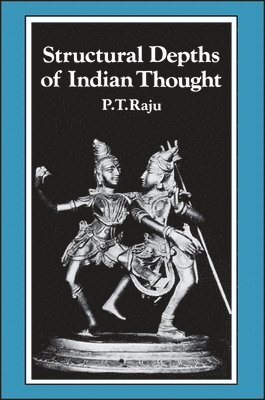
    Structural Depths of Indian Thought

    AvP. T. Raju

    Häftad, Engelska, 1989

    Del i serien SUNY series in Philosophy

    450 kr

    Tillfälligt slut

    Fler format och utgåvor

    Inbunden

    Tillf. slut

    Produktinformation

    • Utgivningsdatum:1989-06-15
    • Mått:152 x 229 x 32 mm
    • Vikt:844 g
    • Format:Häftad
    • Språk:Engelska
    • Serie:SUNY series in Philosophy
    • Antal sidor:632
    • Förlag:State University of New York Press
    • ISBN:9780887061400

    Utforska kategorier

    • Referensverk och tvärvetenskap inom Samhälle och politik
    • Filosofiska discipliner inom Filosofi och religion

    Mer om författaren

    P. T. Raju is best known for his Thought and Reality: Hegelianism and Advaita; Idealistic Thought of India; Comparative Studies in Philosophy; The Concept of Man; The Philosophical Traditions of India; and Spirit, Being, Self.

    Recensioner i media

    "No other work treating Indian philosophy on a comparable scale contains the illuminating comparisons between doctrines of Indian schools and the thought of Western philosophy ranging from Plato to Sartre and Wittgenstein...It will, moreover, contribute to the understanding of Western philosophy by Indian thinkers and vice versa...Raju has an intimate acquaintance with a remarkable range of Western thinkers and this distinguishes his work from most of what has gone before...Raju, moreover, is himself a critical thinker and consequently, although he has written a history, he treats the ideas and doctrines in a philosophical mode and his assessments of positions are often original and illuminating." — John E. Smith, Clark Professor of Philosophy, Yale University"Purpose: To deal with Indian philosophy in a fashion reflecting the way the best German historians of philosophy deal with Western philosophy...The book is remarkable for its comprehensiveness in combination with extensive critical discussions...Raju's book...is more critical than Radhakrishnan's and more philosophical than Dasgupta's. Radhakrishnan's comments are far less philosophically sophisticated and interesting than Raju's....a monument to a senior Indian philosopher's lifelong study and thoughtful critical consideration of the great classical systems of his tradition." — Karl H. Potter, Professor of Philosophy, University of Washington"Raju's credentials are impeccable. He is one of the few scholars in the world who could presume to write a major work on Indian thought. Accordingly, his knowledge of the Indian schools is accurate and impressive. To the extent that one of his intentions is to cast those schools in terms which make them more intelligible to western readers, his work measures up very well." — Harold H. Oliver, Professor of Philosophy, Boston University

    Innehållsförteckning

    • PREFACESpecial feature of the workThe need and use for the workPossible approaches to the study of Indian philosopy: approach of the present workPresentation of ethicsMain divisions of each philosophyMisunderstandings and neglect of the subject in the WestSignificance and use of comparisons"Know thyself": the dictumOrder of the chapters and the nature and interrelations of the schoolsSignificance of sub-titlesSome conventionsThe aim and origins of the workAcknowledgments INTRODUCTIONThe meaning of Indian philosophyHistory of Indian philosophyCaste and stages of lifeValues and ways of lifeDevelopment of Indian religionStages of philosophical developmentThe drive of Indian thought I. IDEAS OF THE UPANISADSIntroductionSome Upanisadic personagesCentral doctrines of the UpanisadsConcluding remarks II. THE MIMAMSA AND THE SOVEREIGNITY OF ETHICAL LAWIntroductionEpistemologyMetaphysicsLife's idealGeneral Estimate and Constructive Comment III. THE CARVAKA AND ITS ANTI-VEDIC MATERIALISMIntroductionEpistemologyMetaphysicsLife's idealCompromises and transformations in the Carvaka schoolGeneral Estimate and Constructive Comment IV. JAINISM AND THE EHTICS OF SELF-CONQUESTIntroductionEpistemologyMetaphysicsLife's idealGeneral Estimate and Constructive Comment V. BUDDHISM AND THE IDEAL OF ENLIGHTENMENTIntroductionThe schools of BuddhismBuddha's original teachings: the school of the eldersThe developed doctrines of BuddhismEpistemologyLife's idealGeneral Estimate and Constructive Comment VI. THE NYAYA AND THE ARCHITECHTONIC OF LOGICIntroductionNature of controversyEpistemologyMetaphysicsLife's idealGeneral Estimate and Constructive Comment VII. THE VAISESIKA AND THE DOCTRINE OF PARTICULARSIntroductionEpistemologyMetaphysicsAppendix to the Nyaya-Vaisesika: The Neo-NyayaIntroductionEpistemologyMetaphysicsGeneral Estimate and Constructive Comment VIII. THE SANKHYA AND THE IDEAL OF SELF-DISCRIMINATIONIntroductionEpistemologyMetaphysicsIdeal of lifeGeneral Estimate and Constructive Comment IX. THE YOGA AND SELF-REALIZATION THROUGH PSYCHO-PHYSICAL PRACTICEIntroductionEpistemologyMetaphysicsThe practice of YogaThe metaphysical basis of practiceExtraordinary powersTransition to the VedantaGeneral Estimate and Constructive Comment X. INTRODUCTION TO THE VEDANTIC SCHOOLS XI. THE VEDANTA OF SANKARA: NON-DUALISMIntroductionEpistemologyMetaphysicsLife's idealGeneral Estimate and Constructive Comment XII. THE VEDANTA OF RAMANUJA: NON-DUALISM OF THE QUALIFIED BRAHMANIntroductionEpistemologyMetaphysicsLife's idealGeneral Estimate and Constructive Comment XIII. THE VEDANTA OF MADHVA: DUALISM OF GOD AND THE WORLDIntroductionEpistemologyMetaphysicsLife's idealGeneral Estimate and Constructive Comment XIV. OTHER VEDANTINS, KASMIR SAIVISM, AND SAKTISMIntroductionThe other VedantinsKasmir SaivismOther Saiva schoolsSaktismGeneral Estimate and Constructive Comment XV. THE PHILOSOPHY OF THE BHAGAVADGITAIntroductionThe doctrines XVI. CONTEMPORARY INDIAN PHILOSOPHYIntroductionContemporary philsophers XVII CONCLUSION APPENDICESGlossary of important Sanskrit termsA note on transliteration and pronunciation BIBLIOGRAPHY INDEX