• Fri frakt över 249 kr
  • •
  • Snabba leveranser
  • •
  • Billiga böcker
Kundservice

Du är på sajten för privatpersoner.

Företag, bibliotek eller offentlig verksamhet?

Du handlar på classic.bokus.com, där alla dina funktioner finns intakta.
Till classic.bokus.com
Bokus logotyp. Gå till startsidan.
  • Erbjudanden
  • Nyheter
  • Student
  • Topplistor
  • Barn & ungdom
  • Bokus Play
  • E-böcker
  • Pocketböcker
  • Spel & pussel

10% rabatt på allt med kod NYSTART10 →

Sidfot

Mina sidor

    Hjälp

    • Kundservice
    • Vanliga frågor och svar
    • Frakt och leverans
    • Retur vid ångerrätt
    • Reklamera vara
    • Betalning
    • Köpvillkor
    • Allmänna villkor
    • Information om webbplatsens tillgänglighet

    Om Bokus

    • Om oss
    • Pressrum
    • För studenter
    • För företag
    • För bibliotek och offentlig verksamhet
    • För leverantörer
    • Hållbarhet

    Populärt

    • Aktuella erbjudanden
    • Presentkort
    • Studentlitteratur
    • Nya böcker
    • Topplistor
    • Signerade böcker
    • Engelska böcker

    Inspiration

    • Boktips
    • BookTok
    • Populära bokserier
    • Barnbokskaraktärer
    • Populära författare
    Logotyp för Bokus
    Följ oss på Facebook (extern länk)Följ oss på Instagram (extern länk)Följ oss på YouTube (extern länk)Följ oss på TikTok (extern länk)
    bokus @ CookiesAnpassa cookiesIntegritetspolicyKöpvillkor
    Till Citymail hemsida (extern länk)Till Budbee hemsida (extern länk)Till Postnord hemsida (extern länk)Till Schenker hemsida (extern länk)Till Early Bird hemsida (extern länk)Till Walleys hemsida (extern länk)
    1. Samhälle och politik
    2. Social välfärd och brottslighet
    3. Socialt arbete och välfärd

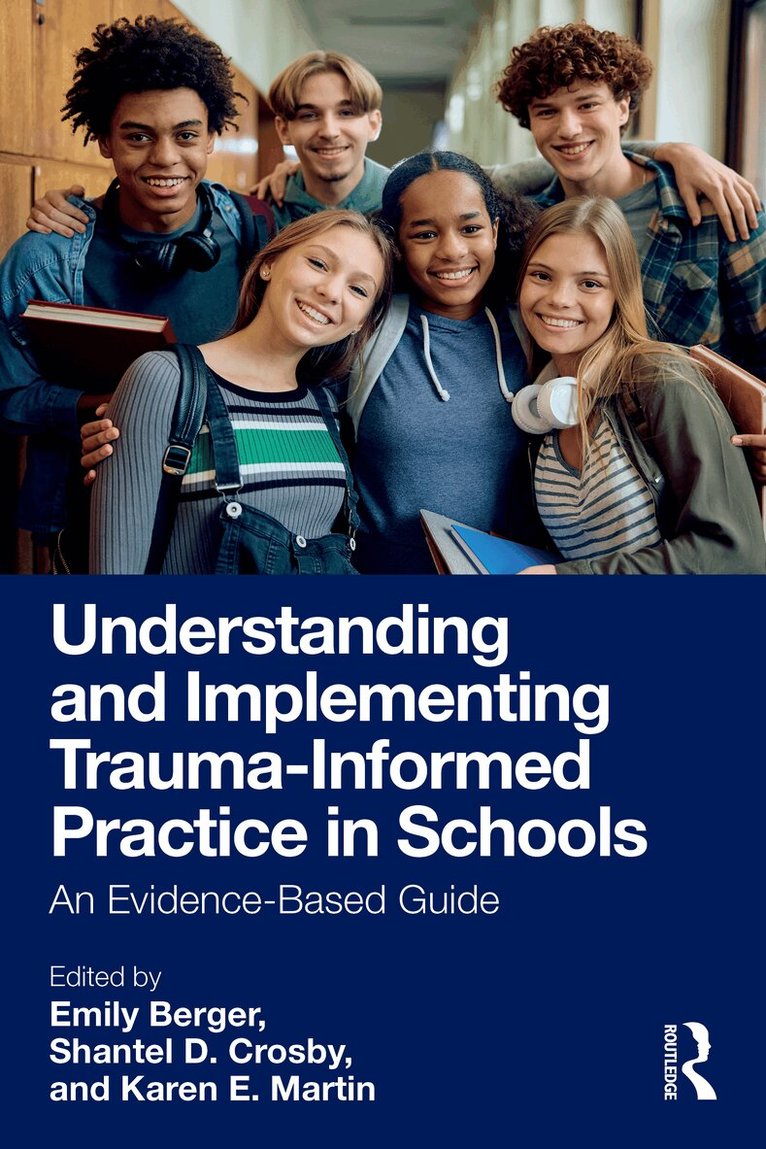
    Understanding and Implementing Trauma-Informed Practice in Schools

    An Evidence-Based Guide

    AvEmily Berger,Shantel D. Crosby

    Häftad, Engelska, 2026

    615 kr

    Beställningsvara. Skickas inom 10-15 vardagar. Fri frakt över 249 kr.

    Beskrivning

    This book bridges the research-to-practice gap by providing clear, evidence-based strategies to enable and advance trauma-informed practices for teachers, school leaders, and student support professionals.Drawing on innovative research, this book explores key trauma-informed practice principles and their practical application. Core topics include a deep dive into the latest research about how trauma and stress impact children and young people in the education setting, including observable and invisible physical responses, relationships and attachment, learning and executive function, and interventions such as supportive policies, routine, music, and movement. Each chapter combines research insights with practical recommendations and real-world case studies, supporting educators in translating theory into effective practice. By explaining the what, why, and how of trauma-informed practices and policies in schools, this book makes the science and practice of trauma-informed education accessible, actionable, and meaningful.Comprehensive, evidence-informed, and deeply practical, this is an essential guide for school leaders, educators, and preservice students committed to building safe, supportive, and trauma-responsive school communities.

    Produktinformation

    • Utgivningsdatum:2026-01-22
    • Mått:156 x 234 x 16 mm
    • Vikt:530 g
    • Format:Häftad
    • Språk:Engelska
    • Antal sidor:266
    • Förlag:Taylor & Francis Ltd
    • ISBN:9781032565439

    Utforska kategorier

    • Socialt arbete och välfärd inom Samhälle och politik
    • Studievägledning och elevhälsa inom Psykologi och pedagogik
    • Specialundervisning inom Psykologi och pedagogik

    Mer om författaren

    Emily Berger (she/her), PhD, MAPS, FCEDP, is an Associate Professor and Registered Psychologist with the School of Educational Psychology and Counselling, Monash University, Australia. She is also an adjunct Associate Professor with the School of Rural Health and Monash Gender and Family Violence Prevention Centre, Monash University. Associate Professor Berger is a nationally and internationally recognized trauma-informed researcher. Her research focuses on transforming organizations and schools to incorporate trauma-informed practice.Shantel D. Crosby (she/her), PhD, LCSW, is an Associate Professor in the School of Social Work and Family Science at the University of Louisville, USA. She is also a clinical therapist, with experience working with youth and adults from marginalized backgrounds. Her research focuses on trauma and racial trauma among racial/ethnic minority youth, and equity-centred, trauma-informed practice in schools and organizations. Karen E. Martin (she/her), PhD, is an Adjunct Professor in the School of Health and Clinical Sciences at The University of Western Australia and the School of Education at the University of Tasmania, Australia. With health research experience spanning three decades, Professor Martin is driven by her passion to help create socially just and compassionate environments for children and young people. Supported by a dedicated team of colleagues and university students, Professor Martin led the creation and publishing of the International Trauma-Informed Practice Principles for Schools (ITIPPS) and the Thoughtful Schools Program.

    Innehållsförteckning

    • List of ContributorsForeword1. Introduction and Background2. Anatomy of Trauma3. Understanding Behavior Through a Trauma-Informed Lens: A Framework for Educators4. Healing Connections: Addressing Interpersonal Trauma Through Belonging and Trauma-Informed Practice5. Teachers, Burnout and Wellbeing6. Designing School-Built Environments for Trauma-Informed Education7. Systemic Harms Call for Systemic Healing: Trauma-informed Systems of Care for Black Students8. Parents, Caregivers and School Trauma-Informed Practice9. Trauma-informed Partnerships with Aboriginal and Torres Strait Islander Peoples10. Effects of Music, Music Interventions and Trauma11. Multi-disciplinary Partnering in School-Based Trauma-Informed Active Play12. An Ecological Approach to Measurement: Trauma-Informed Schools13. Conclusion and Future DirectionsIndex